






Benda Kithaka, Executive Director and Founder of KILELE Health Association, shared a post on LinkedIn:
“Beyond Awareness to Action: Why Cervical Cancer Elimination in LMICs Will Fail.
Every January, the world pauses to mark Cervical Cancer Awareness Month.
Across Africa, civil society organizations (CSOs), including members of the African Cervical Health Alliance (ACHA), continue to translate global commitments into local action all year long, often with minimal or no dedicated resources.
In Kenya, the pause in January has always been marked by a policy milestone – for past last 6 years, we have held an annual national activity led by the National Cancer Control Programme (NCCP) at the Ministry of Health.
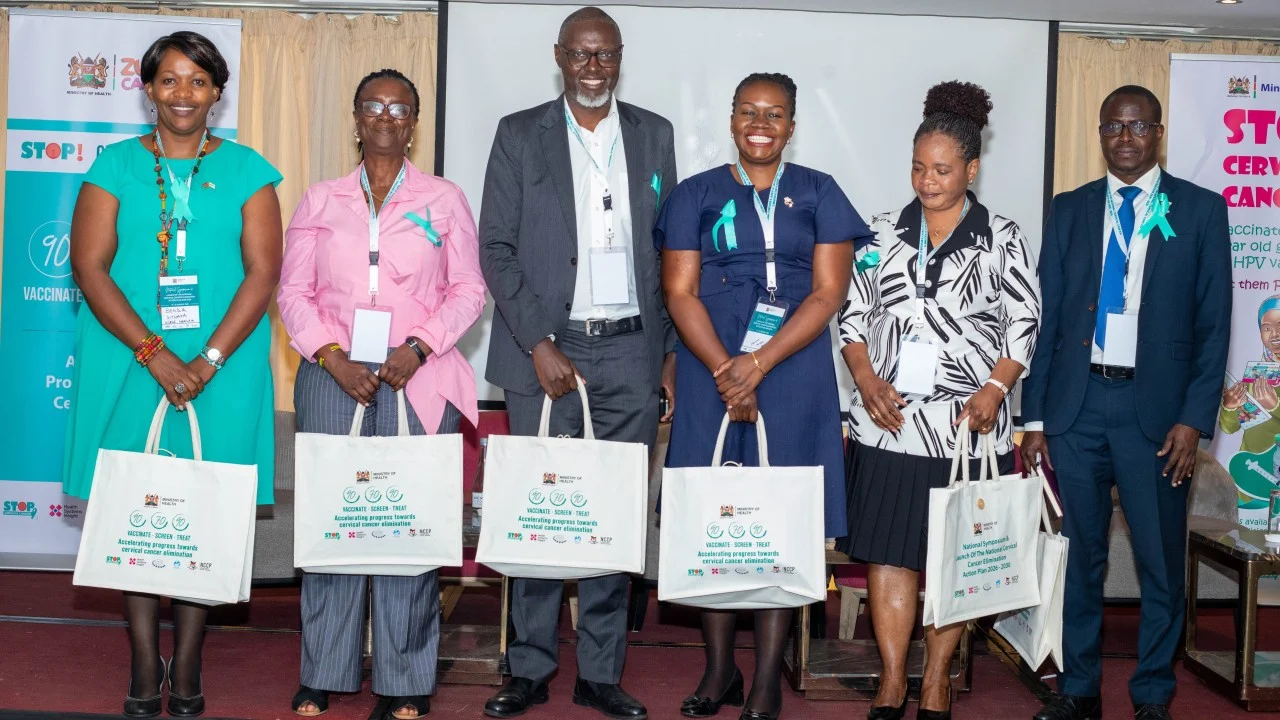
Each Year since 2019, there is a policy dialogue, and this year being no different, we have launched of the MOH National Cervical Cancer Elimination Action Plan (2025 – 2030).
Last week I moderated a high level panel, as I have done each year since 2019 at the start of the STOP Cervical Cancer Working Group by our MOH.
A week later, I have had some reflective moments that demand an honest reckoning with how cervical cancer interventions are designed, funded, and sustained across Africa, and what needs to change, if we are to make any meaningful progress. I now share my innermost thoughts with you dear reader.
The Illusion of Global Progress in Elimination
On paper, cervical cancer elimination is one of the most achievable public health goals of our time. The tools exist. The science is clear. The WHO 90–70–90 targets have created unprecedented political will.
Yet, from the vantage point of communities in Low and Middle Income Countries (LMICs), and at the grassroots where effects of cervical cancer are seen and felt in the most raw form, progress remains fragile.
Women continue to fall through the cracks due to deeply entrenched social, health-system, and socio-economic barriers.
Misinformation, fear, and stigma still deter women from screening. Health facilities face stock-outs, weak referral systems, and inconsistent provider capacity.
Out-of-pocket costs, long distances to access care, and fragmented patient follow-ups lead to late diagnoses and avoidable deaths.
These realities are not theoretical – they are documented daily by CSO actors responding to women who arrive too late, or not at all, and often, people blame the woman for this. Yet one of the most persistent and under-acknowledged barriers is financial: the way funding for cervical cancer programmes is designed and delivered.
The Cost of Community Exclusion – an Honest Analysis of Our Failures
Across Africa, CSOs repeatedly witness a cycle of pilot-traps; I call them ‘pilots without permanence’. Short-term projects that come packaged as the magic silver bullet, introduced as innovations, often creating parallel systems in existing healthcare systems, with limited government and/or community ownership.
Implemented at bullet-speed, to meet donor requirements and publication deadlines.
Then funding ends, trained staff are redeployed, commodities & supplies lapse, and communities are left confused or disillusioned.
The result is fragmentation, duplication, and erosion of trust – especially along patient referral, follow-up, and treatment pathways.
Compounding this problem is a troubling practice: the performative inclusion of CSOs. Global donors invest in LMICs through large international organizations, and require ‘local engagement of CSOs’, which is often reduced to generic letters of support.
These letters are increasingly used as proxies for participation, rather than proof of meaningful involvement in programme design, governance, implementation, or resourcing.
A recent request for a letter of support, absent of any discussion of roles, budgets, or decision-making capacity, triggered me enough to write this article.
By the way, this was not an isolated incident – in my 15 years of advocacy, I have written countless letters of support, and the next time I hear about any of these projects is when I spot the publication online.
So much for ‘we will engage once awarded’, or ‘the meaningful engagement’ that is the magic word that won those grant proposals.
No, this is not unique to me, or us as CSOs, it is a reflection of a systemic issue in global health financing:
CSOs and the communities we serve are treated as endorsers, not as system actors. Health interventions is something that happens for them (us), not something we co-create as equal partners!
Reality Check: What Communities Know that Grant Proposals Miss
Across Africa, ACHA member organizations work daily with women facing overlapping vulnerabilities: those living in rural and hard-to-reach areas, women in urban informal settlements, families operating in ‘under-a-dollar-a-day’ low-income households, women living with chronic conditions, or disabilities, some even displaced by war, famine or conflict.
Based on the complexities of life, our women do not experience cervical cancer as a ‘vertical programme.’ They experience it as part of a complex life context shaped by poverty, gender inequality, stigma, and weak systems .
Community-anchored approaches that have proven effective precisely because they address these realities are routinely under-budgeted or excluded from donor proposals, despite being critical to uptake, continuity of care, and long-term impact.
Enough Whining, What Needs to be done NOW?
Across the continent, governments are aligning with elimination targets and seeking high-impact, measurable wins in women’s health.
The recently launched Cervical Cancer Elimination Action Plan in Kenya signals political will and national intent. This is a narrow but powerful window of opportunity to shift from short-term projects to policy-backed, scalable, and community-owned interventions.
Engaging communities should no longer be a tick-box grant proposal requirement, it must become the undeniable recipe for success.
I listened to Pracksidis Wandera speak during the launch, and she elucidated the barriers, burdens, struggles and realities of cervical cancer survivors so well, through a tool we use in KILELE Health, called StoryTellingforImpact, and couldn’t have been more proud of her and all the other mentees who have taken their raw lived experiences, coupled with our training, to shift it to a tool for policy advocacy and community engagement.
But, ask a funder to dedicate some resources to support this training, and majority will say it is not in the workplan. Bottomline, soft skills such as story telling, are not fundable.
What people miss, yet it is glaringly evident; CSOs are uniquely positioned to bridge political commitment with lived realities: translating policy into demand, holding systems accountable, and sustaining engagement long after funding cycles end.
But this can only happen if donors agencies and their grantees move from transactional engagement to true partnership.
Political Will as Africa’s Golden Opportunity: From Endorsement to Investment
Here is my two-cents worth of insights. If cervical cancer elimination targets and momentum is to be sustained beyond 2030, donors must fundamentally rethink how they engage civil society actors.
We must:
Move beyond letters of support to letters of commitment. I believe it is not too far fetched to ask that the proposed CSOs submit that letter directly, or call them and verify their role in the grant, before awarding that grant. We do it when we hire staff, why not when we award millions of dollars to support work?
Put frameworks in place to ring-fence funding meant for CSO-led functions that are essential yet often invisible: community engagement, champions training, demand generation, patient navigation, psychosocial support, survivor engagement, and community-led monitoring and accountability tools.
What if donors put mechanisms in place to verify meaningful CSO engagement at design stage, as well as implementation stage – not through participant lists and group photos at events, but with clear roles, budgets, and governance responsibilities?
Recognize CSOs as long-term system actors, not as peripheral implementers, symbolic stakeholders, or even token feel-good add-ons; but as a strategic safeguard for impact. Who picks the ball once the pilot ends, and what does the sustainability plan say about the ownership beyond the grant cycle?
The bottom-line as I see it: cervical cancer elimination will not be achieved through policy documents, pilots, group photos at conferences, boardroom discussions or press releases alone – even though these do help move the needle forward and we have seen it over time.
For real change to happen, and for us to sustain this movement beyond 2030 to the 2130 goal of elimination, success will be achieved (or missed) at the community level. Where every man, woman and girl must see elimination as a personal call to action – or, mark my words, we will all fail miserably.
As ACHA CSOs, we are already carrying out this work, building movements – often with own limited resources – driven by the urgent need to reduce societal suffering. We have an undying accountability to the women we serve, and what we need is a hand-up, not handouts.
All actors in this space know what needs to be done – Donors, Governments, WHO Agencies, Industry Players – will dismiss this and say that most of what I have written above is not news. I agree somewhat, but we also must agree that January cervical cancer awareness must translate into action all year long, for elimination to be achieved.
What we as CSOs need now is inclusive, equitable, and sustainable funding. We need a clear shift to put civil society at the center – not as a signature on a letter, but as a resourced partner in elimination.
Thank you for reading this far. Let us engage as we bring societal realities to your reflections, to spur action – be more, do more.
Blessings, Benda.”
More posts featuring Benda Kithaka.