






Avirup Guha, Director of Cardio-Oncology at Georgia Cancer Center, shared a post by Tarek Nahle, Postdoctoral Research Fellow at Augusta University, on X:
“Excellent work by team Guha chipping away at prostate cancer disparities. This is one look at SOCIO-Economic position which is one of the SDOH which affects these men. See detailed tweetorial. Also read our work on rurality.”
Quoting Tarek Nahle‘s post:
“New in JNCI Cancer Spectrum Socioeconomic position (SEP) meaningfully predicts cardiovascular (CV) outcomes in men with prostate cancer. We examined how neighborhood disadvantage shapes long-term CV and survival risks
Using SEER-Medicare, we studied 141,242 men ≥65 years with prostate cancer (2009–2017). SEP was assigned using the Yost index at the census-tract level to classify high vs. low SEP neighborhoods.
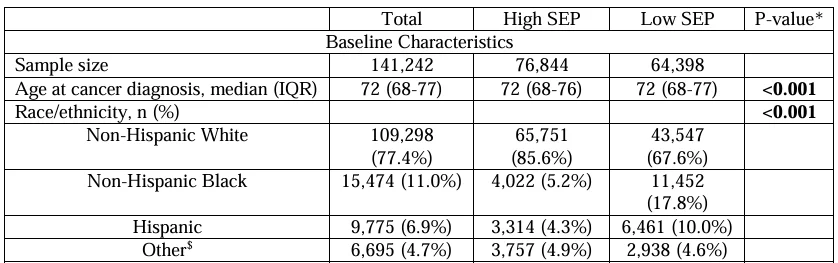
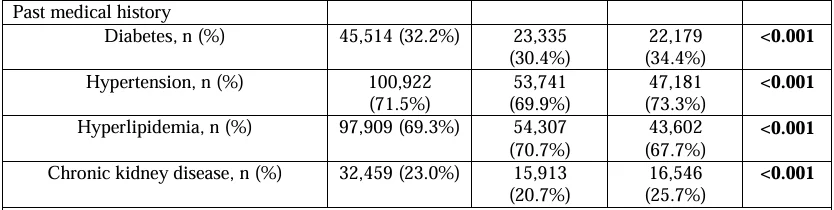
Men in low-SEP areas were more often Black or rural, and had higher rates of diabetes, hypertension, and CKD: factors tightly linked to cardiovascular vulnerability and care access barriers.”
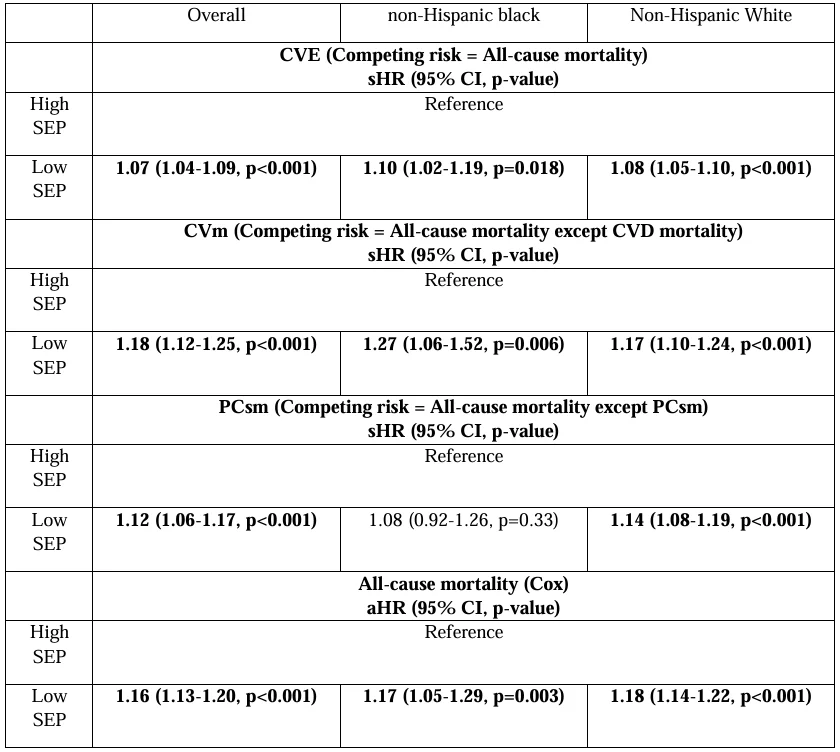
Compared with high SEP, living in low-SEP neighborhoods was associated with: +7% CV events, +18% CV mortality, +12% prostate-cancer specific mortality, and +16% all-cause mortality (competing-risk + Cox models).
Effects were strongest in non-Hispanic Black men and those <75 years, underscoring how structural disadvantage compounds clinical risk. These findings highlight the need for SEP-informed cardio-oncology practices.”
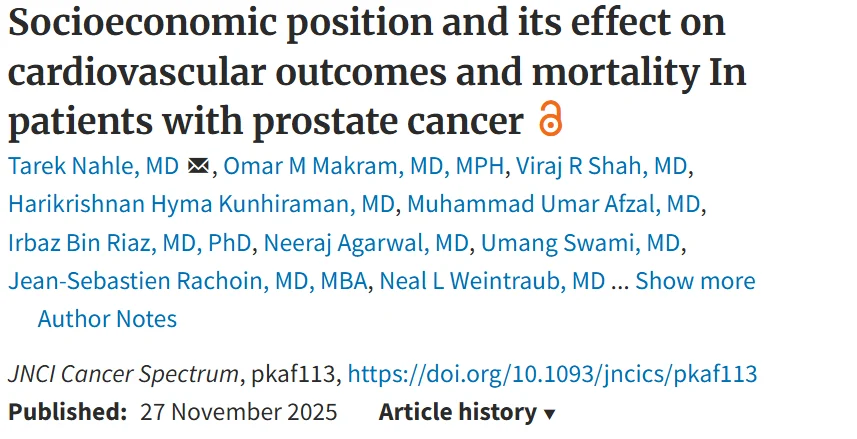
Title: Socioeconomic position and its effect on cardiovascular outcomes and mortality In patients with prostate cancer
Authors: Tarek Nahle, Omar M Makram, Viraj R Shah, Harikrishnan Hyma Kunhiraman, Muhammad Umar Afzal, Irbaz Bin Riaz, Neeraj Agarwal, Umang Swami, Jean-Sebastien Rachoin, Neal L Weintraub, Avirup Guha,
More posts featuring Avirup Guha on OncoDaily.