






Aryabhatta Sadhu, Attending Consultant and Head Transfusion Medicine Fortis Hospital Shalimar Bagh New Delhi at Fortis Healthcare, shared on LinkedIn:
“From Policy to Practice: Key Clinical Takeaways from the National Toolkit for Rational Use of Blood and Blood Components, 2026
Rational transfusion is not about giving less blood.
It is about giving the right component, to the right patient, for the right indication, at the right time.
India’s National Toolkit for Rational Use of Blood and Blood Components, 2026 provides a much-needed framework for standardising transfusion decisions across clinical settings.
The practical message is straightforward:
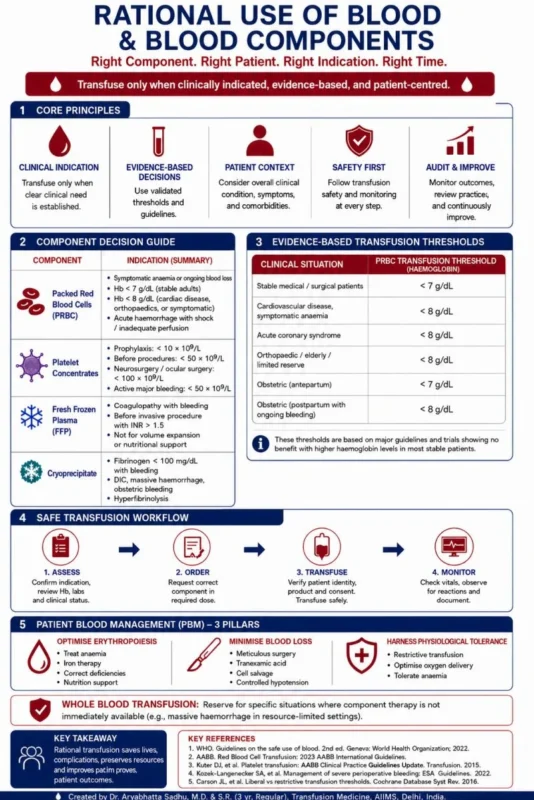
- Transfuse based on clinical need, laboratory evidence and patient context
- Prefer component therapy over routine whole-blood use
- Use restrictive, evidence-based thresholds where appropriate
- Reassess after each transfusion, especially after a single unit of red cells
- Avoid plasma and platelet transfusions without a clear indication
- Integrate Patient Blood Management by treating anaemia, reducing blood loss and improving physiological tolerance
- Strengthen bedside identification, monitoring and reaction reporting
The infographic below condenses the core decision points into a rapid clinical reference for physicians, residents, nurses and transfusion teams.
The larger objective is not only to reduce inappropriate transfusion, but also to improve patient safety, preserve scarce blood resources and make transfusion practice more accountable.”
FDA Approved Subcutaneous Isatuximab: Advancing Anti-CD38 Therapy Delivery in Multiple Myeloma

Other articles about Hematology on OncoDaily.