
Armando Orlandi, Medical Director at the Agostino Gemelli University Hospital Foundation IRCCS, shared a post on LinkedIn:
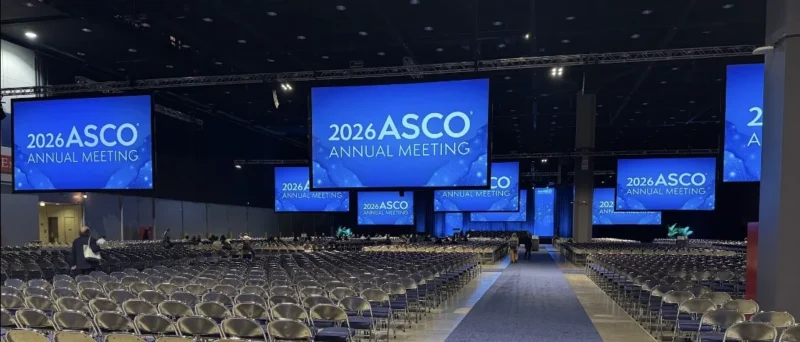
”ASCO26 Breast Cancer Oral Abstract Session – Key Takeaways
30 May
This year’s breast session converged on a single theme: doing more where it matters, and less where it doesn’t. A few highlights worth carrying back into clinic
Genomics to de-escalate chemotherapy (OPTIMA, 500) In high-clinical-risk ER+/HER2− EBC, a PAM50/Prosigna ROR-directed strategy was non-inferior to standard chemo-endocrine therapy (5-yr IBCFS 90.4% vs 91.5%; HR 0.99).
68% safely avoided chemotherapy – including premenopausal women on OFS and patients with N2 disease. A meaningful step away from anatomy – driven decisions toward biology-driven ones.
Building the CDK4/6i and SERD evidence
- NATALEE gene-expression analysis (501): adjuvant ribociclib benefit was consistent across all PAM50 subtypes (HR 0.42–0.77), with no subtype × treatment interaction.
- lidERA BC (502): adjuvant giredestrant improved IDFS regardless of menopausal status (PRE-M HR 0.65; POST-M HR 0.74), with fewer discontinuations vs AI.
Surgical and local de – escalation
- SENOMAC (LBA503): omitting completion ALND for 1–2 SLN macrometastases was oncologically safe (5-yr OS 94.4% vs 93.4%; HR 0.84) and reduced patient-reported arm morbidity.
- AXSANA (505): in 5,262 cN+ patients, axillary response to NACT was driven by tumor biology, not nodal burden- number of involved nodes at diagnosis did not predict ypN0 (p=0.67). Notably, HR+/HER2− tumors reached nodal pCR in only 31%, questioning the rationale of neoadjuvant chemotherapy aimed at axillary clearance in luminal disease.
- PREPEC/OPBC-02 (504): pre-pectoral reconstruction improved 24-month QoL (+4.8 BREAST-Q points) at the cost of higher implant loss/replacement (21.1% vs 14.5%) – a genuine trade-off to discuss with patients.
Escalation where the risk is real
- KEYNOTE-522 final analysis (507): in high-risk early TNBC, neoadjuvant + adjuvant pembrolizumab maintained its survival benefit at ~7.8 years (7-yr OS 85.1% vs 77.2%; HR 0.64).
- Anbenitamab (LBA660): the biparatopic anti-HER2 antibody + nab-docetaxel ± Cb improved tpCR vs THP ± Cb (62.4% vs 51.2%). A promising signal — though benchmarked against the previous standard, while T-DXd → THP (DESTINY-Breast11) has now reshaped the neoadjuvant HER2+ landscape.
- A note of caution (506) A small RCT (n=379) of non-cross-resistant adjuvant chemotherapy in HR+/HER2− residual disease reported a 10-yr OS benefit (89.9% vs 82.9%; HR 0.56). Worth flagging that the primary endpoint (DDFS) was only a trend (p=0.059) and OS was a borderline secondary endpoint (p=0.048) with few events – hypothesis-generating, not practice-changing.
Bottom line: the field keeps refining who truly needs intensification and who can be spared it – with biology, not anatomy, increasingly steering the wheel.”
Other Articles Featuring Armando Orlandi On OncoDaily.