





Allen Li, Medical Oncologist at The Vancouver Clinic and Creator of Oncology AI Lab, shared on Substack:
“A woman with fatty liver is referred for a ferritin of 480. The workup is careful and comes back reassuring: no iron overload, no inflammation behind it, nothing pointing at serious disease. She is told the number most likely reflects her fatty liver and given the usual advice about diet and weight, which is honest and correct. She goes home with a conclusion and no way to weigh it. A few weeks later she is asking a chatbot whether that is really all it is.
The scene is not unusual and not confined to hematology. Rolfe and Burton showed in 2013, across fourteen randomized trials and 3,828 patients, that testing patients at low risk of serious disease did little for their worry or their symptoms. The reassurance was never going to come from the test. Being told is not the same as being shown.
That gap is where much of the enthusiasm for replacing doctors lives. Set aside whether AI can replace a physician. The wish that it would is real, and it reads better as a symptom than as a position to argue with. People reach for AI in the places medicine has stopped showing up: the 2 a.m. worry, the negative result nobody explained, the portal message unanswered for four days, the referral that sits for three weeks. That list is a map of our absences.
None of this is a new observation. About a third of adults have now used an AI chatbot for a health question, and most who do say they were after quick and immediate advice, which says something about availability rather than intelligence. Convenience explains the 2 a.m. question. It does not explain the woman with the ferritin, who asked a machine about a visit she had already had. Affordability is the largest absence of all, and its own essay. The two I can speak to from inside the room are how hard we have become to reach, and how little thinking gets exchanged once someone is in front of us.
Reaching us is the most common complaint I hear, and it is rarely about a diagnosis. It is the machinery: getting the appointment, getting a person on the phone, finding out where a result went. The visit is the best fifteen minutes of a process unreachable on both sides of it, and the physician in the room wears the blame for it.
In oncology I watch the opposite happen. A patient told she has cancer is getting worse news than the ferritin patient ever got, and she is handed far more to work with: a concrete diagnosis, a team, a plan, a schedule, a number that reaches someone. Trust usually follows, and it lasts years. What changed is the delivery model rather than the doctors, where the relationship outlives the transaction.
Oncology is not exempt either. Two or three weeks can pass between the referral and the first real decision, while the patient waits at home and someone chases down the scan report, the outside labs, the molecular sequencing that nobody sent when the tissue was taken. None of that delay is medicine. It is coordination, and part of it still moves by fax in 2026. Every oncologist I know would hand that work to a machine tomorrow, aimed at the legwork rather than the visit.
The other absence runs in both directions: we do not show patients our reasoning, and we do not take in theirs. It hides inside a visit that looks complete. A woman finds a breast mass and arrives knowing roughly what is coming: mammogram, ultrasound, probably a biopsy. When that is exactly what she gets, the visit can feel like a toll booth, a week of waiting to be told to do what she already knew to do. When the workup goes somewhere she did not expect, it can feel like dismissal. Opposite outcomes, same grievance.
Take our own reasoning first. Behind the orders we place in Epic sits work she never sees. Her age and exam findings decide which study comes first and how fast. Her history lifts some diagnoses up the list and takes others off it. What was not ordered was decided too. She sees the order, and the order was always the smallest part of the work.
That reasoning runs forward too. A biopsy has a short list of possible answers, and each one already has a plan behind it. Saying those out loud before she leaves changes what the waiting is made of. She spends it knowing which paths exist and where each leads, which is a different week from the one she would otherwise have had.
Her thinking is the other direction. The idea a patient brings about what is wrong with her can meet three fates. It can be dismissed, the rushed visit’s oldest sin, the test ordered straight over her theory. It can be validated, the chatbot’s documented one, where she is told she is probably right because agreement is the cheapest thing a helpful system can produce, and the cheapest answer is the one that skips the possibility most worth checking. Or it can be put on the differential, the working list of what could explain her findings: named as one candidate among others, given its real weight, and tied to a test that will separate them if appropriate. Only the third puts her thinking and mine in the same room.
When an anemic patient asks whether she should just eat more iron, the answer runs longer than yes or no, and I give her the long one. Anemia can come from poor intake, from bleeding, from the strain of another illness, and sometimes from a problem in the bone marrow where blood is made. Here is how we test each one, and here is what we do at the next visit for each result. We go through it together. Her iron question is not wrong. It is one item on a list she had not seen, and once she sees the list she revises her own expectation rather than having it revised against her.
Patients tell me something several times a week that I filed for years under compliment. They understood the possibilities, the tests, and what came next for each result, explained without jargon or condescension. Then they say they wish more doctors talked like this. I stopped hearing it as praise. Its grammatical target is more doctors, which makes it a complaint with good manners. Any physician who narrates collects that sentence, which is what makes it evidence about the baseline rather than about me. The wish is common, which tells you most visits do not answer it.
‘I wish more doctors talked like this’ and ‘I hope AI replaces doctors’ are one wish meeting different fates. Answered in the room, it leaves as a thank-you. Unanswered, it goes looking for a supplier. Ayers and colleagues found in 2023 that a panel preferred a chatbot’s answers to physicians’ on quality and empathy close to eighty percent of the time. Something else sits in the methods: the chatbot’s replies ran 211 words against the physicians’ 52. Four times the length is not four times the compassion, and nobody tested what those physicians would have written with 211 words and no one waiting. The machine was not kinder. It had more room.
The clearest case I have seen carried no emotion at all. A man came in with a high red cell count, convinced from an AI conversation that his sleep apnea explained it. He does have apnea, he was right that it is a common cause, and I said so. Then I gave him the rest of the list, including a problem in the marrow, and with my suspicion low I still wanted polycythemia vera ruled out. He agreed, and the test was negative. A correct likely answer is exactly the kind that ends a search one item early. What I added was not a better answer. It was knowing what a likely answer leaves unchecked. The AI sent him to me informed and ready to engage. That is triage, and it worked.
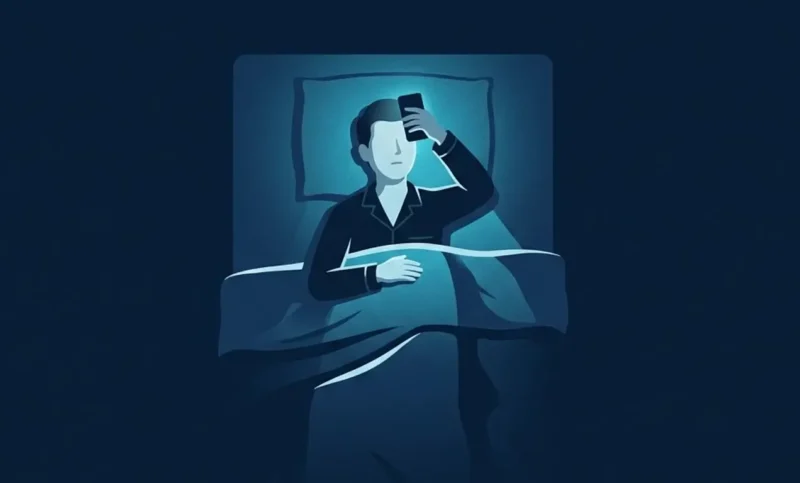
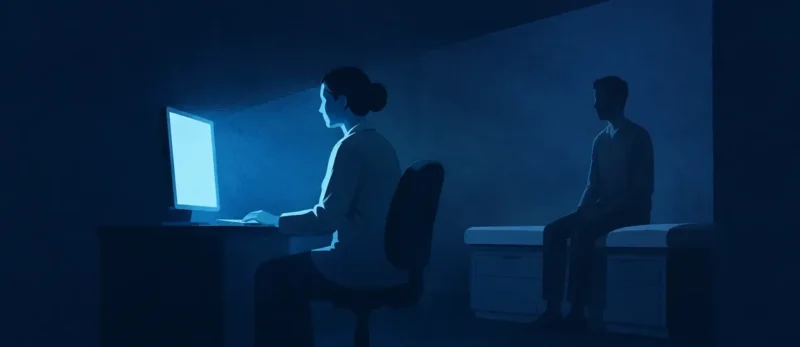
The desire for AI to replace doctors is not, mostly, a judgment that a machine can out-diagnose a physician. It is an old set of wants, to be explained to, to be reached, to not wait blind, to have your thinking taken up. They predate AI by decades, and AI is the first thing offering to meet them. The physician people picture replacing is the one we showed them: the one who orders the test, keeps the reasoning in his head, and barely looks up from the screen while he does it. Click, type, order, next. That physician was trained into existence one unnarrated visit at a time, by a delivery model that priced the reasoning out and left the orders showing. The system trained doctors to behave like machines, and patients went looking for a machine that behaves like a doctor. No one chose the fifteen-minute visit. We inherited it, and our patients met the version of us it produced.
The field keeps asking whether AI will replace doctors. The better question is why so many people, patients and physicians alike, catch themselves hoping something would. The answer is not in the machine. It is in what we stopped doing in the room, and for now it is still ours to start doing again.
I want AI to succeed in medicine. That doesn’t happen by blindly cheering it on. It happens by being honest about where it can improve, and about where we can as well.”
Other articles about AI in Oncology on OncoDaily.