Alexey Kulikov, Head of Partnerships and Operations at World Health Organization, shared on X:
“Worldwide, more than 73.5 million people (adults and children combined) experience serious health-related suffering and require palliative care every year, including 45.9 million prior to and 27.6 million near the end of life.
Thus, most people in need (62.4%) are non-decedents who need palliative care prior to their last year of life. The majority (64.3%) are adults over 50 years old and at least 14.4% are children.
The burden of serious health-related suffering (SHS), and the corresponding need for palliative care, are immense. Yet palliative care is still not accessible by most people in need, especially in low- and middle-income countries.
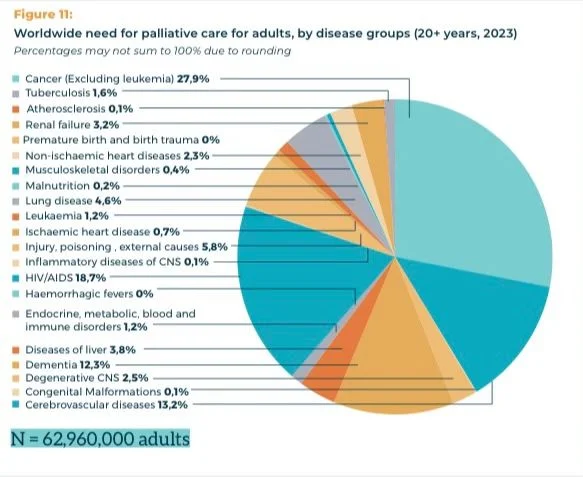
Non-communicable diseases NCDs account for 73.6% of adult palliative care need. Among adults, the health conditions that most account for SHS and generate the greatest need for palliative care interventions are cancer (excluding leukaemia) (27.9%), HIV/AIDS (18.7%), cerebrovascular diseases (13.2%), and dementia (12.3%).
Most adults in need of palliative care (72.9%) live in low- and middle- income countries.”
This also can be interesting:
Supportive Care Is Not an Extra: Why It Belongs at the Center of Cancer Treatment 2026