






Al-Ola Abdallah, Associate Professor and Plasma Cell Disorder Program Director of the Division of HMCT at the University of Kansas Medical Center, shared a post on X about a recent article he and his colleagues co-authored, adding:
“Utility of Neurotoxicity Investigations in CD19 and BCMA CART Recipients with ICANS
Optimizing Neurotoxicity Testing in CAR T-Cell Therapy Recipients
A major retrospective study (n=347) clarifies which neurodiagnostic tests actually help in evaluating ICANS. Spoiler: not all tests are created equal.
Background
- CAR T-cell therapy is transformative for B-ALL, NHL, and MM—but ICANS remains a serious toxicity.
- Guidelines conflict on when to use MRI, CSF studies, or EEG, leaving clinicians uncertain. This study bridges that gap.
Study Snapshot
- 347 adult CART recipients reviewed
- 41% developed ICANS
- Institutional practice: MRI, LP, EEG at Grade 1 or per clinician discretion
- All patients received prophylactic levetiracetam
Diagnostic Yield — The Bottom Line
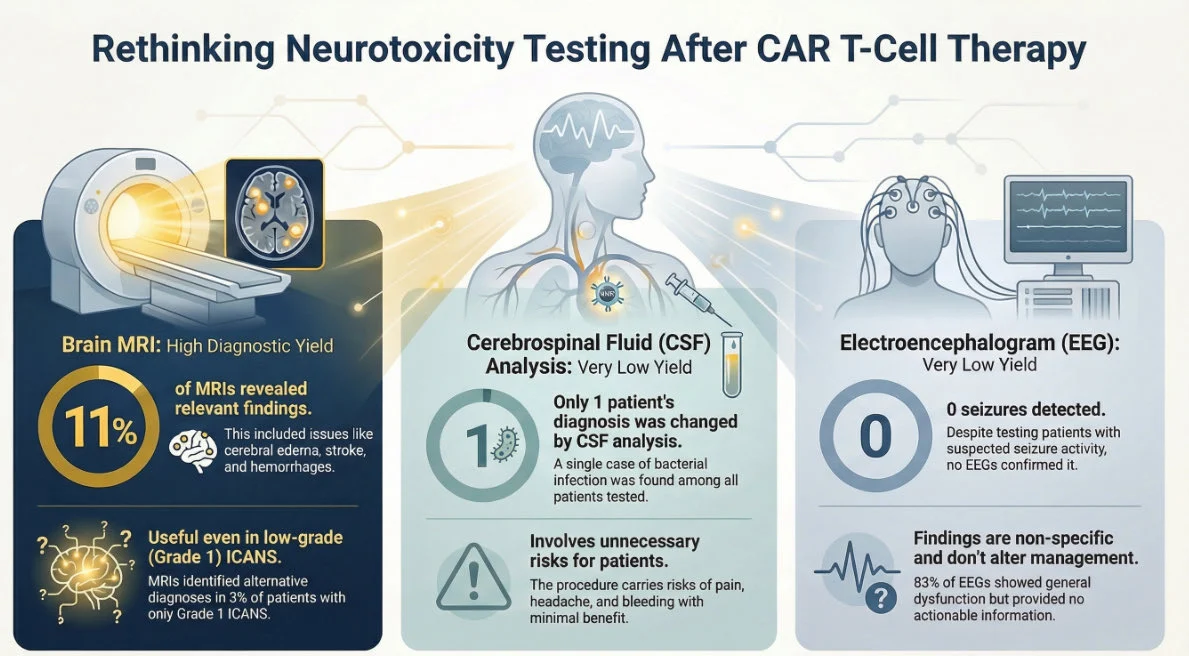
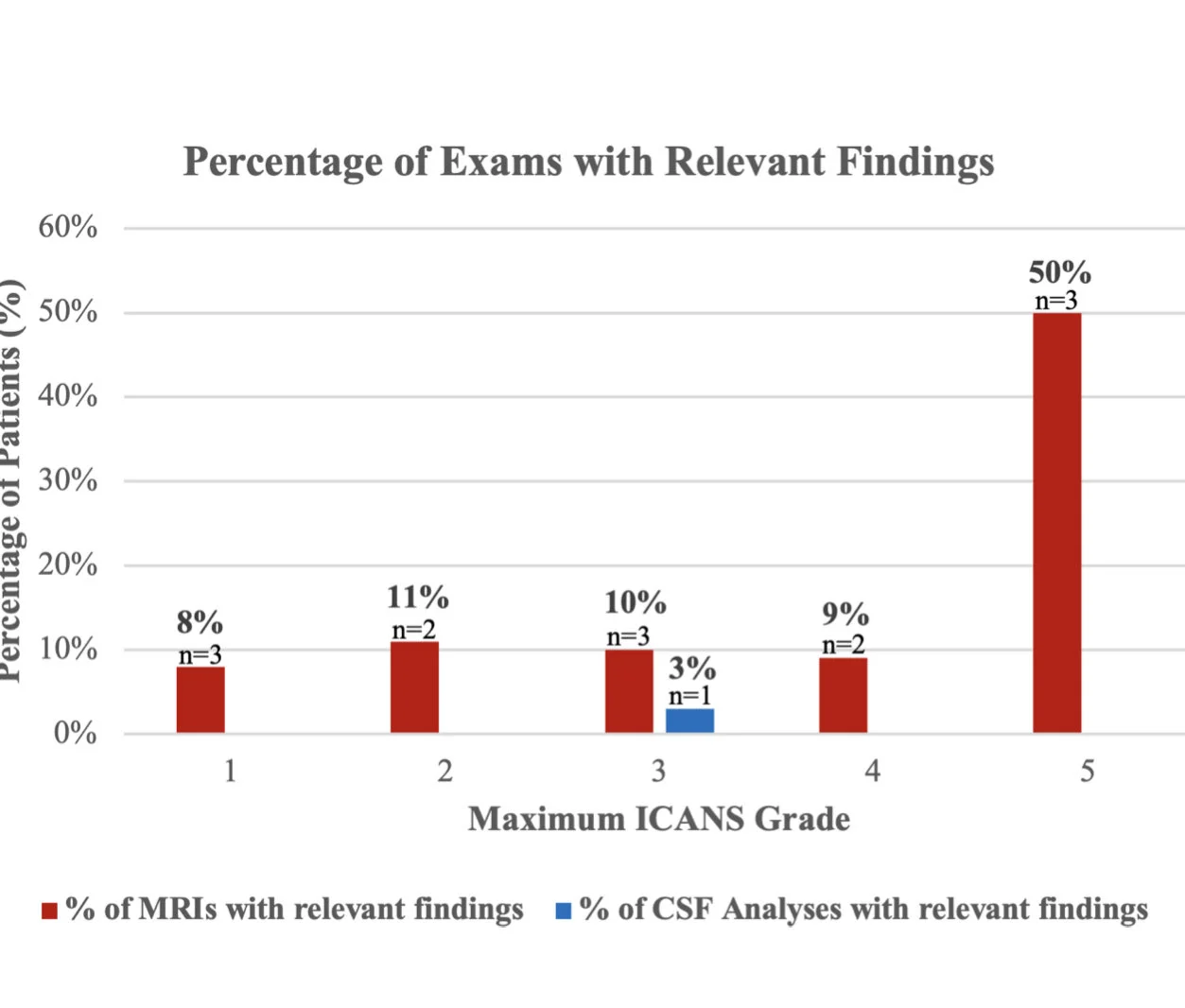
- Brain MRI: High value (11% yield)
- CSF analysis: Very low value (1% yield)
- EEG: Zero seizures detected (0% yield)
MRI Shines
MRI identified alternative diagnoses—even in Grade 1 ICANS.
Findings included edema, new strokes, hemorrhages, hygromas, and FLAIR hyperintensities.
3% of Grade 1 patients had a completely different diagnosis revealed by MRI.
CSF Analysis Falls Short
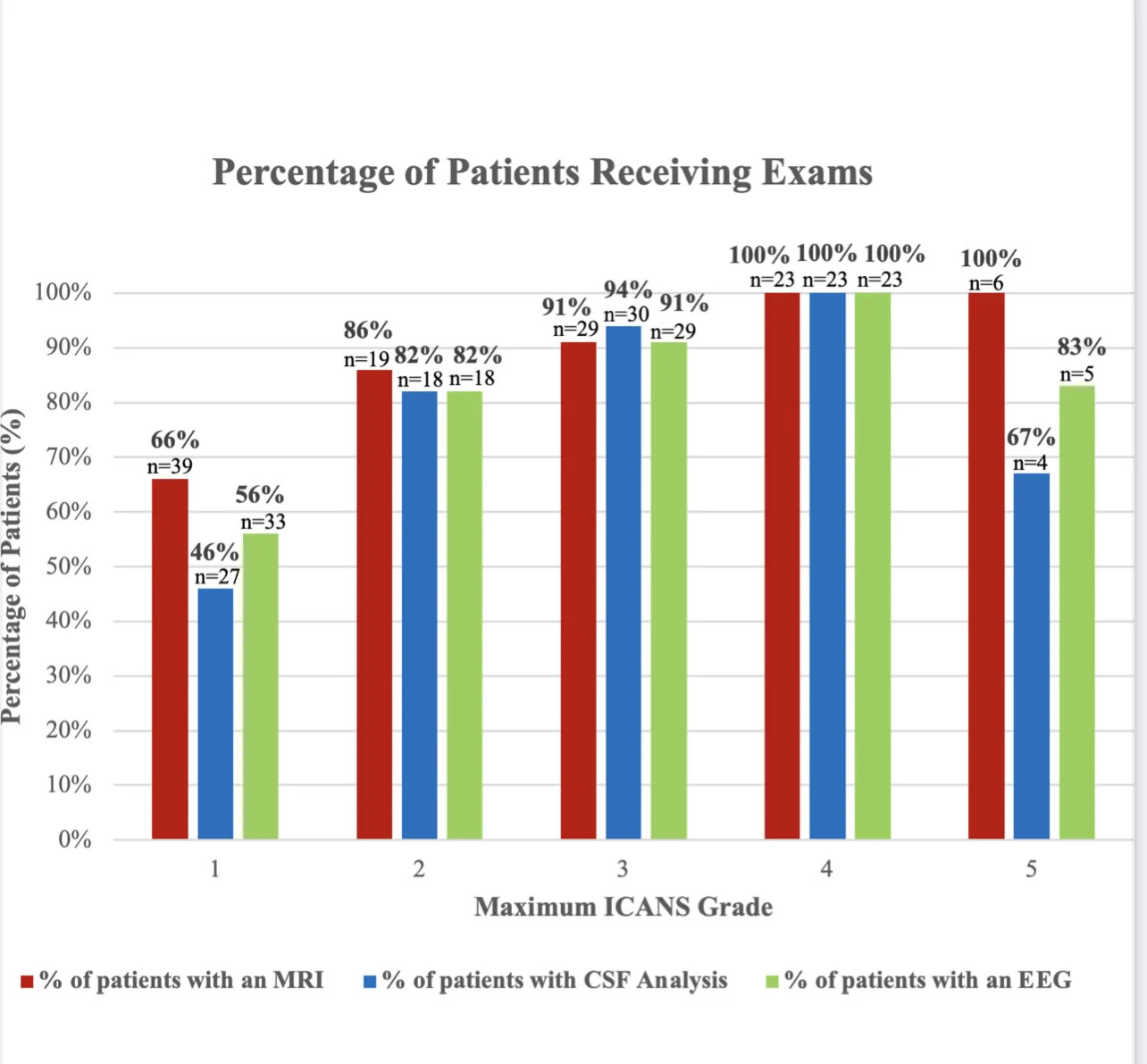
Performed in 72% of ICANS cases, yet only 1 patient had a clinically meaningful result (bacterial infection).
LP risks—headache, pain, bleeding—are nontrivial in cytopenic CART patients.
EEG: Limited Utility
76% underwent EEG.
Seizures detected: 0.
83% showed nonspecific slowing, but none altered management—except 1 case where EEG upgraded ICANS from G3 → G4.
Best use: ruling out NCSE when clinically suspected.
Clinical Implications
- MRI should be first-line for ALL grades of ICANS
- Reserve LP and EEG for:
• persistent Grade 1 symptoms
• Grade ≥2 ICANS
• concern for infection or NCSE
This approach reduces unnecessary procedures and focuses resources where they matter.
Why It Matters
A more selective testing algorithm minimizes risk, reduces delays in care, and better aligns diagnostic workups with actual yield. This is especially important in thrombocytopenic or unstable patients.
Study Limitations
- Single-center (KUMC) retrospective
- Mixed CART products and disease types
- May not generalize to all institutions Still, this is the largest dataset available to date analyzing neurodiagnostic utility in ICANS.
Take-Home for Clinicians
- Use MRI early
- Use LP and EEG thoughtfully
- Prioritize patient safety in the diagnostic workflow
Optimizing neurotoxicity evaluation = better outcomes and smarter resource use.”
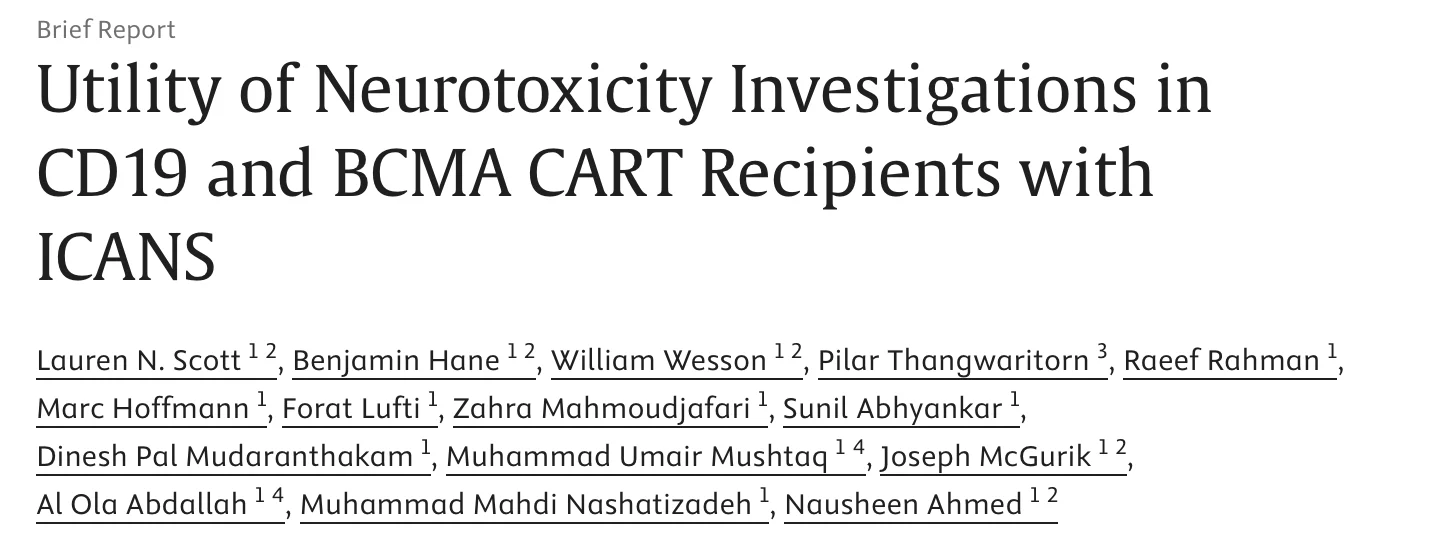
Title: Utility of Neurotoxicity Investigations in CD19 and BCMA CART Recipients with ICANS
Authors: Lauren N. Scott, Benjamin Hane, William Wesson, Pilar Thangwaritorn, Raeef Rahman, Marc Hoffmann, Forat Lufti, Zahra Mahmoudjafari, Sunil Abhyankar, Dinesh Pal Mudaranthakam, Muhammad Umair Mushtaq, Joseph McGurik, Al Ola Abdallah, Muhammad Mahdi Nashatizadeh, Nausheen Ahmed
Read the Full Article on Blood Immunology and Cellular Therapy
More posts featuring Al-Ola Abdallah.