





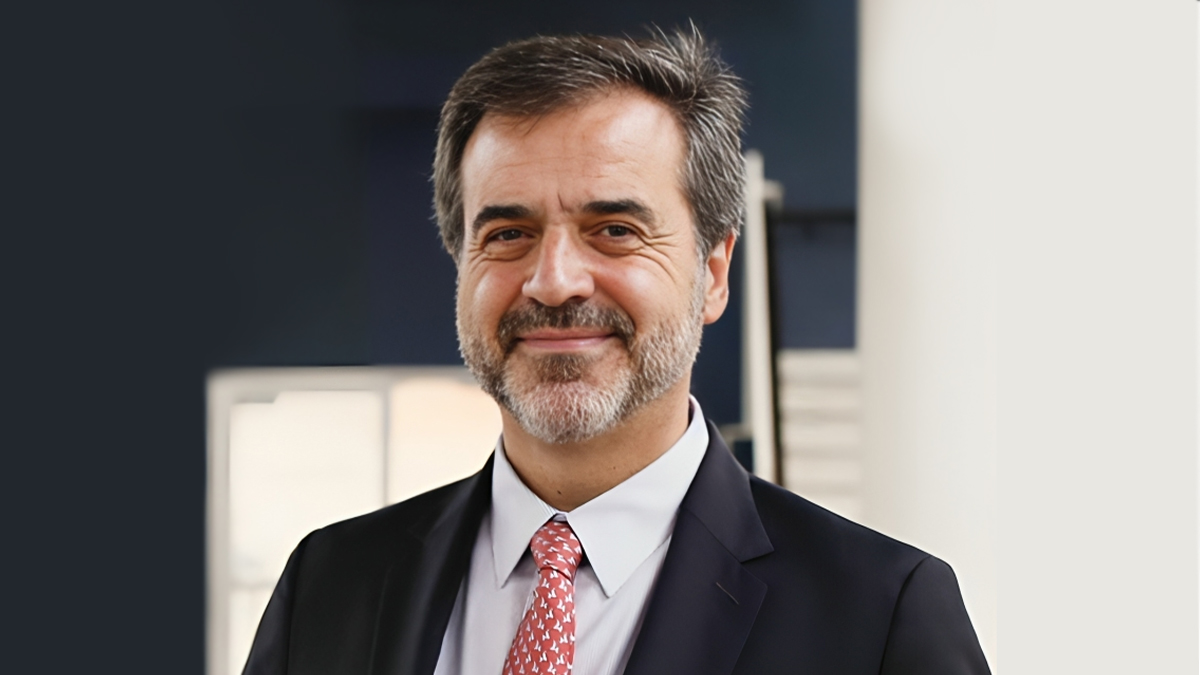
Francisco J. Esteva, Chief of the Division of Hematology and Medical Oncology at Lenox Hill Hospital, shared a post on LinkedIn:
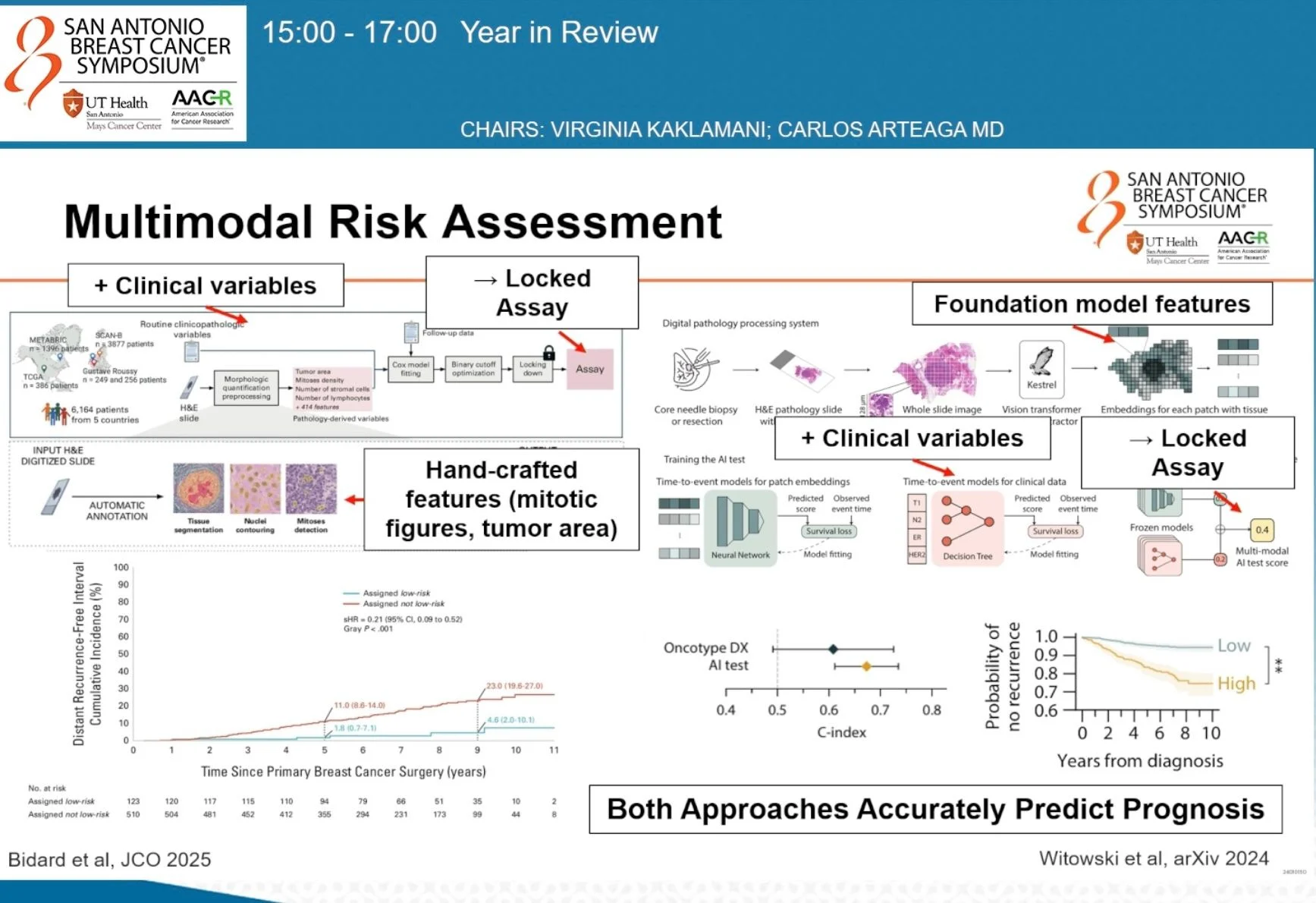
“AI-based tools were a recurring theme at SABCS25, not only for outcome prediction in early breast cancer but also for their emerging role in identifying early signals of response to specific therapies.
What stood out was that very different approaches, traditional pathology-driven features versus foundation models applied to digital slides, converged on similar performance when combined with clinical data and developed as locked assays, both for prognostic assessment and treatment response signals.
For clinicians, this reframes the discussion. The question is no longer whether AI can generate meaningful predictions, but how these tools should be validated against existing assays, where they truly inform therapy selection rather than risk alone, and how to integrate them into care without increasing complexity or overtreatment.”
More posts featuring Francisco J. Esteva.