






Adrian Lee, Director of the Institute for Precision Medicine at UPMC, Professor at UPMC Hillman Cancer Center, and at the University of Pittsburgh, shared a post on LinkedIn:
“Re-imagining precision oncology as a learning system
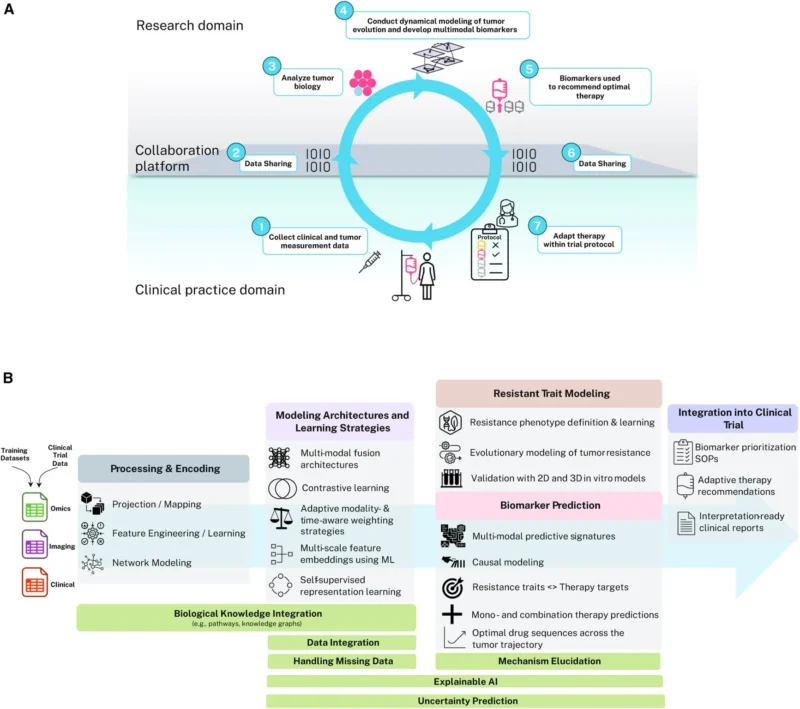
I highly recommend this new Cancer Cell by Cell Press commentary describing ADAPT, the Advanced Research Projects Agency for Health (ARPA-H)–led national initiative designed to detect tumor evolution in real time and adapt treatment accordingly. I am fortunate to be a part of the breast cancer team with the Translational Breast Cancer Research Consortium.
ADAPT moves precision oncology beyond static, baseline biomarkers toward a continuous learning model that integrated longitudinal liquid biopsies (ctDNA), imaging, pathology, EHR data, and interpretable AI to forecast emerging resistance and change therapy before clinical progression.
As I prepare to chair a PMWC – Precision Medicine World Conference track on liquid biopsies, the ADAPT program challenges a passive “watch-and-wait” paradigm. Instead, it operationalizes intervention in real time, using:
- early “delta” biomarkers to identify non-response within weeks
- evolutionary trial designs that allow adaptive switching
- multimodal models that remain biologically interpretable, not black boxes
This is exactly where the field needs to go: from monitoring resistance to intercepting it.
At PMWC, we’ll be discussing how liquid biopsies can directly inform dynamic treatment decisions, and ADAPT provides a compelling blueprint for how this can be done at scale, across institutions, and embedded directly into clinical trials and care pathways.
This is not just better analytics—it’s a new clinical operating system for oncology.
Link to the Cancer Cell commentary.”
More posts featuring Adrian Lee.