





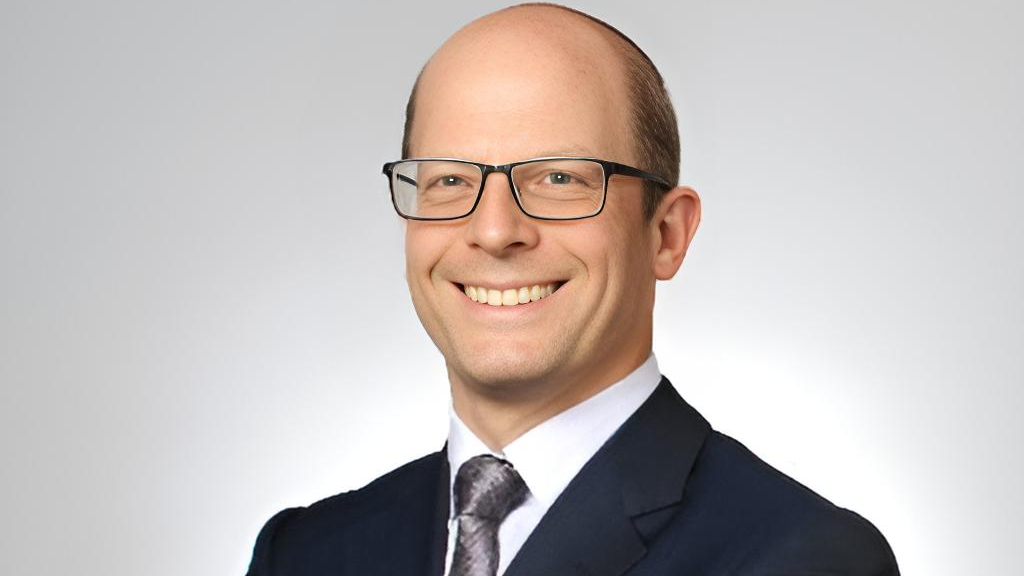
Adam Dicker, Chief Medical Officer of OncoHost and Senior Vice President, Enterprise Radiation Oncology at Thomas Jefferson University Hospitals, shared a post on LinkedIn:
“The hardest part of lung SABR isn’t the radiation. It’s the breath.
Congratulations to Erik Blomain (our faculty! Sidney Kimmel Medical College) and Bill Loo.
Tumors move when patients breathe. Breath-hold techniques reduce that motion – but the standard workflow splits it across two holds: one to verify position on cone-beam CT, another to deliver the beam. Whatever shifts between them quietly erodes the precision you just measured.
A new first-in-human trial (Stanford + Jefferson) tested a different approach: percussive ventilation breath-hold (PVB). A noninvasive ventilator keeps the lungs inflated with rapid, low-volume pulses, so a patient can hold a stable inspiration long enough to image and treat in a single breath-hold.
This is a feasibility and safety readout – not an outcomes study. Efficacy is being reported separately.
But the mechanism is the point: close the gap between imaging and delivery, and you remove a source of uncertainty that otherwise forces wider margins – and wider margins mean more dose to nearby lung and heart.
Sometimes the advance isn’t a bigger machine. It’s asking the patient to breathe differently.
For SABR programs: where would eliminating inter-breath-hold variability change your margin or fractionation decisions?
Across the first 4 patients:
- Final CBCT verification + delivery completed within a single breath-hold
- 93.5% mean duty cycle (beam-on while inside the gating window)
- ~2.5 min mean delivery per fraction; reproducible across a 4-fraction case
- Only grade 1 events (dry mouth, dizziness), all resolved within 24 hours.”
Title: Single Percussive Ventilation Breath-hold Imaging and Delivery in Lung Tumor Stereotactic Ablative Radiation Therapy: Initial Observations From a Prospective Clinical Trial
Authors: Wilson X. Mai, Kelly Z. Huang, Joyce Kuo, Eefay Wang, Samantha Wong, Alyssa Yauger, Joshua Langer, Dwayne Free, Pilu Gebeyehu, Anoushka Kathiravan, Aneesh Swamy, Kevin Z. Flores, Sarah Merrill, Danelia Sianez-Torres, Anthony Kokinos, Angela Pranoto, Onne Lao, Thomas Guerrero, Harmeet Bedi, Marina Sala, Erik S. Blomain
Read the Full Article.
Other articles featuring Adam Dicker on OncoDaily.