





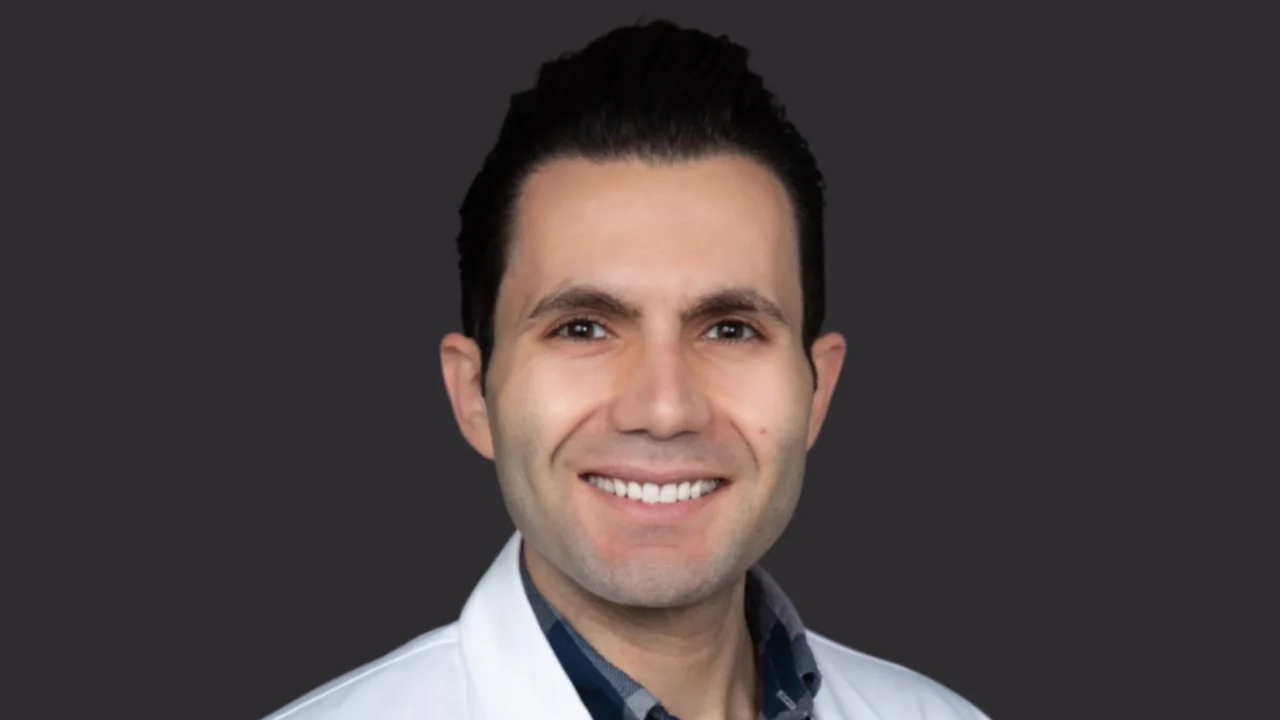
Roupen Odabashian, Hematology/Oncology Fellow at the Karmanos Cancer Institute, shared a post on LinkedIn:
“I’m excited to attend PMWC – Precision Medicine World Conference 2026 this March in Silicon Valley — here’s what I’ll be watching closely in the AI Drug Discovery track.
Why PMWC 2026 Matters
The PMWC – Precision Medicine World Conference is the largest annual event dedicated to precision medicine, co-hosted by Stanford University, University of California, San Francisco, and Yale University. This year’s conference runs March 4–6, 2026 at the Santa Clara Convention Center, featuring 400+ speakers across 12 tracks.
As someone deeply interested in the intersection of AI and medicine, the AI Drug Discovery and Computational Biology track stands out as one of the most compelling sessions to attend.
This Is What I am Excited About:
The track is co-chaired by Alexander Morgan from Khosla Ventures, with confirmed speakers including:
Marc Tessier-Lavigne, Xaira Therapeutics — former Stanford president, leading a well-funded AI drug discovery company
Michael Kahana, Nia Therapeutics — focused on cognitive and neurological applications
This matters. The AI drug discovery space has seen billions in investment but also high-profile failures. The question isn’t whether AI can accelerate drug discovery — it’s whether the current approaches are validated enough to deliver real clinical impact.
The Evidence: What Do We Actually Know?
AI Accelerates Discovery — But By How Much?
AI has fundamentally transformed drug discovery by accelerating timelines, reducing costs, and improving success rates across multiple stages of pharmaceutical development. AI technologies—particularly machine learning (ML), deep learning (DL), and natural language processing (NLP)—are now applied to target identification, lead optimization, de novo drug design, drug repurposing, and clinical trial optimization.
AI uses different types of technologies to discover drugs. Some are traditional methods like random forests and support-vector machines, which are basic pattern-recognition tools. More advanced methods include deep learning systems (CNNs, RNNs, and transformer models), which can analyze complex molecular data. The most exciting are generative AI models (GANs and variational autoencoders), which can actually create brand-new drug molecules by exploring millions of possible chemical combinations and designing compounds with the exact properties scientists are looking for.
Still, critical questions remain:
- How many of these molecules will survive clinical trials?
- What’s the failure rate compared to traditional discovery methods?
Traditional drug development takes 10–15 years and costs billions of dollars to bring a single drug from discovery to market. If AI can meaningfully compress this timeline while maintaining safety standards, the implications are enormous.
The Validation Problem
The challenge is that many AI drug discovery claims remain unvalidated in late-stage trials. As the field matures, we need to see:
- Head-to-head comparisons with traditional discovery methods
- Transparent reporting of failure rates
- Real-world clinical outcomes, not just computational predictions
What PMWC Offer
PMWC 2026 brings together the leading voices in AI-driven drug discovery to address these critical questions. The conference offers:
- Expert validation: Direct access to researchers and clinicians who are testing AI predictions in real-world settings
- Investment insights: Understanding from VCs like Khosla Ventures on which approaches are demonstrating genuine promise
- Cross-pollination: Computational biologists, clinicians, and industry leaders sharing lessons learned from both successes and failures
- Evidence-based discussion: A focus on published data, clinical outcomes, and transparent reporting rather than speculative claims
This is where the rubber meets the road — where AI drug discovery moves from promising algorithms to proven therapeutics.
Where I think AI can be very helpful: AI for Drug Repurposing
While novel drug discovery captures headlines, drug repurposing — identifying new uses for existing approved drugs — may be where AI delivers the most immediate value.
Why Repurposing Matters
Drug repurposing leverages medications that have already been tested for safety, allowing researchers to bypass the most time-consuming and expensive early stages of research. This approach:
- Reduces development time significantly
- Cuts costs dramatically compared to de novo discovery
- Gets treatments to patients faster
What I’ll Be Watching At PMWC
Key Questions to Explore
- Validation metrics: What evidence standards are companies using to prove their AI models work?
- Clinical translation: How many AI-discovered or AI-repurposed drugs have actually reached patients?
- The oncology angle: Why is so much AI drug discovery focused on cancer? (Hint: data availability and clear endpoints)
- Investor perspective: With Khosla Ventures co-chairing, what are VCs looking for before they invest?
Sessions I’m Prioritizing
- AI in Drug Discovery and Computational Biology Track (March 6)
- AI for Clinical Decision Support Systems Showcase (March 5-6)
- Clinical AI & RWE Track — for the real-world evidence perspective
The Bottom Line
AI in drug discovery is at an inflection point. The hype is real, but so is the potential. PMWC 2026’s framing — ‘science, not cosplay’ — suggests a maturing field that’s ready to be held to higher standards.
For me, the most exciting near-term opportunity isn’t necessarily novel drug discovery, but drug repurposing. It’s cheaper, faster, and AI is already demonstrating real clinical impact. The TxGNN model and real-world cases like the adalimumab success story show that this isn’t theoretical — it’s happening now.
I’ll be reporting back from PMWC with insights from the speakers and sessions. Stay tuned.”
More posts featuring Roupen Odabashian on OncoDaily.