Eli Lilly Secures In Vivo CAR-T Platform Through $7 Billion Kelonia Therapeutics Acquisition, Advancing Major Strategic Push Into Hematologic Oncology
Eli Lilly and Company has announced a definitive agreement to acquire Kelonia Therapeutics for up to $7 billion in cash, securing access to what may represent the most commercially viable approach yet to delivering CAR-T cell therapy at scale. The transaction, structured as a $3.25 billion upfront payment with additional milestone-based consideration, positions Lilly to compete directly in a therapeutic modality that has transformed outcomes in hematologic malignancies but has remained constrained by manufacturing complexity, cost, and accessibility. For Lilly, a company whose recent dominance has been defined by its GLP-1 franchise, the Kelonia acquisition represents a continuation of an aggressive strategic pivot toward establishing credible positions across high-value oncology segments.
Kelonia’s In Vivo CAR-T Platform: A Potential Paradigm Shift in Cell Therapy Delivery
Kelonia Therapeutics is a clinical-stage biotechnology company built around a proprietary in vivo gene delivery platform designed to reprogram patients’ T-cells directly within the body to recognize and attack cancer cells. This approach stands in contrast to the prevailing ex vivo CAR-T methodology, which requires harvesting a patient’s cells, engineering them in specialized manufacturing facilities, and reinfusing them following lymphodepleting chemotherapy, a process that can take weeks, cost hundreds of thousands of dollars, and is available only at a limited number of academic medical centers with the infrastructure to manage the logistical and clinical complexity.
Kelonia’s technology uses lentiviral-based particles designed to enter T-cells inside the body, eliminating the need for ex vivo cell manipulation or pre-administration chemotherapy. The lead program, KLN-1010, is an investigational one-time intravenous gene therapy that generates anti-BCMA CAR-T cells targeting multiple myeloma, one of the most common blood cancers and a setting where autologous CAR-T therapies such as ciltacabtagene autoleucel and idecabtagene vicleucel have demonstrated transformative efficacy but remain accessible to only a fraction of eligible patients.
Early clinical results from the Phase 1 trial were presented in the plenary session of the 2025 ASH Annual Meeting, a designation that typically reflects data considered to be of exceptional clinical or scientific significance. Jacob Van Naarden, executive vice president and president of Lilly Oncology and head of corporate business development, called Kelonia’s data “nothing short of remarkable” in an interview following the announcement.
We’re going to be a player in hematology

Jacob Van Naarden/LinkedIn
Strategic Rationale: Lilly’s Methodical Oncology Expansion
The Kelonia acquisition is the latest in a series of oncology-focused transactions that have defined Eli Lilly’s dealmaking activity over the past year. In February, Lilly announced a $2.4 billion agreement to acquire Orna Therapeutics, extending the company’s reach into gene editing, inflammatory bowel disease, and eye disorders. Additional acquisitions, including sleep disorder drug developer Centessa Pharmaceuticals, have further diversified Lilly’s therapeutic footprint beyond the metabolic disease portfolio that has driven its recent revenue growth.
The strategic logic underpinning Lilly’s oncology buildout is straightforward: the company’s blockbuster GLP-1 receptor agonists, tirzepatide (Mounjaro/Zepbound) and other pipeline candidates, have generated extraordinary commercial success, but long-term portfolio sustainability requires investment in high-barrier therapeutic areas where durable competitive advantages can be established. Van Naarden said that outside of multiple myeloma, Lilly plans to use Kelonia’s technology to treat other blood cancers, and possibly solid tumors.
Competitive Context: The Race to Simplify CAR-T Delivery
The in vivo CAR-T space has become one of the most actively contested frontiers in cell therapy development. Multiple biotechnology companies and large pharmaceutical firms are pursuing strategies to eliminate the manufacturing bottlenecks and logistical constraints that have limited the scalability of autologous CAR-T therapies. Approaches under investigation include allogeneic (off-the-shelf) CAR-T cells, which eliminate the need for patient-specific manufacturing, and various forms of in vivo gene delivery that enable CAR-T generation directly within the patient.
Each approach carries distinct trade-offs. Allogeneic CAR-T therapies must contend with the risk of graft-versus-host disease and potential immune rejection, while in vivo platforms must demonstrate that T-cell transduction efficiency, persistence, and tumor control can match or exceed the benchmarks established by ex vivo therapies. The data presented by Kelonia at the 2025 ASH meeting, and the willingness of Lilly to commit up to $7 billion to the platform, suggest that Kelonia may have achieved a level of clinical validation that differentiates it from earlier-stage competitors.
The transaction also reflects a broader recognition within the pharmaceutical industry that cell and gene therapy manufacturing capabilities are becoming strategic assets in their own right. Companies that can internalize next-generation delivery platforms, rather than relying on licensing agreements or external partnerships, retain greater control over long-term commercial terms and product development timelines.
Deal Structure and Timeline
The transaction is expected to close in the second half of 2026, subject to customary regulatory approvals. The milestone-based payment structure, common in acquisitions of clinical-stage biotechnology companies, aligns Lilly’s financial exposure with the successful advancement of Kelonia’s pipeline through clinical development, regulatory approval, and commercial launch. The specific milestones have not been publicly disclosed, but they are likely tied to Phase 2/3 trial readouts, FDA approval, and sales-based thresholds.
At $3.25 billion upfront, the deal represents a substantial premium for a clinical-stage company, reflecting both the strategic value of the platform and the competitive intensity of the current dealmaking environment in cell and gene therapy. For context, the acquisition is among the largest biotechnology transactions announced in 2026 and positions Lilly as a credible participant in a therapeutic modality that is reshaping the standard of care in hematologic malignancies.
Voices from the Field: LinkedIn Reactions to Lilly’s Strategic Move
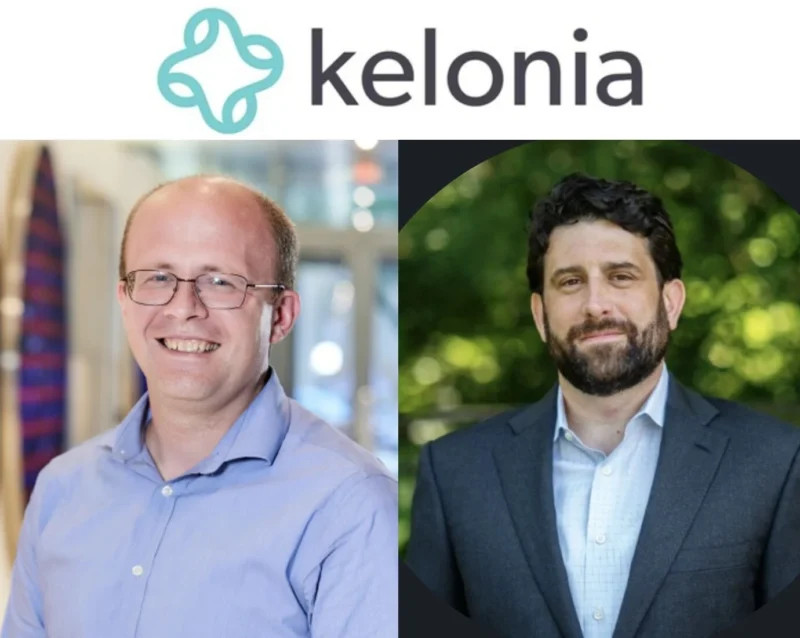
Kevin Friedman, Founder and Chief Executive Officer, Kelonia Therapeutics, reposted Kelonia’s corporate announcement adding the following:
I am beyond thrilled to share that Kelonia has entered into an agreement to be acquired by Lilly.
At Kelonia, we know the potential to democratize CAR-T is closer than ever, and that in vivo CAR T-cell therapy is what will define the future of this field. As a company leading the innovation in this space, we know that Lilly can us help move this incredible platform, our promising treatment for multiple myeloma, and our shared mission around broad, equitable patient access forward to unlock even greater patient impact.
I want to personally recognize Michael Birnbaum for his foundational work that ultimately helped shape Kelonia; Bryan Roberts at Venrock and all of our investors for seeing the potential of our technology and science; our Board for their guidance and sharing of their expertise; our incredible team who has applied steady focus, persistence and rigor to our work; and of course, the patients who inspire this mission.
This is just the beginning of a new and exciting chapter for Kelonia and a massive accelerant for the advancement and development of in vivo CAR T-cell therapeutics.
Mathai Mammen, Chairman and CEO, Parabilis Medicines:
Today is a significant moment for Kelonia Therapeutics, for Kevin Friedman, Michael Birnbaum, and, most importantly, for patients with multiple myeloma and other cancers. Eli Lilly and Company just announced that they intend to acquire Kelonia (see link in comment) for $7B.
I have had the privilege of serving as a board member of Kelonia. I congratulate our amazing CEO Kevin Friedman and his team on this important milestone. Kevin has built the company with clarity of purpose, ambition and discipline.
I also want to congratulate Michael Birnbaum, whose pioneering scientific invention made all this possible.
I also want to say: what an outstanding board. Thoughtful, experienced, engaged, and deeply committed to the mission. It has been a genuine pleasure to serve alongside Bryan Roberts, Kristen Hege, Bob More, Michael, and Kevin. Of great note: Bryan’s pattern recognition and very early support of ideas that will work (while not apparent to most) is absolutely remarkable, and his firm and effective management and mentorship of the company and its leadership is unique. His ability to assemble the right board and manage that board is exemplary.
This moment is also personal. I had a very close friend and colleague die of multiple myeloma. Close family members are physicians that treat multiple myeloma. And a meaningful part of my career has been shaped by the long arc of progress toward helping patients with multiple myeloma, including the great medicines daratumumab, teclistamab, talquetamab, and cilta-cel while leading R&D Johnson & Johnson Innovative Medicine. Each advance has helped move the field forward for patients with a very difficult and devastating disease. And I believe Kelonia’s KLN-1010 has the potential to add meaningfully to that continuum of care.
What is especially compelling here is the ambition of the underlying concept. KLN-1010 is an in vivo anti-BCMA CAR-T therapy intended to treat relapsed and refractory multiple myeloma. The drug is a vector designed to generate CAR-T cells directly in the patient after a single administration. A vector first envisioned by Michael Birnbaum goes in, finds T-cells, and modifies them — enabling those T-cells to find, recognize and kill cancer cells. The goal is to recreate the remarkable efficacy of today’s CAR-T therapies while reducing the complexity that has constrained broader use of ex vivo CAR-T approaches.
If this idea succeeds, it could matter a great deal for patients everywhere who need efficacious and accessible medicines.
Important medicines begin with important ideas – and then require years of 100 correct decisions and teamwork to give those ideas a chance to matter.
A hearty congratulations to Dave Ricks, Daniel Skovronsky, Jacob Van Naarden, and the Eli Lilly team, who intend to advance the Kelonia portfolio toward meaningful medicines.
I am hopeful for patients, for their families, and for the communities who support them every day.
Mathai Mammen/LinkedIn
Lorenz Mayr, Managing Director, BioMedTech Consulting GmbH:
In-vivo CAR-T therapy is making headlines once again.
Today, Lilly announced its acquisition of Kelonia Therapeutics in a deal valued at up to $7 billion, which includes an upfront payment of $3.25 billion. Kelonia’s Phase 1 program, KLN-1010, targets multiple myeloma, alongside several preclinical candidates.
This innovative technology has the potential to transform the treatment of hematological malignancies by eliminating the need for apheresis, custom ex vivo (autologous) cell manufacturing, and lymphodepleting chemotherapy. While initial clinical data are very promising, additional studies are required to evaluate the overall long-term safety and durability of this lentivirus (LV)-based in-vivo therapy.
See also the late-breaking abstract on KLN-1010 presented at ASH 2025, which focuses on anti–B-cell maturation antigen (BCMA) chimeric antigen receptor (CAR)-T cells in patients with relapsed and refractory multiple myeloma (RRMM).
Attached abstract.
Attached abstract.
Bryan Roberts, Partner, Venrock
Kelonia is being acquired by Lilly for up to $7B. The Company’s in vivo CAR-T platform has already produced transformational outcomes for Multiple Myeloma patients and there is enormous potential for so much more in the future.
Venrock seeded the company in December 2020 after 18 months of incubation with Michael Birnbaum of MIT where we continued platform development, attracted leadership in Kevin Friedman, prioritized initial programs, and licensed IP.
The journey was a roller coaster. From the typical manufacturing challenges to failed financings during the biotech nuclear winter (even more so for preclinical, cell therapy businesses…) – Kelonia was a week from fumes on three separate occasions.
The company raised $60M in total equity capital – in contrast to the mega Series A rounds and huge capital consumption so prevalent in the sector today.
This is a story about breakthrough science, amazing leadership and an abundance of hard work.
From our November 2020 Deal Memo (full document attached), our rationale for investing:
“Leaders in the first wave of viral gene therapy have developed transformative medicines for patients with serious diseases – and produced great returns for investors. The next major frontier in gene therapy is cell-type-specific targeting, which will enable therapies that are both durable and easily administered. With card-carrying drug-hunters at the helm and a robust technology platform, Elcano (original name for Kelonia) has the potential to become a dominant player in this next wave of gene therapy.”Congratulations to Kevin, Michael, and the entire Kelonia team. They are in good hands with Lilly.
Outlook
The Eli Lilly–Kelonia Therapeutics transaction is a definitive signal that in vivo CAR-T cell therapy has progressed from a conceptual aspiration to a clinically validated, commercially relevant modality. If Kelonia’s platform can deliver on the promise of simplified, scalable CAR-T therapy without sacrificing efficacy or safety, it may represent one of the most consequential advances in cell therapy accessibility in the past decade. For Lilly, the acquisition is not merely an oncology pipeline expansion,it is a strategic bet that the company best positioned to democratize CAR-T delivery will capture a disproportionate share of the hematologic oncology market over the next ten years.
Read more biotech insights on OncoDaily Biotech.
Written by: Semiramida Nina Markosyan, Editor, OncoDaily Canada