Boehringer Ingelheim will pay SBP Group US$358 million upfront and near-term for options on six preclinical cancer programs, with up to US$7 billion more in milestones. Every program is built on one of oncology’s most competitive technologies: antibody-drug conjugates (ADCs) or T-cell engagers (TcEs).
The strategic multi-program option and license agreement was announced on 4 November 2026. It is the second oncology deal between Boehringer and Sino Biopharmaceutical Limited (HKEX: 01177), which adopted the global brand SBP Group in August 2026. Five programs come from LaNova Medicines (Shanghai) and one from Beijing Tide Pharmaceutical, both SBP subsidiaries.
The new pact reverses the direction of the first. In April 2024, the companies teamed up to bring Boehringer cancer medicines to patients in mainland China. Now Boehringer holds options to take SBP’s science to the rest of the world and, for two programs, worldwide.
Oliver Kast, who heads business development and licensing at Boehringer, called it “deal number 2 with SBP Group,” framing it as the next chapter of an existing relationship between the two teams.
For Boehringer, the deal deepens a deliberate bet on ADCs and TcEs and puts its China strategy into practice. For SBP, it is fresh validation of the in-house R&D engine behind its push into global markets.
The deal at a glance
SBP Group does the early work; Boehringer Ingelheim holds options to take the programs forward. Once agreed clinical milestones are met, Boehringer may exercise options for exclusive development, manufacturing and commercialization rights.
| Term | Detail |
|---|---|
| Agreement | Strategic multi-program option and license agreement |
| Programs | Six biologic preclinical programs based on ADC and TcE technologies |
| Source of programs | LaNova Medicines (Shanghai): five · Beijing Tide Pharmaceutical: one |
| Early development | Led by SBP Group, reportedly through global Phase 1 trials |
| Boehringer’s option | Exclusive development, manufacturing and commercialization rights after agreed clinical milestones |
| Territory | Four programs: worldwide except mainland China, Hong Kong and Macau · Two programs: worldwide |
| Upfront and near-term | US$358 million |
| Milestones | Up to US$7 billion for option exercise, development, regulatory and commercial events |
| Royalties | Tiered, up to double digits, on future product sales |
In total, the agreement is worth up to about US$7.36 billion before royalties. The targets, molecular formats and tumor types have not been disclosed.
The territorial split protects SBP’s home market. On four programs, Boehringer’s options exclude mainland China, Hong Kong and Macau, leaving those markets with SBP. On the other two, the options cover worldwide rights.
What SBP Group brings
SBP Group brings an antibody engine with a track record. LaNova Medicines, the source of five programs, runs discovery platforms for ADCs, T-cell engagers, GPCR targets and tumor-microenvironment-selective antibodies.
Global pharma has bought from LaNova before. AstraZeneca licensed its GPRC5D-targeting ADC LM-305 in 2023 in a deal worth up to US$600 million. In November 2024, Merck paid US$588 million upfront for the PD-1/VEGF bispecific LM-299, with up to US$2.7 billion more in milestones.
SBP then moved to own that engine outright. In July 2025, it agreed to buy the 95.09% of LaNova it did not already hold, for up to about US$951 million. The sixth program comes from Beijing Tide Pharmaceutical, one of SBP’s two long-standing core operating companies alongside Chia Tai Tianqing.
The deal lands in a breakout year for SBP abroad. Sino Biopharmaceutical launched the global brand SBP Group in August 2026, short for Science, Breakthroughs and Patients. Earlier in 2026, it licensed rovadicitinib to Sanofi for up to US$1.53 billion and the inhaled COPD drug TQC3721 to AstraZeneca for up to US$1.9 billion.
As of August, SBP counted four out-licensing deals with multinationals, worth more than US$7 billion in total potential value. The Boehringer agreement alone roughly matches that figure.
Chairwoman Theresa Tse said the partnership
further validates our scientific capabilities in next-generation oncology.

Investors agreed: SBP shares rose about 5% in Hong Kong after the announcement.
Why it fits Boehringer’s playbook
The agreement reads like Boehringer’s oncology shopping list, executed.
Our key focus is on T-cell engagers, as well as ADCs
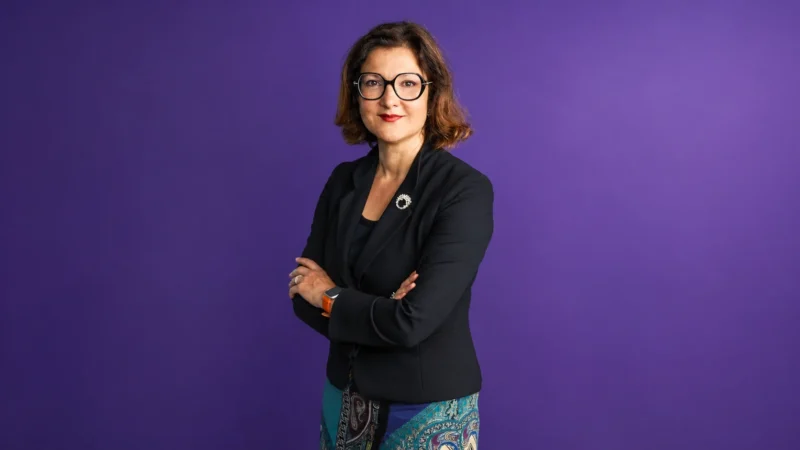
Paola Casarosa/Boehringer Ingelheim
said Paola Casarosa, the board member who heads Boehringer’s Innovation Unit. She added that Boehringer prefers candidates that have not yet entered the clinic, and sees many emerging platforms in China.
Both modalities already anchor its pipeline. Boehringer’s DLL3/CD3 T-cell engager obrixtamig has entered a Phase 3 study in small cell lung cancer. In ADCs, it acquired NBE-Therapeutics in 2020 and licensed a candidate from South Korea’s AimedBio for up to US$991 million in 2025.
The two technologies attack tumors in different ways. ADCs use an antibody to deliver a potent payload more selectively to cancer cells. TcEs activate the patient’s own immune cells and direct them against the cancer.
The deal also puts Boehringer’s China strategy to work. Casarosa said it does so by
“connecting innovation from China with our global research and development capabilities.”
In October 2026, Boehringer opened a China R&D Center in Shanghai’s Zhangjiang Science City, with dedicated early-medicine and external-innovation teams. It aims for Chinese participation in all of its early-stage R&D projects.
The first SBP partnership is already delivering. Zongertinib (Hernexeos), an oral HER2 inhibitor covered by the 2024 agreement, has won approval in China for HER2-mutant non-small cell lung cancer (NSCLC). In May 2026, a further conditional approval extended it to first-line use.
In the U.S., zongertinib became the first oral HER2-targeted therapy for NSCLC when the FDA granted accelerated approval in August 2025.
The bigger picture
The deal rides a record wave of China-sourced innovation. Greater China out-licensing deals reached US$137.7 billion in 2025, nearly ten times the 2021 level, according to Pharmcube data cited by Reuters. In the first half of 2026 alone, deals worth about US$110 billion were signed, per regulator data reported by The Standard.
ADCs sit at the center of that wave. China now accounts for nearly 90% of global ADC licensing activity, according to advisory firm Vision Lifesciences. Competition for next-generation T-cell engagers is heating up too: in October 2026, Roche licensed Zymeworks’ DLL3-targeted trispecific ZW209 for up to US$813 million.
The science still carries real risk. In solid tumors, T-cell engagers have so far succeeded in only a handful of indications, a limit tied to the scarcity of truly tumor-specific surface targets. The option structure is built for that uncertainty: Boehringer pays option-exercise fees only if it opts in after agreed clinical milestones.
What comes next is early clinical work. SBP will advance the six programs through early development, after which Boehringer decides whether to exercise its options. With targets and tumor types still undisclosed, the first clinical trial starts are likely to offer the first public look inside the portfolio.
The stakes are large. Boehringer’s announcement cites about 20.6 million new cancer cases and nearly 10 million cancer deaths worldwide each year.
About the companies
Boehringer Ingelheim is a biopharmaceutical company active in human and animal health, and one of the industry’s top investors in research and development. Founded in 1885 and independent ever since, it has about 54,300 employees serving more than 130 markets.
SBP Group (Sino Biopharmaceutical Limited, HKEX: 01177) is an innovation-driven pharmaceutical group in China with more than three decades of history and over 20,000 employees. It spans R&D, manufacturing and commercialization, with leading positions in oncology, hepatology and cardiometabolic diseases, respiratory and autoimmune diseases, and surgery and analgesia.
Read more on OncoDaily Biotech.