Somewhere in an unnamed country lies the Zone, a forbidden territory created by an unexplained event and sealed off from the outside world. Few know what’s inside it. Fewer are willing to find out. The Stalker guides those who enter in search of the Room, a place said to grant a person’s deepest desire, through abandoned buildings, overgrown ruins, and stagnant water.
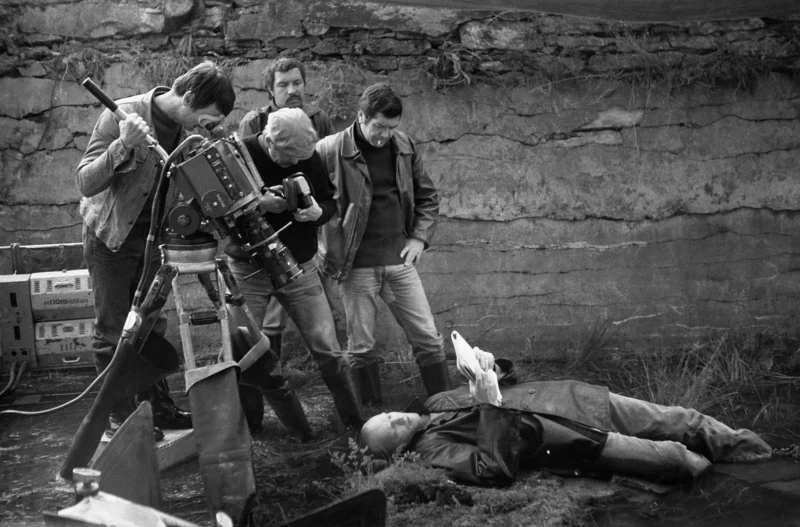
For Andrei Tarkovsky, those ruins were never built. He found them in real landscapes around Tallinn, Estonia, disused industrial sites, rivers, concrete, railway corridors, places visibly marked by decades of industry. He wanted the Zone to feel real. Decades later, that decision became part of another discussion surrounding the film.
Tarkovsky died of lung cancer at 54. His wife and longtime collaborator, Larisa Tarkovskaya, died of lung cancer twelve years later. Anatoly Solonitsyn, who played the Writer, also died of lung cancer. Over time, the three deaths hardened into an unsettling question: were the landscapes that made the Zone so convincing on screen never entirely fiction, did they pose a real hazard to the people who worked inside them?
cinephiliabeyond.org
The Film That Refused to Be Manufactured
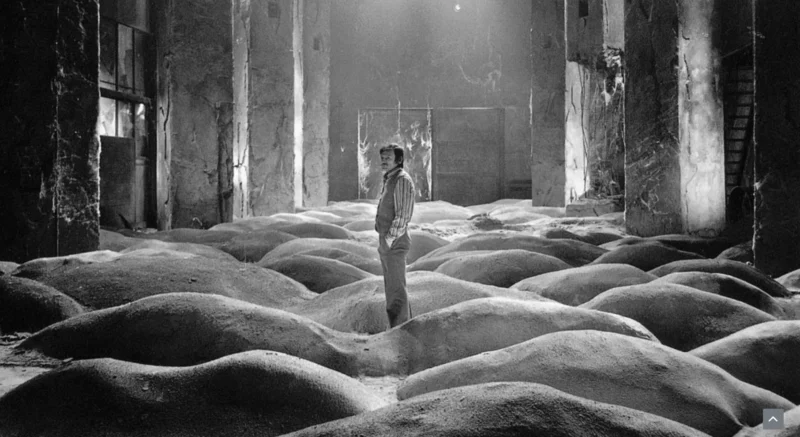
By the mid- 70s, Tarkovsky had little interest in conventional science fiction. Stalker was adapted from the novel Roadside Picnic, but its alien-visitation premise all but disappeared from the film. Tarkovsky became interested instead in the emotional and spiritual weight of the Zone itself, apart from whatever event had supposedly created it.
The Zone in Stalker has no advanced machines, no monumental architecture, no spectacle. Its atmosphere comes from abandoned places that already existed. This wasn’t a budget decision. It was closer to Tarkovsky’s doctrine that cinema should capture the texture of reality. So instead of building the Zone, he searched for it, and the search led to several locations particularly near Tallinn.
But the production ended up spending far longer in those environments than planned. Much of the original footage was ruined during film processing, forcing Tarkovsky to reshoot large portions of the film from scratch.
At the time, this hardship was considered almost entirely in artistic and logistical terms, there’s no evidence that anyone on the production believed they were working somewhere that might threaten their long-term health. Only years later, after illness struck several people closely connected to the film, did these same locations begin to acquire a second history.
What Was Actually There
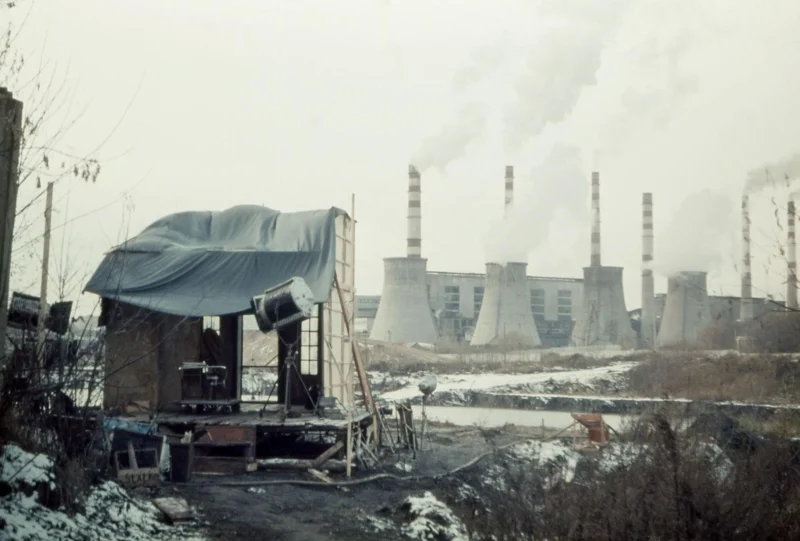
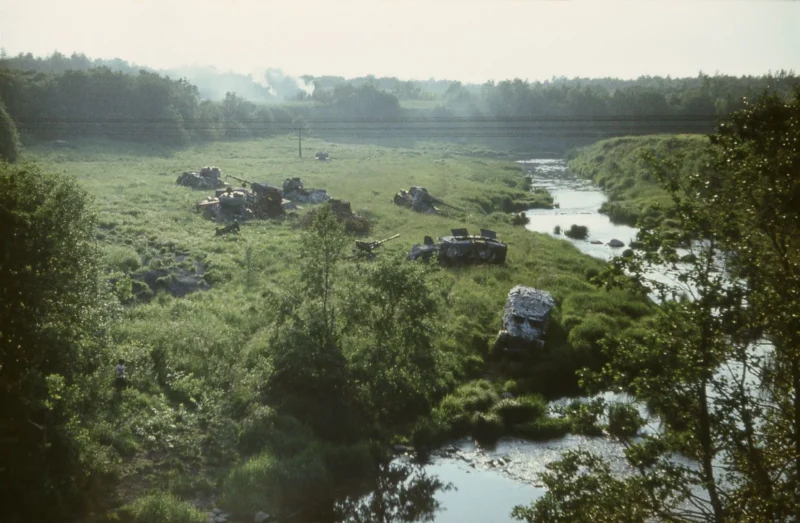
Contrary to the simplified version of the story that circulates now, it wasn’t one contaminated location. Production records and film scholarship point to multiple sites, most notably the area around the former Tallinn Power Plant and stretches of the Jägala River near an abandoned hydroelectric station.
Whether they were hazardous is a separate question, and a harder one. Industrial pollution was common across the Soviet Union in the 70s, environmental regulation varied widely, and contamination of rivers and industrial land was often poorly documented even by the standards of the time. So it’s entirely plausible that some of these sites carried real contamination.
But “industrial” doesn’t tell much about what people actually breathed, touched, or absorbed there, and that gap is where the popular version of this story tends to overreach. Some retellings have described the locations outright as chemical waste dumps, but the language escalated with each retelling, not with new evidence.
The most concrete testimony comes from the sound designer, who recalled industrial effluent being discharged into the Jägala River upstream during filming, with white foam visible on the water in one sequence, and described skin irritation among some crew members. He later linked the contamination to the cancers among those involved in the film, a connection that remained his personal belief.
Assessing Environmental Cancer Risk
Environmental exposure isn’t a single event, it’s a measurable process with components: the specific agent, its concentration, the route by which it entered the body, the duration and frequency of contact, and the individual’s biological susceptibility.
The links between asbestos and mesothelioma, or benzene and leukemia, were established by documenting exposures across large populations, identifying consistent disease patterns, and confirming biological plausibility through experimental and epidemiological evidence. The Stalker case runs backward from that: it starts with disease and tries to reconstruct an exposure decades later.
For lung cancer specifically, inhalation is the relevant route of concern, with most established occupational lung carcinogens associated with sustained or cumulative exposure. Carcinogenesis itself is a cumulative, multistep process: DNA damage that mostly gets repaired, occasional damage that doesn’t, mutations slowly accumulating until regulatory pathways break down.
What Industrial Carcinogens Actually Cause Cancer?
“Chemical pollution” isn’t itself a coherent exposure category. Different carcinogens reach different organs, work through different mechanisms, and produce strikingly different, and specific, cancer patterns.
For lung cancer specifically, established occupational and environmental carcinogens include asbestos, arsenic and inorganic arsenic compounds, chromium(VI) compounds, nickel compounds, beryllium, crystalline silica, diesel-engine exhaust, PAHs, particulate air pollution, and ionizing radiation.
Hexavalent chromium generates reactive intermediates inside cells that damage DNA directly. Arsenic works less as a single mutagen and more by disrupting oxidative stress balance, DNA repair, and epigenetic regulation.
Crystalline silica persists in lung tissue, driving chronic inflammation and repeated macrophage-mediated injury, while inhaled asbestos fibers can remain embedded for decades, promoting oxidative stress and DNA damage alongside sustained inflammation.
Asbestos is associated with both lung carcinoma and malignant mesothelioma. Cigarette smoking markedly amplifies asbestos-associated lung-cancer risk, while it does not appear to increase mesothelioma risk in the same way.
Two other classic carcinogens make the specificity problem unmistakable. Benzene is strongly linked to acute myeloid leukemia and related myeloid disorders, because its metabolites damage hematopoietic stem cells in the bone marrow.
Vinyl chloride, historically encountered in PVC manufacturing, became one of the clearest exposure-disease pairings because it causes hepatic angiosarcoma, a vascular liver malignancy so rare in the general population that even a handful of cases in an exposed cohort was enough to establish causality. It’s also linked to hepatocellular carcinoma.
Latency and the Unanswered Exposure Questions
This matters directly for the Stalker hypothesis. It would need to become something much more specific: was asbestos-containing material deteriorating at the site? Were chromium or nickel compounds aerosolized? Was silica-bearing dust being generated? Were combustion products or diesel exhaust present at significant airborne concentrations?
None of those questions can currently be answered from the surviving production record, and the white foam reported on the Jägala River doesn’t bridge that gap either. Foam can indicate effluent, surfactants, or other contamination, but appearance alone can’t identify the compound. Besides, toxicity and carcinogenicity aren’t synonymous.
Stalker was filmed primarily in 1977-1978, and Tarkovsky was diagnosed in 1985, roughly seven to eight years later. That’s on the short end of the latency typically seen for lung cancers linked to environmental or occupational carcinogens, although the interval alone cannot rule out an environmental contribution. It’s a detail worth weighing.
What the Science Actually Says About the Oil-Shale Connection Specifically
The oil-shale region itself has since been studied, just not the film crew. Long after Stalker was shot, Estonian researchers used national cancer registry data to examine incidence trends in the country’s main oil-shale-industry region in the east, comparing rates there to the rest of Estonia between 1992 and 2015.
That study found a statistically significant elevation in male lung cancer incidence in the oil-shale area relative to the national rate, alongside documented emissions of PM2.5, benzene, phenols, and PAHs from oil-shale combustion and refining, and hazardous, largely unmonitored ash and semi-coke landfills dating to the 1980s and 1990s.
Separate biomarker research on Estonian oil-shale petrochemistry workers, conducted through a European Commission program in the 1990s, measured direct exposure to aromatic mutagens and carcinogens in that workforce.
This is the closest thing that exists to a real evidentiary anchor for the Stalker hypothesis: it confirms that Estonia’s oil-shale industry did produce measurable carcinogen exposure and a detectable cancer signal in people who worked in and around it for years. It says nothing about a film crew that passed through different industrial sites during filming and reshoots, but it establishes that the broader concern wasn’t invented from nothing.
Can This Hypothesis Ever Be Proven?
Epidemiologists have a working framework for judging exactly this kind of claim: the Bradford Hill considerations, which assess an observed association through factors including its strength and consistency, temporality, biological gradient, plausibility, and coherence with existing scientific knowledge.
Biological plausibility isn’t the obstacle, industrial sites can and do contain established pulmonary carcinogens, and prolonged inhalation of several such agents is well linked to lung cancer. The obstacle is that the exposure itself can’t be reconstructed with any precision.
Three cancers among people closely tied to one production is exactly the kind of pattern human attention is built to notice. But asking “would this many cases occur more often than chance?” requires a denominator, the total number of people potentially exposed, and a comparison group.
Other variables can’t simply be set aside. Tobacco smoking remains the dominant risk factor for lung cancer worldwide, and Tarkovsky himself was a smoker. Genetic susceptibility, prior occupational exposures, and ordinary background cancer risk are also unknown.
What Stalker Leaves Behind
Nearly half a century later, the production continues to be approached from two directions. Film scholars return to Stalker as a prominent work of twentieth-century cinema. Physicians, toxicologists, and environmental historians encounter it also as a case study in how difficult it becomes to reconstruct occupational risk once the moment of exposure has passed and no one thought to capture it.
It’s tempting to resolve this into something tidier: a cautionary tale, or a debunking. Neither is honest. It’s more accurate to say: the hypothesis is grounded enough to take seriously, and under-documented enough that it will likely never move past that.
There’s a certain irony in that. In Tarkovsky’s film, the Zone resists straightforward explanation. Those who try to impose one on it discover that appearances reveal very little, and that the Zone cannot simply be outsmarted.
References
- Dyer G. Danger! High-radiation arthouse! The Guardian. February 5, 2009. The Guardian article
- Stalker. Janus Films; The Criterion Collection. Press notes. 2017. Stalker press notes
- Dalton S. Andrei Tarkovsky, Solaris and Stalker. British Film Institute. December 23, 2014. BFI article
- Suton K. ‘Stalker’: Andrei Tarkovsky’s merger of contemplative style and transcendental substance designed to put us in the Zone. Cinephilia & Beyond. Cinephilia & Beyond article
- Idavain J, Lang K, Tomasova J, Lang A, Orru H. Cancer incidence trends in the oil shale industrial region in Estonia. Int J Environ Res Public Health. 2020;17(11):3833. doi:10.3390/ijerph17113833.
- Olsson A, Bouaoun L, Schüz J, Vermeulen R, Behrens T, Ge C, et al. Lung cancer risks associated with occupational exposure to pairs of five lung carcinogens: results from a pooled analysis of case-control studies (SYNERGY). Environ Health Perspect. 2024;132(1):017005. doi:10.1289/EHP13380.
- National Cancer Institute. Asbestos exposure and cancer risk. Bethesda, MD: National Cancer Institute; 2021. NCI fact sheet
- IARC Working Group on the Evaluation of Carcinogenic Risks to Humans. Benzene. IARC Monographs on the Evaluation of Carcinogenic Risks to Humans. Vol 120. Lyon, France: International Agency for Research on Cancer; 2018.
FAQ
Did filming Stalker cause Andrei Tarkovsky’s lung cancer?
There is no evidence strong enough to establish that filming Stalker caused Tarkovsky’s cancer. The hypothesis is plausible in the broad sense that some industrial environments can contain carcinogens, but no measurements exist to show which agents Tarkovsky encountered, at what concentrations, or for how long. His smoking history also represents an important competing risk factor.
Why do people associate Stalker with cancer?
The connection emerged after several people closely associated with the production developed cancer. Tarkovsky, his wife and collaborator Larisa Tarkovskaya, and actor Anatoly Solonitsyn all died of lung cancer. Sound designer Vladimir Sharun later expressed his personal belief that contamination encountered during filming was connected to their illnesses.
Where was Stalker actually filmed?
Many of the Zone sequences were filmed around Tallinn, Estonia, using existing industrial and post-industrial landscapes rather than constructed sets. Locations included areas around the former Tallinn Power Plant and stretches of the Jägala River near an abandoned hydroelectric station.
Can a few cancer cases among people who worked together indicate a cancer cluster?
They can raise a legitimate question, but they do not establish a cluster by themselves. Epidemiologists need to know how many people were potentially exposed, how many cancers would normally be expected in a comparable population, the cancer types involved, individual risk factors, and whether a common exposure can actually be demonstrated.
How long can it take for an environmental exposure to cause lung cancer?
Occupational and environmental cancers can have long latency periods, often developing years or decades after exposure. Tarkovsky was diagnosed approximately seven to eight years after the main Stalker filming period, which is relatively short for many established occupational lung-cancer exposures, although timing alone cannot exclude a contribution.
Does seeing chemical pollution mean that a place is carcinogenic?
No. Toxicity and carcinogenicity are different concepts. A substance can cause acute irritation or other toxic effects without causing cancer, while some carcinogens may produce no obvious immediate symptoms. Establishing cancer risk requires identifying the agent, exposure route, concentration, and duration, not merely observing visible pollution.
Which workplace exposures are known to increase lung cancer risk?
Established occupational and environmental lung carcinogens include asbestos, crystalline silica, arsenic compounds, chromium(VI), nickel compounds, diesel-engine exhaust, polycyclic aromatic hydrocarbons, particulate air pollution, and ionizing radiation. Their risks differ substantially depending on the agent and the intensity and duration of exposure.
Could the Stalker cancer hypothesis ever be investigated more conclusively?
A definitive answer is unlikely because the most important exposure information was never collected. Historical environmental records, archived industrial documents, detailed production schedules, or reliable information about individual risk factors could add context, but reconstructing personal carcinogen doses almost half a century later would be extremely difficult. That is precisely what makes the Stalker story an unusual example of the limits of retrospective environmental epidemiology.