
Spoiler warning: This article discusses Sara Deever’s diagnosis and the ending of Sweet November.
Movies and television can strongly influence how people understand cancer. A diagnosis mentioned in a single scene may shape a viewer’s perception of prognosis, treatment, symptoms, and even what living with advanced cancer looks like. At OncoDaily, we want to look beyond the storyline and bring the oncology details behind the movies into focus—separating what is medically accurate from what has been simplified, dramatized, or left unexplained.
In this OncoDaily film analysis, we revisit the 2001 romantic drama Sweet November and ask a question many viewers are left with: What cancer does Sara actually have, and how realistic is her prognosis? Directed by Pat O’Connor, Sweet November follows Nelson Moss, played by Keanu Reeves, and Sara Deever, played by Charlize Theron. Sara lives an unconventional life and invites Nelson to spend one month with her. As their relationship deepens, Nelson discovers that Sara is living with what the film describes as terminal non-Hodgkin lymphoma.
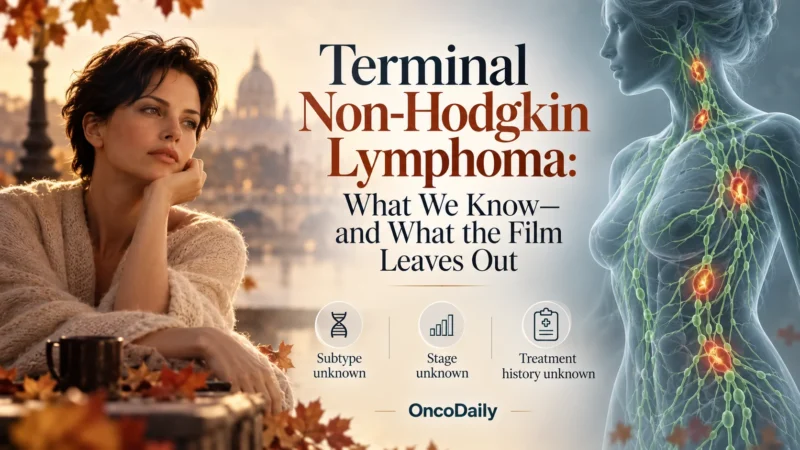
The film uses Sara’s illness to explore love, loss, independence, mortality, and the fear of becoming a burden. However, it provides remarkably little clinical information about her cancer. It does not identify her lymphoma subtype, stage, treatment history, laboratory findings, imaging results, or the medical evidence behind her prognosis. Before looking at Sara’s diagnosis in more detail, it is worth looking at the two actors who brought the story to the screen.
Who Plays Sara and Nelson in Sweet November?
Charlize Theron plays Sara Deever, the free-spirited woman whose terminal cancer diagnosis gradually becomes the emotional center of the film. By the time Sweet November was released in 2001, Theron had already appeared in films including 2 Days in the Valley, The Devil’s Advocate, Mighty Joe Young, and The Cider House Rules. Sweet November also reunited her with Keanu Reeves after the two had previously appeared together in the 1997 film The Devil’s Advocate. Only two years after Sweet November, Theron delivered one of the defining performances of her career as Aileen Wuornos in Monster. She won the Academy Award for Best Actress for the role at the 2004 Oscars.
She later received another Best Actress nomination for North Country and a third for Bombshell. Her career has moved between drama, science fiction, comedy, and major action films.
Among her best-known later performances are Imperator Furiosa in Mad Max: Fury Road, Lorraine Broughton in Atomic Blonde, and Andy in The Old Guard. Theron has also expanded her career behind the camera as a producer, including on Bombshell. Seen in the context of her career, Sara Deever represents an earlier dramatic role for Theron—before Monster transformed her critical reputation and before she became closely associated with physically demanding action characters.
Keanu Reeves as Nelson Moss
Keanu Reeves plays Nelson Moss, an ambitious advertising executive whose carefully structured life changes after meeting Sara. Reeves had already become a major international star before Sweet November. His earlier career included Bill & Ted’s Excellent Adventure, Point Break, My Own Private Idaho, Speed, and The Devil’s Advocate. His career changed dramatically again with his role as Neo in The Matrix in 1999, one of the films most closely associated with him and a landmark in modern science-fiction and action cinema.
After Sweet November, Reeves continued working across romance, drama, science fiction, and action, appearing in films including Constantine, A Scanner Darkly, The Lake House, and later returning to major franchise success as the title character in the John Wick films. Interestingly, Sweet November was not the first time Reeves and Theron played a couple on screen. Four years earlier, they appeared together in The Devil’s Advocate, with Reeves playing lawyer Kevin Lomax and Theron playing his wife, Mary Ann. The supporting cast of Sweet November also includes Jason Isaacs as Chaz Watley, Greg Germann as Vince Holland, Liam Aiken as Abner, Lauren Graham as Angelica, and Frank Langella as Edgar Price.
What is Sara’s diagnosis in Sweet November?
Sara is described as having terminal non-Hodgkin lymphoma. Non-Hodgkin lymphoma, or NHL, is not one single disease. It is a broad group of cancers that begin in lymphocytes, which are immune-system cells. The National Cancer Institute explains that NHL includes many different subtypes, with major differences in how quickly they grow, how they respond to treatment, and whether they can be cured.
The film does not reveal whether Sara has a B-cell or T-cell lymphoma, whether her disease is aggressive or indolent, whether it is newly diagnosed or recurrent, or whether it is localized or widespread. It also does not explain whether the lymphoma involves her lymph nodes, bone marrow, spleen, or other organs. Because these details are missing, Sara’s diagnosis cannot be evaluated as if it were a complete medical case.
Does the Film Identify the Exact Lymphoma Subtype?
No. The film names non-Hodgkin lymphoma but does not provide a specific subtype. This is medically important. Diffuse large B-cell lymphoma, follicular lymphoma, mantle cell lymphoma, Burkitt lymphoma, and T-cell lymphomas can behave very differently. Some grow rapidly and require immediate treatment, while others grow slowly and may be monitored or treated over a much longer period. A medically accurate analysis should therefore not claim that Sara has diffuse large B-cell lymphoma, follicular lymphoma, or another specific subtype unless the film explicitly identifies it.
What Does “Terminal” Mean?
“Terminal” generally means that a disease is not expected to be cured and is likely to shorten a person’s life. It does not necessarily mean that death will occur within an exact number of weeks or months. In real-world oncology, prognosis is usually estimated using multiple factors rather than the cancer name alone. For non-Hodgkin lymphoma, doctors may consider the exact lymphoma subtype, stage, sites of involvement, tumor burden, symptoms such as fever, drenching night sweats and unintentional weight loss, LDH levels, genetic or molecular abnormalities, age, general health, response to treatment, and whether the disease is newly diagnosed, progressing during therapy, or recurrent. The film does not provide these details for Sara.
Is Sara’s Terminal Prognosis Medically Possible?
Yes. Some forms of non-Hodgkin lymphoma can become life-threatening, particularly when they are resistant to treatment, recur after several therapies, or involve vital organs. However, the movie never explains why Sara’s disease is considered terminal.
The National Cancer Institute distinguishes broadly between aggressive and indolent NHL. Aggressive NHL can progress quickly but may also be curable with treatment. Indolent NHL often grows more slowly and can sometimes be controlled for many years, although advanced disease is not always curable. Sara’s terminal prognosis is therefore medically possible, but the film does not provide enough information to determine whether it is realistic for any particular lymphoma subtype.
Is Non-Hodgkin Lymphoma Always Fatal?
No. Non-Hodgkin lymphoma is not automatically a terminal diagnosis. Some aggressive lymphomas can be cured with modern treatment. According to the National Cancer Institute, outcomes vary substantially according to lymphoma subtype, risk group, age, disease biology, and response to therapy.
Some indolent lymphomas may remain controlled for many years but can be difficult to cure when diagnosed at an advanced stage. Other uncommon lymphoma subtypes may have a more serious prognosis. This is why Sara’s story should never be generalized to everyone diagnosed with non-Hodgkin lymphoma.
Could Sara have been cured with today’s treatment?
It is impossible to know from the information provided in the film. A modern hematologist would need to review her pathology, immunophenotyping, molecular or genetic testing, staging scans, sites of disease, previous treatment, response to previous treatment, and overall health. Without these details, it is impossible to determine whether Sara would today be considered curable, treatable with the goal of long-term disease control, or eligible for newer therapies. Modern NHL treatment can include chemotherapy, monoclonal antibodies and other immunotherapies, targeted therapies, radiation therapy, stem-cell transplantation, and cellular therapies such as CAR T-cell therapy. The correct treatment depends heavily on the exact lymphoma subtype.
How Would Sara’s Diagnosis Be Confirmed?
In real clinical practice, diagnosing NHL generally requires examination of tissue, usually obtained through a lymph-node or other appropriate biopsy. A pathologist examines the cells and may use immunohistochemistry, immunophenotyping, cytogenetic testing, fluorescence in situ hybridization, and molecular testing to determine the type of lymphoma. Doctors may also order a complete blood count, blood chemistry tests, LDH testing, and testing for hepatitis B, hepatitis C, or HIV when clinically appropriate.
CT or PET imaging is often used to determine the extent of disease, and bone-marrow examination may be performed in selected cases. Other tests depend on symptoms and suspected organ involvement. The film does not show Sara undergoing this diagnostic process. Instead, the audience meets her after the diagnosis has apparently already been established.
Can Doctors Diagnose Lymphoma From Symptoms Alone?
No. Symptoms such as fatigue, weight loss, fever, night sweats, or enlarged lymph nodes can occur with lymphoma, but they may also result from infections and many other medical conditions. A definitive lymphoma diagnosis generally requires appropriate tissue evaluation together with laboratory, pathology, and imaging studies.
Does Sweet November show typical lymphoma symptoms?
Not in a comprehensive way. Sara remains active, social, and energetic for much of the movie. People with NHL may experience enlarged lymph nodes, unexplained fever, drenching night sweats, unintentional weight loss, fatigue, itchy skin or rash, and chest, abdominal, or bone pain. Symptoms vary according to lymphoma subtype, tumor location, disease burden, and growth rate.
Can someone with terminal cancer look healthy?
Yes. A person with advanced or terminal cancer may sometimes look relatively well, particularly when symptoms are controlled or during periods of clinical stability. Appearance alone cannot reveal cancer stage, treatment response, disease burden, life expectancy, or whether somebody is receiving palliative care. Sara’s active lifestyle therefore does not automatically contradict a serious diagnosis. However, the film significantly simplifies the physical side of advanced lymphoma and does not show many of the complications that can occur in progressive disease.
Does Sweet November explain Sara’s cancer treatment?
No. The film never clearly states when Sara was diagnosed, which treatments she previously received, whether she underwent chemotherapy, whether she received immunotherapy or targeted therapy, whether she experienced a relapse, or whether her lymphoma had become resistant to treatment. It also does not explain why her doctors concluded that the disease was terminal or whether she was receiving palliative or hospice care. This omission makes it impossible to evaluate whether Sara’s treatment history resembles real lymphoma care.
What treatments can be used for non-Hodgkin lymphoma?
Treatment depends on the lymphoma subtype and clinical situation. Depending on the disease, treatment may include chemotherapy, radiation therapy, immunotherapy, targeted therapies, antibody-based treatments, stem-cell transplantation, or CAR T-cell therapy for selected patients with relapsed or refractory lymphoma. Some people with indolent lymphoma may undergo active surveillance rather than immediate treatment, while palliative therapy may be used to relieve symptoms and improve quality of life when cure is not possible. Not every patient receives every treatment. A therapy appropriate for one lymphoma subtype may be ineffective or inappropriate for another.
Can a doctor predict exactly when someone with lymphoma will die?
Usually not. Doctors estimate prognosis using clinical findings, disease biology, response to treatment, and population-level outcome data. Even with extensive medical information, predicting an exact date of death is usually impossible. Films frequently compress this uncertainty because a defined timeline creates dramatic tension. A more scientifically accurate description of Sara’s situation would be: Sara is portrayed as having a terminal prognosis, but the film does not explain how her doctors reached that conclusion or exactly how much time they expected her to have. Some patients live substantially longer than expected, while others deteriorate more quickly.
Does stage determine prognosis by itself?
No. Stage matters, but lymphoma prognosis also depends on lymphoma subtype, disease biology, age, general health, LDH levels, symptoms, molecular characteristics, and response to therapy. A person with advanced lymphoma can sometimes respond very well to treatment, while another patient with apparently less extensive disease may have biologically aggressive cancer. Because Sara’s stage and subtype are unknown, her prognosis cannot be calculated from the movie.
What Does Sweet November Portray Well?
Although the film provides little oncology detail, it explores several emotional issues that can accompany serious illness. These include fear of becoming dependent on others, avoidance of long-term commitments, concern about how loved ones will cope, the desire to maintain independence, anticipatory grief, difficulty discussing prognosis, the search for meaning when time may be limited, and conflict between emotional closeness and self-protection. These experiences can feel emotionally recognizable even though they do not provide a complete representation of living with lymphoma.
Is Sara’s Decision to Leave Nelson typical?
There is no single typical response to terminal illness. Some people become more focused on their relationships after an advanced cancer diagnosis, while others withdraw. Some share almost every detail of their diagnosis with family members and partners, while others prefer to keep parts of their illness private. These decisions can be influenced by personality, culture, family relationships, symptoms, previous experiences, personal beliefs, and the support available. Sara’s decision to leave Nelson is therefore a fictional character choice, not something viewers should interpret as the expected behavior of people with terminal cancer.
What Important Medical Information is Missing?
Almost everything needed to understand Sara’s lymphoma clinically. The film does not provide her pathology results, lymphoma subtype, immunophenotype, genetic findings, stage, PET or CT findings, bone-marrow status, blood counts, LDH level, previous treatments, treatment response, relapse history, current disease burden, palliative-care plan, or information about hospice involvement. These omissions are important. Without them, viewers cannot determine whether Sara’s disease is newly diagnosed, refractory, relapsed, rapidly progressive, or at the end of a long course of treatment. For this reason, Sweet November should be interpreted primarily as an emotional drama involving cancer, rather than as a realistic clinical case study.
Does Sara Die at the End of Sweet November?
The ending strongly implies that Sara is approaching death, but the film does not actually show her death or provide a medical account of what happens afterward. Sara decides to leave Nelson because she believes that allowing him to remain with her as her condition deteriorates would change his memory of their relationship and make her eventual death more painful for him. Nelson is left to process the relationship and how it has changed him. The ending provides emotional closure rather than a clinical description of terminal lymphoma.
Is Separation Always the Best Choice For Someone With Terminal Cancer?
No. There is no universal answer. People with advanced cancer make very different decisions about relationships, communication, treatment, caregiving, independence, palliative care, and end-of-life planning. Some people prioritize spending as much time as possible with loved ones. Others may place greater importance on privacy or independence. These choices are individual and may be supported by oncologists, palliative-care specialists, nurses, psychologists, counselors, social workers, and family members.
What Can We Learn From Sweet November About Cancer?
The most important oncology lesson from Sweet November may actually come from what the film does not tell us. Simply knowing that somebody has “non-Hodgkin lymphoma” is not enough to determine their prognosis. Modern oncology depends on precision: What subtype? What stage? What molecular features? What treatments have been given? How did the disease respond? Without those answers, the word “terminal” tells viewers much less about Sara’s medical story than it initially appears to.
At the same time, the film illustrates how serious illness can reshape a person’s identity, relationships, future plans, emotional intimacy, sense of autonomy, understanding of time, priorities, and quality of life. Those themes are part of cancer care too. Good oncology is not only about treating a tumor. It also involves understanding how cancer affects the person living with it.
What Should Someone With a Real Lymphoma Diagnosis Ask Their Doctor?
Someone diagnosed with non-Hodgkin lymphoma should understand exactly what type of disease they have. Important questions for a hematologist or oncologist include the exact lymphoma subtype, whether the disease is indolent or aggressive, its stage, which organs or tissues are involved, and whether important molecular or genetic features have been identified. Patients may also want to ask which treatments are available, whether the goal is cure, long-term disease control, or symptom relief, how treatment response will be measured, whether a clinical trial may be appropriate, whether palliative care should be involved, and which symptoms should prompt urgent medical attention.
A real lymphoma diagnosis should always be interpreted using the person’s individual pathology and clinical information rather than compared directly with a fictional character. Sara Deever’s cancer diagnosis is central to the emotional power of Sweet November. The film identifies her illness as terminal non-Hodgkin lymphoma, but it does not provide the clinical details needed to evaluate her disease or prognosis. Non-Hodgkin lymphoma encompasses many biologically different diseases. Some aggressive forms can be cured, while some indolent forms can be controlled for many years, and some relapsed or treatment-resistant lymphomas can ultimately become life-threatening.
The most accurate conclusion is therefore: Sweet November presents a fictional woman with terminal non-Hodgkin lymphoma, but it does not explain her exact subtype, stage, treatment history, or the medical basis of her prognosis. The film is emotionally focused rather than medically detailed, and Sara’s experience should not be used to predict the outcome of a real person diagnosed with lymphoma.
For OncoDaily, that distinction is exactly why looking at cancer through film can be valuable. Popular culture can open conversations about diagnosis, prognosis, treatment, relationships, and mortality—but oncology provides the details needed to understand what those stories would mean in real life.
Medical Disclaimer
This article discusses a fictional character and is intended for education and entertainment. It is not a substitute for medical advice, diagnosis, or treatment. Non-Hodgkin lymphoma includes many different subtypes, and prognosis must be assessed individually by a qualified hematologist or oncologist.

You Can Also Read Andy Whitfield’s Final Battle: The Spartacus Star and Stage IV Non-Hodgkin Lymphoma by OncoDaily
References
National Cancer Institute. Lymphoma—Patient Version. Updated August 17, 2026.
National Cancer Institute. Non-Hodgkin Lymphoma Treatment (PDQ®)—Patient Version. Updated February 10, 2026.
National Cancer Institute. Advances in Lymphoma Research. Updated January 24, 2025.
American Film Institute. Sweet November (2001). AFI Catalog of Feature Films.
Academy of Motion Picture Arts and Sciences. The 76th Academy Awards—2004. Charlize Theron won Actress in a Leading Role for Monster.
Academy of Motion Picture Arts and Sciences. The 78th Academy Awards—2006. Charlize Theron nominated for North Country.
Academy of Motion Picture Arts and Sciences. The 92nd Academy Awards—2020. Charlize Theron nominated for Bombshell.
British Film Institute. Where to Begin With Keanu Reeves.
Sweet November. Directed by Pat O’Connor. Warner Bros.; 2001.
FAQ
What cancer does Sara have in Sweet November?
Sara Deever is described as having terminal non-Hodgkin lymphoma. The movie does not identify the exact lymphoma subtype.
Does Sweet November say what type of non-Hodgkin lymphoma Sara has?
No. The film does not specify whether Sara has B-cell or T-cell lymphoma, an aggressive or indolent form, or a particular subtype such as diffuse large B-cell lymphoma or follicular lymphoma.
’s cancer in Sweet November terminal?
Yes. The film describes her disease as terminal, although it does not explain the medical findings that led doctors to that prognosis.
Is non-Hodgkin lymphoma always terminal?
No. Non-Hodgkin lymphoma includes many different diseases. Some aggressive forms can be cured, while some indolent or relapsed forms may be managed for years or become life-threatening.
Could Sara Deever’s lymphoma be treated today?
Possibly, but the film gives too little medical information to know. Treatment would depend on her exact subtype, stage, molecular features, previous therapy, and response to treatment.
What treatments are used for non-Hodgkin lymphoma?
Depending on the subtype, options can include chemotherapy, radiation therapy, immunotherapy, targeted therapy, antibody-based treatments, stem-cell transplantation, CAR T-cell therapy, active surveillance, and palliative treatment.
Does Sara die at the end of Sweet November?
The ending strongly implies that Sara is approaching death, but her death is not shown on screen.
Who plays Sara Deever in Sweet November?
Charlize Theron plays Sara Deever. The role came before her Academy Award-winning performance in Monster.
Who plays Nelson Moss in Sweet November?
Keanu Reeves plays Nelson Moss, the advertising executive who falls in love with Sara.
Were Keanu Reeves and Charlize Theron in another movie together?
Yes. They previously appeared together in The Devil’s Advocate in 1997.
Who directed Sweet November?
Sweet November was directed by Pat O’Connor.
Can someone with terminal lymphoma still look healthy?
Yes. A person with advanced cancer can sometimes appear relatively well, especially when symptoms are controlled or during periods of stability. Appearance alone cannot determine stage or prognosis.