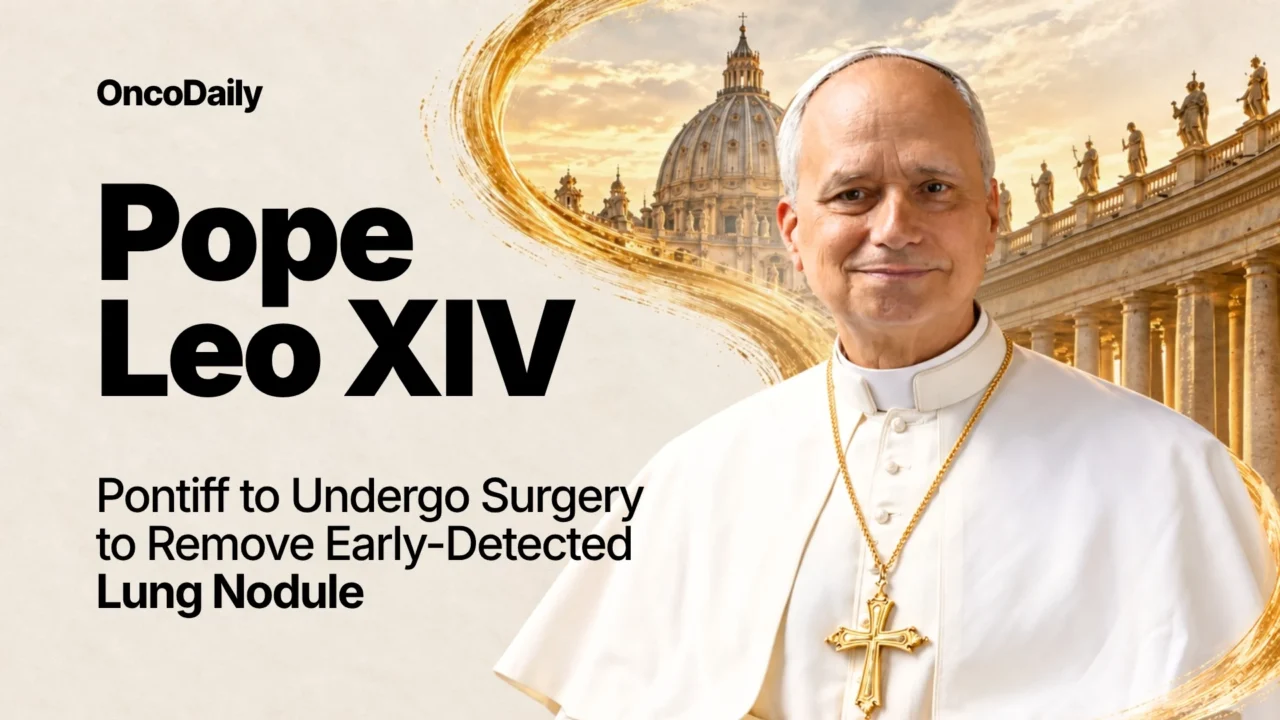
Pope Leo XIV is preparing to undergo surgery to remove a localized nodule from his lung after the abnormality was discovered during recent medical examinations. The 71-year-old pontiff announced the planned procedure himself following the Angelus on October 11, saying doctors had detected the nodule at a “very early stage” and that it was well localized. His medical team recommended surgical removal, and the Pope said he had decided to follow their advice.
The procedure is planned at Rome’s Agostino Gemelli Polyclinic, and the Vatican has estimated that his postoperative hospitalization will last approximately one week. On October 12, the Vatican said Pope Leo is expected to be admitted to the hospital on Tuesday, October 13, in the late morning. The precise timing of the operation itself has not yet been announced. Importantly, the Vatican has not announced that Pope Leo has lung cancer. No biopsy or pathology results have been released, and the nature of the nodule—benign or malignant—remains publicly unknown.
What Did Pope Leo XIV Say About His Lung Nodule?
Speaking to those gathered for the Sunday Angelus in St. Peter’s Square on October 11, Pope Leo said the finding had emerged during recent medical examinations. He explained that doctors had identified a localized nodule in his lung and described it as having been detected at a very early stage and being well localized. According to the Pope, his doctors considered surgical intervention appropriate, and he therefore agreed to an operation to remove it.
He thanked the faithful for their spiritual support and asked for their prayers ahead of the procedure. The announcement represents the first major publicly reported health event of Pope Leo XIV’s pontificate.
When Will Pope Leo XIV Have Surgery?
The operation is scheduled to take place at the Agostino Gemelli Polyclinic in Rome, the hospital closely associated with papal medical care. Initially, Vatican spokesperson Matteo Bruni said the procedure was planned for the first days of the week and that the expected postoperative hospital stay would be approximately one week.
An update on October 12 indicated that Pope Leo is expected to be admitted to Gemelli Hospital on Tuesday, October 13, in the late morning, ahead of the surgery. The Vatican had not, as of October 12, publicly announced the exact time or day of the operation itself. The estimated one-week period refers specifically to postoperative hospitalization. It should not be interpreted as a guarantee that the Pope will have fully recovered or resumed all normal activities within seven days.
What Is a Lung Nodule?
A lung nodule, sometimes called a pulmonary nodule, is a small abnormal area seen within the lung on an imaging examination such as a CT scan. A nodule is a radiological finding—not a diagnosis of cancer. Pulmonary nodules can develop for many reasons. Some are related to previous infections, inflammation, scar tissue, or other benign processes, while others can represent an early lung cancer or another type of tumor.

Photo: Depositphotos
The American Cancer Society describes a lung nodule as an abnormal area in the lung measuring less than approximately 3 centimeters across. These findings are often discovered incidentally when imaging is performed for another reason. The size, appearance, growth pattern, location, and clinical characteristics of a nodule can all help doctors determine how it should be evaluated.
Does Pope Leo XIV Have Lung Cancer?
No lung cancer diagnosis has been announced. This distinction is particularly important. The Pope has described a nodule that was found early and is well localized, but neither the Vatican nor his medical team has publicly identified it as malignant. A lung nodule may be benign or cancerous. Until tissue is examined or doctors release a definitive diagnosis, it would be inaccurate to describe Pope Leo as having lung cancer.
No pathology results, biopsy findings, tumor type, or cancer stage have been disclosed. Similarly, the Pope’s use of the phrase “very early stage” should not be interpreted as a formal cancer stage. Without a confirmed malignant diagnosis, terms such as Stage I lung cancer should not be applied.
Why Are Doctors Removing the Lung Nodule?
The Pope has said only that his physicians considered surgical intervention advisable and recommended removing the nodule. The Vatican has not publicly explained the specific clinical features that led doctors to recommend surgery. In general medical practice, the management of a lung nodule can depend on its size, appearance on imaging, whether it has changed over time, a patient’s age and medical history, and the estimated probability of malignancy.
Some nodules are monitored with repeat imaging. Others may require additional imaging, biopsy, or surgical removal. In Pope Leo’s case, however, those details have not been disclosed. It would therefore be inappropriate to infer why his doctors chose surgery rather than surveillance or another diagnostic approach.
What Type of Lung Surgery Will Pope Leo Have?
The Vatican has not announced the surgical technique that will be used. Operations involving a lung nodule can range from removal of a small portion of lung tissue to larger resections, depending on the nodule’s characteristics and what surgeons find. But there is currently no public information indicating whether Pope Leo will undergo a wedge resection, segmentectomy, lobectomy, minimally invasive thoracic surgery, robotic surgery, or another procedure. Until the Vatican or his medical team provides those details, describing a specific operation would be speculation.
What Is Confirmed About Pope Leo XIV’s Condition?
As of October 12, the central facts remain limited but clear: a localized lung nodule was discovered during recent medical examinations; Pope Leo said it was detected very early and was well localized; his doctors recommended that it be removed; surgery has been planned at Gemelli Hospital; and the Vatican expects approximately one week of postoperative hospitalization. What remains unknown is equally important. The Vatican has not disclosed the nodule’s exact size or imaging characteristics, whether a biopsy has already been performed, whether the lesion is benign or malignant, the planned surgical technique, pathology findings, or a detailed long-term prognosis.
Pope Leo Continues Working Ahead of Surgery
Despite the upcoming procedure, Pope Leo continued his regular schedule on October 12. According to reporting from Reuters, he held several scheduled meetings on Monday as he prepared for hospitalization and surgery. The Vatican’s handling of the announcement has also drawn attention because the Pope disclosed the finding personally rather than allowing speculation about an upcoming hospitalization. Religious leaders around the world have since issued messages of support and prayers for the Pope and the medical team who will perform the operation.
Gemelli Hospital and Papal Medical Care
The Agostino Gemelli University Hospital in Rome has a long history of caring for popes and includes facilities used specifically during papal hospitalizations. Pope John Paul II received treatment there on multiple occasions, and Pope Francis was also hospitalized at Gemelli during his pontificate. Pope Leo’s planned admission therefore continues a long association between the hospital and the Vatican. The Vatican has not announced which surgeons will perform Pope Leo’s operation or provided additional information about his clinical team.
What Happens After the Nodule Is Removed?
One of the most important unanswered questions will be the pathology result. When abnormal lung tissue is surgically removed, microscopic examination can determine what type of tissue is present and whether the lesion is benign or malignant. If a nodule is benign, further treatment may not be required beyond appropriate postoperative care and follow-up. If malignancy were identified, the pathology would help determine the exact tumor type and other characteristics needed to guide subsequent management. None of these possibilities should be assumed in Pope Leo’s case until his medical team or the Vatican releases further information.
Why Early Detection Matters
Whatever the final diagnosis, identifying a small, localized lung abnormality before it has caused significant problems can allow doctors to evaluate and manage it at an earlier point. For lung cancer specifically, earlier-stage disease generally offers more treatment options than disease discovered after it has spread. However, the Pope’s description of the nodule as having been found “very early” should not be transformed into an oncology diagnosis that has not been made public. At present, the appropriate description remains an early-detected, localized lung nodule scheduled for surgical removal.
What We Know as Pope Leo XIV Prepares for Surgery
As of October 12, 2026, Pope Leo XIV has announced that he will undergo surgery to remove a localized lung nodule identified during recent medical examinations. He is expected to be admitted to Rome’s Gemelli Hospital on Tuesday, October 13, with the operation planned for the early part of the week and an estimated postoperative hospitalization of approximately one week. The surgery has not yet been publicly confirmed as completed.
Most importantly, there is currently no publicly confirmed cancer diagnosis. The Vatican has not released biopsy or pathology findings, and whether the nodule is benign or malignant remains unknown. Further information is likely to depend on the operation and subsequent medical assessment. Until then, reporting should remain limited to what has been confirmed: a localized lung nodule was detected early, doctors recommended its removal, and Pope Leo XIV is preparing to undergo surgery.
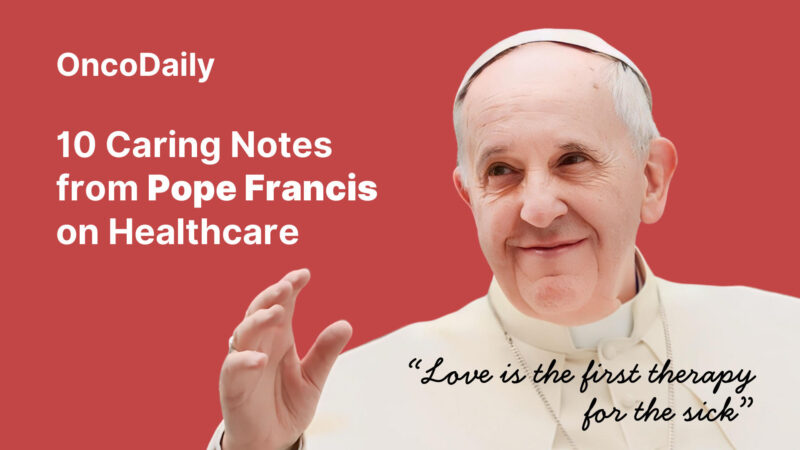
You Can Also Read 10 Caring Notes from Pope Francis on Healthcare by OncoDaily
Written by Aharon Tsaturyan, MD, Editor at OncoDaily Intelligence Unit
FAQ
Does Pope Leo XIV have lung cancer?
No lung cancer diagnosis has been announced. The Vatican has confirmed that Pope Leo XIV has a localized lung nodule that doctors recommended removing, but it has not said whether the nodule is benign or malignant. Vatican News
Why is Pope Leo XIV having lung surgery?
Pope Leo said doctors discovered a localized lung nodule during recent medical examinations and considered surgical removal advisable. The Vatican has not disclosed the specific imaging features or other clinical reasons behind that recommendation. Vatican News
What is a lung nodule?
A lung nodule is a small abnormal area seen on lung imaging, usually a CT scan or chest X-ray. The American Cancer Society defines a lung nodule as an abnormal area measuring up to about 3 cm. A nodule is a finding on imaging and does not automatically mean cancer. Канцер.org
Are lung nodules usually cancerous?
No. Most lung nodules are benign. They can result from previous infections, scar tissue, inflammation, or other non-cancerous causes, although some nodules can represent early lung cancer.
How do doctors know if a lung nodule is cancerous?
Doctors assess factors such as the nodule’s size, shape, growth over time, and appearance on imaging. Depending on the level of concern, evaluation may include repeat CT scans, PET imaging, biopsy, or surgical removal so the tissue can be examined under a microscope.
What type of lung surgery will Pope Leo XIV have?
The Vatican has not announced the exact surgical procedure. It has only confirmed that doctors plan to remove the localized nodule. There is currently no confirmed information about whether the procedure will involve wedge resection, segmentectomy, lobectomy, or another technique.
How long will Pope Leo XIV stay in the hospital?
The Vatican has estimated approximately one week of postoperative hospitalization. That estimate refers to his expected hospital stay after surgery and should not be interpreted as a guarantee that his overall recovery will be complete within one week.
What does “early and well localized” mean for Pope Leo’s lung nodule?
Pope Leo used those words to describe what doctors had found, but they should not be interpreted as a formal cancer stage. Without a confirmed malignant diagnosis and pathology results, terms such as “Stage I lung cancer” would be inaccurate.
What happens after Pope Leo’s lung nodule is removed?
The removed tissue can be examined by a pathologist to determine what the nodule is and whether it is benign or malignant. If it is cancerous, pathology can provide information needed to guide staging and any further treatment. In Pope Leo’s case, no pathology results have yet been released.