Pelé, the legendary Brazilian footballer known as “O Rei” (The King), died of complications from colon cancer on December 29, 2022, at the age of 82. The only player to win three FIFA World Cups, Pelé became a global symbol of football, inspiring generations with his extraordinary talent and unforgettable achievements. Yet behind his remarkable career, the final chapter of his life was marked by a serious illness.
Diagnosed with colon cancer in September 2021, Pelé underwent surgery and chemotherapy before his condition worsened in 2022. Despite ongoing medical care, the disease progressed, ultimately leading to multiple organ failure. His death brought an outpouring of tributes from around the world and renewed attention to colorectal cancer, one of the leading causes of cancer-related death globally.
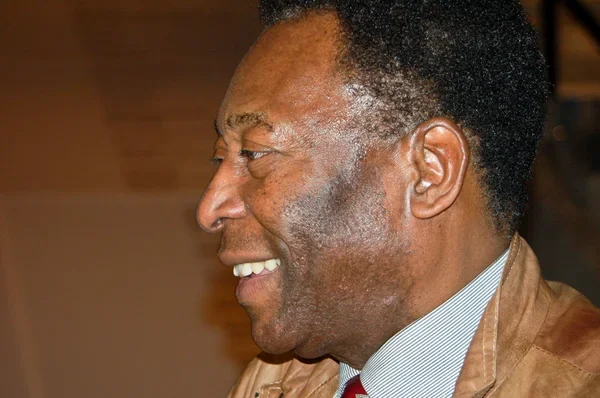
Photo: Depositphotos
From his historic World Cup victories and extraordinary career to his cancer diagnosis, treatment, and final days, Pelé’s story reflects both the legacy of football’s greatest icons and the medical challenges associated with advanced colon cancer.
How Did Pelé Become a Three-Time World Cup Champion?
Pelé’s international breakthrough came at the 1958 FIFA World Cup in Sweden, when he was only 17 years old. Despite his youth, he played a decisive role in Brazil’s first World Cup victory. He scored against Wales in the quarterfinal, completed a hat-trick against France in the semifinal, and scored twice in the final against Sweden. Brazil won the final 5–2, and Pelé became the youngest player to win the men’s FIFA World Cup, a distinction he continues to hold.
His emotional celebration after the final became one of football’s enduring images. Four years later, Pelé was part of the Brazilian team that won the 1962 World Cup in Chile. Although an injury limited his participation, he received his second World Cup winner’s medal as Brazil successfully defended its title. The 1966 tournament in England was far more difficult. Pelé suffered from repeated physical challenges and Brazil was eliminated in the group stage. Yet his greatest international performance was still ahead.
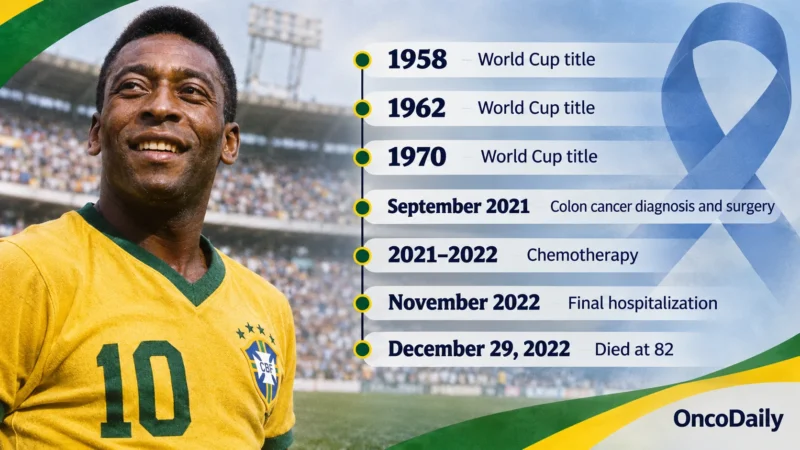
At the 1970 World Cup in Mexico, Pelé led a Brazilian side widely regarded as one of the finest national teams in football history. Playing alongside Jairzinho, Tostão, Rivellino, Gérson, and Carlos Alberto, he helped create an attacking team remembered for its technical brilliance and collective understanding. Pelé scored Brazil’s opening goal in the final against Italy, which Brazil won 4–1. He also contributed to the move that produced Carlos Alberto’s famous fourth goal. The victory gave Pelé his third World Cup title.
He remains the only male footballer to have won three FIFA World Cups as a player: 1958, 1962, and 1970. Across four World Cup tournaments, he scored 12 goals in 14 appearances, securing a place among the competition’s most influential figures.
What Were Pelé’s Greatest Career Achievements and Awards?
Pelé’s accomplishments extended well beyond international football. During his years at Santos FC, from 1956 to 1974, he helped transform the club into a major international force. His achievements included six Brazilian national championships, two Copa Libertadores titles in 1962 and 1963, and two Intercontinental Cups. Santos also dominated the Campeonato Paulista during much of his career, winning ten state championships with Pelé in the team.
After leaving Santos, Pelé joined the New York Cosmos in 1975, bringing international attention to professional football in the United States. His arrival was a defining moment for the North American Soccer League, attracting spectators, media coverage, and commercial interest to a sport that had not yet achieved mainstream popularity in the country. In 1977, the Cosmos won the Soccer Bowl, giving Pelé another major achievement before his retirement.
Pelé’s official scoring statistics vary depending on whether friendly matches and exhibition games are included. Santos records credit him with 1,091 goals for the club across official and friendly matches, while widely cited career totals exceed 1,200 goals. For Brazil, he scored 77 goals in 92 senior international appearances, a record later equaled and surpassed by Neymar.
His influence was recognized through numerous distinctions. In 1999, the International Olympic Committee named him among its Athletes of the Century, despite his never having competed in the Olympic Games. In 2000, FIFA recognized Pelé and Diego Maradona as Players of the Century through separate voting processes. That same year, Pelé received the inaugural Laureus Lifetime Achievement Award. He also received international honors for his contributions to sport, humanitarian initiatives, and football development. Yet no award captured his legacy more powerfully than his three World Cup titles and the cultural influence he exercised far beyond the pitch
How Did Pelé’s Health Change Before His Cancer Diagnosis?
Before his colon cancer diagnosis, Pelé had already experienced several health challenges. In his later years, he underwent hip surgery and developed persistent mobility difficulties that sometimes required assistance when walking. He also experienced hospitalizations for infections and other medical problems, and his public appearances became less frequent. These conditions affected his independence, although he continued communicating with fans through interviews and social media.
It is important to distinguish these earlier health problems from his later cancer diagnosis. There is no reliable public evidence establishing that his orthopedic difficulties or previous infections caused his colon cancer. By 2021, Pelé was 80 years old, and his medical care required consideration of both his cancer and his overall health. This is particularly relevant in oncology, where treatment decisions for older adults depend not only on chronological age but also on physical function, nutritional status, other medical conditions, and the patient’s priorities.
When Was Pelé Diagnosed With Colon Cancer?
Pelé’s colon cancer diagnosis became public in September 2021. He had been admitted to Hospital Israelita Albert Einstein in São Paulo for medical examinations when a tumor was identified in his colon. On September 4, 2021, he underwent surgery to remove the tumor. The operation was a major intervention at an advanced age, and Pelé remained hospitalized for several weeks while recovering. Reports described periods of intensive care and rehabilitation before his condition improved sufficiently for discharge.
On September 30, 2021, the hospital announced that Pelé had been discharged in stable condition and would continue receiving chemotherapy. His diagnosis drew significant international attention. Supporters who had watched his performances decades earlier followed medical updates alongside younger fans who knew him through his legendary reputation. The announcement also highlighted an important reality: colon cancer can occur even in people who have spent much of their lives as elite athletes.
Although physical activity is associated with a lower risk of colorectal cancer, it does not eliminate the possibility of developing the disease. The precise pathological stage of Pelé’s tumor at diagnosis, the findings from his surgical specimen, and his tumor’s molecular profile were not publicly disclosed in sufficient detail to reconstruct his original cancer staging.
What Is Colon Cancer, and How Does It Develop?
Colon cancer is a malignant disease that develops in the large intestine, most commonly from cells lining the inner surface of the colon. It is closely related to rectal cancer, and the two diseases are often discussed together under the term colorectal cancer. Most colorectal cancers are adenocarcinomas, meaning they arise from gland-forming cells in the intestinal lining. In many cases, colorectal cancer develops gradually through a process involving precancerous growths known as polyps. Some polyps acquire genetic and molecular changes over time, allowing abnormal cells to multiply, invade surrounding tissue, and eventually develop into cancer.
However, not every polyp becomes malignant, and not every colorectal cancer follows exactly the same biological pathway. Factors associated with increased colorectal cancer risk include older age, family history, certain inherited genetic syndromes, inflammatory bowel disease, obesity, physical inactivity, smoking, alcohol consumption, and diets high in processed meat. Cancer can develop without a recognizable risk factor.
The disease may initially cause few or no symptoms, which is why screening plays an essential role in identifying precancerous lesions and cancers before they become advanced. As a tumor grows, patients may experience changes in bowel habits, blood in the stool, abdominal discomfort, anemia, fatigue, or unexplained weight loss. The particular symptoms Pelé experienced before his diagnosis were not publicly documented in enough detail to establish how his tumor first developed.
Why Did Pelé Need Surgery and Chemotherapy?
Surgery is a central treatment for many patients with localized colon cancer. The goal is to remove the primary tumor, together with an appropriate segment of the colon and nearby lymph nodes, when clinically feasible. Pelé underwent surgery on September 4, 2021, to remove a tumor from his colon. Following his recovery, he received chemotherapy. Chemotherapy may be recommended after surgery to reduce the risk of recurrence in selected patients, particularly those with stage III disease or certain high-risk stage II cancers. It may also be used to control cancer that has spread beyond the original site.
The treatment can involve combinations of medicines that interfere with cancer cell growth and division. Frequently used regimens in colon cancer include FOLFOX, which combines fluorouracil, leucovorin, and oxaliplatin, and CAPOX, which combines capecitabine with oxaliplatin.
Other chemotherapy combinations may be used for advanced disease. However, Pelé’s exact chemotherapy medicines, doses, treatment schedule, and molecular test results were not comprehensively disclosed to the public. It would therefore be inappropriate to claim that he received a particular regimen. The available reports establish that he underwent surgery and subsequently received chemotherapy, with continuing treatment and follow-up during 2022.
How Did Pelé’s Colon Cancer Progress in 2022?
Throughout 2022, Pelé continued to receive hospital-based cancer treatment. In January, he was briefly hospitalized for treatment related to his cancer. In February, he returned for chemotherapy, during which physicians also identified and treated a urinary infection. He was discharged in stable condition, but further hospital visits followed.
In April 2022, the hospital again reported that his clinical condition was good and stable following another admission for treatment. These updates demonstrated that he remained under active medical supervision. However, reports of disease progression also began to emerge. Brazilian media reported that examinations had identified cancer involvement in additional sites, including the liver and lungs. Some reports also mentioned intestinal involvement.
Those findings were not accompanied by publicly available pathology reports or a complete oncological staging record. Consequently, while metastatic spread was widely reported, the exact locations and extent of his disease cannot be independently reconstructed from official medical documentation. By December 2022, however, the hospital explicitly confirmed progression of his oncological disease.
This marked a major deterioration in his condition. For patients with colorectal cancer, distant spread is classified as metastatic or stage IV disease. The liver and lungs are among the most common organs affected. Metastatic cancer is more difficult to treat because the disease is no longer confined to the original tumor location. Nevertheless, advanced colorectal cancer does not always progress rapidly, and modern treatments can sometimes provide meaningful and prolonged disease control.
What Happens When Colon Cancer Spreads to the Liver or Lungs?
When colon cancer cells spread to another organ, the resulting tumors are still classified as metastatic colon cancer. For example, if colon cancer spreads to the liver, the malignant cells retain the biological characteristics of their colorectal origin. The diagnosis is not automatically considered a separate primary liver cancer. The liver is a common site of colorectal cancer metastasis because blood from much of the gastrointestinal tract passes through the portal venous system before reaching the liver. The lungs are another frequent metastatic site.
The effects of metastatic disease vary depending on the number and location of lesions, tumor biology, treatment response, and the patient’s overall condition. Liver metastases may eventually interfere with liver function, while pulmonary disease can contribute to respiratory symptoms, although some patients remain asymptomatic for considerable periods.
Modern treatments for metastatic colorectal cancer may include chemotherapy, targeted therapy, immunotherapy for selected molecular subtypes, and local treatment of metastases in carefully selected cases. Surgery or ablation of limited liver or lung metastases can sometimes offer prolonged survival and, in selected patients, potentially curative treatment. However, not all metastatic disease is amenable to local treatment. In Pelé’s case, the absence of detailed public medical records prevents assessment of whether such treatment options were ever appropriate.
Why Was Pelé Hospitalized in November 2022?
On November 29, 2022, Pelé was admitted to Hospital Israelita Albert Einstein in São Paulo. According to hospital statements, the admission involved a reassessment of his chemotherapy treatment and management of a respiratory infection. The timing was especially significant because the 2022 FIFA World Cup was underway in Qatar. As Brazil competed on football’s biggest stage, concern grew about the health of the man who had helped establish the country’s extraordinary World Cup legacy. Fans displayed banners wishing him a recovery, while buildings in Qatar featured messages supporting the Brazilian legend.
Pelé continued to communicate publicly during his hospitalization and expressed gratitude for the affection he received. His family also shared updates intended to reassure supporters while acknowledging the seriousness of his condition. Initially, physicians reported that he was responding to antibiotic treatment for his respiratory infection. However, as December progressed, the clinical situation became increasingly concerning.
Brazilian media reported that his chemotherapy had stopped producing the desired response and that his care had shifted toward palliation. These reports were not initially confirmed in full by the hospital. It is important to note that palliative care is not synonymous with abandoning treatment. In oncology, palliative care focuses on relieving symptoms, supporting quality of life, and addressing physical and emotional needs. It can be delivered alongside disease-directed treatments or become the principal focus when further anticancer treatment is unlikely to provide meaningful benefit.
What Happened During Pelé’s Final Days?
On December 21, 2022, Hospital Israelita Albert Einstein released an update confirming that Pelé’s cancer had progressed and that he required additional medical care because of kidney and cardiac dysfunction. This represented a significant deterioration from earlier reports describing clinical stability. His family remained close during the Christmas period, with his daughter Kely Nascimento sharing photographs and updates from the hospital. The images showed relatives gathered around his bed, offering a rare glimpse into the personal experience behind the global headlines.
For much of the world, Pelé was an almost mythical sporting figure. In the hospital, he was also a father, husband, and loved one receiving care during a serious illness. One of his final widely reported messages about football followed Argentina’s victory at the 2022 World Cup on December 18. Despite his hospitalization, he congratulated Lionel Messi and Argentina, praised Kylian Mbappé’s achievements, and recognized Morocco’s historic World Cup performance. The message reflected his continuing interest in football even as his health declined. Over the following days, his condition worsened further. On December 29, his family and the hospital announced his death.
What Was Pelé’s Official Cause of Death?
Pelé died on December 29, 2022, at 3:27 p.m. local time, at Hospital Israelita Albert Einstein in São Paulo. He was 82 years old. According to the hospital’s official statement, his death resulted from multiple organ failure caused by the progression of colon cancer in the context of his previous clinical condition. Multiple organ failure occurs when two or more vital organ systems become severely impaired and the body can no longer maintain essential physiological functions. In patients with advanced malignancy, this may result from several interacting processes, including progressive cancer, infection, inflammatory complications, and dysfunction affecting major organs.
The hospital had previously reported kidney and cardiac dysfunction during Pelé’s final hospitalization. However, the precise sequence by which each organ system failed was not publicly described in enough detail to support further conclusions. It is therefore important to distinguish between the underlying cause of death, which was progressive colon cancer, and the immediate clinical process, which was multiple organ failure. Pelé’s death brought to an end a cancer journey that had become public approximately 15 months earlier.
How Common Is Colorectal Cancer Worldwide?
Pelé’s illness drew attention to a disease that remains one of the leading causes of cancer-related death worldwide. According to the International Agency for Research on Cancer’s GLOBOCAN 2024 estimates, published in 2026, colorectal cancer accounted for approximately 2 million new diagnoses and 918,000 deaths worldwide in 2024. It ranked among the three most commonly diagnosed cancers and was the second leading cause of cancer mortality globally. In the United States, the National Cancer Institute estimates approximately 158,850 new colorectal cancer cases and 55,230 deaths in 2026.
The burden of disease varies considerably between countries, reflecting differences in age distribution, lifestyle-related risk factors, access to screening, and healthcare services. Although colorectal cancer has historically been more common in older adults, increasing incidence among younger people has become a major concern in several countries. Pelé’s diagnosis at age 80 reflects the substantial burden of colorectal cancer in older populations, although his individual risk factors were not publicly established.
What Is the Survival Rate for Colorectal Cancer?
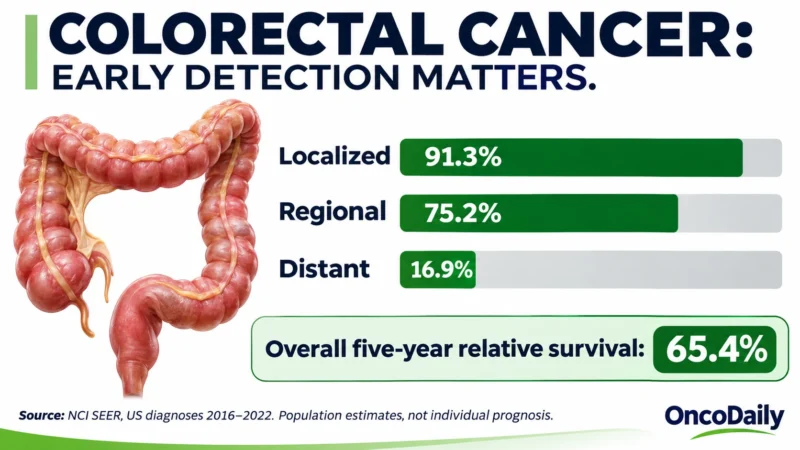
Colorectal cancer survival depends strongly on the stage at diagnosis, tumor biology, treatment response, and the patient’s general health. According to the National Cancer Institute’s SEER database, the five-year relative survival rate for colorectal cancer was 65.4% among patients diagnosed in the United States between 2016 and 2022. For localized colorectal cancer, five-year relative survival was approximately 91.3%. For regional disease, where cancer has spread to nearby structures or lymph nodes, survival was approximately 75.2%.
For distant-stage disease, where cancer has spread to organs or tissues beyond the primary region, five-year relative survival was approximately 16.9%. These statistics demonstrate why early detection is so important. However, they describe outcomes among large groups of patients and cannot predict the prognosis of an individual person. Survival also continues to change as treatments improve, particularly for selected patients whose tumors have molecular characteristics that can be targeted with newer therapies. Pelé’s precise stage at diagnosis was not publicly established, so modern survival estimates should not be used to infer what his expected survival was in September 2021.
Could Newer Treatments Have Changed Pelé’s Outcome?
Modern colorectal cancer treatment increasingly depends on the biological characteristics of each patient’s tumor. For patients with advanced disease, molecular testing may assess alterations in genes such as KRAS, NRAS, and BRAF, as well as HER2 status in relevant clinical settings. Testing for mismatch repair deficiency (dMMR) or high microsatellite instability (MSI-H) is particularly important because it can identify patients who may benefit from immune checkpoint inhibitors. Immunotherapy has produced substantial improvements in outcomes for selected patients with MSI-H or dMMR metastatic colorectal cancer.
Other patients may benefit from combinations of chemotherapy and targeted agents, including treatments directed against VEGF or EGFR pathways. More recently, additional targeted approaches have become available for certain molecular subgroups, including cancers with specific BRAF or KRAS alterations. However, these treatments are not suitable for every patient.
Treatment selection depends on tumor characteristics, the extent of disease, previous therapies, organ function, age-related vulnerabilities, and individual preferences. Pelé’s molecular test results and full treatment history were not publicly disclosed. Consequently, there is no reliable basis for claiming that a particular targeted treatment or immunotherapy would have changed his outcome. His experience nevertheless illustrates why personalized treatment and supportive care are increasingly important in managing advanced colorectal cancer.
What Can Pelé’s Story Teach Us About Colorectal Cancer Screening?
One of the most important messages associated with colorectal cancer is that the disease can sometimes be prevented or detected early through appropriate screening. Many colorectal cancers develop from precancerous polyps over several years. During colonoscopy, physicians can identify and remove certain polyps before they develop into cancer.
Other screening methods include stool-based tests that detect hidden blood or other markers associated with colorectal neoplasia. The American Cancer Society’s 2026 guideline recommends that adults at average risk begin regular colorectal cancer screening at age 45, with screening generally continuing through age 75 when life expectancy exceeds ten years. For adults aged 76–85, screening decisions should be individualized according to health status, previous screening history, life expectancy, and preferences. People with strong family histories, hereditary cancer syndromes, inflammatory bowel disease, or other risk factors may need screening earlier or more frequently.
Symptoms such as persistent blood in the stool, unexplained iron-deficiency anemia, changes in bowel habits, or unexplained weight loss require medical evaluation regardless of age or routine screening eligibility. Pelé’s diagnosis highlights the seriousness of colorectal cancer, but it should not be assumed that screening would necessarily have prevented his illness. His previous screening history was not publicly established. The broader medical message is that timely screening and symptom evaluation can improve the chances of detecting colorectal cancer at an earlier, more treatable stage.
How Did the Football World React to Pelé’s Death?
Pelé’s death prompted an extraordinary response across football and beyond. In Brazil, the government declared three days of national mourning. Stadiums, public buildings, and monuments became places of remembrance, while supporters gathered to celebrate a career that had helped define Brazilian sporting identity. FIFA, football federations, clubs, and players from different generations paid tribute to his achievements. Brazilian stars, including Neymar, Ronaldo Nazário, and Cafu, reflected on the influence Pelé had on their careers and the importance of his contribution to world football.
Lionel Messi and Cristiano Ronaldo also joined the international tributes, recognizing the passing of a figure whose achievements had helped establish the standards against which later generations of footballers would be measured.
For many Brazilians, Pelé represented more than sporting success. His rise from a modest background to global fame symbolized possibility, national pride, and the international recognition of Brazilian talent. His death came only days after Argentina’s victory at the 2022 World Cup, connecting the conclusion of one football era with the celebration of another. In its tribute, FIFA emphasized his unique achievement of winning three World Cups and his enduring place in the history of the sport.
Where Was Pelé Buried, and How Was He Remembered?
Pelé’s public farewell took place in Santos, the Brazilian city where he had spent most of his professional career. On January 2, 2023, his coffin was placed at the center of the pitch at Vila Belmiro Stadium, the home of Santos FC. The public wake lasted approximately 24 hours, allowing supporters to pay their respects. According to figures cited by FIFA and local authorities, approximately 230,000 people attended the wake. On January 3, a funeral procession carried his coffin through the streets of Santos, accompanied by thousands of mourners.
The procession passed near important locations associated with Pelé’s life before reaching the Memorial Necrópole Ecumênica cemetery, where a private burial ceremony was held. Brazil’s newly inaugurated president, Luiz Inácio Lula da Silva, was among those who paid tribute. The scale of the farewell reflected the remarkable connection Pelé had established with generations of supporters, many of whom had never seen him play in person. For those who remembered his performances, the funeral was a farewell to one of football’s greatest talents. For younger generations, it was an opportunity to recognize the man who had helped transform the sport into a truly global cultural phenomenon.
What Is Pelé’s Legacy Beyond Football?
Pelé’s influence extended far beyond his goals, trophies, and records. After retiring, he became an international ambassador for football, participating in events and initiatives intended to promote sport, education, and social development. He served as Brazil’s Minister of Sport from 1995 to 1998 and supported reforms intended to improve aspects of football administration. His arrival at the New York Cosmos in the 1970s also helped introduce professional football to a much wider American audience, contributing to the sport’s long-term development in the United States.
His story became the subject of books, documentaries, films, and exhibitions. Pelé’s name also became closely associated with the idea of the beautiful game, an expression that came to represent football’s creativity, artistry, and emotional appeal. His legacy is preserved by Santos FC, the Brazilian national team, football museums, and countless supporters around the world. While discussions about the greatest player in football history continue across generations, Pelé’s unique achievements remain central to the sport’s identity.
He was a three-time World Cup winner, an international sporting ambassador, and a cultural figure whose influence reached far beyond Brazil. His experience with colon cancer also demonstrated the human vulnerability behind his international reputation. The illness that took his life did not diminish his achievements. Instead, it became the final chapter in a story that had already transformed football history.
You Can Also Raed Franco Baresi Dies at 66: AC Milan and Italian Football Mourn an Iconic Legend by OncoDaily

Written by Aharon Tsaturyan, MD, Editor at OncoDaily Intelligence Unit
FAQ
What Was Pelé's Cause of Death?
Pelé died from multiple organ failure caused by the progression of colon cancer on December 29, 2022. The official cause of death was confirmed by Hospital Israelita Albert Einstein in São Paulo, Brazil.
What Type of Cancer Did Pelé Have?
Pelé was diagnosed with colon cancer in September 2021. He underwent surgery to remove a tumor from his colon and subsequently received chemotherapy. His exact tumor stage at diagnosis was not publicly disclosed.
How Old Was Pelé When He Died?
Pelé was 82 years old when he died on December 29, 2022. He was born on October 23, 1940, in Três Corações, Brazil.
When Was Pelé Diagnosed With Colon Cancer?
Pelé's colon cancer diagnosis became public in September 2021, when doctors discovered a tumor during medical examinations. He underwent surgery on September 4, 2021.
Did Pelé's Colon Cancer Spread to Other Organs?
Media reports indicated that Pelé's cancer had spread to his liver and lungs. Although the hospital confirmed cancer progression in December 2022, the complete metastatic sites and disease staging were not publicly documented.
What Cancer Treatment Did Pelé Receive?
Pelé underwent surgery to remove a colon tumor in September 2021, followed by chemotherapy during 2021 and 2022. His exact chemotherapy regimen and molecular tumor characteristics were not publicly disclosed.
What Were Pelé's Final Days Like?
Pelé was hospitalized on November 29, 2022, for reassessment of his cancer treatment and management of a respiratory infection. His condition worsened in December, with reported kidney and cardiac dysfunction. He died surrounded by the care of his family and medical team.
What Are the Early Warning Signs of Colon Cancer?
Common warning signs include blood in the stool, persistent changes in bowel habits, abdominal discomfort, unexplained weight loss, fatigue, and iron-deficiency anemia. However, early colorectal cancer may develop without noticeable symptoms.
Can Stage 4 Colon Cancer Be Treated?
Yes. Stage 4 colon cancer can be treated, although treatment depends on the extent of metastases, tumor biology, and the patient's overall health. Options include chemotherapy, targeted therapy, immunotherapy for selected patients, and surgery or ablation in carefully selected cases.
How Many World Cups Did Pelé Win Before His Death?
Pelé won three FIFA World Cups with Brazil—in 1958, 1962, and 1970. He remains the only male footballer to have won three World Cups as a player, one of the achievements that established his reputation as the King of Football.