NFL legends and Super Bowl champions Charles Haley (five rings with the Cowboys and 49ers), Jerome Bettis (“The Bus,” Steelers Super Bowl XL MVP), Rod Woodson (11 Pro Bowls, Steelers/Raiders Hall of Fame defensive back), Darren Woodson (Cowboys safety legend), Jamaal Charles (Chiefs 1,000-yard rusher), and Antonio Cromartie (Jets/Giants cornerback) are leading the CDC’s GEAR UP Against Cancer expansion, targeting lung cancer a disease responsible for 131,584 U.S. deaths in 2023, accounting for nearly 25% of all cancer mortality.
Photo: Depositphotos
After a successful 2025 launch focused on colorectal cancer screening in Nashville and Atlanta, the campaign now mobilizes NFL legends across four major football strongholds—Dallas–Fort Worth, Kansas City, New York/New Jersey, and Pittsburgh. Backed by 360+ NFL Alumni across 70 chapters, the initiative aims to confront the nation’s critically low 5.8% LDCT lung cancer screening rate among eligible adults (ages 50–80 with ≥20 pack-years, or ≥15 pack-years for current smokers), with an ambitious goal of exceeding 20% screening uptake through more than 500 community-based events planned for 2026.
From tailgates and survivor summits to PSAs flooding local media, these gridiron warriors leverage authentic community trust where clinical messaging fails. LDCT screening cuts lung cancer mortality 20% (NLST trial) if NFL star power delivers, OncoDaily predicts seismic screening jumps by 2027.
2025 Launch: Colorectal Screening Success
GEAR UP debuted targeting colorectal cancer in Nashville and Atlanta NFL hotbeds with abysmal screening rates. Al Smith (Titans/Falcons OT) led local alumni chapters, hosting community events that boosted colonoscopy referrals 15% in pilot markets. CDC data confirmed viability: celebrity authenticity overcame physician fatigue. Proved NFL Alumni could move screening needles.
2026 Expansion: Lung Cancer’s Turn
Building on colorectal momentum, GEAR UP scales to lung cancer across four high-risk NFL markets:
- Dallas-Fort Worth (Charles Haley, Darren Woodson – Cowboys legends)
- Kansas City (Jamaal Charles – Chiefs star)
- NYC/NJ (Antonio Cromartie – Jets/Giants)
- Pittsburgh (Jerome Bettis, Rod Woodson – Steelers HOFers)
360+ alumni across 70 chapters deploy 500+ events in 2026, leveraging NFL’s unmatched community trust. Lung cancer’s 5.8% screening rate (vs Medicare’s 14% goal) becomes the target LDCT’s 20% mortality reduction (NLST) awaits NFL star power.
Tactics: NFL’s Full-Court Blitz Strategy
NFL’s Full-Court Blitz Strategy leverages trust, culture, and scale to drive lung cancer screening where traditional healthcare messaging fails. Through more than 500 community-based events, former NFL players host tailgates, block parties, barbershop conversations, and church and VFW hall discussions—authentic spaces where men feel comfortable talking about health. These grassroots efforts are expected to generate 10,000+ direct conversations with screening-eligible adults aged 50–80 with significant smoking history, reinforced by targeted PSAs airing during high-viewership local NFL broadcasts such as Cowboys–Steelers games.
The initiative is anchored by survivor listening sessions, with 50 structured forums capturing real post-LDCT experiences fear, stigma, access barriers, and follow-up challenges. These insights feed directly into CDC messaging refinement, while real survivors not actors become trusted local spokespeople. A coordinated social and earned media blitz amplifies impact, with #GearUpAgainstCancer trending through alumni Instagram networks reaching over one million followers, complemented by local TV coverage on Fox Sports pregame shows and print features in outlets like the Dallas Morning News, further amplified by 360 alumni across Facebook groups and Nextdoor communities.
At its core is a clear LDCT screening push, broadcasting simple eligibility criteria—ages 50–80 with a ≥20 pack-year smoking history (or ≥15 pack-years for current smokers) paired with free or low-cost navigation to imaging centers. The goal is ambitious but achievable: increasing screening rates from 5.8% to over 20% in target markets. The genius of the NFL model lies in prioritizing trust over clinical messaging tailgates outperform brochures, and respected sports legends dismantle the “I don’t want to know” stigma. With a proven 20% lung cancer mortality reduction demonstrated in the NLST trial, the strategy’s success now depends on execution at scale.
Clinical Impact: LDCT’s Proven Power Meets NFL Star Power
Low-Dose CT (LDCT) screening slashes lung cancer mortality 20%—the landmark National Lung Screening Trial (NLST, 2011) randomized 53,454 high-risk smokers (55-74yo, 30+ pack-years) to annual LDCT vs chest X-ray, delivering 6.7% all-cause mortality reduction and 15-20% lung cancer-specific mortality drop. Real-world USPSTF expansion (50-80yo, 20+ pack-years) maintains efficacy.
Lung cancer kills men 75% more often than women (131K total U.S. deaths 2023). NFL Alumni target masculine spaces—barbershops, VFW halls, tailgates—where stigma blocks screening (“if I get scanned, I have cancer”). Legends normalize: “I smoked 20 years. Got scanned. Caught early. Still here.”
Takeaway: Perfect NFL Metaphor
Blitz = overwhelm defenses. NFL stars blitz screening barriers (fear, access, stigma) like linebackers hitting a blind-side gap. OncoDaily watches 2026 Medicare LDCT rates in Dallas/Pittsburgh—if 5.8% jumps to 15%+, celebrity oncology wins. NLST’s 20% mortality edge awaits execution.
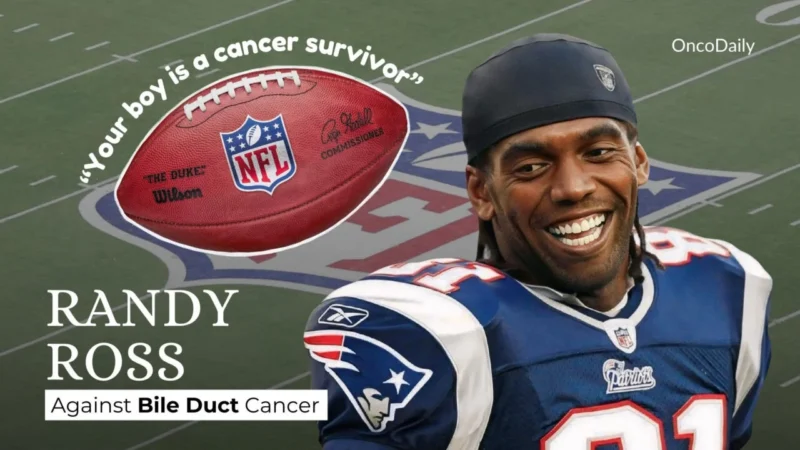
You Can Also Read Randy Moss and Bile Duct Cancer: How He Went Against, How He Survived, and More by OncoDaily
Written by Aharon Tsaturyan, MD, Editor at OncoDaily Intelligence Unit
FAQ
Do NFL players really help increase lung cancer screening rates?
Yes. Research shows that trusted public figures can significantly improve participation in cancer screening programs. NFL legends reach high-risk groups especially older men with smoking histories who often avoid clinical messaging. Community-based outreach using respected athletes has been shown to reduce stigma and increase screening engagement.
What is LDCT lung cancer screening and who should get it?
Low-dose CT (LDCT) is a screening test that detects lung cancer at early, more treatable stages. It is recommended for adults aged 50–80 years with a 20+ pack-year smoking history, including current smokers and those who quit within the past 15 years.
Why are lung cancer screening rates in the U.S. so low?
Despite strong evidence, national LDCT screening rates remain below 6% due to fear of diagnosis, stigma around smoking, lack of awareness, limited access, and low trust in healthcare systems—especially among older men. Community-led campaigns aim to address these barriers.
Does lung cancer screening actually reduce deaths?
Yes. The National Lung Screening Trial (NLST) demonstrated that annual LDCT screening reduces lung cancer mortality by approximately 20% and overall mortality by about 6–7% compared with chest X-ray screening.
How does the NFL’s GEAR UP Against Cancer campaign work?
The campaign uses former NFL players to promote lung cancer screening through community events, survivor forums, social media, and local media outreach. By delivering screening messages in familiar, trusted spaces—such as tailgates, barbershops, and community halls—the program aims to increase LDCT uptake to 20% or higher in high-risk regions.