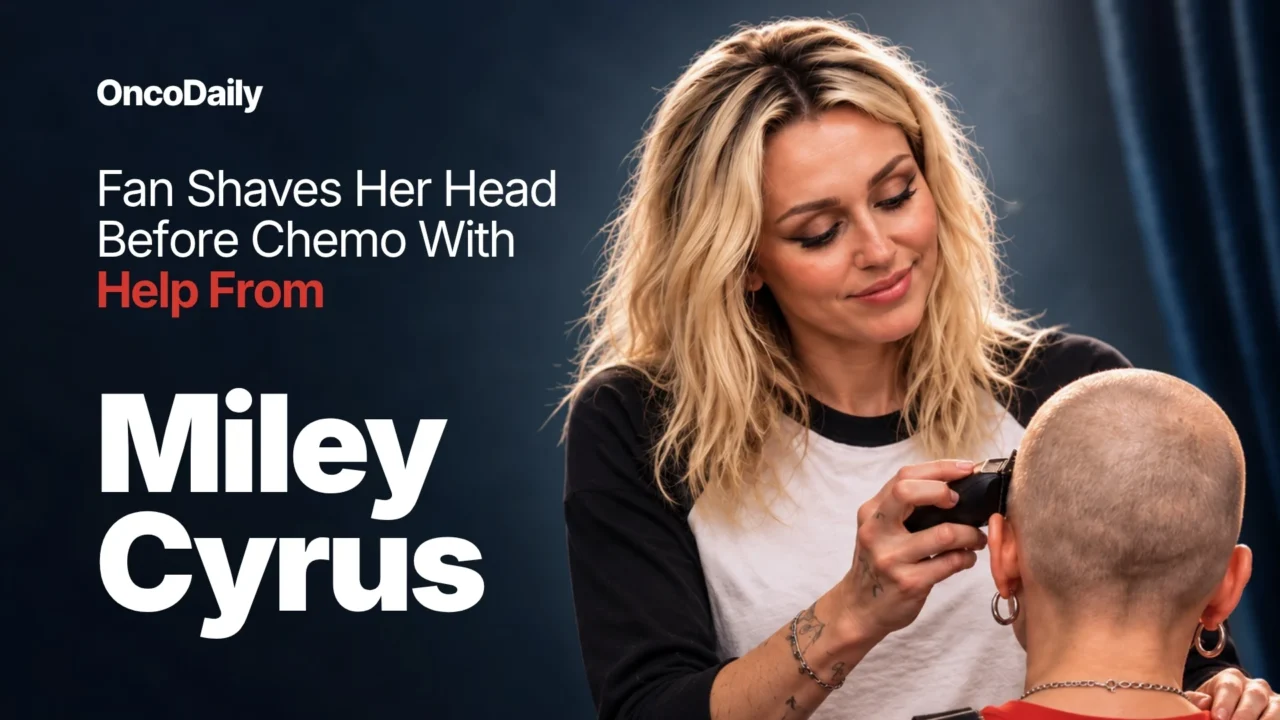
Miley Cyrus turned an emotional request from a fan facing stage 3 breast cancer into an unforgettable moment backstage at the Hollywood Bowl. After singer-songwriter Cash Jacobs reached out on TikTok, hoping the Grammy-winning artist would help shave her head during chemotherapy, Cyrus made the wish come true on October 18, 2026. What began as a social media appeal became a personal meeting that quickly captured international attention. Cyrus helped Jacobs shave her head, offering reassurance, laughter, and encouragement as she navigated one of the most visible changes associated with cancer treatment. The encounter, shared publicly on October 21, highlighted the emotional impact of chemotherapy-related hair loss and the importance of personal support during cancer care.
Who Is Cash Jacobs, the Miley Cyrus Fan Diagnosed With Breast Cancer?
Cash Jacobs is a New York-based singer-songwriter and longtime Miley Cyrus fan who has publicly shared her diagnosis of stage 3 breast cancer. For Jacobs, Cyrus has been more than a favorite musician. She has described the artist’s music as a source of comfort during difficult periods in her life, including experiences with depression and the emotional challenges surrounding her cancer diagnosis. When Jacobs learned she had breast cancer, her life changed considerably. Alongside the emotional burden of the diagnosis, she faced medical procedures, chemotherapy, and uncertainty about the treatment ahead.
She publicly discussed having a chest port inserted to facilitate treatment and experiencing chemotherapy-related side effects. One of the changes she found particularly difficult was losing her hair. For many people undergoing cancer treatment, hair loss can affect confidence, self-image, privacy, and their sense of control over their appearance. Rather than facing the experience entirely alone, Jacobs hoped to share it with someone whose music had helped her through other challenging moments. That person was Miley Cyrus.
How Did Cash Jacobs Ask Miley Cyrus to Shave Her Head?
Ahead of Cyrus’ Hollywood Bowl performances in October 2026, Jacobs posted a video on TikTok asking viewers to help get the singer’s attention. Her request was personal: she wanted Miley Cyrus to help shave her head as she experienced hair loss associated with chemotherapy. Jacobs already had plans to attend Cyrus’ October 16 performance in Los Angeles. She hoped that by sharing her story and encouraging other social media users to tag the singer, her request might reach Cyrus or her management team. The video attracted attention, and Cyrus’ representatives eventually contacted Jacobs.
However, despite attending the October 16 concert, Jacobs did not meet Cyrus that evening. The disappointment appeared to mark the end of her wish. Instead, the situation took an unexpected turn. Cyrus arranged for Jacobs to return to Los Angeles for her second Hollywood Bowl performance on October 18. After the concert, the singer met Jacobs backstage and personally helped her shave her head. The meeting transformed a difficult moment in Jacobs’ cancer experience into a memory she later described with considerable gratitude.
What Happened When Miley Cyrus Shaved Cash Jacobs’ Head?
The backstage encounter took place on October 18, 2026, following Cyrus’ performance at the Hollywood Bowl. Footage shared by Jacobs shows the singer helping her through the head-shaving process while offering emotional reassurance. Cyrus began by cutting Jacobs’ hair before using clippers to shave her head. The two shared conversation, laughter, and moments of vulnerability throughout the experience. At one point, Cyrus encouraged Jacobs with the words, “Let’s go girl.” She also reminded her that it was possible to experience fear and strength simultaneously.
One of the messages that resonated most widely was Cyrus’ reassurance that a person could be both gentle and resilient while navigating a difficult experience. For Jacobs, the interaction represented much more than a celebrity meeting. She was undergoing treatment for a serious illness and facing a visible physical change that many patients describe as emotionally challenging. Having someone she admired participate in that moment helped make the experience feel less isolating. Cyrus also expressed appreciation for being trusted with such a personal request. The video showed an interaction centered on Jacobs’ feelings and comfort rather than the singer’s celebrity status.
What Did Miley Cyrus Say to Cash Jacobs During the Emotional Moment?
Throughout the encounter, Cyrus emphasized that difficult feelings do not contradict personal strength. She acknowledged that facing serious illness can involve fear, uncertainty, and emotional vulnerability. Rather than suggesting that Jacobs needed to remain positive throughout her treatment, the singer recognized the complexity of her experience. Cyrus also complimented Jacobs’ appearance after the head-shaving process, helping her approach the physical change with greater confidence.
Her words reflected an important aspect of emotional support during cancer treatment: reassurance does not necessarily mean minimizing the difficulty of what someone is experiencing. Sometimes, meaningful support involves acknowledging a person’s fear while remaining present during the experience. Jacobs later expressed appreciation for Cyrus’ kindness, patience, and willingness to participate in such an intimate moment.
How Did Cash Jacobs React to Meeting Miley Cyrus?
Jacobs shared footage of the encounter on Instagram and TikTok on October 21, 2026. In her accompanying message, she described the meeting as an extraordinary experience during one of the most difficult periods of her life. She explained that receiving a breast cancer diagnosis, undergoing medical procedures, and beginning chemotherapy had already been emotionally demanding. The prospect of hair loss added another challenge.
Jacobs also reflected on how Cyrus’ music had helped her through previous periods of depression and other difficult experiences. For that reason, meeting Cyrus was meaningful beyond the opportunity to spend time with a famous artist. It brought together two important parts of her life: her connection to music and her experience as a person undergoing cancer treatment.
She thanked the individuals who helped circulate her original request and the people involved in arranging the meeting. She also expressed gratitude to Cyrus for making her feel comfortable and supported. The story subsequently attracted coverage from major entertainment and news publications, including People, Entertainment Weekly, NBC’s TODAY, and other outlets. The public response reflected how strongly the experience resonated with people familiar with the emotional challenges of cancer treatment.
What Does Stage 3 Breast Cancer Mean?
Stage 3 breast cancer, also known as locally advanced breast cancer, describes a malignancy that has spread extensively within the breast, surrounding tissues, or regional lymph nodes but has not metastasized to distant organs. Unlike stage 4 breast cancer, stage 3 disease is generally treated with curative intent. According to the American Joint Committee on Cancer (AJCC) staging system, stage 3 breast cancer includes stages IIIA, IIIB, and IIIC, depending on tumor size, regional lymph-node involvement, and extension into the chest wall or skin. Prognostic staging also incorporates tumor grade and estrogen receptor (ER), progesterone receptor (PR), and HER2 status, which influence treatment decisions and outcomes.
According to the National Cancer Institute’s SEER database, the five-year relative survival rate for regional breast cancer is approximately 87.5%, based on patients diagnosed between 2016 and 2022. However, this category includes some stage 2 cancers and is not a stage 3-specific estimate. Survival also varies substantially by molecular subtype. For example, five-year relative survival for regional hormone receptor-positive, HER2-negative breast cancer is approximately 91.1%, compared with 68.3% for regional triple-negative breast cancer. Treatment typically combines systemic therapy, surgery, and radiotherapy. Many patients receive neoadjuvant chemotherapy to reduce tumor size and assess treatment response. Depending on tumor biology, additional treatments may include HER2-targeted therapy, immunotherapy, or endocrine therapy.
An important indicator of treatment response is pathological complete response (pCR), defined as the absence of residual invasive cancer in the breast and sampled lymph nodes after neoadjuvant treatment. Achieving pCR is associated with improved long-term outcomes, particularly in HER2-positive and triple-negative breast cancer. Cash Jacobs has publicly disclosed her stage 3 breast cancer diagnosis and chemotherapy experience. However, her precise stage, molecular subtype, and treatment regimen have not been publicly confirmed. Therefore, population-level survival statistics cannot reliably predict her individual prognosis.
Why Does Chemotherapy Cause Hair Loss?
Chemotherapy-induced hair loss, medically known as alopecia, is a common side effect of several cancer treatments. Many chemotherapy drugs work by damaging rapidly dividing cells. Cancer cells often divide quickly, but healthy cells in certain tissues also undergo rapid renewal. Hair follicle cells are particularly susceptible to the effects of some cytotoxic medications. When chemotherapy interferes with their normal function, hair growth may slow or stop, resulting in hair thinning or loss. Not every chemotherapy drug causes substantial hair loss, and the severity depends on the drugs used, dose, treatment schedule, and individual factors. Some patients experience mild thinning, while others lose most or all of their scalp hair.
Hair loss may also affect eyebrows, eyelashes, and body hair. The timing varies, although noticeable shedding commonly develops within several weeks of starting chemotherapy when hair loss is an expected side effect. In many cases, hair begins growing again after treatment ends. However, the texture, thickness, or color may initially differ from the person’s previous hair. Rarely, some chemotherapy regimens can cause prolonged or persistent hair thinning. For breast cancer patients, hair loss can be particularly distressing because it makes an otherwise private medical experience more visible. This is one reason that hair-related supportive care has become an increasingly important component of oncology treatment.
Can Breast Cancer Patients Prevent Hair Loss During Chemotherapy?
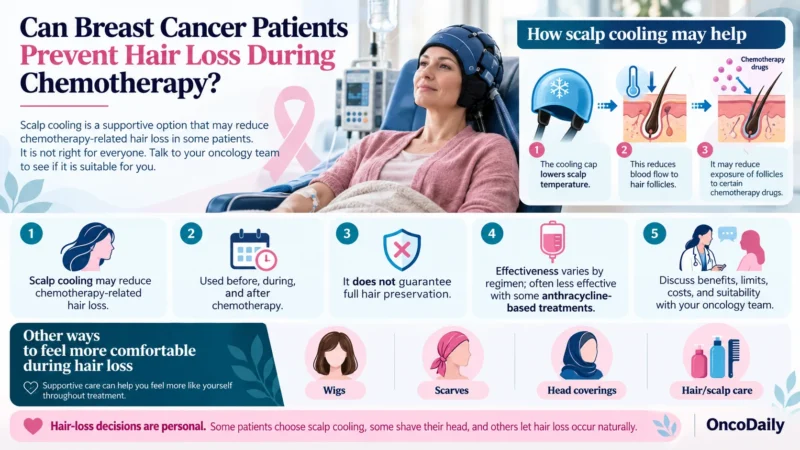
Some patients may be able to reduce chemotherapy-related hair loss through scalp cooling. Scalp cooling involves using a specialized cap to lower the temperature of the scalp before, during, and after chemotherapy. Cooling reduces blood flow to hair follicles and may limit their exposure to certain chemotherapy medications. The effectiveness of scalp cooling varies depending on the treatment regimen, the cooling system, and individual patient characteristics. For example, scalp cooling is often less effective with some anthracycline-containing chemotherapy regimens. It does not guarantee that patients will retain all their hair.
It may also be unsuitable for people with certain medical conditions or specific cancer types. The American Cancer Society recommends discussing the potential benefits, limitations, costs, and availability of scalp cooling with the treating oncology team. Other supportive options include wigs, scarves, head coverings, and professional advice on hair and scalp care. However, not every patient wants to preserve their hair. Some prefer to shave it in advance or once shedding begins.
Others choose to allow hair loss to occur naturally. These decisions are personal, and patients should be supported in making the choice that feels most comfortable to them. Jacobs’ decision to shave her head with Cyrus reflected her own preference and should not be interpreted as a medical requirement for everyone receiving chemotherapy.
Why Can Shaving Your Head Before or During Chemotherapy Be Emotional?
For some people, hair is closely connected to identity, confidence, cultural expression, and personal appearance. Losing it during cancer treatment may trigger feelings of grief, sadness, anxiety, or vulnerability. It can also change how others perceive a patient. A person who previously had the option to keep their diagnosis private may find that visible treatment effects prompt questions or unwanted attention. Some patients describe feeling that cancer has taken control of their bodies or appearance. Choosing when and how to shave their hair can provide a sense of agency. Other patients may prefer not to shave their heads and instead manage hair loss gradually.
There is no universally correct approach. Research into supportive cancer care consistently recognizes that appearance-related changes can affect psychological well-being and quality of life. Addressing those concerns is an important part of comprehensive oncology care. In Jacobs’ case, sharing the experience with Cyrus helped turn a difficult physical change into a moment of connection. The significance was not the haircut itself, but the reassurance and support she received while making a deeply personal decision.
How Has Miley Cyrus Supported Cancer-Related Causes?
Cyrus’ support for Jacobs is consistent with her previous participation in charitable and healthcare-related initiatives. In March 2019, she performed at the Unforgettable Evening gala benefiting the Women’s Cancer Research Fund, a program associated with the Breast Cancer Research Foundation. The event raised money to support research into women’s cancers and highlighted the role of entertainment-industry participation in charitable fundraising. Cyrus has also visited young patients receiving hospital care. In 2017, she visited Julia Davidson, a child undergoing treatment for neuroblastoma at Rady Children’s Hospital in San Diego. The hospital publicly acknowledged Cyrus and the Happy Hippie Foundation for the visit.
The Happy Hippie Foundation primarily focuses on supporting young people experiencing homelessness, LGBTQ+ youth, and other vulnerable populations rather than functioning specifically as a cancer charity. These activities demonstrate different ways a public figure can support patients or health-related causes. However, they should not be interpreted as evidence that Cyrus funds or oversees a particular oncology research program unless that involvement is documented. Her meeting with Jacobs was primarily an act of personal support rather than a medical or fundraising intervention.
Why Did Miley Cyrus and Cash Jacobs’ Story Go Viral?
The encounter attracted attention because it combined a familiar celebrity with an unusually personal request. Many celebrity interactions involve brief meetings, photographs, or public messages. Jacobs’ request was different. She asked Cyrus to participate in a physical change associated with cancer treatment, something many patients experience privately with family members or close friends. The resulting interaction revealed a more intimate side of celebrity-fan relationships. Cyrus responded not only by acknowledging the request but by arranging an opportunity to meet Jacobs and personally help her through the experience. The footage also resonated with people who had undergone chemotherapy or supported loved ones during treatment.
For these viewers, the video represented an experience they recognized: navigating illness while trying to preserve dignity, confidence, and a sense of control. The story also illustrated how social media can help create direct connections between individuals who might otherwise never meet. A public request on TikTok reached the artist and her team, eventually resulting in a personal encounter that Jacobs chose to share with the wider public.
What Can Friends and Family Do to Support Someone Undergoing Chemotherapy?
Emotional and practical support can play an important role throughout cancer treatment. Although patients have different preferences, support is often most helpful when it responds to their specific needs rather than making assumptions. Practical assistance might include transportation to chemotherapy appointments, help with meals, childcare, or everyday responsibilities. Some patients appreciate regular messages or phone calls, while others prefer privacy and time to rest. Respecting these preferences can be particularly important when treatment causes fatigue or emotional distress. Appearance-related changes also require sensitivity.
Friends and family should avoid pressuring patients to wear wigs, shave their heads, conceal hair loss, or maintain a consistently positive attitude. Instead, they can ask what would make the person feel most comfortable. For patients struggling with the psychological consequences of cancer, oncology social workers, psychologists, support groups, and other psychosocial care services may provide additional assistance. Compassionate cancer care includes not only treatment of the disease but also attention to patients’ emotional well-being.
What Comes Next for Cash Jacobs?
Jacobs has shared parts of her cancer journey publicly, including her diagnosis, chemotherapy experience, and the backstage meeting with Cyrus. However, she has not publicly established every detail of her treatment plan or expected recovery. Stage 3 breast cancer treatment often involves several treatment phases, and individual schedules depend on tumor biology, response to therapy, and clinical circumstances. Her decision to share her story may help other patients feel less alone when confronting chemotherapy-related hair loss. Nevertheless, the outcome of her cancer treatment remains a private medical matter unless she chooses to disclose further information. For now, the public story is centered on a meaningful moment of support during a difficult period in her life.
Miley Cyrus and Cash Jacobs: A Moment Beyond the Spotlight
The meeting between Miley Cyrus and Cash Jacobs was not a medical breakthrough or a change in cancer treatment. It was a moment of human connection. Jacobs faced a difficult experience associated with chemotherapy and asked someone she admired to help her through it. Cyrus responded by making time for her, offering encouragement, and participating in the experience personally. The moment demonstrated that emotional support can come in many forms, from professional psychological care to small acts of kindness.
For Jacobs, it became a memory she could carry through the challenges of treatment. For others watching, it provided a reminder that a cancer diagnosis affects more than physical health. Cancer care is also about dignity, choice, emotional well-being, and the people who help patients navigate difficult moments.
You Can Also Read Dolly Parton’s Cancer Journey: Her Health Legacy, Medical Philanthropy, and Extraordinary Impact Beyond Music by OncoDaily

Written by Aharon Tsaturyan, MD, Editor at OncoDaily Intelligence Unit
FAQ
Why Did Miley Cyrus Shave a Fan's Head?
Miley Cyrus helped fan Cash Jacobs shave her head during chemotherapy for stage 3 breast cancer. Jacobs had shared a TikTok request asking the singer to help her through the emotional experience of chemotherapy-related hair loss. Cyrus responded and arranged to meet her backstage at the Hollywood Bowl on October 18, 2026.
Who Is Cash Jacobs, the Miley Cyrus Fan With Cancer?
Cash Jacobs is a New York-based singer-songwriter and longtime Miley Cyrus fan who publicly disclosed her stage 3 breast cancer diagnosis. Her story attracted international attention after Cyrus helped her shave her head during cancer treatment.
What Type of Cancer Does Miley Cyrus' Fan Cash Jacobs Have?
Cash Jacobs has publicly disclosed a diagnosis of stage 3 breast cancer, also known as locally advanced breast cancer. This means the disease involves extensive local or regional spread without identified distant metastases. Her specific molecular subtype and treatment regimen have not been publicly confirmed.
Does Miley Cyrus Have Cancer?
There is no verified public disclosure that Miley Cyrus has cancer. The recent cancer-related headlines concern her support for fan Cash Jacobs, who is undergoing treatment for breast cancer. Cyrus helped Jacobs shave her head during an emotional backstage meeting.
Is Stage 3 Breast Cancer Curable?
Yes, stage 3 breast cancer is potentially curable. Treatment generally involves a combination of systemic therapy, surgery, and radiation therapy, depending on the tumor's characteristics. Outcomes vary according to molecular subtype, disease extent, and treatment response.
What Is the Survival Rate for Stage 3 Breast Cancer?
Survival varies considerably by tumor subtype and disease characteristics. According to National Cancer Institute SEER estimates, the five-year relative survival rate for regional breast cancer is approximately 87.5%, although this category includes some stage 2 cancers and is not specific to stage 3. Individual prognosis depends on several clinical factors.
Why Do Breast Cancer Patients Lose Their Hair During Chemotherapy?
Some chemotherapy drugs affect rapidly dividing cells, including healthy cells in hair follicles. This can cause hair thinning or complete hair loss. Not every chemotherapy regimen causes significant hair loss, and hair typically begins growing back after treatment ends.
Can Breast Cancer Patients Prevent Hair Loss During Chemotherapy?
Some patients can reduce chemotherapy-related hair loss using scalp cooling, also called cold-cap therapy. Effectiveness depends on the chemotherapy regimen and individual circumstances. Scalp cooling does not guarantee complete hair preservation and should be discussed with the treating oncology team.
When Did Miley Cyrus Help Cash Jacobs Shave Her Head?
Miley Cyrus helped Cash Jacobs shave her head backstage at the Hollywood Bowl in Los Angeles on October 18, 2026. Jacobs subsequently shared footage of the encounter on social media on October 21, bringing widespread attention to her breast cancer experience.
Does Miley Cyrus Support Breast Cancer Charities?
Yes. Miley Cyrus has participated in cancer-related fundraising and patient-support initiatives. In 2019, she performed at the Unforgettable Evening gala benefiting the Women's Cancer Research Fund, associated with the Breast Cancer Research Foundation. Her support for Cash Jacobs represents another example of her involvement in cancer-related causes.