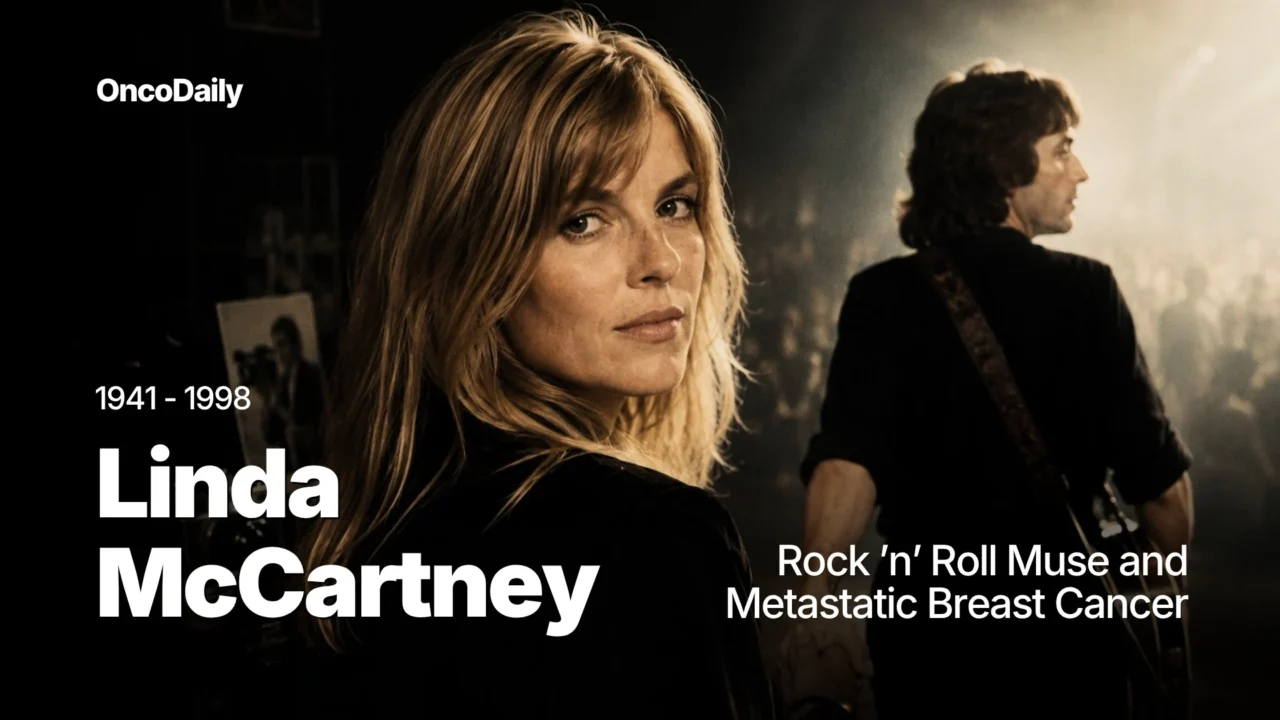
Linda McCartney, the American photographer, musician, animal rights advocate, and wife of Paul McCartney, died on April 17, 1998, at the age of 56 after a three-year battle with breast cancer that progressed to metastatic disease involving the liver. Diagnosed with breast cancer in late 1995, McCartney initially appeared to respond to treatment, with the disease remaining controlled for a period of time. However, in March 1998, doctors discovered that the cancer had spread to her liver, marking a transition to metastatic breast cancer. She died one month later at the McCartney family ranch in Arizona, surrounded by her family.

Photo: Depositphotos CAMPBELTOWN, SCOTLAND – OCTOBER 24, 2014: Linda McCartney Memorial Garden, dedicated to Linda McCartney, the late wife of Paul McCartney, on the Kintyre Peninsula
While many details of her medical treatment remain private, Linda McCartney’s story continues to be remembered not only as a personal cancer journey but also as one that contributed to greater breast cancer awareness, research support, patient care, and healthcare advocacy.
Linda McCartney’s Breast Cancer Diagnosis and Treatment Journey
Linda McCartney was diagnosed with breast cancer in late 1995 after discovering a breast lump that was later confirmed to be malignant. Reports from the time described her undergoing surgery and subsequent treatment after diagnosis. Her diagnosis occurred during a period when breast cancer treatment was rapidly evolving. Researchers were increasingly recognizing that breast cancer was not a single disease but a group of biologically different cancers requiring different treatment approaches. However, the specific details of McCartney’s cancer including hormone receptor status, HER2 status, genetic features, and exact treatment sequence were never publicly disclosed.
Initial Response to Treatment (1995–1997)
Following her diagnosis, McCartney underwent treatment that included chemotherapy, according to reports from the time. Her family stated that the cancer initially appeared to respond and remained controlled for a period. This period reflects an important reality of cancer care: even when treatment produces a positive response, some cancers can later return or progress. Cancer cells that remain after initial therapy may acquire resistance mechanisms, allowing disease to grow again. Modern oncology has focused heavily on understanding these mechanisms and developing treatments that can prevent or delay progression.
Progression to Metastatic Breast Cancer
In March 1998, doctors discovered that Linda McCartney’s breast cancer had spread to her liver. At this point, the disease had become metastatic breast cancer (MBC), also known as stage IV breast cancer. Metastatic breast cancer occurs when cancer cells travel from the original breast tumor to distant organs. Common sites of breast cancer metastasis include:
- Bone
- Liver
- Lung
- Brain
Once breast cancer spreads to distant organs, treatment goals change. Instead of focusing only on eliminating the cancer, therapy aims to control disease, prolong survival, reduce symptoms, and maintain quality of life.
Understanding Metastatic Breast Cancer: Then and Now
When Linda McCartney developed metastatic breast cancer in the late 1990s, the disease was viewed very differently compared with today. In that era, metastatic breast cancer was generally associated with limited treatment options and shorter survival. Treatment focused mainly on controlling symptoms, slowing disease progression, and preserving quality of life. Available therapies included chemotherapy, hormonal treatments for selected patients, and supportive care, but many modern targeted therapies had not yet transformed the field.
The late 1990s represented an important transition period in breast oncology. Shortly after Linda’s illness, major advances began changing how doctors understood and treated breast cancer, including improved classification of tumors based on biological characteristics and the introduction of targeted treatments. One of the most significant breakthroughs was the development of HER2-targeted therapy, including trastuzumab, which dramatically improved outcomes for patients with HER2-positive breast cancer.
Survival and Quality of Life: The Evolution of Care
Since Linda McCartney’s death in 1998, outcomes for many breast cancer patients have improved because of earlier detection, improved imaging, better understanding of tumor biology, and more effective systemic therapies. Historically, metastatic breast cancer was often associated with a much shorter survival period. Today, survival varies greatly depending on cancer subtype, treatment response, and individual health factors.
Patients with hormone receptor-positive metastatic breast cancer, for example, may sometimes live many years with ongoing treatment. Advances in targeted therapies have also significantly improved outcomes for specific groups, including patients with HER2-positive disease. However, metastatic breast cancer remains a major challenge. Some cancers remain aggressive despite available treatments, and researchers continue searching for therapies that can achieve deeper and longer-lasting responses. Linda McCartney’s experience reflects the reality of metastatic breast cancer at the end of the 20th century a time when treatment options were expanding but were still limited compared with the personalized oncology approaches available today.
The Importance of Tumor Biology in Modern Breast Cancer Treatment
One of the greatest changes in breast cancer care since Linda McCartney’s treatment era has been the recognition that breast cancer is not one disease. Two patients with breast cancer can have completely different treatment pathways depending on the molecular characteristics of their tumors.
Doctors now evaluate:
- Hormone receptor expression
- HER2 status
- Genetic mutations
- Biomarkers predicting treatment response
This personalized approach allows clinicians to select therapies that are more specifically matched to each patient’s cancer. Because Linda McCartney’s pathology information was never publicly released, her exact breast cancer subtype and treatment strategy cannot be determined. Her story highlights why responsible cancer reporting must focus on confirmed facts rather than assumptions.
Diet, Vegetarianism, and Cancer: Separating Facts From Myths
Linda McCartney was widely recognized for her commitment to vegetarianism, animal rights, and plant-based living. Following her death, some public discussions attempted to connect her dietary choices with her cancer journey. However, scientific evidence does not support the idea that diet alone can prevent or cure established cancer.
Research suggests that diets rich in vegetables, fruits, whole grains, and plant-based foods may contribute to overall health and may be associated with a lower risk of developing certain cancers. However, cancer development and progression are influenced by multiple factors, including genetics, aging, environmental exposures, lifestyle factors, tumor biology, and access to medical care.
A healthy diet can support overall well-being and may help patients tolerate treatment, maintain strength, and improve quality of life, but it is not a substitute for evidence-based cancer therapies. For patients with metastatic cancer, treatment decisions must be guided by scientific evidence, disease characteristics, and individual medical circumstances.
Linda McCartney’s Family: Carrying Her Legacy Forward
Linda McCartney’s influence continued through her children, who preserved many aspects of her creative, environmental, and humanitarian values. Linda was the mother of four children: Heather, Mary, Stella, and James McCartney. Together with Paul McCartney, she prioritized family life and maintained a relatively private upbringing for their children despite global public attention.
Mary McCartney: Continuing Her Mother’s Artistic Legacy
Mary McCartney followed her mother’s path into photography, developing an internationally recognized career focused on portraiture, documentary photography, and storytelling. Growing up surrounded by her mother’s photography shaped Mary’s own creative approach. She has continued to preserve Linda’s artistic legacy through exhibitions and projects celebrating her mother’s work. Mary has also used her platform to support causes connected to family, health, and social issues, including breast cancer awareness initiatives.
Stella McCartney: Breast Cancer Advocacy and Awareness
Stella McCartney became one of the world’s most recognized fashion designers and continued many of the values shared by her mother, particularly sustainability, ethical fashion, and animal welfare. Her mother’s experience with breast cancer has influenced Stella’s advocacy work. She has supported breast cancer awareness campaigns focused on early detection and supporting patients affected by the disease. In breast cancer awareness initiatives, Stella has highlighted the importance of recognizing the disease early and supporting women facing treatment and recovery. For Stella, Linda’s legacy has been not only artistic but deeply personal transforming a family loss into continued efforts to support other women and families affected by breast cancer.
James McCartney and the Family’s Continued Connection
James McCartney followed a career in music while maintaining a more private public presence compared with his sisters.Together, Linda’s children have continued to represent many of the causes that were important to their mother, including creativity, environmental awareness, and compassionate living.
The Linda McCartney Centre: A Lasting Legacy in Breast Cancer Care
One of the most significant outcomes of Linda McCartney’s cancer journey is the healthcare institution created in her memory: the Linda McCartney Centre at the Royal Liverpool University Hospital in the United Kingdom. Opened in 2000, the center was created after the Forget-Me-Not Cancer Appeal raised £4 million to transform an underused hospital building into a dedicated cancer care facility. It was named after Linda McCartney to honor her life and raise awareness of the importance of cancer treatment and support.
The center was designed around a patient-focused model of cancer care, bringing together multiple services in one location, including:
- Specialist breast assessment services
- Chemotherapy facilities
- Outpatient cancer care
- Research and development programs
At its establishment, the center included a regional breast assessment unit that screened more than 18,000 patients annually, alongside chemotherapy services and cancer research activities within the Royal Liverpool University Hospital.
Beyond treatment, the center reflects an important evolution in oncology: cancer care is not only about controlling disease but also about supporting patients and families throughout the entire cancer experience. The facility also incorporated specialist palliative care services focused on improving quality of life for patients with incurable disease, demonstrating a modern approach that recognizes comfort, dignity, and emotional support as essential parts of cancer care. Linda McCartney’s experience with metastatic breast cancer in the 1990s became the foundation for a center that continues helping thousands of patients receive specialist care.
Cancer Awareness, Fundraising, and Medical Advocacy
Following Linda McCartney’s death, Paul McCartney supported cancer-related fundraising initiatives in her memory, helping direct attention toward breast cancer research, awareness, and patient support. Her story contributed to broader conversations about the importance of earlier diagnosis, continued investment in research, access to specialist cancer care, and support systems for patients and families. While celebrity cancer stories cannot represent every individual experience, they can help reduce stigma, encourage open conversations, and highlight the importance of improving cancer care for millions of people worldwide.
Cancer Survivorship and the Human Side of Oncology
Linda McCartney’s story highlights an important principle of modern oncology: patients are more than their diagnosis. Cancer care involves much more than medical treatment alone. It includes quality of life, emotional support, family involvement, rehabilitation, symptom management, and long-term survivorship care.
Although metastatic breast cancer remains a major challenge, advances in oncology have allowed many patients to live longer with better disease control and improved quality of life compared with previous decades. Today, treatment decisions are increasingly personalized based on tumor biology, biomarkers, patient goals, and overall health. Every cancer journey remains unique. Outcomes depend on many factors, including disease characteristics, available therapies, healthcare access, and individual circumstances.
What Remains Unknown About Linda McCartney’s Cancer
Despite public interest, many medical details of Linda McCartney’s cancer journey remain private.
The public does not know:
- Her exact breast cancer subtype
- Hormone receptor or HER2 status
- Molecular characteristics of her tumor
- Complete treatment sequence
- Response to individual therapies
What is known is that she was diagnosed with breast cancer in 1995, initially responded to treatment, later developed liver metastasis in 1998, and died at age 56 from metastatic breast cancer. Responsible reporting requires focusing on confirmed information rather than speculation about a patient’s medical history.
Linda McCartney’s Enduring Legacy
Linda McCartney’s cancer journey represents both the challenges of metastatic breast cancer and the lasting impact one person can create beyond illness. She was remembered not only as Paul McCartney’s wife but as a photographer, musician, author, entrepreneur, animal advocate, and mother. After her death, her name became connected with breast cancer care through the Linda McCartney Centre, fundraising initiatives, and continued awareness efforts.
Her children Mary, Stella, James, and Heather have continued different aspects of her creative and humanitarian legacy. Linda McCartney’s story remains a reminder that behind every cancer diagnosis is a person with a unique life, family, and contribution to the world. Progress in oncology depends not only on scientific discoveries and treatments, but also on compassion, awareness, research investment, and the commitment to improve care for future generations.
You Can Also Read Jacqueline Kennedy Onassis: From First Lady to Lymphoma Warrior by OncoDaily
Written by Aharon Tsaturyan, MD, Editor at OncoDaily Intelligence Unit
FAQ
What cancer did Linda McCartney have?
Linda McCartney was diagnosed with breast cancer in 1995. The cancer later spread to her liver, becoming metastatic breast cancer, and she died in 1998 at the age of 56.
How did Linda McCartney die?
Linda McCartney died on April 17, 1998, from metastatic breast cancer after the disease spread to her liver.
Did Linda McCartney’s breast cancer spread?
Yes. In March 1998, doctors discovered that her breast cancer had metastasized to her liver, meaning cancer cells had spread from the original tumor to another organ.
How long did Linda McCartney live after her breast cancer diagnosis?
Linda McCartney lived for approximately three years after her diagnosis in 1995 until her death in 1998.
What is metastatic breast cancer?
Metastatic breast cancer, also called stage IV breast cancer, occurs when breast cancer spreads to distant organs such as the liver, lungs, bones, or brain. Today, it is considered treatable but generally not curable, with treatment focused on controlling disease and improving quality of life.
How has metastatic breast cancer treatment changed since Linda McCartney’s time?
Since the 1990s, breast cancer treatment has advanced significantly through personalized medicine, targeted therapies, hormone therapies, antibody-drug conjugates, immunotherapy for selected patients, and improved supportive care. Many patients today live longer with metastatic breast cancer compared with previous decades.
Who was Linda McCartney married to?
Linda McCartney was married to Paul McCartney, the legendary musician and member of The Beatles. They married in 1969 and remained together until her death in 1998.
Who are Linda McCartney’s children?
Linda McCartney had four children: Heather McCartney, Mary McCartney, Stella McCartney, and James McCartney. Her children have continued different parts of her creative and humanitarian legacy.
What is the Linda McCartney Centre?
The Linda McCartney Centre is a specialist cancer care facility at the Royal Liverpool University Hospital in the UK. Opened in 2000, it provides breast cancer assessment, treatment services, research support, and patient care in her memory.
Did Linda McCartney’s daughters continue her legacy?
Yes. Mary McCartney continued her mother’s photography legacy, while Stella McCartney became an internationally recognized fashion designer and advocate for sustainability and ethical causes. Her children have continued to honor Linda’s creative and humanitarian values.
Did Linda McCartney’s diet cause or prevent her cancer?
There is no evidence that Linda McCartney’s vegetarian diet caused or prevented her cancer. A healthy diet can support overall health, but cancer development depends on many factors, including genetics, aging, tumor biology, and environmental influences.