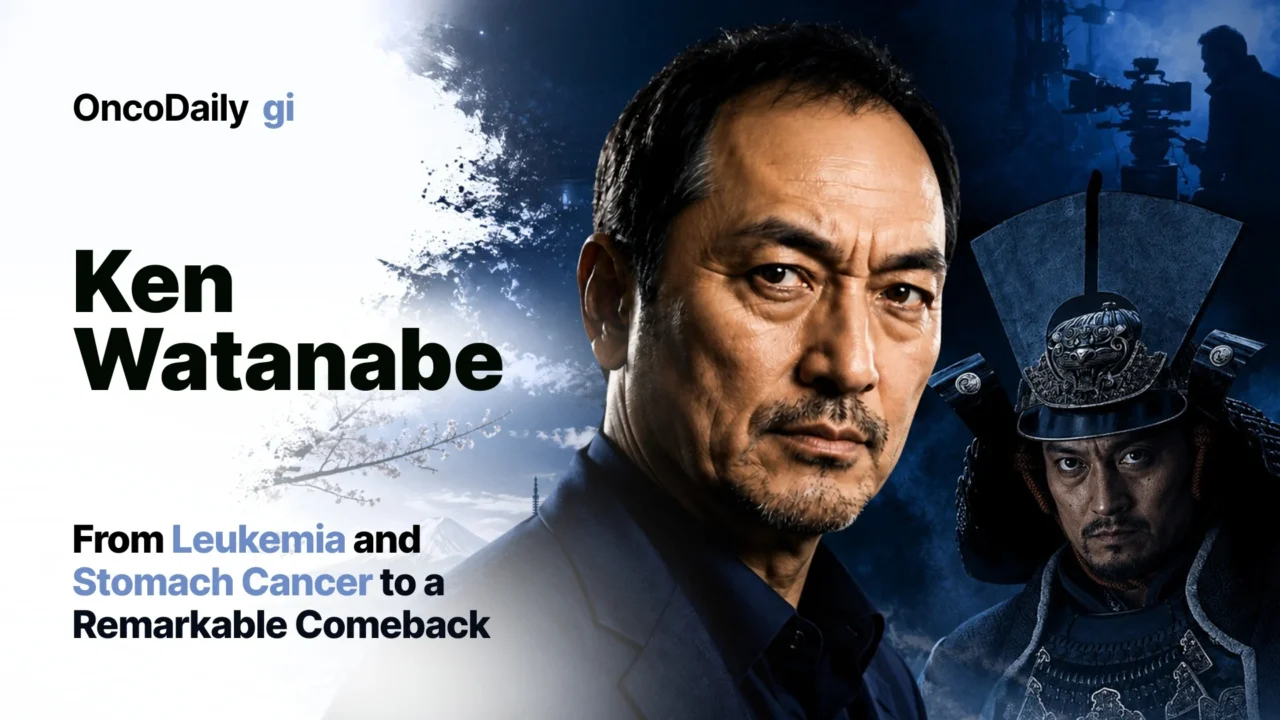
Ken Watanabe is one of Japan’s most internationally recognized actors, known for memorable performances in The Last Samurai, Batman Begins, Inception, and HBO’s Tokyo Vice. Beyond his celebrated career, Watanabe’s life includes a remarkable medical journey: surviving two separate cancers and returning to the stage and screen after each diagnosis. At the age of 29, while his acting career was beginning to expand internationally, Watanabe was diagnosed with acute myeloid leukemia (AML), an aggressive cancer of the blood and bone marrow. More than two decades later, at age 56, he was diagnosed with early-stage gastric (stomach) cancer, discovered during a routine medical examination in Japan.

Photo: Depositphotos
His experiences represent two very different chapters in oncology: intensive treatment for a life-threatening blood cancer and the benefits of early detection and minimally invasive treatment for gastric cancer. Watanabe’s story reflects not only personal resilience but also the progress of modern cancer medicine and the growing number of patients who are able to return to meaningful lives after cancer treatment.
First Cancer Diagnosis: Acute Myeloid Leukemia at Age 29
In 1989, while filming the historical epic Heaven and Earth (Ten to Chi to) in Canada, Ken Watanabe developed health problems that led to further medical evaluation. He was diagnosed with acute myeloid leukemia (AML) at only 29 years old. AML is an aggressive hematologic malignancy characterized by the uncontrolled growth of abnormal myeloid cells in the bone marrow. These abnormal cells interfere with normal blood production, leading to complications such as anemia, infections, and bleeding.
During the period of Watanabe’s diagnosis, AML treatment relied primarily on intensive chemotherapy designed to achieve remission and eliminate leukemia cells. Standard approaches included induction chemotherapy, commonly based on cytarabine combined with an anthracycline, followed by consolidation therapy to reduce relapse risk.
Watanabe achieved remission after treatment but later experienced a relapse in the early-to-mid 1990s, requiring additional therapy. Although he has not publicly disclosed his exact treatment regimen, his experience reflects the challenges of AML, where relapse remains a significant concern even after an initial response. Despite repeated treatment and hospitalizations, Watanabe eventually returned to acting, demonstrating the possibility of long-term recovery after a serious hematologic cancer diagnosis.
A Late Health Challenge: Hepatitis C After Cancer Treatment
Years after his leukemia treatment, Watanabe revealed another important health challenge: chronic hepatitis C infection. The infection was believed to have been acquired through blood transfusions received during his leukemia treatment period, at a time when hepatitis C screening of donated blood was not yet universally implemented. Before modern antiviral therapies became available, transfusion-associated hepatitis C was a recognized complication among patients receiving blood products. Watanabe publicly discussed his diagnosis in his autobiography Dare? – Who Am I? and later underwent interferon-based treatment.
He reported a marked reduction in viral load and successful management of the infection. His experience highlights an important aspect of cancer survivorship: patients treated decades ago may face long-term health issues related not only to cancer itself but also to medical treatments available during that period. Today, improved blood screening and direct-acting antiviral therapies have significantly changed hepatitis C prevention and treatment.
Second Cancer Diagnosis: Early Gastric Cancer at Age 56
In January 2016, at age 56, Watanabe was diagnosed with early-stage gastric cancer during a routine medical examination in Japan. Unlike his AML diagnosis, which occurred after symptoms prompted evaluation, his stomach cancer was detected before significant symptoms developed. Japan has one of the highest gastric cancer incidences worldwide and has developed structured screening approaches, including endoscopic examinations, to identify cancers at earlier and more treatable stages.
Public reports described Watanabe’s tumor as small and detected early, with no evidence of advanced disease. His diagnosis demonstrates one of the most important principles in oncology: early detection can transform treatment options and improve the likelihood of curative therapy.
Minimally Invasive Treatment and Recovery
Following his diagnosis, Watanabe underwent minimally invasive treatment to remove the gastric lesion. For appropriately selected patients with early gastric cancer limited to the mucosa or superficial submucosa, treatments such as endoscopic resection (including techniques such as endoscopic submucosal dissection) or laparoscopic surgery can provide curative treatment while preserving more normal stomach function. Compared with traditional open surgery, these approaches can reduce treatment burden, shorten recovery time, and improve quality of life in suitable patients.
Watanabe’s representatives reported that the cancer was detected early and successfully removed, allowing him to recover and return to his professional activities. His case reflects major advances in gastrointestinal oncology, where screening and minimally invasive techniques now allow many early gastric cancers to be treated effectively.
Returning to the Stage and Screen
At the time of his gastric cancer diagnosis, Watanabe was preparing to return to Broadway in The King and I. His performances were postponed while he underwent treatment and recovery in Japan. Later in 2016, he returned to the stage and continued his international career. In the following years, he appeared in major projects including HBO’s Tokyo Vice, continuing to work across Japanese and Western entertainment industries. His journey demonstrates an important principle of survivorship: recovery is not only about controlling disease but also about helping patients return to their goals, careers, relationships, and everyday lives.
Advances in Cancer Treatment Improve Survivorship
Watanabe’s survival reflects decades of progress in oncology. When he was diagnosed with AML, treatment depended largely on intensive chemotherapy and supportive care. Today, advances in molecular classification, risk-adapted treatment strategies, targeted therapies, and stem-cell transplantation have transformed AML management and improved outcomes for many patients.
His gastric cancer experience highlights another area of progress: early detection and minimally invasive treatment. Screening programs, improved endoscopic techniques, laparoscopic surgery, and more precise staging have allowed many early gastric cancers to be treated successfully while reducing treatment burden. Modern oncology is no longer focused only on extending survival. Increasingly, cancer care aims to preserve quality of life and help patients return to meaningful activities after treatment.
Living After Multiple Cancer Diagnoses
Surviving more than one cancer diagnosis presents unique challenges that continue long after treatment ends. Cancer survivors may require long-term follow-up to monitor for recurrence, treatment-related complications, secondary cancers, organ-specific late effects, and psychological effects of their experience. Watanabe has spoken about how his health challenges changed his perspective on life, emphasizing gratitude and appreciation for everyday moments. His story reflects a broader reality of modern oncology: survivorship is a lifelong journey involving physical recovery, emotional adaptation, continued medical care, and attention to overall well-being.
The Importance of Cancer Awareness and Screening
Stories of public figures facing cancer can help increase awareness and encourage conversations about prevention, screening, and early diagnosis. However, individual experiences should always be interpreted carefully. Screening recommendations depend on age, genetics, family history, geographic risk factors, and personal health circumstances. Watanabe’s journey highlights several important lessons: early detection can create opportunities for curative treatment, advances in oncology allow many patients to return to fulfilling lives, and cancer survivorship continues beyond the completion of therapy. Regular follow-up care remains essential for monitoring health and supporting long-term recovery.
Where Is Ken Watanabe Today?
Ken Watanabe continues to work internationally across film, television, and theater. Following his early gastric cancer treatment in 2016, there have been no widely reported cancer recurrences, and he has continued building an extraordinary career that spans Japanese and Western cinema. His return to acting after cancer treatment has included major roles such as Saito in Christopher Nolan’s Inception (2010), Lord Katsumoto in The Last Samurai (2003), Ra’s al Ghul in Batman Begins (2005), Dr. Ishirō Serizawa in Godzilla (2014), and Detective Hiroto Katagiri in HBO’s Tokyo Vice.
Watanabe’s performance in The Last Samurai became his international breakthrough, earning him an Academy Award nomination for Best Supporting Actor, along with nominations from the Golden Globe Awards, Screen Actors Guild Awards, and Critics’ Choice Awards. Beyond film, he has also achieved major recognition on stage. His performance as the King of Siam in the Broadway revival of The King and I (2015) earned him a Tony Award nomination for Best Performance by a Leading Actor in a Musical, making him the first Japanese actor nominated in that category.
Gastric Cancer in Japan: The Impact of Early Detection
Japan remains one of the countries with the highest gastric cancer burden worldwide, but decades of screening programs and advances in treatment have improved outcomes, particularly for patients diagnosed at an early stage. According to the National Cancer Center Japan, approximately 104,864 new stomach cancer cases were diagnosed in Japan in 2023, including 71,135 cases in men and 33,729 cases in women. Gastric cancer caused 37,867 deaths in 2024. The overall 5-year relative survival rate for gastric cancer in Japan was 66.6% among patients diagnosed between 2009 and 2011.
However, survival varies greatly depending on the stage at diagnosis. Patients with early gastric cancer confined to the stomach lining or superficial layers often have excellent outcomes after appropriate treatment. Data from Japan’s National Cancer Center show that patients with surgically treated stage IA gastric cancer have reported 5-year survival rates above 90%, while survival decreases significantly with advanced disease. Ken Watanabe’s diagnosis illustrates this difference.
His gastric cancer was detected at an early stage during routine medical evaluation, allowing treatment with minimally invasive approaches and a rapid return to professional activities. The Japanese experience demonstrates how screening, early diagnosis, and advances in surgical techniques can transform gastric cancer from a potentially life-threatening disease into one that is frequently curable when detected early. (National Cancer Center Japan, 2026; Japanese Gastric Cancer Association, 2021)
Helicobacter pylori and Gastric Cancer Prevention
One of the most important discoveries in gastric cancer prevention has been the role of Helicobacter pylori (H. pylori) infection. This bacterium is recognized as one of the strongest established risk factors for gastric cancer and plays a central role in the development of chronic gastritis, gastric atrophy, intestinal metaplasia, and eventually malignant transformation through the well-described Correa cascade. Persistent H. pylori infection causes long-term inflammation of the gastric mucosa, creating an environment that can promote genetic damage, cellular changes, and cancer development over time. For this reason, international guidelines recommend identifying and treating H. pylori infection as an important strategy for reducing gastric cancer risk, particularly in high-risk populations.
Evidence supporting eradication therapy has grown over decades. Long-term follow-up from a randomized clinical trial in China showed that antibiotic treatment to eradicate H. pylori reduced gastric cancer incidence by nearly 50% over 22 years among infected individuals. Additional studies have demonstrated that eradication therapy may also reduce the risk of developing new gastric cancer lesions after treatment of early gastric cancer.
Japan’s experience demonstrates the importance of combining risk-factor management, screening programs, and early diagnosis. While not every individual requires gastric cancer screening, identifying high-risk populations including those with H. pylori infection, family history, or high-incidence geographic background remains an important component of prevention strategies. Ken Watanabe’s diagnosis of early gastric cancer during routine medical evaluation reflects the broader impact of prevention and early detection approaches in reducing the burden of this disease. (Correa, 1992; Sugano et al., 2015; National Cancer Institute, 2021; Lordick et al., 2022)
How Gastric Cancer Treatment Has Changed
The treatment of gastric cancer has undergone remarkable transformation over the past several decades. Historically, management relied mainly on extensive surgery, often associated with significant functional consequences. Today, advances in screening, endoscopic techniques, surgery, pathology, and systemic therapy have created a more personalized approach to treatment. For early gastric cancer, minimally invasive approaches have become increasingly important. Techniques such as endoscopic mucosal resection (EMR) and endoscopic submucosal dissection (ESD) allow selected tumors confined to superficial layers of the stomach to be removed without major surgery. For patients requiring surgery, laparoscopic and robotic approaches can reduce postoperative complications and improve recovery while maintaining oncologic effectiveness.
For more advanced gastric cancer, treatment has moved beyond traditional chemotherapy alone. Modern care incorporates molecular and immune-based classification, allowing therapy selection according to tumor characteristics. Biomarkers such as HER2 amplification, PD-L1 expression, microsatellite instability (MSI-H), mismatch repair deficiency (dMMR), and CLDN18.2 expression are increasingly important in guiding targeted therapy and immunotherapy decisions.
For example, HER2-positive gastric cancers may benefit from trastuzumab-based therapy, while selected HER2-negative tumors with appropriate PD-L1 expression may benefit from immune checkpoint inhibitors combined with chemotherapy. More recently, emerging targets such as CLDN18.2 have expanded treatment possibilities for advanced disease. These advances highlight the evolution of gastric cancer care from a one-size-fits-all approach toward precision oncology. Ken Watanabe’s experience with early-stage disease represents one side of this progress where screening and minimally invasive treatment can achieve excellent outcomes while modern systemic therapies continue improving options for patients with advanced gastric cancer. (Smyth et al., 2016; Lordick et al., 2022; ASCO Living Guideline, 2026)
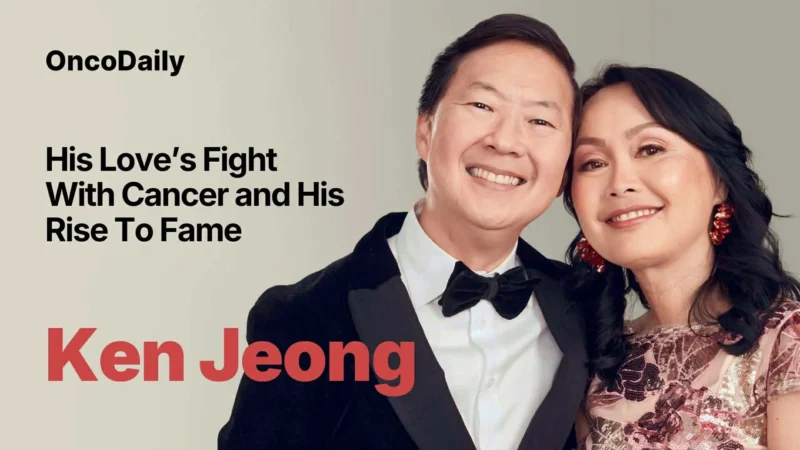
You Can Also Read Ken Jeong’s Wife Beats Stage 3 Breast Cancer: Hangover Star’s Cancer Battle That Changed His Career Forever by OncoDaily
Written by Aharon Tsaturyan, MD, Editor at OncoDaily Intelligence Unit
FAQ
Did Ken Watanabe have cancer?
Yes. Ken Watanabe has survived two separate cancers during his lifetime. He was diagnosed with acute myeloid leukemia (AML) in 1989 at the age of 29 and later diagnosed with early-stage gastric (stomach) cancer in 2016 at age 56. Both conditions were treated, and he later returned to his acting career.
What type of leukemia did Ken Watanabe have?
Ken Watanabe was diagnosed with acute myeloid leukemia (AML), an aggressive cancer of the blood and bone marrow. AML occurs when abnormal myeloid cells grow uncontrollably and interfere with normal blood cell production, leading to complications such as infections, anemia, and bleeding.
Did Ken Watanabe survive leukemia?
Yes. Ken Watanabe achieved remission after treatment for AML. He later experienced a relapse in the early-to-mid 1990s and underwent additional treatment. He eventually recovered and continued his international acting career.
What cancer did Ken Watanabe have in 2016?
In 2016, Ken Watanabe was diagnosed with early-stage gastric cancer (stomach cancer) during a routine medical examination in Japan. His cancer was detected at an early stage, allowing treatment with minimally invasive approaches.
What treatment did Ken Watanabe receive for gastric cancer?
Public reports stated that Ken Watanabe underwent endoscopic/laparoscopic treatment to remove the early gastric cancer lesion. Because the cancer was detected early, he did not require extensive treatment and was able to return to his professional activities after recovery.
Can early gastric cancer be cured?
Yes. Early gastric cancer has excellent outcomes when detected and treated appropriately. For cancers limited to the stomach lining or superficial layers, treatments such as endoscopic resection or surgery can be curative, with many patients achieving long-term survival.
What is the survival rate for early gastric cancer?
Survival depends on cancer stage and treatment. Patients with stage I gastric cancer, especially very early disease treated successfully, can have 5-year survival rates exceeding 90%. Outcomes decrease when gastric cancer is diagnosed at more advanced stages.
Why is gastric cancer screening important in Japan?
Japan has one of the highest rates of gastric cancer worldwide and has developed screening programs, including endoscopic examinations, to detect cancers earlier. Early detection increases the possibility of curative treatment and reduces the need for more extensive therapies.
What is Helicobacter pylori and how is it linked to stomach cancer?
Helicobacter pylori (H. pylori) is a bacterium that infects the stomach lining and causes chronic inflammation. Long-term infection can contribute to changes such as gastric atrophy and intestinal metaplasia, increasing the risk of gastric cancer. Treating H. pylori infection is an important strategy for gastric cancer prevention.
Did Ken Watanabe return to acting after cancer?
Yes. After both cancer diagnoses and treatments, Ken Watanabe returned to his acting career. He continued appearing in major productions, including Broadway’s The King and I and HBO’s Tokyo Vice.