Immunotherapy and summer sun can still be safely enjoyed with the right precautions. However, sun exposure, heat, sweating, and frequent bathing can make some treatment-related skin symptoms more uncomfortable. Rash, itching, dryness, skin sensitivity, and blistering can occur with certain immunotherapies, and these reactions vary widely by treatment and by person. Immunotherapy and summer sun do not have to be incompatible, but skin protection, gentle bathing habits, hydration, and early reporting of new symptoms should become part of the routine.
Photo: Depositphotos
Why Does Summer Need Extra Attention During Immunotherapy?
Hot weather can intensify common skin concerns. Strong ultraviolet radiation can contribute to sunburn, while heat and sweat may aggravate itching, irritation, or an existing rash. Dehydration and overheating can also worsen fatigue and make treatment days harder. People who have recently received radiation therapy, already have sensitive skin, or are experiencing an active treatment-related rash may need particularly careful guidance from their oncology team. The goal is not to avoid summer entirely. It is to adapt outdoor activities in a way that protects the skin and supports recovery.
What Is Immunotherapy?
Immunotherapy is a type of cancer treatment that helps the immune system recognize and attack cancer cells. It works differently from chemotherapy, which directly targets rapidly dividing cells. Some immunotherapies can trigger immune-related side effects because an activated immune system may also affect healthy tissues. The skin is one of the areas most commonly affected. Possible symptoms can include rash, itching, dryness, redness, blisters, pigment changes, or increased sensitivity. Not every patient receiving immunotherapy will develop skin problems. The best skin-care approach depends on the specific drug, treatment combination, medical history, and symptoms already present.
How Can the Summer Sun Affect Patients on Immunotherapy?
Strong sun exposure may worsen skin irritation and increase the chance of sunburn. Patients with dry or itchy skin may find that even a short period outdoors leaves their skin feeling tight, sore, or inflamed. Heat can also contribute to dehydration, dizziness, headaches, and fatigue. These symptoms may overlap with treatment-related side effects, so it is important not to assume that feeling unwell is simply due to the weather. A practical approach is to limit direct sun exposure when ultraviolet radiation is strongest, usually between 10 a.m. and 4 p.m. Plan outdoor activities for earlier in the morning or later in the afternoon when possible.
Why Do Baths, Showers, and Hot Tubs Matter?
Long, hot baths and showers can remove natural oils from the skin. For someone already experiencing dryness, itching, or rash during immunotherapy, this may weaken the skin barrier and worsen discomfort. Choose lukewarm water rather than hot water. Keep baths and showers brief, ideally around 5 to 10 minutes when the skin is dry, itchy, or irritated. Use mild, fragrance-free cleansers and avoid scrubbing, exfoliating gloves, strongly scented products, or harsh soaps. After bathing, pat the skin dry rather than rubbing it. Apply a gentle fragrance-free moisturizer within 5 minutes to help seal in moisture.
Hot tubs, steam rooms, and very hot baths may not be appropriate for everyone receiving immunotherapy, particularly if there is an active rash, open skin, infection risk, dehydration, dizziness, or recent surgery. Ask the oncology team before using them.
What Should a Daily Summer Skin-Protection Routine Include?
A simple routine can make a meaningful difference. Use Broad-Spectrum SPF 30 or Higher Choose a broad-spectrum sunscreen with SPF 30 or higher. Broad-spectrum products protect against both UVA and UVB radiation. Apply sunscreen to exposed skin before going outside. Reapply it every 2 hours, and sooner after swimming, heavy sweating, or towel drying.
Patients with irritated skin may find mineral sunscreens containing zinc oxide or titanium dioxide more comfortable, but any new product should be tested on a small area first and discussed with the care team if there is an active rash.
Use Clothing and Shade, Not Sunscreen Alone
Sunscreen is only one part of protection. Wear tightly woven clothing, long sleeves when practical, UV-blocking sunglasses, and a wide-brimmed hat that shades the face, ears, and neck. Seek shade whenever possible, especially from 10 a.m. to 4 p.m. Umbrellas, covered patios, trees, and indoor breaks can all reduce direct UV exposure. Avoid tanning beds and sunlamps. They increase ultraviolet exposure without providing a medical benefit.
Keep Skin Care Gentle
Use fragrance-free moisturizers, body washes, and laundry products. Avoid products that sting, exfoliate, or contain strong fragrances, alcohol, retinoids, or acids unless the oncology or dermatology team has specifically advised their use. If the skin is dry or itchy, use moisturizer at least once daily and within 5 minutes after bathing. Some patients may benefit from applying it more often, particularly to hands, feet, arms, and legs.
Drink Fluids Regularly
Drink fluids throughout the day, especially during hot weather or outdoor activity. Individual fluid needs can vary for patients with heart, kidney, or other medical conditions, so those with fluid restrictions should follow their care team’s advice.
Which Skin Symptoms Should Be Reported Promptly?
Not every skin change is an emergency, but some symptoms need prompt medical attention. Contact the oncology team quickly if you develop:
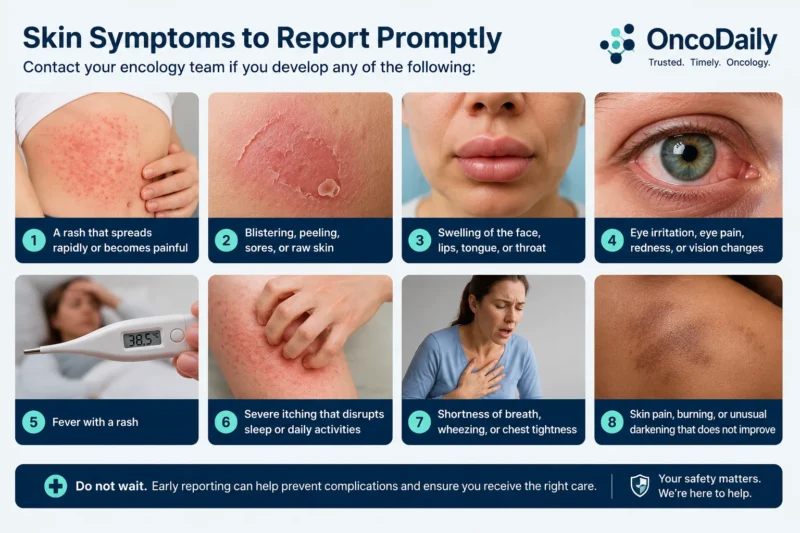
Do not stop immunotherapy on your own unless the oncology team tells you to. Some immune-related skin reactions may need prescription creams, oral medication, specialist review, or a temporary treatment adjustment. Early reporting can help prevent complications.
Who May Need Extra Caution in Summer?
Some patients may need more individualized summer planning. This includes people with:
- An active immune-related rash or prior severe skin reaction
- Recent radiation therapy or sensitive treated skin
- Eczema, psoriasis, rosacea, or other chronic skin conditions
- Autoimmune disease
- Multiple medications, including drugs that can increase photosensitivity
- Recent surgery, open wounds, or healing scars
- A history of dehydration, dizziness, or heat-related illness
- A patient’s oncology team can advise whether certain sunscreens, lotions, outdoor activities, pools, hot tubs, or travel plans should be modified.
The Main Takeaway
People receiving immunotherapy can usually enjoy summer activities, but skin protection should be treated as part of supportive cancer care. Broad-spectrum sunscreen, protective clothing, shade, gentle bathing, regular moisturizing, and hydration can help reduce discomfort. Patients should also report rash, blistering, peeling, swelling, or worsening symptoms promptly. With the right precautions and personalized advice from the oncology team, summer plans can often be adapted safely and comfortably.
You Can Also Read Does Sunscreen Cause Cancer? Myths and Facts by OncoDaily

Written by Aharon Tsaturyan, MD, Editor at OncoDaily Intelligence Unit
FAQ
Is all sun exposure forbidden during immunotherapy?
Not necessarily. Many people receiving immunotherapy can spend time outdoors safely with appropriate precautions. The right level of sun protection depends on the treatment, current symptoms, skin history, and advice from the oncology team.
Can a short time in the sun cause problems during immunotherapy?
Yes, even brief exposure can matter if the skin is already irritated, recently treated with radiation, or unusually sensitive. Sun protection is important during everyday activities such as walking, driving, gardening, or sitting outdoors.
Does every rash during immunotherapy mean the cancer is getting worse?
No. A rash can have many causes, including an immune-related treatment effect, infection, allergy, heat, medication interaction, or another skin condition. It should be reported, but it does not automatically mean cancer progression.
When should patients ask their oncology team about sun safety?
Patients should ask their oncology team before trying a new sunscreen, skin-care product, hot tub, tanning bed, long outdoor activity, or travel plan if they are unsure whether it is safe.
Who may need extra individualized advice about sun exposure?
Extra guidance may be especially important for patients with an active rash, recent dose change, treatment pause, recent radiation therapy, severe itching, or a history of serious skin side effects.
What sunscreen is best during immunotherapy?
A broad-spectrum sunscreen with SPF 30 or higher is generally recommended. Patients with sensitive or irritated skin may prefer a fragrance-free mineral sunscreen containing zinc oxide or titanium dioxide, but should check with their oncology team if they have an active rash.
Can patients use hot tubs or steam rooms during immunotherapy?
Hot tubs and steam rooms may worsen dehydration, itching, redness, or skin irritation. Patients with an active rash, recent surgery, open skin, dizziness, or infection concerns should ask their oncology team before using them.
How often should patients moisturize during immunotherapy?
Patients with dry or itchy skin may benefit from applying a gentle, fragrance-free moisturizer at least once daily and within 5 minutes after bathing. Some people may need to moisturize more often depending on symptoms.
Can immunotherapy make skin more sensitive to heat?
Yes. Heat, sweating, and direct sunlight can make rash, itching, dryness, or irritation feel worse for some patients receiving immunotherapy. Staying cool, drinking fluids, and taking breaks in the shade can help.
Should patients stop immunotherapy if they develop a rash?
No. Patients should not stop treatment on their own. They should contact their oncology team, who can assess the rash and decide whether supportive skin care, prescription treatment, a specialist referral, or a treatment adjustment is needed.