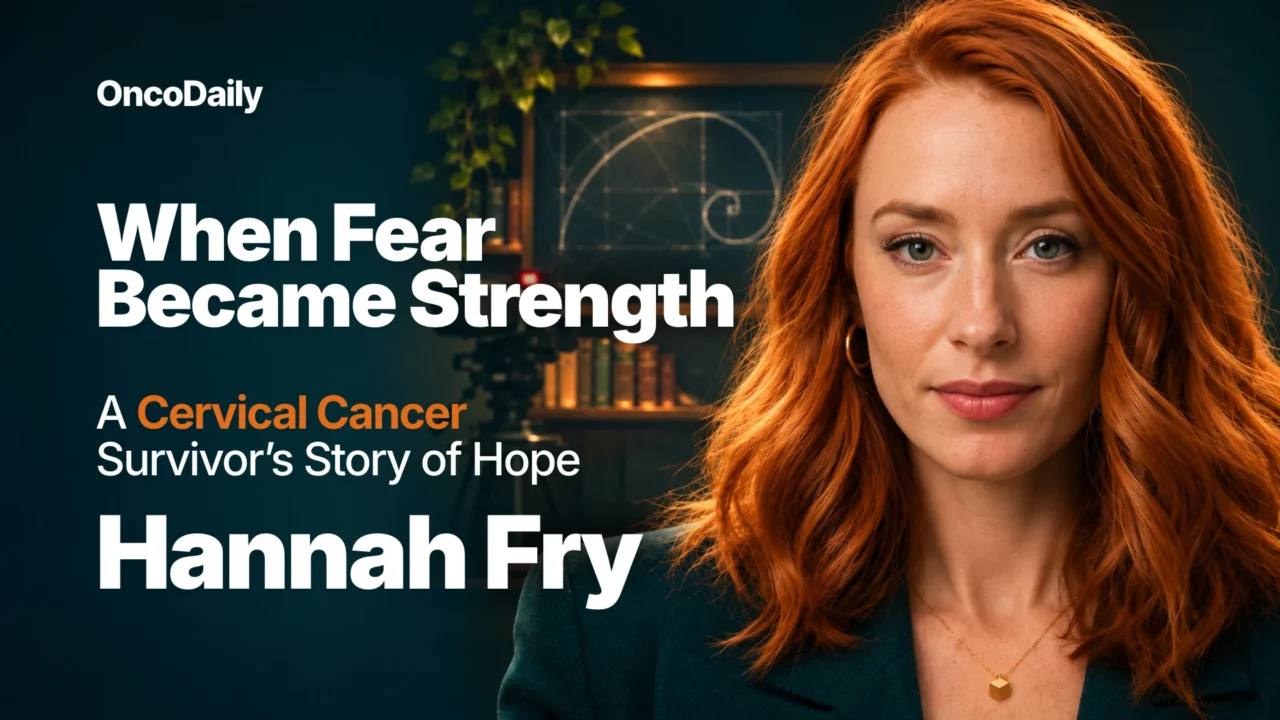
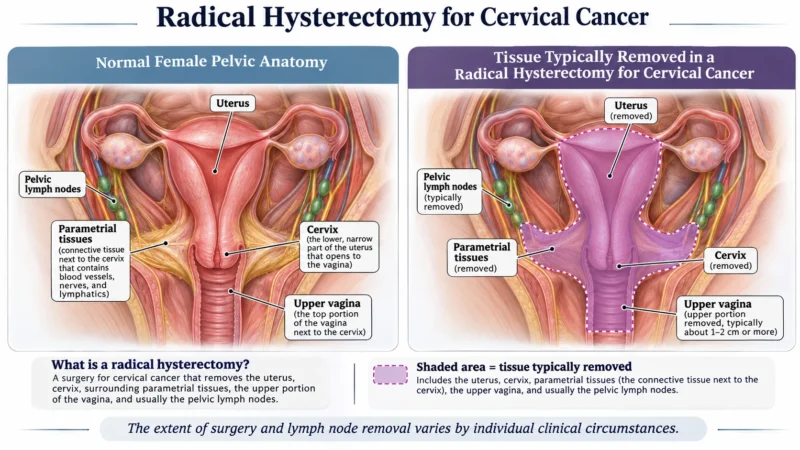
British mathematician, author, and television presenter Hannah Fry has revealed that she recently received her five-year cancer-free milestone after undergoing treatment for cervical cancer. Diagnosed at age 36 following a delayed routine screening appointment in 2020, Fry underwent a radical hysterectomy and faced frightening uncertainty about whether the disease had spread to her lymph nodes. During her recovery, Fry was told that several pelvic lymph nodes appeared enlarged, raising concerns about possible metastatic disease. The experience left her confronting questions about survival, treatment risks, and the future of her two young daughters.
Although she subsequently received reassuring news about her treatment, Fry developed lymphedema, a lasting complication associated with disruption of the lymphatic system after pelvic surgery. Her experience eventually inspired the BBC documentary Making Sense of Cancer with Hannah Fry, in which she examined the relationship between medical statistics, treatment decisions, and the long-term consequences of cancer care.
On November 15, 2026, Fry publicly discussed her recent five-year cancer-free milestone during an appearance on BBC Radio 4’s Desert Island Discs, describing herself as “unbelievably lucky.” Her story highlights several important issues in modern gynecologic oncology: the role of HPV and cervical screening, the clinical significance of lymph node involvement, the selection of surgical and nonsurgical treatments, and the importance of informed consent and survivorship care.
Who Is Hannah Fry?
Hannah Fry is a British mathematician, academic, author, and science communicator recognized for making mathematical concepts accessible to the general public. Born in February 1984, she studied mathematics and theoretical physics at University College London, where she subsequently completed a PhD. Throughout her career, Fry has explored how mathematical principles influence human relationships, technological development, artificial intelligence, and everyday decision-making. She is the author of The Mathematics of Love and Hello World: How to Be Human in the Age of the Machine. Her television and radio work includes scientific documentaries and the BBC program The Curious Cases of Rutherford & Fry.
Fry has become particularly well known for explaining probability, statistical uncertainty, and the limitations of mathematical predictions. These subjects took on profound personal significance when she was diagnosed with cervical cancer. For someone accustomed to understanding risk through numbers, the experience demonstrated how difficult it can be to interpret medical probabilities when they concern one’s own life.
When Was Hannah Fry Diagnosed With Cervical Cancer?
Hannah Fry’s cancer journey began in 2020, when she attended a routine cervical screening appointment that she had postponed for several months. The screening identified abnormalities requiring additional investigation. She was subsequently referred for further testing, including a biopsy, and was diagnosed with cervical cancer at the age of 36. At the time, Fry was raising two young daughters and maintaining an active academic and broadcasting career.
The diagnosis was particularly distressing because the extent of the malignancy was initially uncertain. In later interviews, Fry described the fear associated with learning that cancer had been identified and that further evaluation was necessary to determine whether it had spread.
The uncertainty was compounded by the COVID-19 pandemic, which affected hospital procedures, family visits, and the emotional experience of undergoing treatment. Her diagnosis eventually led to a radical hysterectomy in early 2021. Unlike many patients who require combinations of surgery, chemotherapy, and radiotherapy, Fry’s public accounts indicate that she did not undergo postoperative chemotherapy or radiotherapy. However, her complete pathology report and detailed treatment records have not been publicly released.
Did Hannah Fry Delay Her Cervical Screening Appointment?
Fry acknowledged that she had delayed attending a routine cervical screening appointment for several months. When she eventually underwent screening, abnormal findings prompted further testing that led to her cancer diagnosis. Her experience illustrates the importance of participating in recommended screening programs. However, it is essential to distinguish between a delay in screening and the biological development of cancer.
There is no publicly available clinical evidence establishing that Fry’s screening delay caused her cancer or changed its stage. Cervical cancer typically develops through a prolonged process involving persistent infection with high-risk human papillomavirus (HPV), precancerous cellular changes, and eventual malignant transformation. This progression may take many years. A delay of several months does not establish when an invasive tumor first developed. Nevertheless, routine screening is an important preventive intervention because it can identify precancerous changes before invasive cervical cancer develops.
How Does Cervical Screening Work?
Contemporary cervical screening programs increasingly use primary high-risk HPV testing rather than relying exclusively on cytology. A sample of cervical cells is collected and tested for oncogenic HPV types.
If high-risk HPV is detected, additional assessment may include cytological examination, repeat testing, colposcopy, or biopsy, depending on the result and the patient’s clinical history. Colposcopy allows clinicians to examine the cervix under magnification and identify abnormal areas requiring tissue sampling. Biopsy is necessary to establish a histological diagnosis of invasive cervical cancer. Importantly, a positive HPV screening test does not mean a person has cancer. Likewise, abnormal cervical cells may represent precancerous lesions rather than invasive malignancy. The purpose of screening is to identify abnormalities at a stage when appropriate surveillance or treatment can prevent progression.
You Can Also Read Cervical Cancer Screening: Who Needs a Pap Smear or HPV Test and When? by OncoDaily
How Often Is Cervical Screening Recommended in the UK?
In England, the NHS offers routine cervical screening to eligible people aged 25–64 who have a cervix. A significant change took effect on July 1, 2025, when the routine screening interval for eligible HPV-negative individuals aged 25–49 was extended from three to five years. The interval was already five years for many older participants. Under the current English program, people with negative high-risk HPV tests are generally invited for routine screening every five years, although those with previous HPV-positive results or other clinical considerations may require shorter intervals.
The change followed evidence that primary HPV testing provides strong protection against cervical cancer when high-risk HPV is not detected. Screening arrangements vary across the UK’s nations and internationally, and individuals should follow the recommendations of their local screening program.
What Causes Cervical Cancer?
Persistent infection with high-risk HPV is responsible for the overwhelming majority of cervical cancers. HPV is a common virus transmitted primarily through intimate skin-to-skin contact, including sexual contact. Most HPV infections resolve spontaneously or become undetectable through immune control. However, persistent infection with oncogenic HPV types can produce progressive changes in cervical epithelial cells.
HPV16 and HPV18 are particularly important because they account for a substantial proportion of cervical cancers worldwide. At the molecular level, the viral oncoproteins E6 and E7 interfere with major tumor-suppressor pathways. E6 promotes dysfunction of the p53 pathway, while E7 disrupts retinoblastoma protein (pRb) signaling. These alterations impair normal cell-cycle regulation, reduce the effectiveness of cellular responses to DNA damage, and promote abnormal proliferation.
Over time, persistent high-risk HPV infection may produce high-grade squamous intraepithelial lesions and, in some individuals, invasive carcinoma. Additional risk factors include smoking, immunosuppression, and inadequate access to screening and HPV vaccination. However, Fry has not publicly disclosed the HPV status or specific molecular findings associated with her cancer. Her individual tumor should therefore not be assigned a confirmed HPV genotype or pathological mechanism.
How Common Is Cervical Cancer? Latest 2026 Statistics
Cervical cancer remains an important public health concern, despite the availability of effective preventive strategies. According to the National Cancer Institute’s Surveillance, Epidemiology, and End Results (SEER) program, the United States is expected to record approximately 13,490 new cervical cancer diagnoses and 4,200 deaths in 2026. The overall five-year relative survival rate is approximately 68.8%, based on patients diagnosed between 2016 and 2022.
How Does Cervical Cancer Survival Vary by Stage?
SEER data demonstrate substantial differences in survival according to disease extent. The five-year relative survival rate is 91.8% for localized cervical cancer, compared with 64.0% for regional disease and 20.5% for distant metastatic disease. These findings emphasize the prognostic importance of disease stage at diagnosis.
However, SEER summary stages are not interchangeable with the International Federation of Gynecology and Obstetrics (FIGO) staging system used in clinical gynecologic oncology. Five-year relative survival measures survival in a cancer population compared with the expected survival of people of similar demographic characteristics in the general population.
It does not represent an individual patient’s probability of cure and should not be used to reconstruct Fry’s personal prognosis. According to the National Cancer Institute’s SEER program, an estimated 13,490 new cases of cervical cancer and 4,200 related deaths are expected in the United States in 2026. The overall five-year relative survival rate is 68.8%, based on patients diagnosed between 2016 and 2022. These figures highlight the ongoing burden of cervical cancer and the importance of prevention, early detection, and effective treatment.
What Is the Global Burden of Cervical Cancer?
According to the International Agency for Research on Cancer, approximately 660,000 women were diagnosed with cervical cancer worldwide in 2022, and approximately 350,000 died from the disease. More recent WHO estimates indicate approximately 604,000 new cases and 280,000 deaths in 2024.
The global burden is disproportionately concentrated in low- and middle-income countries, where access to HPV vaccination, screening, diagnostic services, and appropriate treatment may be limited. These figures illustrate the potential impact of coordinated prevention and early detection.
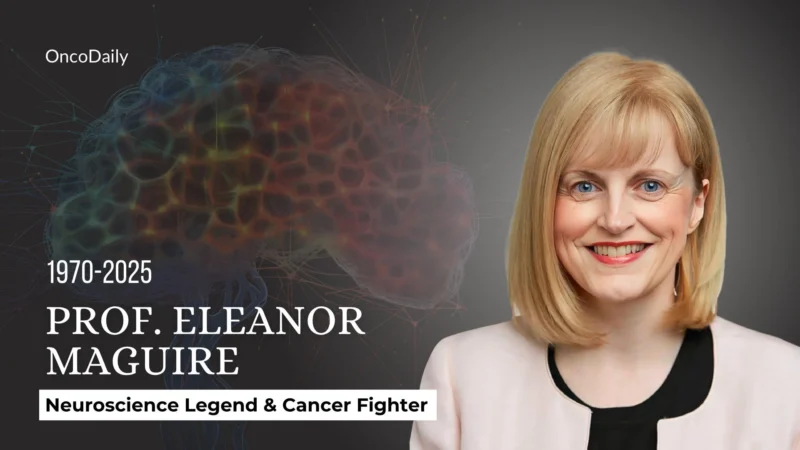
You Can Also Read Eleanor Maguire: Honoring Her Legacy and Brave Battle with Spinal Cancer by OncoDaily
Written by Aharon Tsaturyan, MD, Editor at OncoDaily Intelligence Unit
FAQ
What type of cancer did Hannah Fry have?
Hannah Fry was diagnosed with cervical cancer, a malignancy affecting the cervix, the lower part of the uterus that connects to the vagina. Her exact histological subtype has not been publicly confirmed.
How old was Hannah Fry when she was diagnosed with cancer?
She was 36 years old when diagnosed in early 2021, after abnormal cervical screening findings in late 2020.
What treatment did Hannah Fry receive for cervical cancer?
She underwent a radical hysterectomy and pelvic lymph node removal. She has reported that she did not need chemotherapy or radiotherapy afterward.
Did Hannah Fry's cervical cancer spread to her lymph nodes?
Doctors initially suspected possible lymph node involvement, but subsequent findings were reassuring. She has not reported confirmed lymph node metastases.
Is Hannah Fry cancer-free in 2026?
In November 2026, she publicly announced that she had received her five-year all-clear following treatment for cervical cancer.
Did Hannah Fry experience long-term complications after surgery?
Yes. She has discussed developing lymphedema after pelvic lymph node surgery, requiring further management.
Why did Hannah Fry make a cancer documentary?
Her experience inspired the BBC documentary Making Sense of Cancer with Hannah Fry, which examines treatment risks, medical statistics, and the importance of informed consent.
Can cervical cancer be cured with surgery alone?
Yes. Selected patients with early-stage cervical cancer may be treated successfully with surgery alone. Whether additional treatment is necessary depends on the pathological findings and risk of recurrence.