Grace Helbig’s brain tumor diagnosis has drawn attention after the 41-year-old YouTuber, comedian, and author revealed that doctors discovered two tumors in her brain, three years after she was diagnosed with breast cancer. Helbig announced the findings on October 12, 2026, after experiencing unexplained leg numbness that led her to seek emergency medical care. The tumors were considered operable, and Helbig underwent brain surgery on October 14. The following day, she shared a photograph from her hospital bed, confirming that she had come through the operation and thanking her medical team, family, and followers for their support.
Helbig was previously diagnosed with triple-positive breast cancer in 2023 and underwent chemotherapy, breast-conserving surgery, radiation therapy, and hormone therapy. Although she has publicly suggested that her previous breast cancer may have returned, the exact nature of the brain tumors has not been confirmed through publicly disclosed pathology findings. Her experience raises important questions about neurological symptoms, breast cancer recurrence, brain metastases, and the treatment options available for patients with intracranial tumors.
Who Is Grace Helbig?
Grace Helbig is an American comedian, author, actress, podcast host, and digital content creator who became widely recognized through her YouTube videos. She first gained popularity through her DailyGrace channel and subsequently developed a successful career across social media, television, publishing, and live entertainment. Helbig is also known for This Might Get Weird, the comedy podcast she co-hosts with longtime friend and fellow comedian Mamrie Hart.
Her work is characterized by observational humor and a candid approach to personal experiences, including relationships, mental health, and her previous breast cancer diagnosis. In 2023, Helbig publicly discussed undergoing treatment for breast cancer, sharing parts of her experience with followers and using humor to communicate during a difficult period. She is married to comedian and content creator Elliott Morgan, whom she thanked during her latest health announcement.
When Did Grace Helbig Reveal Her Brain Tumors?
On October 12, 2026, Helbig announced through Instagram and TikTok that doctors had discovered two tumors in her brain. The news followed an emergency department visit after she experienced numbness in her leg. Helbig explained that the tumors were considered operable and that she was scheduled to undergo brain surgery on October 14. She acknowledged that surgery had not initially been guaranteed, making the possibility of an operation particularly meaningful to her.
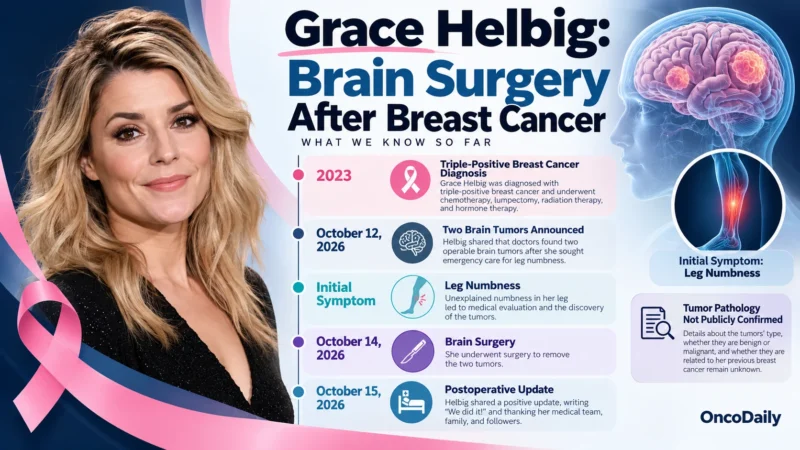
Despite the uncertainty, she expressed optimism and said she was approaching the situation one day at a time. Helbig also acknowledged that additional treatment, potentially including radiation therapy, might be necessary after surgery. At the time of her announcement, the full treatment plan had not yet been established.
We did it! I am overwhelmed with love and support. THANK YOU. Thank you to the doctors, my family, my friends, my husband and truly all of you. I know we may not know each other personally, but this was a deep kind of support that was wholly special. People are good and kind and caring and I never want to forget that. Just thank you. Now I will rest for 29484829837 hours.
Why Did Leg Numbness Lead to Grace Helbig’s Brain Tumor Diagnosis?
Helbig reported experiencing leg numbness before seeking emergency medical attention. Neurological symptoms such as numbness, weakness, changes in sensation, or difficulty walking can sometimes indicate abnormalities affecting the brain or spinal cord. The brain contains specialized regions responsible for processing sensation and controlling voluntary movements. A tumor affecting these regions, or causing swelling in nearby brain tissue, may interfere with neurological signaling. For example, a lesion involving the sensory or motor regions of the cerebral cortex may produce numbness or weakness on the opposite side of the body.
Intracranial tumors can also produce neurological symptoms through surrounding edema, increased intracranial pressure, or disruption of adjacent neural pathways. However, leg numbness has many possible causes unrelated to cancer, including peripheral neuropathy, nerve compression, spinal disorders, and vascular conditions. In Helbig’s case, the symptom prompted further investigation, during which doctors discovered two intracranial tumors. She has not publicly disclosed their precise locations or the neurological findings documented during her medical evaluation.
What Type of Brain Tumors Does Grace Helbig Have?
The exact type of Grace Helbig’s brain tumors has not been publicly confirmed. Brain tumors are broadly classified as primary or secondary. Primary brain tumors originate within the brain or surrounding central nervous system structures. They include several distinct tumor types, such as gliomas, meningiomas, and other intracranial neoplasms. Secondary brain tumors, commonly called brain metastases, develop when malignant cells from a cancer elsewhere in the body spread to the brain. In adults, common primary sources of brain metastases include lung cancer, breast cancer, and melanoma.
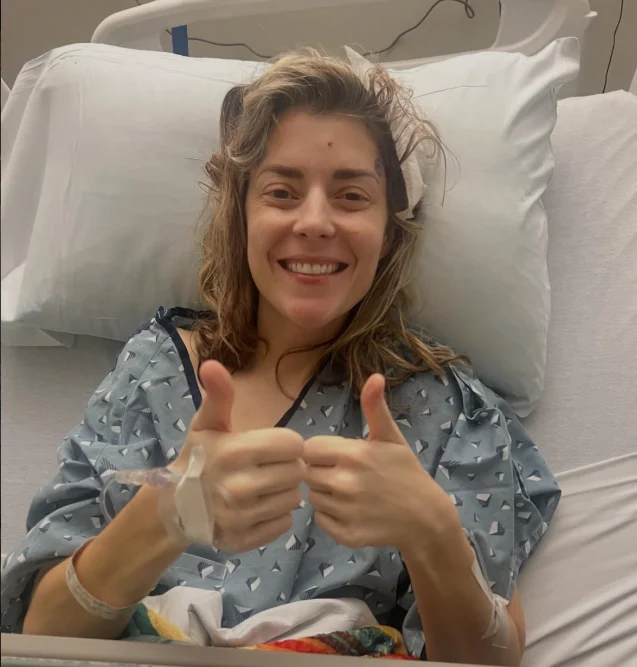
Photo: @gracehelbig Instagram
The distinction is clinically significant because primary brain tumors and brain metastases differ in their biological characteristics, treatment approaches, and prognosis. Importantly, not all brain tumors are malignant. Some primary brain tumors are benign, although their location can still cause serious neurological complications. Helbig’s previous breast cancer diagnosis raises the possibility of metastatic disease, but the presence of a cancer history alone is insufficient to confirm the origin of a new brain lesion. Imaging findings, surgical pathology, and, when appropriate, molecular testing are important for establishing a definitive diagnosis.
What Was Grace Helbig’s Previous Breast Cancer Diagnosis?
Grace Helbig was diagnosed with triple-positive breast cancer in 2023, meaning that her tumor expressed estrogen receptors (ER), progesterone receptors (PR), and human epidermal growth factor receptor 2 (HER2). Triple-positive breast cancer belongs to the broader category of hormone receptor-positive, HER2-positive breast cancer. These biomarkers are important because they influence treatment selection and may predict responsiveness to endocrine therapy and HER2-directed treatments. In 2023, Helbig described receiving chemotherapy and subsequently undergoing a lumpectomy and radiation therapy. Her treatment history also included hormone therapy.
She later reported entering remission. However, remission does not necessarily mean that the possibility of recurrence has been permanently eliminated. Some breast cancers can recur locally, regionally, or at distant sites after initially successful treatment. The likelihood and pattern of recurrence depend on several factors, including the original disease stage, tumor biology, treatment response, and individual clinical characteristics. Helbig has not disclosed the stage of her original breast cancer or a complete account of her previous systemic treatment.
Can Triple-Positive Breast Cancer Spread to the Brain?
Yes. HER2-positive breast cancer can metastasize to the brain, although not every patient with this subtype develops brain metastases. Breast cancer brain metastases occur when malignant cells from the original breast tumor reach the central nervous system and establish secondary tumor deposits. Cancer cells generally spread through the bloodstream, cross or interact with the blood-brain barrier, and may eventually form metastatic lesions.
HER2-positive breast cancer is recognized as one of the breast cancer subtypes associated with a comparatively increased risk of central nervous system involvement, particularly in the metastatic setting. Studies of patients with advanced HER2-positive breast cancer have reported brain metastases in a substantial proportion of patients over the course of their disease, with estimates varying according to the study population, treatment era, and duration of follow-up.
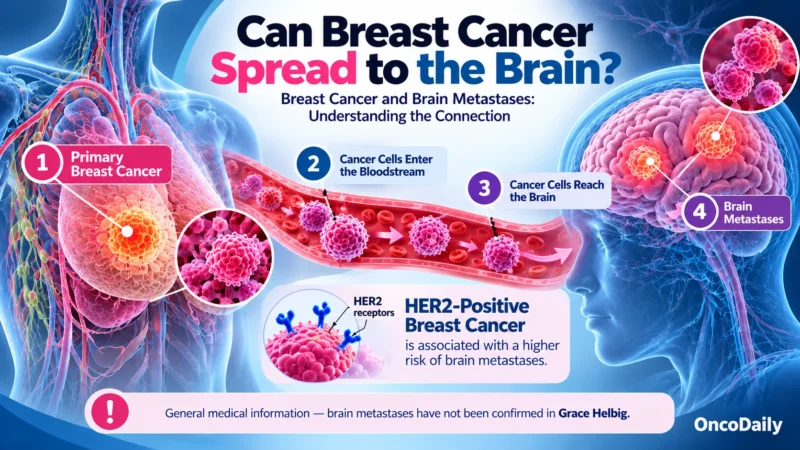
This does not mean that the same risk applies to patients diagnosed with early-stage HER2-positive breast cancer. The brain can become an important site of disease progression partly because the blood-brain barrier limits the penetration of some systemic treatments. However, modern HER2-directed therapies have significantly expanded treatment options for patients with HER2-positive metastatic breast cancer, including selected patients with brain metastases. If a brain lesion is confirmed as a breast cancer metastasis, it remains classified as metastatic breast cancer rather than a new primary brain cancer. In Grace Helbig’s case, a connection between the two brain tumors and her previous breast cancer remains a possibility rather than a publicly confirmed diagnosis.
What Are the Warning Signs of Brain Tumors and Brain Metastases?
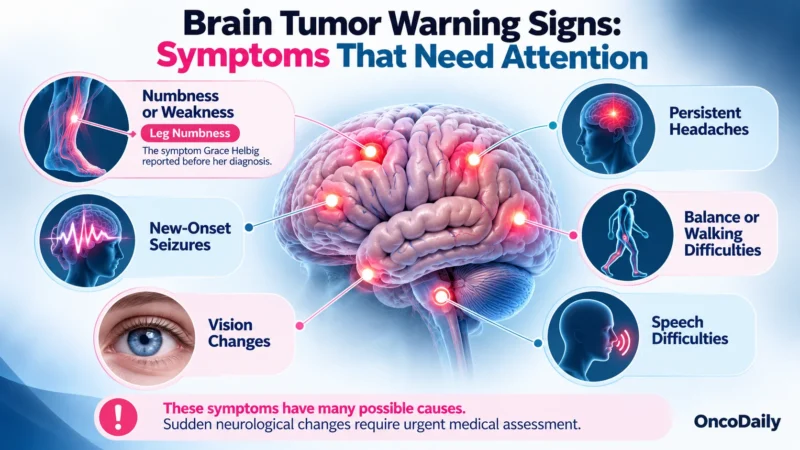
Brain tumors can cause a wide range of neurological symptoms, depending on their location, size, surrounding edema, and effects on nearby brain structures. Common symptoms include persistent or progressively worsening headaches, new-onset seizures, weakness or numbness affecting part of the body, difficulty walking, and problems with balance or coordination. Some patients experience changes in vision, speech, memory, concentration, or behavior.
Nausea and vomiting may occur when intracranial pressure increases. However, symptoms are not always present. Some intracranial lesions are discovered incidentally during imaging performed for another reason. Neurological symptoms also have numerous noncancerous causes, so their presence does not automatically indicate a brain tumor. In patients with a previous cancer diagnosis, new or progressive neurological symptoms generally warrant careful clinical assessment. Sudden weakness or numbness, particularly on one side of the body, or a new seizure requires urgent medical evaluation, because these symptoms may indicate a stroke or another serious neurological condition.
How Are Brain Tumors Diagnosed?
The diagnostic evaluation of a suspected brain tumor generally includes neurological examination and imaging. Contrast-enhanced magnetic resonance imaging (MRI) is a principal imaging modality for assessing intracranial lesions because it provides detailed visualization of the brain and surrounding structures. MRI can help determine the number, size, location, and imaging characteristics of tumors, as well as associated edema or mass effect. Computed tomography (CT) may also be used, particularly when patients present with acute neurological symptoms or when MRI is not immediately available. However, imaging alone cannot always establish whether a lesion is a primary brain tumor, a metastasis, or another pathological process.
When clinically appropriate, surgical resection or biopsy allows tissue to undergo histopathological examination. If metastatic breast cancer is suspected, pathological assessment may include immunohistochemical markers and comparison with the characteristics of the original breast tumor. Reassessment of ER, PR, and HER2 status may also provide clinically important information if metastatic breast cancer is confirmed. Grace Helbig has not publicly disclosed the imaging characteristics of her two tumors or the results of any pathological examination.
What Happened During Grace Helbig’s Brain Surgery?
Helbig underwent brain surgery on October 14, 2026, following the discovery of two operable intracranial tumors. On October 15, she shared an update from her hospital bed, writing, “We did it!” She also thanked her doctors, family, friends, husband, and followers for the encouragement she received during the experience. Her update indicated that the operation had taken place and that she was recovering afterward. However, Helbig did not publicly provide a detailed surgical report. It remains unknown whether both tumors were completely removed, whether residual disease was present, or whether the surgical procedure involved additional complications.
These distinctions are clinically important. The possibility of surgical removal does not necessarily mean that a tumor has been completely resected or that no further treatment will be required. The postoperative treatment plan generally depends on the final diagnosis, extent of resection, neurological recovery, and additional imaging findings.
Why Is Surgery Used to Treat Brain Tumors?
Neurosurgical intervention may serve several purposes in patients with intracranial tumors. In selected cases, surgery is performed to remove a tumor that is causing neurological symptoms, reduce pressure on surrounding brain structures, or obtain tissue for definitive diagnosis. Surgery may also be recommended for a limited number of brain metastases when lesions are accessible and their removal is expected to provide clinical benefit. The decision depends on tumor size, location, neurological symptoms, overall health, extracranial disease status, and whether other treatments are more appropriate.
For patients with suspected brain metastases, surgery can be particularly valuable when the diagnosis is uncertain or when a symptomatic lesion produces substantial mass effect. However, not every brain tumor requires surgery. Radiation therapy, systemic treatment, surveillance, or combinations of these approaches may be appropriate depending on the diagnosis and clinical circumstances. Helbig’s medical team determined that surgery was an option, but the detailed reasons for the chosen approach have not been made public.
Will Grace Helbig Need Radiation Therapy After Surgery?
Before undergoing surgery, Helbig acknowledged that radiation therapy might be part of her subsequent treatment. However, she has not publicly confirmed whether radiation has been recommended or initiated. Postoperative radiation therapy is used in selected patients to improve local disease control and reduce the risk of tumor recurrence. For patients with a limited number of brain metastases, stereotactic radiosurgery (SRS) or fractionated stereotactic radiation therapy may be used to deliver focused radiation to a surgical cavity or other intracranial lesions.
Despite its name, stereotactic radiosurgery is a form of radiation treatment rather than an operation. It allows radiation to be concentrated on a defined target while limiting exposure to surrounding healthy brain tissue. Whole-brain radiation therapy remains an option in selected clinical circumstances, particularly when more extensive intracranial disease is present, although potential neurocognitive effects influence treatment decisions. Modern approaches may incorporate hippocampal avoidance and other protective strategies when appropriate.
The choice of radiation technique depends on factors such as tumor number, size, location, prior treatment, and overall clinical condition. If Helbig’s tumors are confirmed to represent breast cancer metastases, treatment planning would also consider her tumor’s molecular subtype and available systemic therapies.
How Are HER2-Positive Breast Cancer Brain Metastases Treated?
For patients with confirmed HER2-positive breast cancer brain metastases, modern management typically involves a multidisciplinary team that may include medical oncologists, neurosurgeons, radiation oncologists, neuroradiologists, and other specialists. Treatment is individualized according to the extent of intracranial disease, neurological symptoms, extracranial disease control, prior therapies, and patient preferences. Local treatments include surgical resection, stereotactic radiosurgery, and other radiation techniques. Systemic therapies may also play an important role, particularly in HER2-positive disease.
Several HER2-directed agents have demonstrated activity against breast cancer involving the central nervous system. Treatment options can include tucatinib-based combinations and antibody-drug conjugates such as trastuzumab deruxtecan, depending on the clinical setting, prior therapy, regulatory approvals, and treatment guidelines. The HER2CLIMB clinical trial established the intracranial activity of tucatinib combined with trastuzumab and capecitabine in patients with previously treated HER2-positive metastatic breast cancer, including those with brain metastases.
Other studies have demonstrated clinically meaningful intracranial responses with additional HER2-directed therapies. These developments have improved treatment options for selected patients with metastatic HER2-positive breast cancer. However, none of these treatments can be assumed to be part of Grace Helbig’s medical plan, because the origin of her brain tumors and her current systemic treatment requirements have not been publicly confirmed.
How Has Grace Helbig’s Diagnosis Affected Her Career?
Helbig announced that the remaining 2026 dates of her This Might Get Weird tour with Mamrie Hart would be postponed until 2027. She also indicated that she would temporarily step away from podcast recording while focusing on surgery and recovery. The comedian has continued to communicate with followers through social media, sharing updates about her health and expressing appreciation for the support she has received. Her husband, Elliott Morgan, and podcast co-host Mamrie Hart have been important sources of support during this period. Although Helbig has expressed optimism, her recovery timeline and future professional schedule remain dependent on her health and the recommendations of her medical team.
What Is Grace Helbig’s Prognosis?
Grace Helbig’s individual prognosis cannot be determined from the information she has publicly shared. Prognosis for patients with intracranial tumors varies substantially depending on whether the lesions are benign or malignant, primary or metastatic, and on their biological characteristics. Other factors include tumor size and location, extent of surgical resection, molecular findings, neurological status, available treatments, and response to therapy.
For patients with brain metastases, prognosis also depends on the type and extent of the underlying cancer and whether disease is controlled outside the central nervous system. Because Helbig has not publicly disclosed the pathology results or confirmed whether the tumors are metastatic breast cancer, assigning a survival estimate or predicting her long-term outcome would be inappropriate. Her positive postoperative update is encouraging, but it does not establish a final diagnosis or prognosis.
What Remains Unknown About Grace Helbig’s Brain Tumors?
Several important medical details have not been publicly confirmed. These include whether the lesions are primary brain tumors or metastases from her previous breast cancer, their precise anatomical locations, and their histopathological characteristics. The extent of surgical removal and the presence or absence of residual disease also remain unknown. Helbig has not confirmed whether postoperative radiation therapy, additional systemic treatment, or other interventions will be necessary. Although she has shared an update after surgery, no detailed pathology report or individualized prognosis has been publicly disclosed. Until further information becomes available, it is important to distinguish confirmed developments from possible explanations for her condition.
You Can Also Read Grace Helbig’s Courageous Journey: Confronting Breast Cancer with Humor and Resilience by OncoDaily

FAQ
What Type of Brain Tumors Does Grace Helbig Have?
Grace Helbig revealed that doctors discovered two operable brain tumors in October 2026. However, she has not publicly confirmed their exact type, grade, or pathology. It remains unknown whether the tumors are primary brain tumors or metastases related to her previous breast cancer diagnosis.
Did Grace Helbig's Breast Cancer Spread to Her Brain?
Grace Helbig suggested that her previous breast cancer may have returned, but brain metastases have not been publicly confirmed. Although HER2-positive breast cancer can spread to the brain, determining whether the tumors originated from her breast cancer requires appropriate clinical and pathological assessment.
When Did Grace Helbig Have Brain Surgery?
Grace Helbig underwent brain surgery on October 14, 2026, after doctors discovered two intracranial tumors. She shared a positive postoperative update on October 15, thanking her medical team and loved ones. She has not disclosed whether both tumors were completely removed.
What Symptoms Led to Grace Helbig's Brain Tumor Diagnosis?
Grace Helbig reported experiencing unexplained leg numbness, which prompted her to seek emergency medical attention. Further investigations revealed two brain tumors. Neurological symptoms such as numbness, weakness, seizures, and balance difficulties can occur with brain tumors, although they also have many noncancerous causes.
What Kind of Breast Cancer Did Grace Helbig Have in 2023?
Grace Helbig was diagnosed with triple-positive breast cancer in 2023. This means her tumor was positive for estrogen receptors (ER), progesterone receptors (PR), and HER2. She previously underwent chemotherapy, lumpectomy, radiation therapy, and hormone therapy.
Is Grace Helbig Cancer-Free After Brain Surgery?
Grace Helbig has not publicly confirmed that she is cancer-free following her October 2026 brain surgery. Her postoperative update confirmed that she had undergone the procedure, but the final pathology, extent of tumor removal, and need for additional treatment have not been disclosed.
Can HER2-Positive Breast Cancer Cause Brain Metastases?
Yes. HER2-positive breast cancer can spread to the brain, particularly in patients with advanced metastatic disease. However, the risk differs according to the original stage, tumor characteristics, and treatments received. A history of HER2-positive breast cancer does not automatically mean that a newly discovered brain tumor is metastatic.
Will Grace Helbig Need Radiation Therapy After Brain Surgery?
Grace Helbig mentioned that radiation therapy might be necessary following her operation, but she has not confirmed a final treatment plan. Postoperative radiation may be recommended depending on the tumor's pathology, location, extent of removal, and other clinical findings.
How Old Is Grace Helbig, and Who Is Her Husband?
Grace Helbig is 41 years old as of October 2026. She is married to comedian and digital content creator Elliott Morgan, whom she thanked for his support during her recent medical experience.
Is Grace Helbig Returning to Her Podcast and Tour After Surgery?
Grace Helbig postponed the remaining 2026 dates of her This Might Get Weird tour with Mamrie Hart until 2027. She also temporarily stepped away from podcast recording while recovering. Her precise return schedule depends on her health and further medical recommendations.