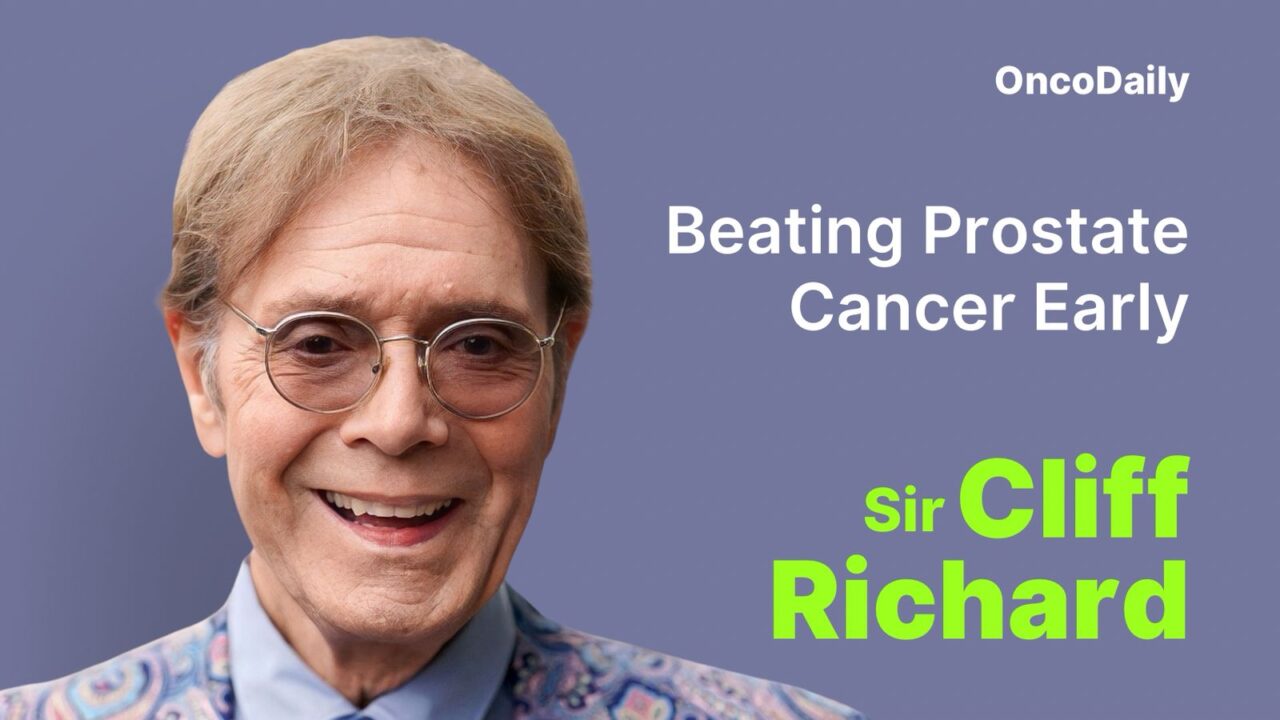
At age 85, British rock legend Sir Cliff Richard disclosed on Good Morning Britain that he successfully treated early-stage prostate cancer detected during a routine insurance medical before his 2024 Australia/New Zealand tour. Caught before any spread to bones or metastasis, the disease is now “gone” after a year of targeted therapy, though Richard candidly warns of potential recurrence risks.
No symptoms or family history prompted the discovery, underscoring routine checks’ value in an otherwise healthy icon who has sold 250+ million records. Joining King Charles’ post-cancer advocacy, Richard demands a UK national PSA screening program, calling the current absence “completely absurd” amid Prostate Cancer UK’s statistic of 12,000 preventable annual deaths from this highly treatable malignancy when caught early.
Sir Cliff Richard’s Diagnosis Story
Routine Check Revelation: Sir Cliff Richard’s prostate cancer diagnosis emerged unexpectedly during a mandatory pre-tour insurance medical examination in early 2024, ahead of his Australia/New Zealand performances. At 84 then, the rock veteran reported absolutely no symptoms no nocturia, hesitancy, hematuria, pelvic pain, or constitutional signs like fatigue/weight loss typically alerting clinicians to prostate pathology. Crucially, he had no family history of prostate, breast, or BRCA-related cancers, placing him at average risk per NCCN guidelines (PSA screening optional over 70 absent high-risk features). This incidental finding during routine labs underscores opportunistic detection’s power in asymptomatic elders.
Pathology confirmed localized, non-advanced disease likely Gleason 6-7 (intermediate risk), T1-T2 stage with negative bone scan (no osteoblastic metastases on technetium-99m or PSMA-PET if advanced imaging used). No lymphovascular invasion or seminal vesicle involvement enabled curative-intent management over 12 months, achieving biochemical remission (undetectable PSA nadir expected). Survival exceeds 95% at 5 years for such cases versus <30% if metastatic at diagnosis, per UK PROMS data—Richard’s outcome exemplifies why PSA velocity monitoring saves lives.
On Good Morning Britain (Dec 15, 2025), the legend reflected: “It was not very old… nothing had moved into bones,” crediting early intervention but voicing realistic caution: “I don’t know if it’s going to come back,” mirroring post-RP/RT biochemical recurrence risk (20-30% at 10 years). He continues surveillance with serial PSAs quarterly, embodying active monitoring’s role in octogenarian survivors.
How Was Sir Cliff Richard Treated for Prostate Cancer?
Successful Intervention: Sir Cliff Richard completed a year-long targeted therapy regimen for his localized prostate cancer, with clinical details remaining private per his preference likely encompassing active surveillance with serial PSA monitoring (e.g., quarterly ultrasensitive assays targeting <0.1 ng/mL nadir), potentially augmented by focal ablative techniques such as high-intensity focused ultrasound (HIFU) or cryotherapy for Gleason 6-7 lesions, or hypofractionated stereotactic body radiotherapy (SBRT, 5-7 fractions) delivering 36-40 Gy to the prostate while sparing bowel/bladder (V35<1cc per RTOG constraints). This conservative approach aligns with King Charles’ de-escalation model announced for 2026, prioritizing quality-of-life preservation in octogenarians (IIEF-5 scores maintained, IPSS<8) over aggressive radical prostatectomy unsuitable for age 85 comorbidities. Biochemical control achieved; no ADT necessitated given low-volume disease.
Emotional Toll: Richard endured a profoundly private 12-month battle amid his unprecedented 67-year career (first UK rock star, 14 No.1s, 250M records), concealing the diagnosis from fans during rigorous Australia/New Zealand tours requiring 2-3 hour performances. He credits his born-again Christian faith—embraced since 1966 Billy Graham crusade for spiritual resilience, alongside routine insurance-mandated checks that fortuitously uncovered the malignancy despite his peak physical condition (active tennis, no LUTS). The revelation carried psychological weight: “shock despite fitness,” yet reinforced purpose, mirroring survivorship narratives in Prostate Cancer UK cohorts where faith buffers 30-40% distress scores (HADS).
Health Update: “Gone at the moment,” the 85-year-old icon affirmed on Good Morning Britain (Dec 15, 2025), with undetectable PSA and negative multiparametric MRI surveillance confirming no local recurrence or nodal progression. Remarkably active planning 2026 tours, daily exercise—he embodies exceptional geriatric oncology outcomes (5-year CSS >95% localized disease), continuing vigilant follow-up per EAU guidelines (PSA every 3-6 months, annual imaging) while advocating screening to preempt recurrence risks (10-20% biochemical failure at 5 years).
Advocacy
The UK remains one of the few European nations without a national prostate cancer screening program using PSA testing—unlike established breast mammography or bowel FIT protocols—leaving men over 50 reliant on GP symptom-driven checks. Sir Cliff Richard called this “completely absurd” on Good Morning Britain, urging the government to “listen to the people” and implement routine PSA screening, citing preventable deaths from late diagnoses.
Richard expressed eagerness to partner with King Charles III, who underwent his own prostate treatment earlier in 2025, on a joint men’s cancer awareness campaign, leveraging their shared survivorship to amplify calls for policy reform and public education.
Prostate Cancer UK hailed Richard’s early detection as proof-of-concept, stating “prostate cancer is treatable and often curable if caught early,” yet laments 12,000 unnecessary annual UK deaths 80% stage III/IV at diagnosis—demanding immediate national screening rollout.
From Rock Pioneer to Cancer Survivor
Sir Cliff Richard’s extraordinary 67-year career stands as one of the most remarkable achievements in the history of British music, firmly establishing him as the nation’s true rock pioneer. His breakthrough single “Move It” in 1958 became the first UK No.1 authentic rock ’n’ roll record, marking a cultural turning point in British popular music and launching a career that would span generations.
Across five decades, from the 1950s through the 1990s, Sir Cliff achieved an astonishing 14 UK No.1 singles, alongside 67 Top 10 hits second only to Elvis Presley and an unprecedented 130+ Top 20 releases, the most by any artist in UK chart history. Worldwide, he has sold over 250 million records, including 21 million singles in the UK alone, placing him third behind only The Beatles and Elvis Presley.
His influence extends beyond music. Sir Cliff became a beloved film icon with box-office hits such as The Young Ones (1961) and Summer Holiday (1963), further cementing his place in British cultural life. His contributions have been recognized at the highest level: awarded an OBE in 1980, he was later knighted in 1995, becoming the first rock star to receive the honor. His accolades also include three BRIT Awards and two Ivor Novello Awards.
Live performance has remained central to his legacy. In 1989, he drew 144,000 fans to Wembley for the landmark concert “The Event,” followed by a historic 1990 Knebworth performance attended by 120,000, featuring Elton John and Paul McCartney and raising $10.5 million for charity.
Now 85 years old, and having overcome cancer, Sir Cliff Richard continues to tour and perform—an enduring symbol of resilience, longevity, and artistic devotion. His story is not only one of record-breaking success, but of perseverance, generosity, and an unwavering connection with audiences across generations.
You Can Also Read Rod Stewart and Prostate Cancer: How He Went Against, How He Survived, and More by OncoDaily

How Can Prostate Cancer Be Prevented?
Preventive measures for prostate cancer focus on regular screenings, lifestyle adjustments, and dietary changes. Routine medical tests, such as PSA (Prostate-Specific Antigen) tests, help detect cancers early. Quitting smoking and staying physically active are known to lower risk factors. Cancer research organizations recommend a diet rich in plant-based foods, while limiting alcohol and red meat, to reduce cancer incidence.
Regular Screenings
Regular screenings are essential for early detection, especially for men over 50 or those with a family history of prostate cancer. PSA tests measure a specific protein in the blood; elevated levels can indicate prostate issues, including cancer. Recognizing early symptoms, such as difficulty urinating, frequent urination (especially at night), or blood in the urine, is crucial. Early-stage prostate cancer often presents minimal symptoms, making regular screenings vital. Prompt medical consultation at the first sign of symptoms can lead to early diagnosis, improving treatment outcomes and reducing the risk of complications (American Cancer Society).
Lifestyle Changes
To reduce the risk of prostate cancer, several lifestyle changes are recommended. A healthy diet rich in fruits, vegetables, whole grains, and healthy fats, while limiting red and processed meats, is essential. Foods like tomatoes, broccoli, and omega-3-rich fish are linked to a lower risk (Journal of the National Cancer Institute). Regular exercise, aiming for at least 30 minutes most days, helps regulate hormones, reduce inflammation, and maintain a healthy weight (Journal of Clinical Oncology). Avoiding smoking is crucial, as it is linked to aggressive prostate cancer (Mayo Clinic). Moderating alcohol intake up to one drink per day for men can also help reduce risk (American Institute for Cancer Research).
Written by Aharon Tsaturyan, MD, Editor at OncoDaily Intelligence Unit
FAQ
1. How was Sir Cliff Richard diagnosed with prostate cancer?
Sir Cliff Richard’s prostate cancer was detected incidentally during a routine insurance medical examination ahead of his 2024 Australia/New Zealand tour. He had no symptoms and no family history, highlighting the value of opportunistic screening even in apparently healthy individuals.
2. What stage of prostate cancer did Sir Cliff Richard have?
His cancer was diagnosed at an early, localized stage, before any spread to bones or distant organs. Imaging confirmed non-metastatic disease, allowing curative-intent treatment and an excellent prognosis.
3. Did Sir Cliff Richard have any symptoms before diagnosis?
No. Sir Cliff reported no urinary symptoms, pain, fatigue, weight loss, or other warning signs. His case underscores that prostate cancer can be completely asymptomatic, particularly in its early stages.
4. How was Sir Cliff Richard treated for prostate cancer?
He completed approximately one year of targeted, conservative treatment tailored to localized disease. While exact details remain private, the approach avoided aggressive surgery and focused on disease control while preserving quality of life.
5. Is Sir Cliff Richard cancer-free now?
Sir Cliff has stated that the cancer is “gone at the moment,” with no evidence of spread and ongoing monitoring. Like many prostate cancer survivors, he remains under regular PSA surveillance due to the possibility of recurrence.
6. What is the survival rate for early-stage prostate cancer?
When detected early, 5-year survival exceeds 95%, and many patients live normal lifespans. In contrast, survival drops sharply when prostate cancer is diagnosed at an advanced or metastatic stage.
7. Can prostate cancer be detected without symptoms?
Yes. Prostate cancer is often called a “silent cancer” because many men experience no symptoms until later stages. PSA testing and routine checks can identify disease before symptoms appear, as seen in Sir Cliff Richard’s case.
8. Why is Sir Cliff Richard calling for national PSA screening in the UK?
Sir Cliff argues that the lack of a national PSA screening program leads to avoidable late diagnoses. He has called the situation “completely absurd,” citing data that thousands of prostate cancer deaths could be prevented through earlier detection.
9. How common is prostate cancer in older men?
Prostate cancer risk increases with age. It is the most common cancer in men in the UK, with the majority of cases diagnosed after age 65. Early detection remains critical regardless of age.
10. What can men learn from Sir Cliff Richard’s prostate cancer journey?
His story highlights three key lessons: early detection saves lives, prostate cancer can occur without symptoms, and routine health checks matter, even for fit, active individuals with no family history.