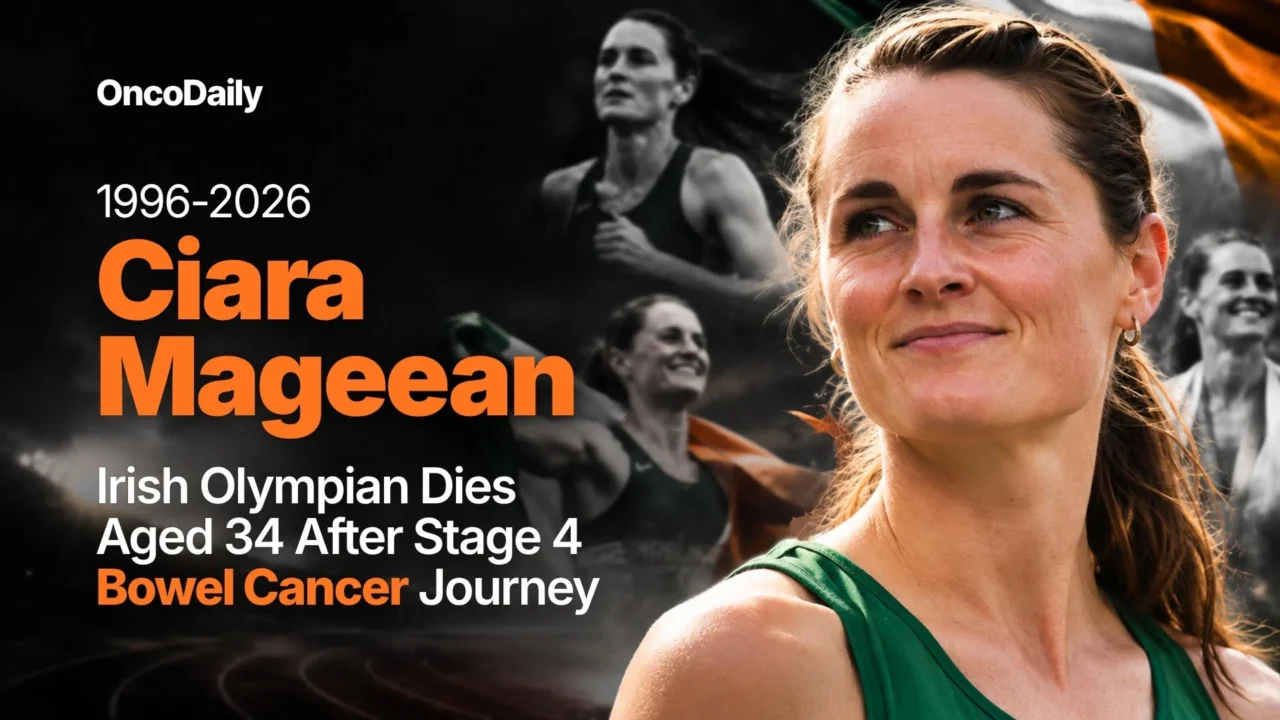
Ciara Mageean, Ireland’s celebrated middle-distance runner and 2024 European 1,500m champion, died on November 1, 2026, aged 34, following a 17-month battle with stage 4 bowel cancer. The two-time Olympian, who spoke openly about her diagnosis, chemotherapy, and determination to find joy despite an uncertain prognosis, leaves behind a legacy extending far beyond athletics. Mageean died at 6:30 a.m. at the Marie Curie Hospice, surrounded by loved ones. Her family confirmed her death in a statement shared through her social media accounts, remembering her as a beloved daughter, sister, wife, friend, and inspiration.

Photo: @ciaramageeanrun Instagram page
Her death came just 20 days after marrying her longtime partner, Thomas Moran, and one week after the couple’s larger wedding celebration on October 25. It was also approximately two years and five months after she won European 1,500m gold in Rome in June 2024. From her diagnosis in May 2025 to the publication of her memoir My Greatest Race in June 2026, Mageean shared a deeply personal account of living with advanced cancer. Her openness brought attention to bowel cancer in younger adults, the emotional challenges of metastatic disease, and the importance of recognizing persistent symptoms.

Who Was Ciara Mageean?
Ciara Mageean was an Irish middle-distance runner from Portaferry, County Down, widely regarded as one of Ireland’s most accomplished track athletes. Born on March 12, 1992, she developed a passion for athletics at a young age and went on to represent Ireland at the highest levels of international competition. Mageean competed at two Olympic Games, Rio 2016 and Tokyo 2020, specializing in the women’s 1,500 metres.
Her greatest achievement came in June 2024, when she won the European 1,500m title in Rome. The victory made her only the second Irish athlete, after Sonia O’Sullivan, to win an individual European outdoor athletics championship. She had previously won European bronze in 2016 and silver in 2022, completing a remarkable collection of continental medals.
Mageean also earned silver at the 2022 Commonwealth Games in Birmingham and finished fourth at the 2023 World Athletics Championships. At the end of her career, she held Irish records in the 800m, 1,000m, 1,500m, and mile. An Achilles injury prevented her from competing at the Paris 2024 Olympics, but her sporting achievements had already established her among Ireland’s leading athletes. Beyond the track, she was admired for her humor, generosity, and close connection with her hometown.
When Was Ciara Mageean Diagnosed With Bowel Cancer?
Ciara Mageean was diagnosed with bowel cancer on May 20, 2025, less than a year after winning her European title. She was undergoing medical evaluation while recovering from an ankle injury when doctors discovered a tumor in her bowel. Mageean later explained that she had experienced changes in her bowel habits, including needing to use the bathroom more frequently. Because digestive symptoms can occur during endurance training, she had initially attributed them to less serious causes. Further investigations revealed a tumor measuring approximately five centimetres. Subsequent imaging established that the disease had spread beyond its original location.
Doctors diagnosed stage 4 bowel cancer, also known as metastatic colorectal cancer, with involvement of her liver, lungs, and lymph nodes. The diagnosis was profoundly unexpected for an athlete who had spent years maintaining exceptional physical fitness and competing internationally. Mageean later described how the news changed her understanding of the future. The prospect of continuing her athletic career was suddenly replaced by questions about treatment, survival, and the time she might have with those closest to her. Her experience also challenges a common misconception: being young and physically fit does not eliminate the possibility of developing cancer.
When Did Ciara Mageean Reveal Her Cancer Diagnosis?
Mageean first announced her cancer diagnosis publicly on July 4, 2025, through a message on Instagram. She explained that she had already started treatment and was receiving support from her family and friends. At that stage, she did not disclose the full extent of her disease. Her announcement prompted messages of encouragement from fellow athletes, sporting organizations, public figures, and supporters across Ireland and internationally. Mageean initially chose to keep many details of her treatment private. This changed in June 2026, when she spoke openly about the advanced nature of her illness while promoting her memoir.
She confirmed that she had stage 4 bowel cancer and had undergone 18 rounds of chemotherapy. She also discussed the difficult conversations she had experienced with her medical team about the limited treatment options available in her circumstances. Her decision to share these details helped bring wider public attention to the realities of metastatic cancer.
What Treatment Did Ciara Mageean Receive for Stage 4 Bowel Cancer?
Mageean underwent extensive chemotherapy following her diagnosis in May 2025. By December 2025, she had completed 12 rounds of treatment. In interviews released in June 2026, she disclosed that she had received 18 rounds of chemotherapy, reflecting the intensity and duration of her treatment. She also described receiving difficult news about the possibility of surgery and radiation therapy. According to her public account, her doctors had explained that these approaches were not suitable treatment options in her particular case.
This did not mean that surgery or radiotherapy are never used for metastatic colorectal cancer. In selected patients, especially those with limited metastatic disease, local treatments may form an important part of disease management. However, treatment decisions depend on the location and extent of metastases, whether tumors can be safely removed, their biological characteristics, and the patient’s overall health. For many patients with widely metastatic bowel cancer, systemic therapy is the principal treatment approach.
Despite chemotherapy, Mageean later reported evidence of disease progression, including increased tumor activity and involvement of a rib. The precise chemotherapy drugs, molecular characteristics of her cancer, and full sequence of treatment decisions have not been publicly established. Her treatment history therefore should not be used to draw conclusions about the effectiveness of particular colorectal cancer regimens.
What Does Stage 4 Bowel Cancer Mean?
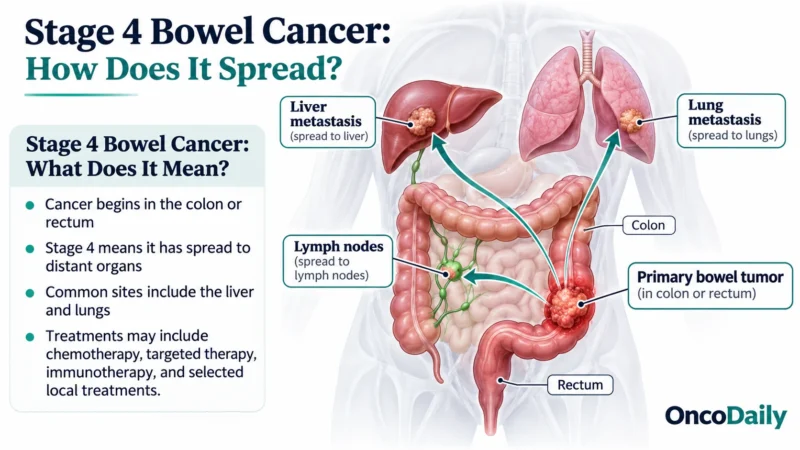
Stage 4 bowel cancer occurs when cancer originating in the colon or rectum has spread to distant organs or tissues. This is also called metastatic colorectal cancer. The liver and lungs are among the most common sites of colorectal cancer metastases, although the disease can also spread to the peritoneum, bones, and other locations.Cancer cells can spread through the bloodstream or lymphatic system and establish tumors away from their original site.
Stage 4 colorectal cancer is generally associated with a more challenging prognosis than disease confined to the bowel or regional lymph nodes. However, treatment options have expanded considerably. Depending on tumor biology and disease extent, patients may receive chemotherapy, targeted therapies, immunotherapy, or selected local treatments. Molecular testing now plays an important role in guiding treatment. Clinicians may evaluate RAS and BRAF mutations, mismatch repair deficiency, microsatellite instability, HER2 status, and other relevant biomarkers. For example, immune checkpoint inhibitors have demonstrated substantial benefits in appropriately selected patients with mismatch repair-deficient or microsatellite instability-high metastatic colorectal cancer.
In patients with certain molecular characteristics, targeted treatments may also provide meaningful benefit. Some individuals with limited, potentially removable liver or lung metastases may be candidates for surgery or other local approaches. Nevertheless, treatment must be individualized, and not all patients are eligible for every therapeutic option.
What Is the Survival Rate for Stage 4 Bowel Cancer?
Survival in metastatic colorectal cancer varies significantly depending on disease extent, molecular subtype, treatment response, and patient-related factors. According to the US National Cancer Institute’s Surveillance, Epidemiology, and End Results (SEER) database, the five-year relative survival rate for distant-stage colorectal cancer is approximately 16.9%, based on patients diagnosed between 2016 and 2022. This compares with approximately 91.3% for localized disease and 75.2% for regional disease.
These are population-level statistics, not predictions for an individual patient. The American Cancer Society’s Colorectal Cancer Statistics, 2026 also highlights that survival has improved over several decades, reflecting advances in screening, treatment, surgical techniques, and supportive care. Mageean publicly recalled being told that she might have approximately two to three years to live. She discussed that prognosis candidly while expressing hope that advances in cancer research might improve her outlook. Her individual experience should not be treated as representative of all people diagnosed with stage 4 bowel cancer.
Why Is Bowel Cancer Increasing Among Younger Adults?
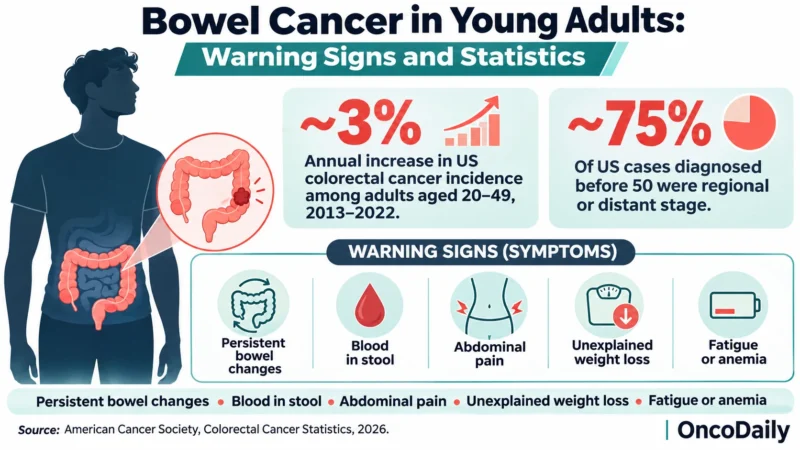
Mageean’s diagnosis at 33 is especially relevant to a growing public-health concern: colorectal cancer among adults younger than 50. Although colorectal cancer remains more common in older adults, incidence among younger people has increased in several countries. According to the American Cancer Society’s Colorectal Cancer Statistics, 2026, published in March 2026, colorectal cancer incidence among US adults aged 20–49 increased by approximately 3% annually between 2013 and 2022. During the same period, incidence among adults aged 65 and older declined by approximately 2.5% annually.
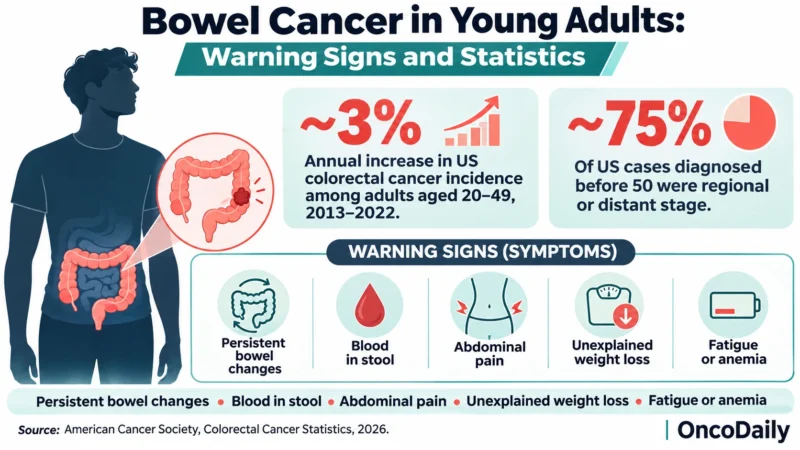
The report also found that approximately three in four colorectal cancers diagnosed before age 50 were detected at regional or distant stages, with 27% already classified as distant-stage disease.
These findings highlight the need to investigate persistent symptoms in younger adults, even when they do not fall within the usual age range for routine population screening. The reasons for rising early-onset colorectal cancer remain incompletely understood. Researchers are investigating changes in diet, obesity, metabolic health, environmental exposures, the gut microbiome, and other potential contributors. However, no single explanation accounts for every case. A physically active lifestyle can reduce the risk of several cancers at the population level, but it does not provide complete protection. Mageean’s experience illustrates why persistent changes in health should not be dismissed solely because a person is young or physically fit.
What Are the Early Warning Signs of Bowel Cancer?
Bowel cancer can develop without obvious symptoms, particularly during its earlier stages. When symptoms occur, they may include persistent changes in bowel habits, rectal bleeding, blood in the stool, abdominal discomfort, unexplained weight loss, and persistent fatigue. Iron-deficiency anemia may sometimes be an early indication of colorectal cancer, particularly when gastrointestinal blood loss is not immediately visible.
Some patients experience diarrhea, constipation, or a sensation of incomplete bowel emptying. These symptoms are not specific to cancer and can occur with hemorrhoids, inflammatory bowel disease, infections, and other gastrointestinal conditions. However, new, persistent, or unexplained changes should be assessed by a healthcare professional.
Mageean’s account of increasingly frequent bowel movements is a reminder that even symptoms initially attributed to exercise or routine digestive problems may warrant investigation if they persist or worsen. For average-risk adults, the American Cancer Society recommends beginning regular colorectal cancer screening at age 45. Other national guidelines may recommend different starting ages. People with concerning symptoms, a significant family history, or recognized hereditary cancer syndromes may require diagnostic evaluation or screening before the standard starting age.
What Did Ciara Mageean Say About Living With Cancer?
Throughout her illness, Mageean became known for an unusually candid approach to discussing her diagnosis. During a BBC Sport interview in June 2026, she spoke about trying to preserve hope while accepting the seriousness of her condition. Her message was captured in the words “You make your own hope.” Rather than presenting cancer as a challenge that could always be overcome through determination alone, she acknowledged the uncertainty of her medical situation.
She spoke openly about the emotional difficulty of waiting for scan results, the fear of disease progression, and the impact of her diagnosis on loved ones. Mageean also described her efforts to find happiness in ordinary moments. Her approach did not deny the physical and psychological burden of advanced cancer.
Instead, she emphasized the importance of continuing to live meaningfully while facing uncertainty. For patients and families navigating serious illness, her story resonated because she allowed fear, sadness, determination, and hope to exist together.
What Is Ciara Mageean’s Book My Greatest Race About?
In June 2026, Mageean published her memoir, My Greatest Race, written with Irish sports journalist Clíona Foley. Released on June 18 by Gill Books, the memoir explored her childhood in Portaferry, development as an international athlete, major sporting achievements, injuries, and cancer diagnosis. The book also addressed her experience of moving from elite competition into treatment for a life-threatening illness.
Its publication allowed Mageean to discuss her life beyond the headlines and share her perspective on the challenges she had faced. The memoir’s title carried a double meaning, reflecting both her achievements on the track and the profoundly different challenges presented by cancer. Throughout its promotion, she spoke about the importance of family, friendship, personal identity, and enjoying the present. My Greatest Race remains an important part of her legacy, offering a first-person account of an athlete whose life changed dramatically shortly after reaching the height of her career.
Who Was Ciara Mageean’s Husband, Thomas Moran?
Ciara Mageean married her longtime partner, Thomas Moran, in a civil ceremony in Belfast on October 12, 2026. The couple had shared many years together before their marriage. Their wedding took place while Mageean was living with advanced cancer and continuing to navigate treatment and uncertainty about her health. Photographs from the ceremony showed the couple celebrating at several Belfast landmarks. They later held a larger celebration with family and friends on October 25, 2026, exactly one week before Mageean’s death.
Their relationship featured prominently in public accounts of her final months. Mageean had spoken about wanting to grow old with her partner, while also acknowledging that her illness had made the future uncertain. The wedding represented an important personal milestone during a difficult period. Her family subsequently included the word wife in the statement announcing her death, recognizing her life beyond athletics and cancer.
How Did the Sporting World React to Ciara Mageean’s Death?
Following the announcement of her death on November 1, 2026, tributes emerged from across Irish and international sport. World Athletics described Mageean as an inspiration both on and off the track. Its president, Sebastian Coe, expressed condolences and emphasized the impact her death would have across the athletics community. Athletics Ireland also remembered her courage, warmth, and lasting contribution to the sport. Fellow athletes, including Australian middle-distance runner Jessica Hull, shared personal messages of remembrance.
Other athletes and public figures highlighted Mageean’s generosity, determination, and ability to support others despite her own challenges. In her hometown of Portaferry, Mageean was remembered not only for her sporting achievements but also for her close relationship with the local community. Her funeral was scheduled for November 3, 2026, at 2 p.m. at St Patrick’s Church, Ballyphilip, near Portaferry, followed by burial in the adjoining cemetery. Her family requested that those wishing to make charitable donations consider Bowel Cancer Ireland and Marie Curie. These tributes reflected the different dimensions of her legacy: European champion, Olympian, author, wife, daughter, friend, and advocate.
Why Does Ciara Mageean’s Cancer Story Matter?
Ciara Mageean’s story highlights several important issues in modern oncology. First, her diagnosis demonstrates that colorectal cancer can occur in younger adults, including those who maintain exceptional levels of physical fitness. Second, her experience illustrates the importance of investigating persistent gastrointestinal symptoms rather than assuming that age or overall health excludes serious disease. Third, her public discussion of stage 4 bowel cancer helped bring attention to the realities of metastatic disease.
Advanced cancer treatment often involves repeated medical appointments, systemic therapy, scan assessments, changing treatment plans, and difficult conversations about prognosis. Mageean described these experiences with uncommon openness. Finally, her story reinforces the importance of patient-centered care.
For people living with cancer, meaningful outcomes include more than tumor response and survival statistics. They also involve emotional support, personal relationships, dignity, and the ability to make choices about how to spend time. Mageean’s courage should not be interpreted as a requirement for patients to remain optimistic or publicly discuss their illnesses. Every person’s experience is different, and patients have the right to respond to cancer in their own way. Her contribution was choosing to share her experience honestly, helping others understand that vulnerability and resilience can coexist.
Remembering Ciara Mageean: A Legacy Beyond the Track
Ciara Mageean achieved extraordinary success during her athletic career, representing Ireland at two Olympic Games and winning the European 1,500m championship in June 2024. Less than a year later, she faced a diagnosis that fundamentally changed her life. During the following 17 months, she underwent extensive chemotherapy, wrote a memoir, married her longtime partner, and spoke publicly about the experience of living with metastatic bowel cancer.
Her death at 34 is a profound loss for her family, friends, and the international athletics community. It is also an opportunity to recognize the broader lessons of her experience: the importance of early symptom recognition, continued research into colorectal cancer in younger adults, and compassionate care for people living with advanced disease. Ciara Mageean will be remembered not only for the races she won, but also for the honesty, warmth, and humanity with which she shared the final chapter of her life.
You Can Also Read Archie Goodburn: Defying Oligodendroglioma While Racing for the Future of Brain Cancer Care by OncoDaily

Written by Aharon Tsaturyan, MD, Editor at OncoDaily Intelligence Unit
FAQ
What Was Ciara Mageean's Cause of Death?
Ciara Mageean died from stage 4 bowel cancer on November 1, 2026, aged 34. The Irish Olympic runner and European 1,500m champion had been diagnosed in May 2025 and underwent extensive chemotherapy. She died at the Marie Curie Hospice, surrounded by her loved ones.
What Type of Cancer Did Ciara Mageean Have?
Ciara Mageean was diagnosed with stage 4 bowel cancer, also known as metastatic colorectal cancer. The disease had spread beyond her bowel to her liver, lungs, and lymph nodes. Stage 4 means cancer has reached distant parts of the body.
How Old Was Ciara Mageean When She Died?
Ciara Mageean was 34 years old when she died on November 1, 2026. She was born on March 12, 1992, in Northern Ireland. She had won the European 1,500m championship in June 2024, approximately two years and five months before her death.
When Was Ciara Mageean Diagnosed With Cancer?
Ciara Mageean received her bowel cancer diagnosis on May 20, 2025, at age 33. Doctors discovered a tumor measuring approximately five centimetres during a medical investigation. Further scans revealed that the cancer had spread to other organs.
What Were Ciara Mageean's First Bowel Cancer Symptoms?
Ciara Mageean publicly described experiencing changes in her bowel habits, including more frequent trips to the bathroom. She initially attributed these symptoms to her training and routine digestive issues. Persistent changes in bowel habits, rectal bleeding, unexplained weight loss, and abdominal discomfort are possible warning signs of colorectal cancer.
Is Stage 4 Bowel Cancer Curable?
Stage 4 bowel cancer is sometimes potentially curable in carefully selected patients, particularly when a limited number of metastases can be completely removed or treated. For many patients with widespread metastatic disease, treatment focuses on controlling cancer, extending survival, and maintaining quality of life. Treatment depends on disease extent, molecular characteristics, and overall health.
What Is the Life Expectancy for Stage 4 Bowel Cancer?
According to the National Cancer Institute's SEER database, the five-year relative survival rate for distant-stage colorectal cancer is approximately 16.9% for patients diagnosed between 2016 and 2022. However, survival varies widely depending on tumor biology, disease extent, and response to treatment. These population-level statistics cannot predict an individual patient's life expectancy.
Who Was Ciara Mageean's Husband?
Ciara Mageean's husband was Thomas Moran, her longtime partner. They married in Belfast on October 12, 2026, and celebrated with family and friends on October 25. Mageean died one week after their larger wedding celebration.
What Is Ciara Mageean's Book My Greatest Race About?
My Greatest Race, published in June 2026 and written with journalist Clíona Foley, explores Ciara Mageean's childhood, athletic achievements, injuries, bowel cancer diagnosis, and experience of living with advanced cancer. The memoir reflects on resilience, relationships, and finding meaning beyond competitive sport.
Can Young, Healthy Athletes Develop Bowel Cancer?
Yes. Bowel cancer can develop in young, physically active people, including professional athletes. Although regular exercise is associated with a lower colorectal cancer risk, it cannot eliminate that risk. The American Cancer Society reports that colorectal cancer incidence among US adults aged 20–49 increased by approximately 3% annually between 2013 and 2022.