





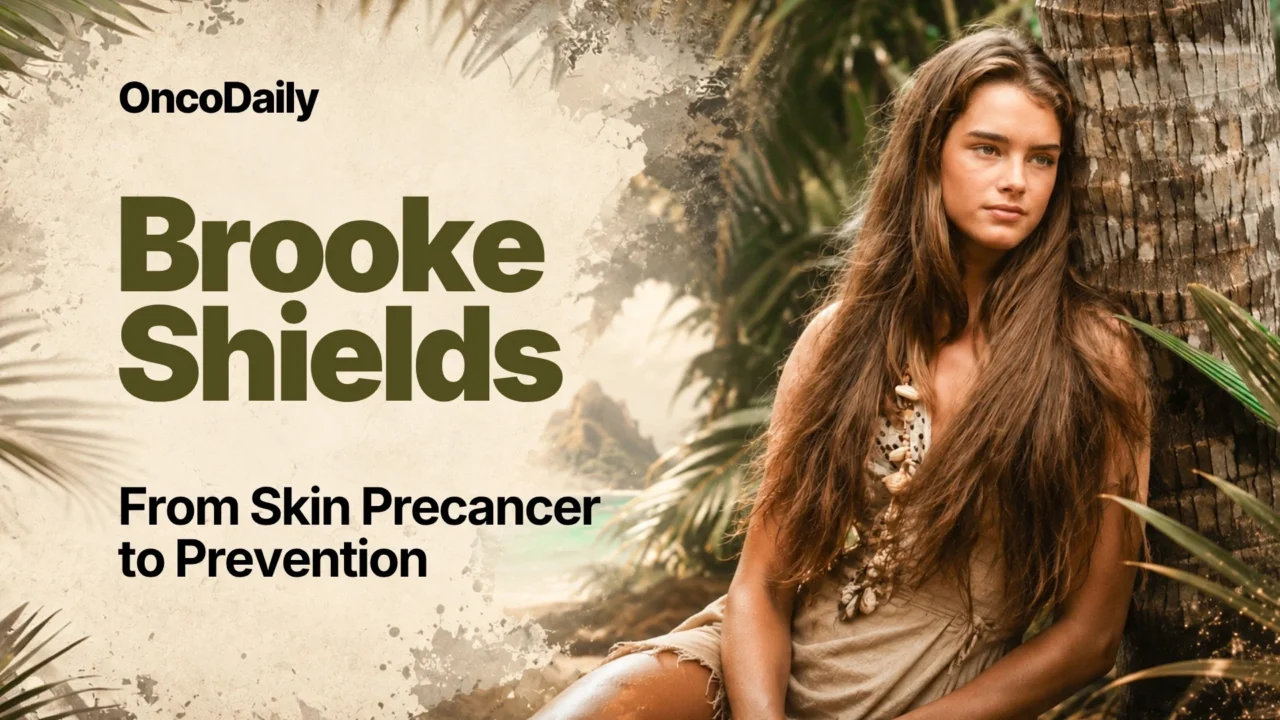
For decades, Brooke Shields has been recognized as one of Hollywood’s most enduring stars. But one of the most important turning points in her life happened far from a movie set. During a routine dermatology appointment, doctors discovered a precancerous lesion on her upper lip an experience that transformed her approach to skin health and inspired her to encourage millions to take sun protection and early detection seriously.
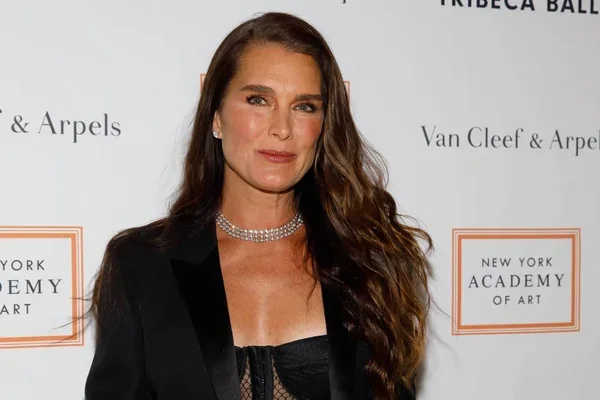
Photo: Depositphotos
How Was Brooke Shields’ Precancerous Lesion Discovered?
The diagnosis came during one of Brooke Shields’ routine annual dermatology appointments. Her dermatologist noticed a small spot on the upper lip that looked different from previous examinations and recommended a biopsy. The results revealed a precancerous lesion, later identified in published reports as actinic keratosis (solar keratosis) a condition caused by years of cumulative ultraviolet (UV) damage that can develop into squamous cell carcinoma if left untreated.
Shields later explained that she probably would never have noticed the lesion herself. It caused few symptoms, and it was only because she attended regular skin examinations that it was identified early. Treatment lasted approximately one month and required more than one procedure before the lesion was completely removed. Rather than becoming a skin cancer diagnosis, her story became an example of how preventive care can stop disease before it progresses.
What Is Actinic Keratosis and Why Does It Matter?
Actinic keratosis is one of the most common precancerous skin conditions. It develops after years of exposure to ultraviolet radiation from the sun or artificial tanning devices and usually appears on areas that receive the greatest amount of sunlight, including the face, scalp, ears, lips, forearms, and hands.
According to the World Health Organization (WHO), excessive exposure to ultraviolet radiation is responsible for the majority of skin cancers worldwide. WHO estimates that between 2 and 3 million non-melanoma skin cancers and approximately 132,000 melanoma skin cancers are diagnosed globally each year, with most cases linked to UV exposure. Although not every actinic keratosis becomes cancerous, dermatologists cannot reliably predict which lesions will progress. For that reason, suspicious skin changes are usually treated before they have the opportunity to become invasive.
How Did the Diagnosis Change Brooke Shields’ Perspective?
Before the diagnosis, Shields admitted she had spent years enjoying the sun and had not always viewed sunscreen as an everyday necessity. The experience completely changed that mindset. She has since described sunscreen as a daily habit rather than something reserved for beach vacations or summer holidays. Annual dermatology appointments, regular self-checks, and sun protection became part of her routine. Her message is straightforward: prevention is far easier than treatment. According to WHO, reducing unnecessary ultraviolet exposure through shade, protective clothing, hats, sunglasses, and sunscreen remains one of the most effective ways to lower the risk of skin cancer.
How Is Actinic Keratosis Treated?
Treatment depends on the number, size, location, and appearance of the lesions. Because actinic keratosis has the potential to progress to cutaneous squamous cell carcinoma, dermatologists usually recommend treating suspicious lesions rather than simply observing them.
Common treatment options include:
- Cryotherapy (liquid nitrogen): The most common treatment for individual lesions. The abnormal skin is frozen, causing it to peel away over the following
- days or weeks.
- Topical medications: Prescription creams or gels, such as 5-fluorouracil, imiquimod, diclofenac, or tirbanibulin, are used to treat larger areas of sun-damaged skin containing multiple lesions.
- Photodynamic therapy (PDT): A light-sensitive medication is applied to the skin and then activated with a special light to destroy abnormal cells while minimizing damage to surrounding healthy tissue.
- Curettage or surgical removal: Some thicker or persistent lesions may be scraped away or removed if there is concern for progression to skin cancer.
- Laser therapy: In selected cases, laser treatment may be used to remove precancerous skin lesions.
Treatment is usually followed by regular skin examinations because people who develop one actinic keratosis are at increased risk of developing additional lesions and other forms of skin cancer.
Brooke Shields’ Experience
Brooke Shields has said her precancerous lesion required about a month of treatment and more than one procedure before it was fully removed. In interviews, she described a biopsy followed by liquid nitrogen treatment and a second procedure because the lesion was resistant. She has emphasized that routine dermatology visits allowed the lesion to be found and treated early.
Who Is Brooke Shields?
Long before becoming an advocate for skin health, Brooke Shields had already become one of the world’s most recognizable public figures. She began modeling at just 11 months old, quickly becoming one of the most successful child models of her generation. International recognition followed with Pretty Baby (1978) before she became a global sensation starring in The Blue Lagoon (1980) alongside Christopher Atkins.
The film turned Shields into one of the biggest stars of the early 1980s and remains one of the defining movies of her career. She later starred in Endless Love, enjoyed success on television with Suddenly Susan, appeared on Broadway, wrote several bestselling books, and became known for speaking openly about postpartum depression, aging, women’s health, and preventive medicine. More recently, the acclaimed documentary Pretty Baby: Brooke Shields (2023) revisited her extraordinary career and explored the challenges of growing up under constant public scrutiny.
What Has Brooke Shields Said About The Blue Lagoon?
Although The Blue Lagoon remains one of the most iconic films of her career, Shields has spoken candidly in recent years about how differently she views that period of her life. In interviews and in the documentary Pretty Baby: Brooke Shields, she reflected on becoming highly sexualized as a child performer and acknowledged that many of the decisions surrounding her career were made by adults rather than herself.
She has said that she does not regret her career, but believes young actors deserve greater protection than was common during that era. She has also noted that films such as The Blue Lagoon would likely be approached very differently today. Those reflections have become part of a broader conversation about child performers, consent, media representation, and safeguarding young actors in the entertainment industry.
Why Is Brooke Shields Speaking So Openly About Prevention?
Following her diagnosis, Shields chose to share her experience publicly rather than keep it private. During Skin Cancer Awareness Month campaigns, she has encouraged people to:
- Schedule annual skin examinations.
- Perform regular skin self-checks.
- Wear broad-spectrum sunscreen every day.
- Seek medical attention for any persistent or changing skin lesion.
- Understand that sun damage accumulates throughout life not just during vacations.
She has since expanded that preventive-health message through additional public awareness campaigns, using her platform to normalize routine screening and proactive healthcare.
What Can We Learn From Brooke Shields’ Story?
Brooke Shields’ experience highlights a reality many people overlook: serious skin conditions often develop silently. Her precancerous lesion caused few noticeable symptoms and was discovered only because she attended a routine dermatology appointment. Her story reinforces several important messages:
- Early detection can identify precancerous lesions before they become invasive skin cancer.
- Daily sun protection is important throughout the year, not only during summer.
- Regular dermatology examinations can identify subtle skin changes that patients may never notice themselves.
- Preventive care remains one of the most effective tools in reducing the burden of skin cancer.
For many people, the lesson is simple: do not wait until a skin lesion becomes obvious before seeking medical advice.
You Can Also Read Edie Falco and Breast Cancer: How She Went Against, How She Survived, and More by OncoDaily
Written by Aharon Tsaturyan, MD, Editor at OncoDaily Intelligence Unit
FAQ
Did Brooke Shields have skin cancer?
No. Brooke Shields has publicly shared that she was diagnosed with a precancerous lesion (actinic keratosis) on her upper lip, which was treated before it developed into skin cancer.
What skin condition did Brooke Shields have?
She was diagnosed with actinic keratosis, also known as solar keratosis, a precancerous skin lesion caused by long-term exposure to ultraviolet (UV) radiation.
How was Brooke Shields' precancerous lesion discovered?
The lesion was identified during a routine annual dermatology examination, where her dermatologist noticed a suspicious spot and recommended a biopsy.
What is actinic keratosis?
Actinic keratosis is a precancerous skin condition caused by cumulative sun damage. Without treatment, some lesions can progress to cutaneous squamous cell carcinoma.
How was Brooke Shields treated for actinic keratosis?
Brooke Shields has said the lesion required treatment over approximately one month and more than one procedure before it was completely removed.
What has Brooke Shields said about The Blue Lagoon?
Brooke Shields has reflected that The Blue Lagoon would likely be approached differently today. She has spoken openly about growing up in the public eye and believes child actors deserve stronger protections.
When did Brooke Shields start modeling?
Brooke Shields began her career at just 11 months old, appearing in an Ivory Soap advertisement before becoming one of the world's best-known child models.
Why does Brooke Shields wear sunscreen every day?
Following her precancer diagnosis, Shields has said daily sunscreen became part of her routine because of the long-term effects of cumulative ultraviolet exposure.
What movies made Brooke Shields famous?
Her best-known films include Pretty Baby (1978), The Blue Lagoon (1980), and Endless Love (1981). She later starred in the television sitcom Suddenly Susan.
What is Brooke Shields doing today?
Brooke Shields continues acting, writing, producing, and advocating for preventive health. She frequently speaks about skin cancer prevention, women's health, and the importance of regular medical screenings.