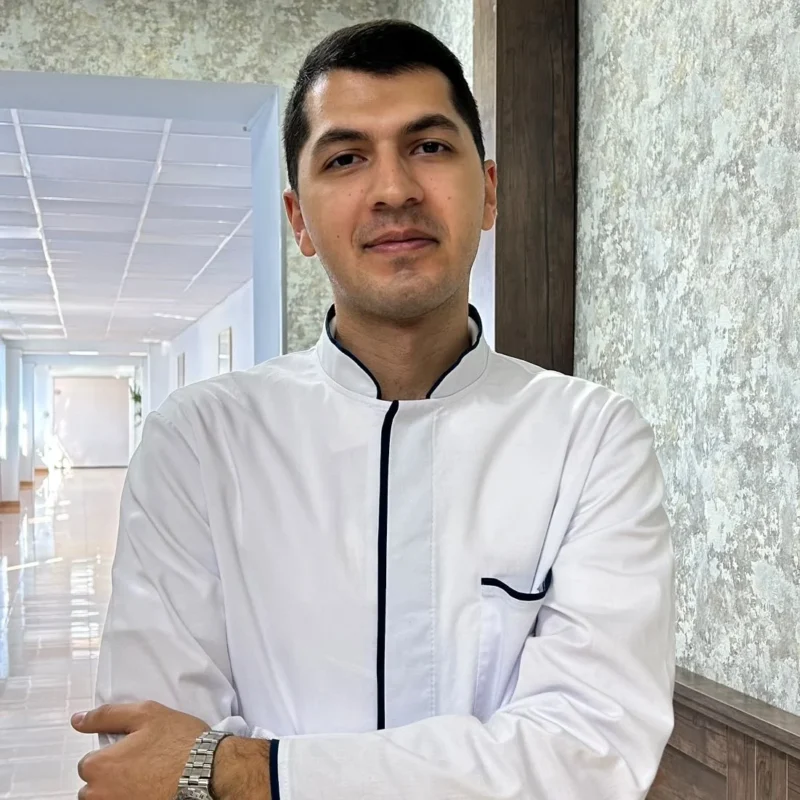
Brittany Parks, a 38-year-old dancer, actress, and choreographer known for her work on Glee, has revealed that she is undergoing treatment for stage 2 triple-negative breast cancer (TNBC).
Parks reportedly received her diagnosis on March 31, 2026, and publicly shared the news in early August after months of tests, medical appointments, treatment, and significant emotional challenges. She has said that she is working closely with her doctors and feels confident in the treatment plan developed by her medical team.
Her diagnosis also brings attention to a biologically distinct subtype of breast cancer. Triple-negative breast cancer accounts for approximately 10%–15% of breast cancers and is characterized by the absence of estrogen receptors, progesterone receptors, and HER2 overexpression. TNBC can behave more aggressively than several other breast cancer subtypes, making timely diagnosis and appropriate systemic treatment particularly important.
Who Is Brittany Parks?
Brittany Parks is an American dancer, actress, and choreographer whose career spans television, film, Broadway, music videos, and live performance. She became known to television audiences through her work on Glee, contributing as a dancer and performer during the musical comedy series. She was also associated with Glee: The 3D Concert Movie, which brought the show’s performances to cinema audiences.
Her screen career extends beyond Glee. Parks’ credits have been associated with productions including La La Land, Annie, The Marvelous Mrs. Maisel, Étoile, and Palm Royale. Her television work has also included She’s Gotta Have It and The Other Two, while her choreography credits include The Sex Lives of College Girls. On stage, Parks was part of the Broadway production of Shuffle Along, or, the Making of the Musical Sensation of 1921 and All That Followed. Her professional dance career has also included work connected with major recording artists and large-scale live performances.
Dance is therefore more than one part of Parks’ career. Her livelihood has been built around physical performance, choreography, teaching, rehearsals, travel, and the ability to maintain a demanding professional schedule. Her cancer diagnosis has consequently affected not only her health but also her ability to work with the same intensity as before treatment.
When Was Brittany Parks Diagnosed With Breast Cancer?
Parks reportedly received her breast cancer diagnosis on March 31, 2026. She initially kept much of the experience private while navigating diagnostic testing and treatment before publicly discussing her diagnosis in August. Parks has confirmed two central medical details: her breast cancer is stage 2 and triple-negative.
However, she has not publicly disclosed several pieces of information necessary to characterize her individual disease more precisely, including the exact tumor size, lymph-node involvement, whether the disease is stage IIA or IIB, germline genetic testing results, complete pathology findings, or her response to treatment. These details should not be inferred from the stage and subtype alone.
What Is Triple-Negative Breast Cancer?
Triple-negative breast cancer is a biologically distinct subtype of invasive breast cancer defined by the absence of three biomarkers commonly used to guide breast cancer treatment: estrogen receptor (ER), progesterone receptor (PR), and HER2 overexpression or amplification. Because these three commonly targeted biomarkers are absent, TNBC generally does not respond to endocrine therapies used for hormone receptor-positive breast cancer or conventional HER2-directed therapies used for HER2-positive disease.
According to the National Cancer Institute (NCI), TNBC accounts for approximately 15% of breast cancers. It is diagnosed more frequently in younger women than several other breast cancer subtypes and is also more common among Black women and people carrying certain inherited BRCA1 or BRCA2 pathogenic variants. TNBC generally has a more aggressive clinical course than many hormone receptor-positive breast cancers. It can grow and spread more rapidly and has historically been associated with a greater risk of recurrence, particularly during the first several years following diagnosis.
However, prognosis varies substantially according to stage at diagnosis, tumor characteristics, response to systemic therapy, overall health, and other clinical factors. Importantly, the term “triple-negative” does not mean there are no treatment options. Modern TNBC management can include chemotherapy, immunotherapy, surgery, radiation therapy, and selected targeted treatments, depending on disease stage, molecular characteristics, treatment response, and individual clinical circumstances.
You Can Also Read Triple-Negative Breast Cancer in 2026: A Step-by-Step Clinical Approach From Diagnosis to Treatment by OncoDaily
What Does Stage 2 Triple-Negative Breast Cancer Mean?
Stage 2 TNBC is generally considered early-stage invasive breast cancer, rather than metastatic breast cancer. Under the TNM staging system, stage II disease is divided into stage IIA and stage IIB. Classification depends on factors including the size of the primary tumor and whether cancer is present in nearby lymph nodes. Importantly, stage II disease has no distant metastases (M0).
This distinction matters. Stage describes the anatomical extent of the cancer, while the triple-negative designation describes important aspects of its tumor biology. Both influence treatment decisions and prognosis. Stage II can therefore represent several different clinical situations. One patient may have a smaller tumor with regional lymph-node involvement, while another may have a larger primary tumor without involved nodes.
For TNBC, stage II disease is particularly important because systemic therapy is frequently considered before surgery, known as neoadjuvant treatment. The landmark KEYNOTE-522 trial, which enrolled patients with previously untreated stage II or III TNBC, helped change the treatment landscape for high-risk early TNBC. Adding pembrolizumab to neoadjuvant chemotherapy increased the pathologic complete response rate compared with chemotherapy alone, while longer follow-up demonstrated improvements in event-free survival.
Achieving a pathologic complete response (pCR) meaning no residual invasive cancer is identified in the breast and sampled lymph nodes following neoadjuvant therapy—is associated with a more favorable prognosis in TNBC. Stage II TNBC should therefore not be interpreted as metastatic or terminal disease. It is treated with curative intent in appropriate patients, although treatment can be intensive and multidisciplinary. For Parks specifically, available information confirms stage 2 TNBC, but she has not disclosed whether her disease is stage IIA or IIB, her tumor size, lymph-node status, BRCA status, or response to treatment. Her individual prognosis therefore cannot responsibly be estimated from publicly available information.
How Is Stage 2 Triple-Negative Breast Cancer Treated?
Treatment of early-stage TNBC often involves several therapeutic modalities, and the precise strategy is individualized. For many patients with stage II or III TNBC, treatment begins with systemic therapy before surgery. Neoadjuvant treatment can reduce the amount of cancer present before an operation while also providing valuable information about how strongly the tumor responds to systemic therapy. Depending on the clinical situation, treatment can include chemotherapy combined with immunotherapy, followed by surgery and additional postoperative treatment.
Surgery may involve breast-conserving surgery or mastectomy, depending on the extent of disease, response to neoadjuvant treatment, patient preference, and other clinical considerations. Radiation therapy can also form an important component of curative treatment, with indications influenced by the type of surgery, initial tumor extent, lymph-node involvement, and other risk factors. Additional postoperative systemic treatment can be considered according to the amount of residual disease and specific molecular or inherited characteristics. For example, selected patients with germline BRCA1 or BRCA2 mutations and high-risk HER2-negative early breast cancer can be candidates for PARP inhibitor therapy.
These are general treatment principles and should not be presented as Parks’ personal treatment regimen. She has confirmed that she is receiving treatment and has expressed confidence in her medical team, but she has not publicly disclosed her complete treatment plan.
Why Can Triple-Negative Breast Cancer Be More Challenging to Treat?
For many years, one of the central challenges of TNBC was the absence of the receptors targeted by some of the most successful therapies used in other breast cancer subtypes. Hormone receptor-positive cancers can often be treated with endocrine therapy, while HER2-positive cancers have multiple HER2-directed therapies. TNBC lacks these conventional therapeutic targets. Its biology can also be more aggressive, with a tendency toward earlier recurrence compared with many hormone receptor-positive cancers. However, the therapeutic landscape has changed substantially.
The incorporation of immunotherapy into treatment for selected patients with high-risk early TNBC, together with advances in molecular testing and targeted therapies for particular patient groups, has expanded treatment beyond conventional chemotherapy. Research continues to investigate additional biomarkers, antibody-drug conjugates, immunotherapeutic strategies, and molecularly targeted approaches. For that reason, describing TNBC simply as a breast cancer with “no treatment targets” no longer accurately represents modern clinical practice.
How Has Heather Morris Supported Brittany Parks?
Parks’ diagnosis has brought a strong public response from her Glee community. Her former colleague Heather Morris, known for playing Brittany S. Pierce on the series, launched a GoFundMe campaign with a $50,000 fundraising goal to help Parks manage the financial consequences of treatment. According to the fundraising appeal, the money is intended to assist with expenses including rent, food, everyday living costs, and medical copayments while Parks undergoes treatment.
The campaign also highlights how cancer can affect a person’s ability to continue working. For a professional dancer and choreographer, treatment can directly interfere with the physical activity, travel, teaching, rehearsals, and performances on which employment depends. Support from Parks’ colleagues therefore draws attention to an often overlooked dimension of cancer care: financial toxicity.
What Is Financial Toxicity in Cancer Care?
The financial consequences of cancer can extend far beyond hospital bills. Patients can face insurance copayments, prescription expenses, transportation costs, reduced working hours, prolonged absence from employment, and loss of income at precisely the time when everyday expenses continue. For freelancers, performers, and people whose careers depend heavily on physical ability, these effects can be particularly significant. Parks’ experience illustrates why social and financial support can become an important part of the broader cancer journey alongside medical treatment.
What Does Cancer Treatment Mean for a Professional Dancer?
For Parks, cancer treatment intersects directly with the profession around which she has built her adult life. Professional dancing requires physical endurance, strength, mobility, coordination, travel, and consistent training. Cancer treatment can temporarily disrupt many of these abilities. The effects of systemic therapy vary considerably between patients, but fatigue, treatment appointments, recovery periods, infection precautions, and other treatment-related effects can make maintaining a demanding professional schedule difficult.
This does not mean Parks will be unable to return to her previous activities. Her future professional capacity will depend on her treatment course, recovery, and individual circumstances. What her story demonstrates is that cancer can affect far more than the organ in which it begins.
Why Has Brittany Parks’ Story Resonated?
Parks is 38 years old, making her diagnosis particularly striking to audiences who still associate breast cancer primarily with older women. Although breast cancer incidence increases substantially with age, younger adults can and do develop the disease. Her story also brings together several realities that are frequently discussed separately: a relatively young patient, an aggressive breast cancer subtype, intensive treatment, interruption of employment, financial pressure, and strong community support. At the same time, Parks has chosen to keep much of her medical information private. She has disclosed her diagnosis and confidence in her treatment plan without releasing every pathology result, scan, medication, or prognostic estimate. That boundary deserves to be respected.
What Do We Still Not Know About Brittany Parks’ Cancer?
Despite public interest in Parks’ diagnosis, substantial clinical information remains private. She has not publicly confirmed her exact tumor size, lymph-node status, whether she has a germline BRCA1, BRCA2, or another cancer-predisposition variant, the precise systemic therapies she is receiving, whether surgery has already occurred or is planned, whether radiation therapy will be required, or how her cancer has responded to treatment. Most importantly, Parks has not publicly provided an individualized prognosis.
She should therefore not be described as cancer-free, in remission, or cured unless she or her medical team subsequently provides information supporting those descriptions. Her diagnosis should also not be used to speculate about why she developed breast cancer. There is currently no publicly established evidence linking her cancer to a particular inherited mutation, family history, lifestyle factor, or environmental exposure.
What Can We Learn From Brittany Parks’ Diagnosis?
Brittany Parks’ story demonstrates why modern conversations about breast cancer need to go beyond the diagnosis itself. Stage matters. Subtype matters. Biomarkers matter. Response to treatment matters. And the person living through treatment matters. Triple-negative breast cancer lacks ER, PR, and HER2, but advances in chemotherapy, immunotherapy, molecularly selected therapies, surgery, and radiation therapy have transformed how early TNBC is approached. Her experience also highlights consequences of cancer that cannot be captured by pathology reports alone. A diagnosis can affect employment, finances, physical independence, relationships, emotional well-being, and everyday life.
For now, Parks has chosen to share the central facts: she has stage 2 triple-negative breast cancer, she is undergoing treatment, and she has expressed confidence in the plan developed with her medical team. Around her, friends and former colleagues have transformed their support into practical action. Her cancer story is still unfolding, and the details she chooses to share remain hers to tell.
You Can Also Read Lisa Faulkner and Breast Cancer : Diagnosis, Surgery, and What She Revealed by OncoDaily

Written by Aharon Tsaturyan, MD, Editor at OncoDaily Intelligence Unit
FAQ
What cancer does Brittany Parks have?
Brittany Parks has revealed that she has stage 2 triple-negative breast cancer (TNBC), a breast cancer subtype that lacks estrogen receptors, progesterone receptors, and HER2 overexpression.
What does stage 2 triple-negative breast cancer mean?
Stage 2 TNBC is generally considered early-stage invasive breast cancer, not metastatic disease. It may involve different combinations of tumor size and regional lymph-node involvement, but there are no distant metastases.
Is stage 2 triple-negative breast cancer curable?
Stage 2 TNBC is typically treated with curative intent in appropriate patients. Outcomes depend on tumor characteristics, lymph-node involvement, response to treatment, and other individual clinical factors.
How is stage 2 triple-negative breast cancer treated?
Treatment can include neoadjuvant chemotherapy, immunotherapy in selected patients, surgery, radiation therapy, and additional postoperative therapy depending on treatment response and molecular or inherited characteristics.
What is triple-negative breast cancer?
TNBC is a breast cancer subtype that does not express ER, PR, or HER2. It accounts for about 10%–15% of breast cancers and can behave more aggressively than several other subtypes.
How is Heather Morris helping Brittany Parks?
Former Glee colleague Heather Morris launched a GoFundMe campaign with a $50,000 goal to help Parks with expenses including rent, food, everyday living costs, and medical copayments during treatment.
Did Brittany Parks have surgery for breast cancer?
Parks has not publicly confirmed whether she has already undergone breast surgery or whether surgery is planned. For stage 2 TNBC, surgery is commonly part of curative treatment, often after neoadjuvant systemic therapy, but her individual treatment sequence remains private.
Does Brittany Parks have a BRCA mutation?
There is currently no public information confirming a BRCA1 or BRCA2 mutation in Parks. Genetic testing can be relevant in TNBC, but her germline testing results have not been disclosed.
Why is triple-negative breast cancer considered aggressive?
Triple-negative breast cancer (TNBC) is considered more aggressive because it often grows and spreads faster than many hormone receptor-positive breast cancers and has historically been associated with a higher risk of recurrence, especially during the first few years after treatment. TNBC also lacks estrogen receptors, progesterone receptors, and HER2, which means endocrine therapy and conventional HER2-targeted treatments are not effective. However, treatment options have expanded significantly with modern chemotherapy, immunotherapy, and selected targeted therapies, improving outcomes for many patients.