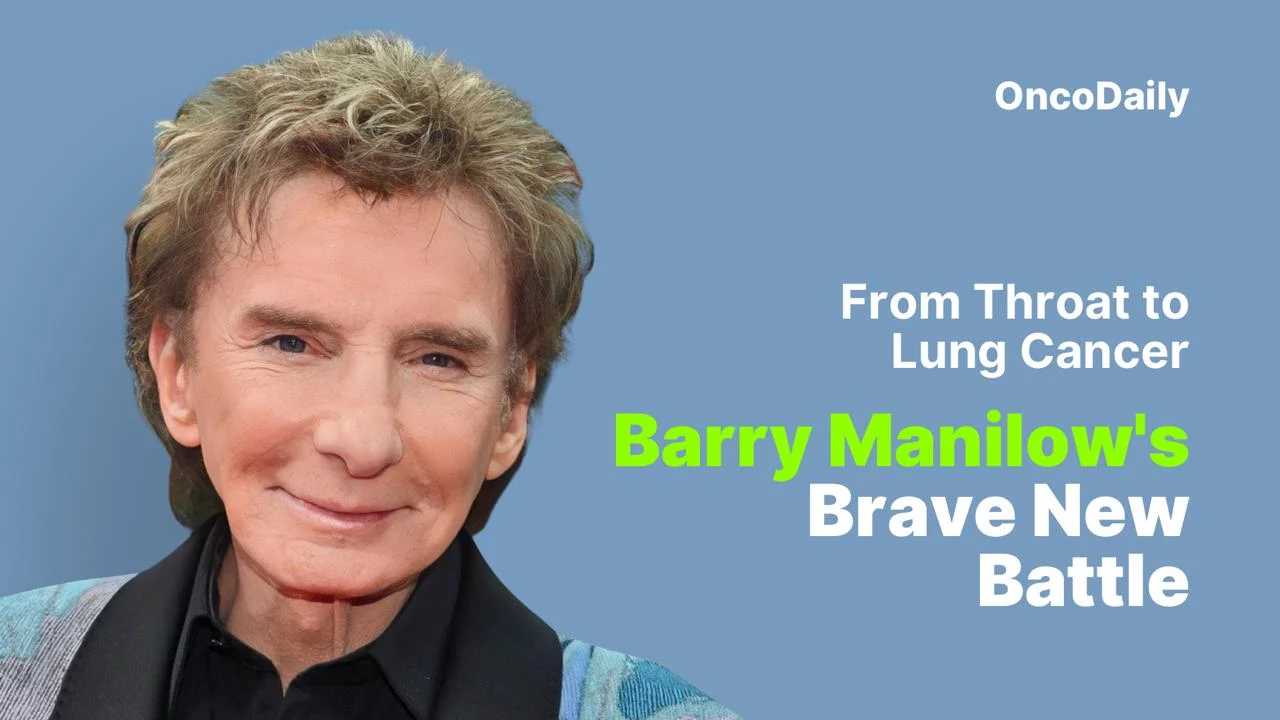
At 82, legendary entertainer Barry Manilow is confronting cancer for the second time in his life this time an early-stage lung malignancy discovered during follow-up imaging after a prolonged respiratory illness. Coming five years after his successful treatment for throat cancer, Manilow’s experience reinforces a fundamental principle in oncology: cancer survivorship does not end with remission. Instead, it requires lifelong vigilance, particularly as age-related cancer risk increases.
A Past Victory: Throat Cancer Diagnosis and Treatment (2020)
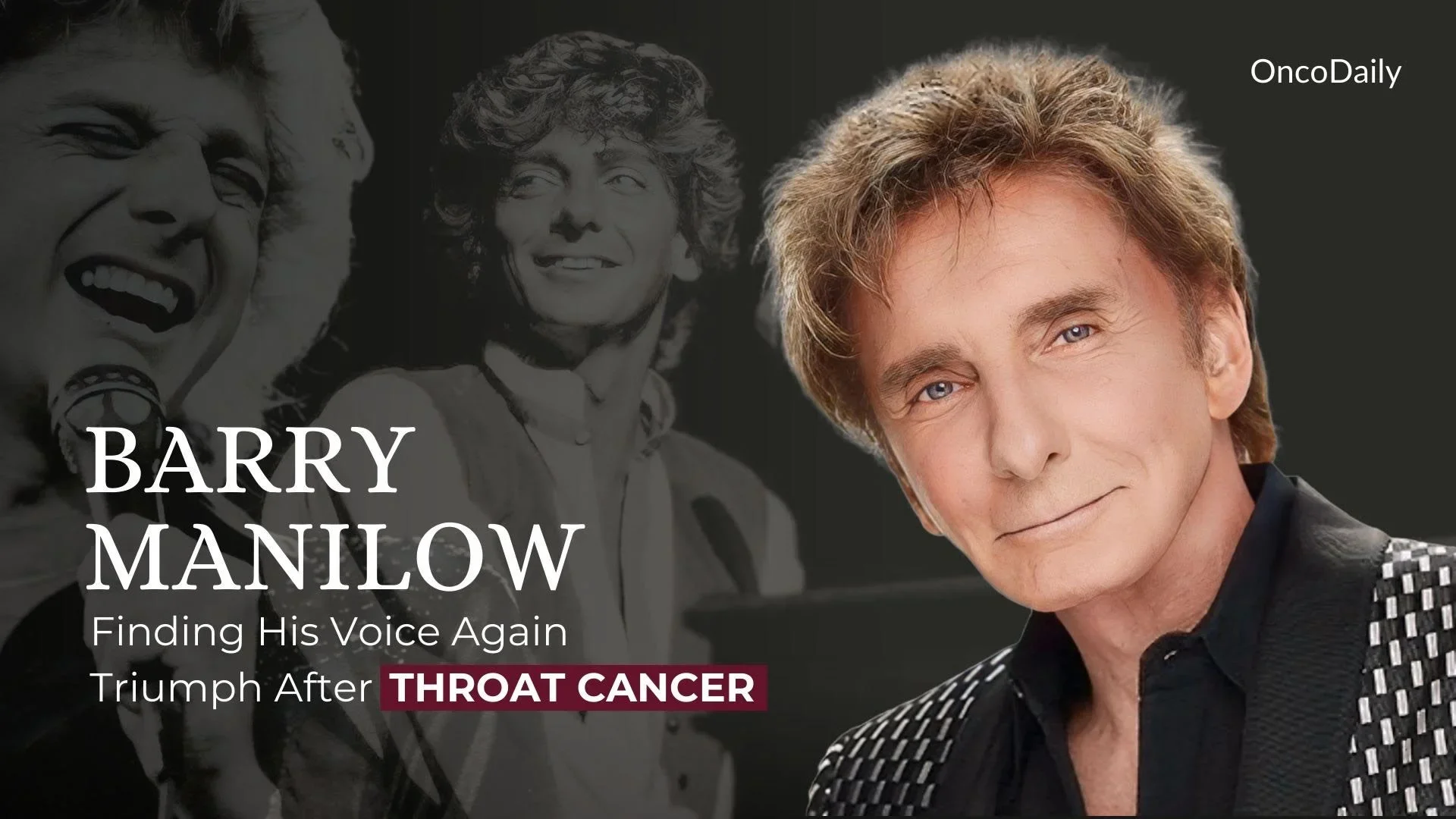
During the height of his Las Vegas residency era, Manilow began to notice subtle yet troubling changes in his voice an alarming development for a performer whose career has long depended on vocal precision. In 2020, he was diagnosed with throat cancer, most likely a squamous cell carcinoma of the larynx or pharynx, and underwent definitive surgical treatment, with or without adjuvant radiation therapy.
The treatment was successful, and over the following five years there was no evidence of disease recurrence. Manilow returned to sold-out performances, demonstrating notable preservation of vocal function through careful post-treatment management and voice therapy. His recovery illustrated several important survivorship lessons, including the importance of early symptom recognition in performers, the value of multidisciplinary care involving surgeons, oncologists, and speech specialists, and the possibility of restoring quality of life even after head and neck cancer treatment.
You Can Also Read Barry Manilow and Throat Cancer: How He Went Against, How He Survived, and More by OncoDaily
A New Challenge: Early-Stage Lung Cancer (December 2025)
While performing during his late-2025 Palm Springs residency, Manilow experienced an unusually prolonged episode of bronchitis lasting approximately eleven weeks. Although he eventually recovered clinically, follow-up imaging performed to evaluate persistent respiratory symptoms revealed a small cancerous lesion in his left lung.
Manilow described the discovery as the result of “pure luck and a great doctor,” underscoring a critical reality in lung oncology: early-stage lung cancer is often asymptomatic and frequently detected incidentally rather than through routine screening. His case exemplifies the growing role of diagnostic vigilance following respiratory illness in older adults.
Subsequent clinical evaluation suggested an early, localized stage I non–small cell lung cancer, confined to the lung with no initial evidence of metastatic spread. Confirmatory staging studies were planned, but the lesion was deemed resectable and highly amenable to curative treatment.
Treatment Plan and Expected Recovery
Given the early stage of disease, Manilow’s oncology team recommended surgical resection as definitive treatment, without the need for chemotherapy or radiation therapy an excellent prognostic sign. Depending on intraoperative findings, the planned approach includes lung-sparing options such as wedge resection or segmentectomy, with lobectomy reserved if anatomically necessary.
The surgery was scheduled after completion of his holiday concerts, allowing him to fulfill prior commitments before focusing on recovery. Postoperative healing is expected to take approximately one month, during which Manilow has characteristically joked that his recovery plan includes “chicken soup and I Love Lucy reruns.” Several January 2026 arena performances were postponed, with a full return to touring anticipated by February.
Early-Stage Non-Small Cell Lung Cancer (NSCLC): Survival Outcomes
For patients diagnosed with stage I non-small cell lung cancer (NSCLC) and treated with curative-intent surgical resection, long-term survival outcomes are substantially better than those seen in more advanced stages. This survival advantage is consistently recognized across major oncology guidelines and population-level datasets.
According to outcomes summarized in NCCN Clinical Practice Guidelines in Oncology (NSCLC) and supported by ASCO-reviewed surgical series, patients with small, localized tumors (<2 cm) who undergo complete resection can achieve 5-year overall survival rates approaching 85–90% in carefully selected cases. These outcomes are most commonly reported in patients with stage IA disease, favorable tumor biology, and no nodal involvement.
Real-world surgical data reviewed in JNCCN and ASCO-affiliated analyses show that, in routine clinical practice, 5-year overall survival after lobectomy for stage IA NSCLC is approximately 70–75%, while lung-sparing procedures such as segmentectomy yield slightly lower but still favorable outcomes, generally in the 65–70% range. These results reflect contemporary surgical standards and patient populations beyond highly selected clinical trials.
At the population level, data from the U.S. Surveillance, Epidemiology, and End Results (SEER) Program, cited by the American Cancer Society, demonstrate that patients with localized NSCLC—a category closely corresponding to early-stage disease—have an estimated 5-year relative survival of approximately 65–70%. This figure captures outcomes across diverse healthcare settings and underscores the real-world benefit of early detection.
Together, these data—derived from NCCN guidance, ASCO-reviewed literature, and national cancer registries—highlight a central principle in thoracic oncology: early detection followed by definitive surgical treatment offers a dramatic survival advantage, in stark contrast to advanced-stage lung cancer, where 5-year survival often falls below 20%.
You Can Also Read Lung Cancer Chemotherapy Success Rate: What Patients Need to Know in 2025 by OncoDaily
Written by Aharon Tsaturyan, MD, Editor at OncoDaily Intelligence Unit
FAQ
What type of lung cancer does Barry Manilow have?
Barry Manilow has been diagnosed with early-stage non-small cell lung cancer (NSCLC), the most common type of lung cancer. Doctors believe the disease is localized and has not spread beyond the lung, making it highly treatable with surgery.
How was Barry Manilow’s lung cancer discovered?
His lung cancer was found incidentally on imaging performed after a prolonged episode of bronchitis. Like many early lung cancers, it caused no specific symptoms and was detected only because follow-up scans were done—highlighting the importance of diagnostic vigilance in older adults.
What stage is Barry Manilow’s lung cancer?
Clinical evaluation suggests Stage I lung cancer, meaning the tumor is small, confined to the lung, and has not spread to lymph nodes or distant organs. Confirmatory staging tests were planned, but the cancer was considered resectable and curable.
What treatment is Barry Manilow receiving for lung cancer?
Barry Manilow’s doctors recommended surgical removal of the tumor as definitive treatment. Because the cancer was detected early, chemotherapy and radiation are not required, which is associated with an excellent prognosis. Surgery may involve a wedge resection, segmentectomy, or lobectomy, depending on final findings.
What is Barry Manilow’s prognosis with early-stage lung cancer?
The prognosis for Stage I NSCLC treated with surgery is very favorable. According to NCCN- and ASCO-referenced data, 5-year survival ranges from 70–90%, especially when tumors are small and completely removed. This is dramatically higher than survival for advanced lung cancer.