By Sara Rossi, Katell Maguet, and Ana Hernández Blázquez
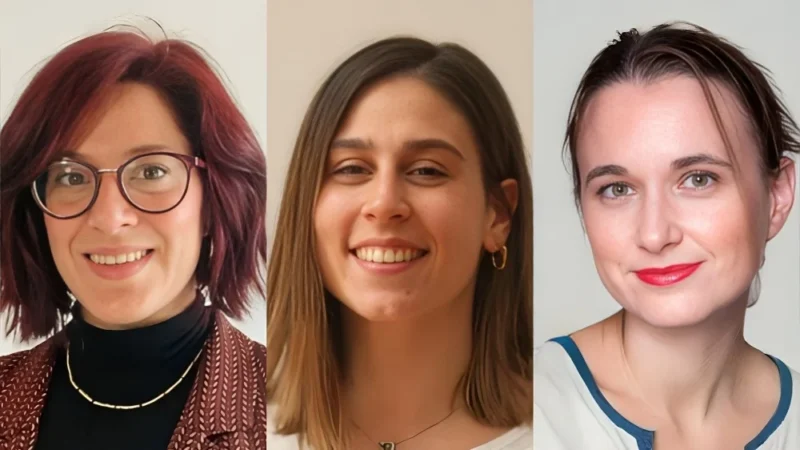
Sara Rossi, Ana Hernández Blázquez and Katell Maguet/LinkedIn
1. Could you briefly introduce WECAN, its network of affiliate umbrella organisations, and its mission to empower evidence-based advocacy across Europe?
WECAN, the Workgroup of European Cancer Patient Advocacy Networks, brings together 23 European umbrella patient organisations, collectively representing close to 900 patient organisations across Europe. Our mission is to strengthen the collective voice of cancer patient advocates by generating independent, referenceable evidence and equipping our members with the tools and data they need to advocate for better care at national and EU level. We believe that advocacy is strongest when it is grounded in evidence, and that is exactly what drives projects like the CANCERSurvey.
2. What is the current gap in Patient Experience Data (PED), and why has data collection across different cancer types and countries been so fragmented in the past?
Patient Experience Data has gained increasing importance in drug development, regulatory decisions, and health technology assessments. However, while PED is collected for various cancer types, there is a lack of consistent and standardised data collection across cancers and across countries. Each organisation, each cancer type, each country tends to gather data in its own way, making it nearly impossible to compare patient experiences or identify where care is falling short. This fragmentation means we cannot reliably pinpoint best practices, measure care inequalities, or produce the kind of cross-cutting evidence that policymakers and HTA bodies need. The result is healthcare policies that do not necessarily reflect what patients actually experience.
3. Why was this pan-European study launched, and how will help identify care inequalities?
We launched the CANCERSurvey to fill exactly that gap: to create the first independent, cancer-agnostic, pan-European dataset on how people affected by cancer experience care, from first symptoms through treatment and beyond. By collecting comparable data across countries and cancer types in 15 languages, we can identify where care pathways work well and where they fail, highlight inequalities between countries, between cancer types, and between patient populations, and give the cancer community evidence that carries weight in policy discussions. No one had done this at this scale before, and without it, advocacy risks being anecdotal rather than evidence-based.
4. Who is eligible to take part, and what can patients and caregivers expect when completing the 25-minute survey?
The survey is open to any adult (18+) who has been diagnosed with cancer and lives in geographical Europe, regardless of cancer type, stage, or when they were diagnosed. Family members and carers can also complete it on behalf of a patient who cannot do so themselves. The survey covers around 50 questions on topics like getting a diagnosis, access to care, communication with your healthcare team, emotional and financial impact, and follow-up support. Most questions are multiple choice, you can skip any question you prefer not to answer, and you can save your progress and return later. It is completely anonymous, available in 15 languages, and takes approximately 25 minutes.
5. How was the survey co-created with patients, and how does the patient-led Steering Committee ensure independent oversight?
The survey was co-developed with cancer patients and patient advocates from across Europe. A Steering Committee of 11 patient organisation leaders has guided the project from the start, providing input on research questions, survey design, question wording, and distribution strategy. The research methodology was designed to ensure scientific rigour while keeping the patient voice at the centre. Picker Institute Europe, an independent organisation specialising in patient experience measurement, supports us with survey implementation and data analysis. Before finalisation, cognitive testing was carried out with patients to make sure the questions were clear, relevant, and sensitive to the lived experience of cancer. All 15 language versions were professionally translated and then reviewed by native-speaking patient advocates to ensure the language was patient-friendly, not just technically correct.
6. How does the CANCERSurvey give visibility to rare cancers and historically underrepresented patient populations?
The survey is deliberately cancer-agnostic: it covers all cancer types, including 88 subtypes. This means that people affected by rare and less visible cancers have the same platform as those with more common diagnoses. We are actively working with our WECAN member organisations and their networks to mobilise communities that are often underrepresented in research. We are also monitoring uptake closely and running targeted outreach where we see gaps, for example towards older patients, men, and specific countries or cancer types with low participation so far. The goal is a dataset that reflects the diversity of the European cancer experience, not just the communities that are easiest to reach.
7. What happens after the survey closes, and how will the data be used to inform HTA bodies, regulators, and policy advocacy?
Once data collection ends on 16 November, the data will be cleaned, compiled, and analysed. We will produce a comprehensive pan-European report, alongside country-level and disease-specific breakdowns where sample sizes allow. A workshop will bring together stakeholders to identify the most striking and actionable findings. From there, the focus shifts to scientific dissemination: we are planning peer-reviewed publications and conference presentations, so the findings are widely accepted as referenceable evidence. Looking ahead, we are already exploring how to sustain this initiative beyond the first wave, so that the CANCERSurvey becomes a long-term source of independent patient evidence rather than a one-off snapshot.
8. Call to Action for Advocates: How can local patient groups, cancer centres, and advocates use the official WECAN distribution toolkit to help spread the word in their communities?
If you are a local patient group, cancer centre, or advocate, you can make a real difference right now. WECAN has made a complete distribution toolkit available with ready-to-use materials in multiple languages: newsletter text, social media posts, flyers, QR codes, and a slide deck. You can share the survey link through your channels, post it on social media, display QR codes at events or clinics, or simply forward it to people you know who are affected by cancer. To access the toolkit, please contact sara.rossi@patientadvocacy.eu.
The survey and more information. Every response strengthens the evidence, and every share extends our reach into communities we cannot access alone.
You may also find this interesting:
Essential Autumn 2026 Lived Experience Advocacy Guide: Training, Events and Research Opportunities