Carole Helissey, Medical Oncologist, Clinical Cancer Research and Phase I at Saint-Joseph & Marie-Lannelongue Hospitals, shared on LinkedIn:
“Prostate cancer: Living longer matters. But living better matters just as much!
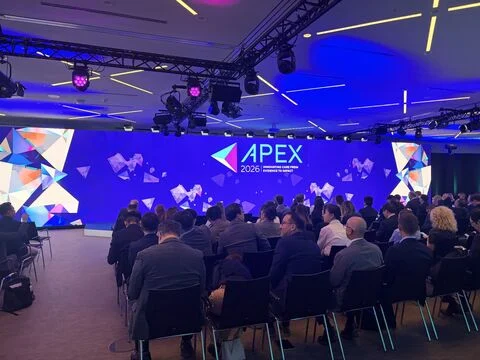
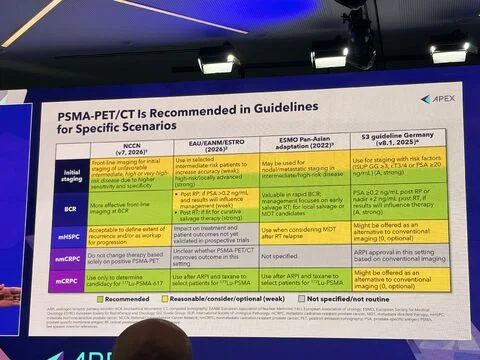
Back from Frankfurt after two truly inspiring meetings, Prostate Cancer NextGen and APEX 2026, organized by Bayer.
Two different perspectives, but one conviction that is particularly close to my heart: our ambition should not only be to extend our patients’ lives, but also to preserve what makes those lives worth living.
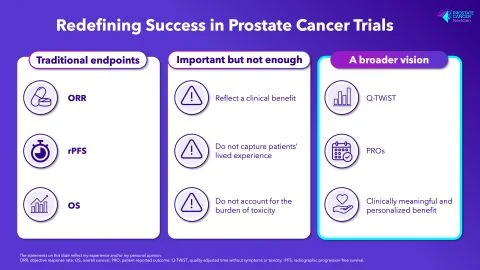
At NextGen, I had the pleasure of sharing my vision for the future of prostate cancer clinical trials.
We are developing new drugs, exploring exciting therapeutic targets, and designing faster, smarter clinical trials.
But one question keeps coming back to me: what is the value of adding years to life if those years come at the cost of a significant loss in quality of life?
Our challenge is therefore twofold: improving survival while minimizing toxicity and placing patients’ expectations and priorities at the heart of clinical research.
I also particularly enjoyed our collaborative work on the cognitive impact of prostate cancer treatments, with a very practical goal: developing screening tools, longitudinal monitoring strategies, and guidance to better support patients in their everyday lives.
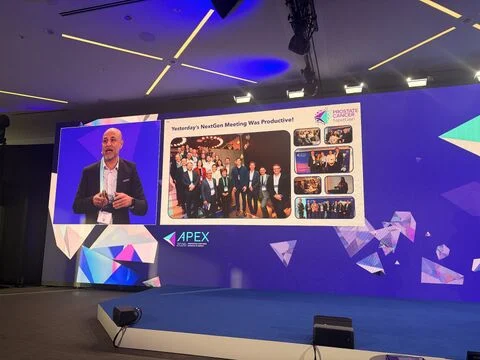
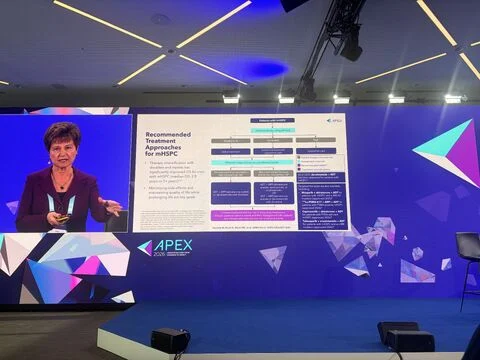
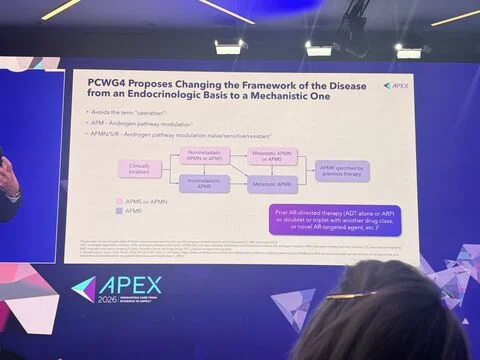
At APEX, a different perspective, but the same priority: the patient!
It was a real pleasure to co-facilitate the interactive workshop ‘Optimizing Patient-Focused Care: Full System Check’ alongside Charles Ryan and Scott Edwards, with a special focus on bone health.
A topic I care deeply about, because preventing a fracture, preserving mobility, or maintaining a patient’s independence is also a meaningful therapeutic success.
I leave these meetings with an even stronger conviction:
‘More than adding years to life, we must add life to years.’
And this is exactly the ambition that should guide the future of our research and clinical practice.
Many thanks to Bayer for bringing us together and to all the international experts for the inspiring discussions and the opportunity to shape a more patient-centered future in oncology.”
In prostate oncology, NextGen refers to the shift away from broad hormone suppression toward precision therapies, molecular diagnostics, and targeted radiopharmaceuticals designed to overcome treatment resistance.
Next-Generation Targeted Therapies:
- AKT/PI3K Pathway Inhibition. In June 2026, the FDA approved capivasertib (Truqap) paired with abiraterone and prednisone for patients with newly diagnosed metastatic hormone-sensitive prostate cancer (mHSPC) who carry a PTEN gene alteration. This marks the first precision therapy specifically tailored to the roughly 25% of metastatic patients with this mutation.
- PROTAC Androgen Receptor (AR) Degraders. Unlike traditional AR inhibitors that merely block the receptor, next-generation proteolysis-targeting chimeras (PROTACs) physically break down mutated androgen receptors inside cancer cells to reverse drug resistance.
- Earlier PARP Inhibitor Integration. Trials in 2026 have moved PARP inhibitors (such as olaparib and talazoparib) earlier into the hormone-sensitive metastatic setting for men with BRCA1/2 and other homologous recombination repair (HRR) mutations.
APEX Cancer Care operates as the specialized oncology division of Urology Austin. Rather than treating prostate cancer in a general setting, APEX is structured as a dedicated ‘center of excellence’ specifically for men dealing with high-risk, recurrent, or metastatic disease.
- Team-Based Care. Instead of sending patients to separate clinics for different treatments, APEX brings urologists, medical oncologists, and radiation oncologists together under one coordinated care plan.
- Focus on Advanced Disease. While early-stage prostate cancer is often managed with surgery or standard radiation, APEX focuses heavily on complex cases – such as cancer that has returned after initial treatment (biochemical recurrence) or spread beyond the prostate.
- Access to Newer Therapies. Because it is a specialized oncology network, patients have direct access to newer treatments that require specialized handling, including targeted radiopharmaceuticals, advanced hormone therapies, immunotherapies, and ongoing clinical trials.
- Precision Testing. Their protocols emphasize genetic and molecular profiling of the tumor to see if a patient qualifies for targeted medications rather than relying solely on standard chemotherapy.
You can also read:
- Amanda Pullinger: What Will It Take to Make Healthcare More Patient-Centered and Affordable?
- TRACE-I: Long-Term Outcomes of PSMA-Guided Salvage Surgery in Recurrent Prostate Cancer