
Weill Cornell Medicine shared on LinkedIn:
“A new study provides insights into how scientists can use the genetics of tumor cells to target the tumor itself – and spare normal cells.
The findings suggest the potential for the development of drugs that have fewer side effects and could benefit patients with colorectal, breast and other cancer types.
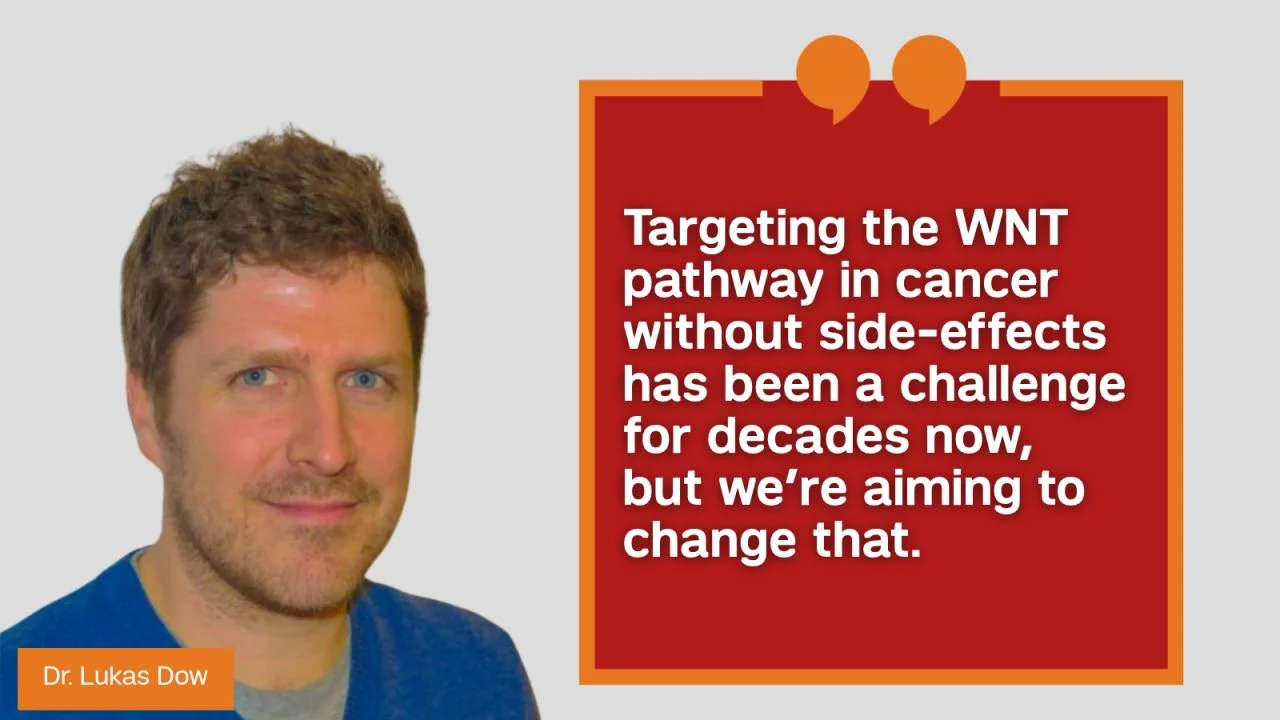
A team led by Weill Cornell Medicine’s Dr. Lukas Dow and Dr. Jill Zimmerman, explored a signaling pathway called the WNT pathway, whose hyperactivity is common in cancers and boosts malignancy.
Targeting WNT signaling without harming normal cells has been notoriously difficult, but in this study, researchers found that many cancer cells are deficient in one of two redundant WNT-supporting enzymes.
They showed that selectively targeting the remaining one reduces WNT signaling in such cells with no apparent effect on healthy cells. They also demonstrated the strategy successfully in early preclinical experiments with a selective enzyme inhibitor they developed.”
Title: A selective TNKS2 inhibitor for tumor-restricted WNT suppression
Authors: Jill Zimmerman, Brandon F. Malone, Kevan Chu, Efrat Finkin-Groner, Shan Sun, Rui Liang, Sher Bahadur, Miguel Foronda, Emma M. Schatoff, Elizabeth Granowsky, Florencia Madorsky, Sukanya Goswami, Alyna Katti, Benjamin Leach, Heather Alcorn, Tuomas Tammela, Benjamin Hopkins, Yoshiyuki Fukase, Tanweer Khan, David J. Huggins, John Ginn, Nigel Liverton, Richard K. Hite, Lukas E. Dow
Read the Full Article on Nature Chemical Biology
You can also read: Kathryn Anderson’s Final Study Reveals How WNT Signaling Shapes Cell Identity and May Inform Cancer Metastasis Research