





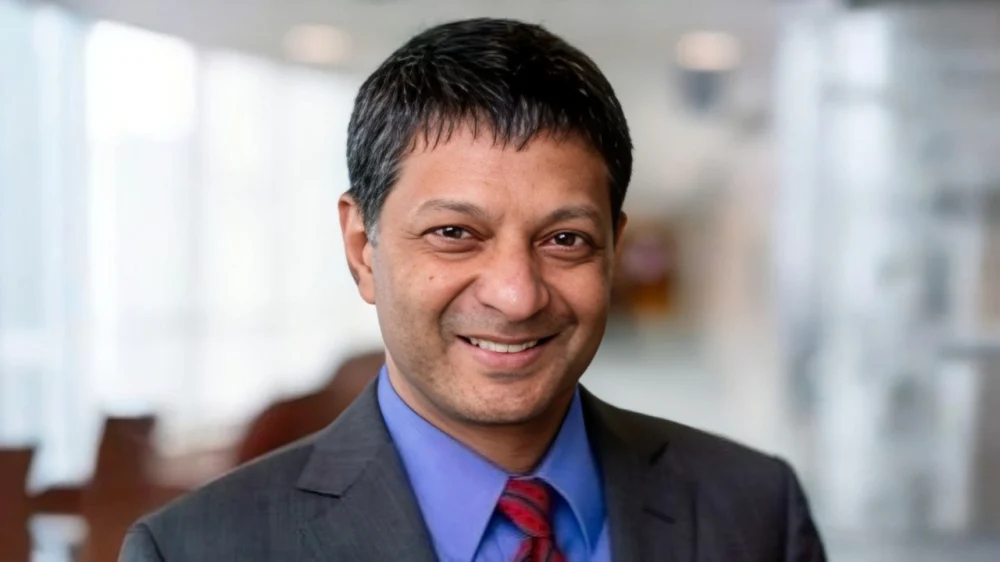
Vincent Rajkumar, Professor of Medicine at the Mayo Clinic in Rochester, shared on X:
“Here are the top 5 of my papers that I’m most proud of. Residents and young faculty and those interested in academic medicine may gain some insights on learning how these papers came to be and what kind of resources and preparation is needed if you want to pull off these type of studies and trials. I’ve added a few lines about how each paper came to be, and why I consider them important. All of this represents team work not individual.
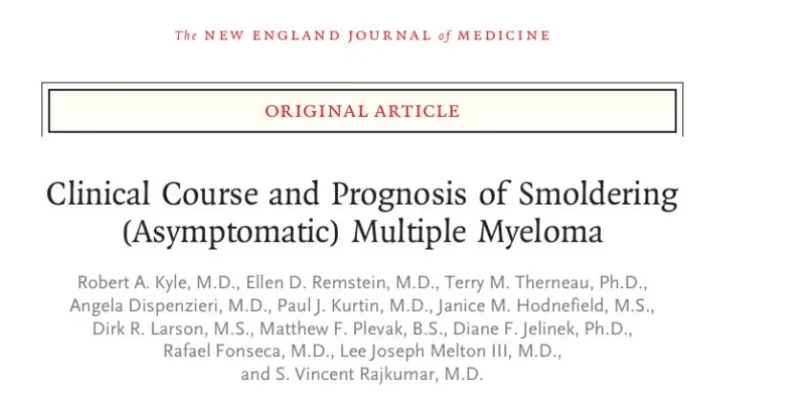
1. Clinical course of Smoldering Myeloma (SMM) – NEJM 2007
This paper established the natural history of SMM, risk factors, and provided the foundation to embark on early intervention trials. It’s cool to be last author on a paper with Bob Kyle as the first author! Working with him I watched and learnt how meticulous and careful you have to be with any kind of research. He called and verified the status of every patient in the cohort. To do this type of study you need a large cohort of patients with very long follow up on a disease that not much is known about natural history or prognosis. I was lucky to work with Dr. Kyle and have this database.
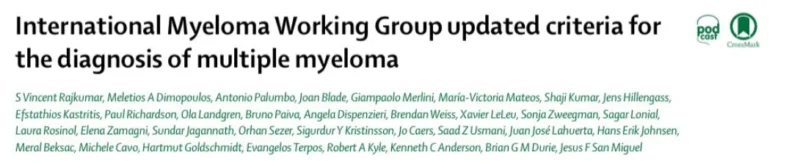
2. IMWG Updated Diagnostic Criteria for Myeloma and Related Disorders – The Lancet Oncology 2014
The most cited myeloma paper in the world with over 6700 citations. Over 140 members of the IMWG worked on this paper. Just getting to the first draft required several original research studies to be completed. Total team work. Defining and redefining major diseases is a big undertaking. Taught me how to navigate and reconcile competing ideas from numerous leaders in the field. To do this and to actually have an impact, you need a clear need for a change that is well recognized. You need you have a team of colleagues with the same vision and goal who are willing to carefully ponder over the pros and cons, and work together. International Myeloma Foundation, IMWG is a great group we have that makes this possible.
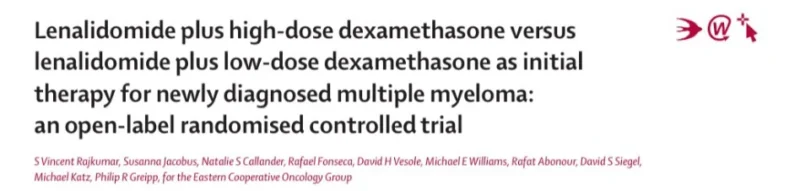
3. The ECOG trial that showed that lowering the dose of dexamethasone in myeloma saves lives -The Lancet Oncology 2010
Randomized trial that helped my career the most. Design proposed by a patient advocate! We didn’t realize the 10% mortality in the first year following diagnosis that occurred in newly diagnosed myeloma due to Dex related toxicity until this trial. The trial was done in a narrow population with doublet regimen. But the results were compelling and welcomed by patients and physicians alike that it became standard across the board with all regimens and all settings. These type of randomized trials are only possible through National Cancer Institute funded cooperative groups: ECOG-ACRIN Cancer Research Group, SWOG, Alliance for Clinical Trials in Oncology.
Leadership of these trials requires investment of years participating in the group activities and perseverance. Also skill and effort because every word of the protocol and paper you have to write.
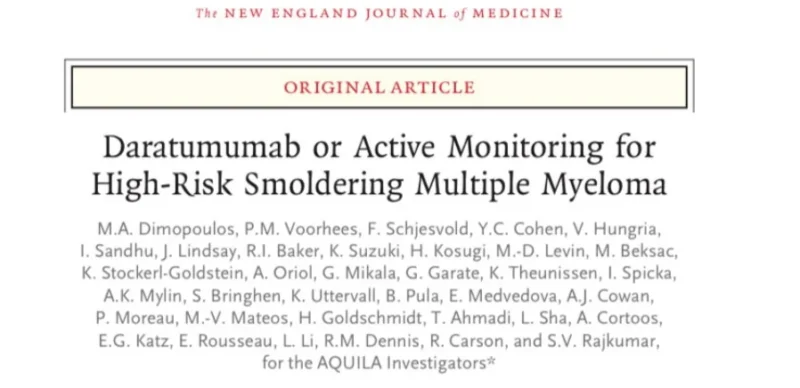
4. Daratumumab is effective in high risk smoldering multiple myeloma. (AQUILA) -NEJM 2024
Randomized trial that showed early intervention works. International effort that to the first approved therapy for high risk smoldering myeloma. Changed paradigm. 10 years from trial concept to publication. But over 20 years from the time of my first trial in SMM. It takes time and there are no shortcuts. This type of trial requires a track record in the field on the particular topic. Leading many natural history studies, phase IIs and a phase III in SMM before helped. Patience and time. It also needs a conviction in the hypothesis: in this case that early intervention works.
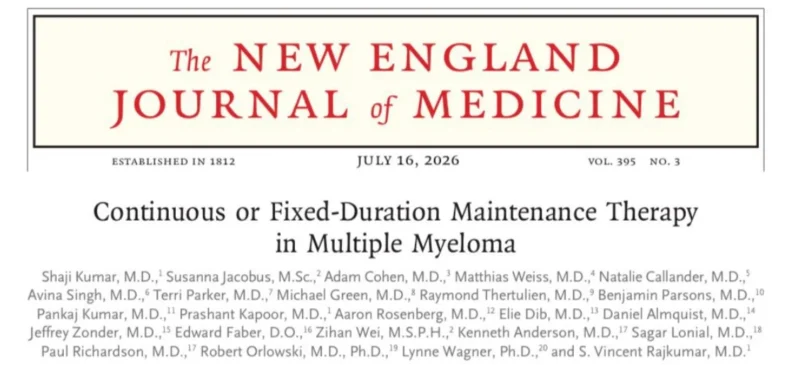
5. Lenalidomide for 2 years is as good as giving it indefinitely. (ENDURANCE trial) – NEJM 2026
This is an investigator initiated National Cancer Institute funded clinical trial that I think is practice changing; reduces toxicity; and saves the country billions of $ Took 15 years start to finish. Shaji Kumar spearheaded this ECOG-ACRIN Cancer Research Group effort. Similar to the Dexamethasone trial above, this type of trial can only be done an IIT through National Cancer Institute funded mechanism, and you need a clear vision that while pharma trials find X treatment forever is better than nothing, we need IITs to determine how much of X is actually needed for the effect.”
To which Murali Janakiram, Associate Professor at City of Hope, added:
“Dear Dr. Rajkumar – This is very inspirational, and thx for all your /team’s contributions to the field. You are a role model for many of us. For all faculty interested in MM attending the co-operative group calls ECOG-ACRIN Cancer Research Group, SWOG Cancer Research Network, Alliance for Clinical Trials in Oncology, listening to leaders and interacting with the group Vincent Rajkumar, Shaji Kumar, Natalie Callander, Amrita Krishnan, Saad Z. Usmani, Sagar Lonial paves the way for good research.”