Thomas Newsom-Davis, Vice Chair of the Multidisciplinary Clinical Sciences Committee at IASLC, shared on LinkedIn:
“Highlight of WCLC26 №4:
DESTINY-Lung04 and 1L HER2 NSCLC landscape
What was presented?
- Presidential Session 2
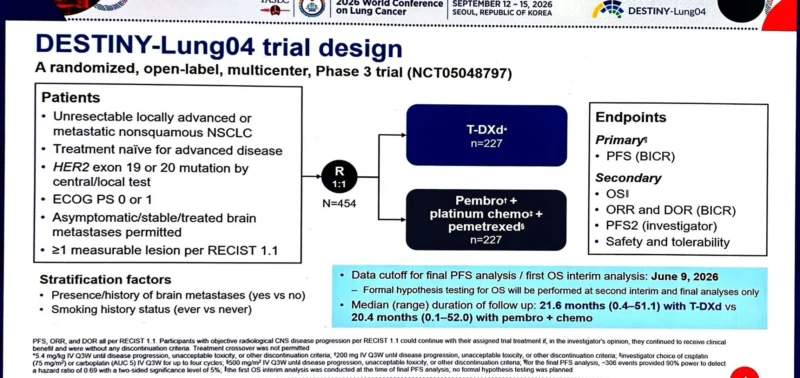
- Ph3 randomised open-label
- Trastuzumab Deuxtecan (TDXd, anti-HER2 ADC) v chemoimmunotherapy (PPC)
Background:
- HER2mut NSCLC rare, but aggressive
- T-DXd licensed in 2L+: not funded in many countries
- HER2 TKIs also arriving: Zongertinib, Sevabertinib
What is the efficacy?
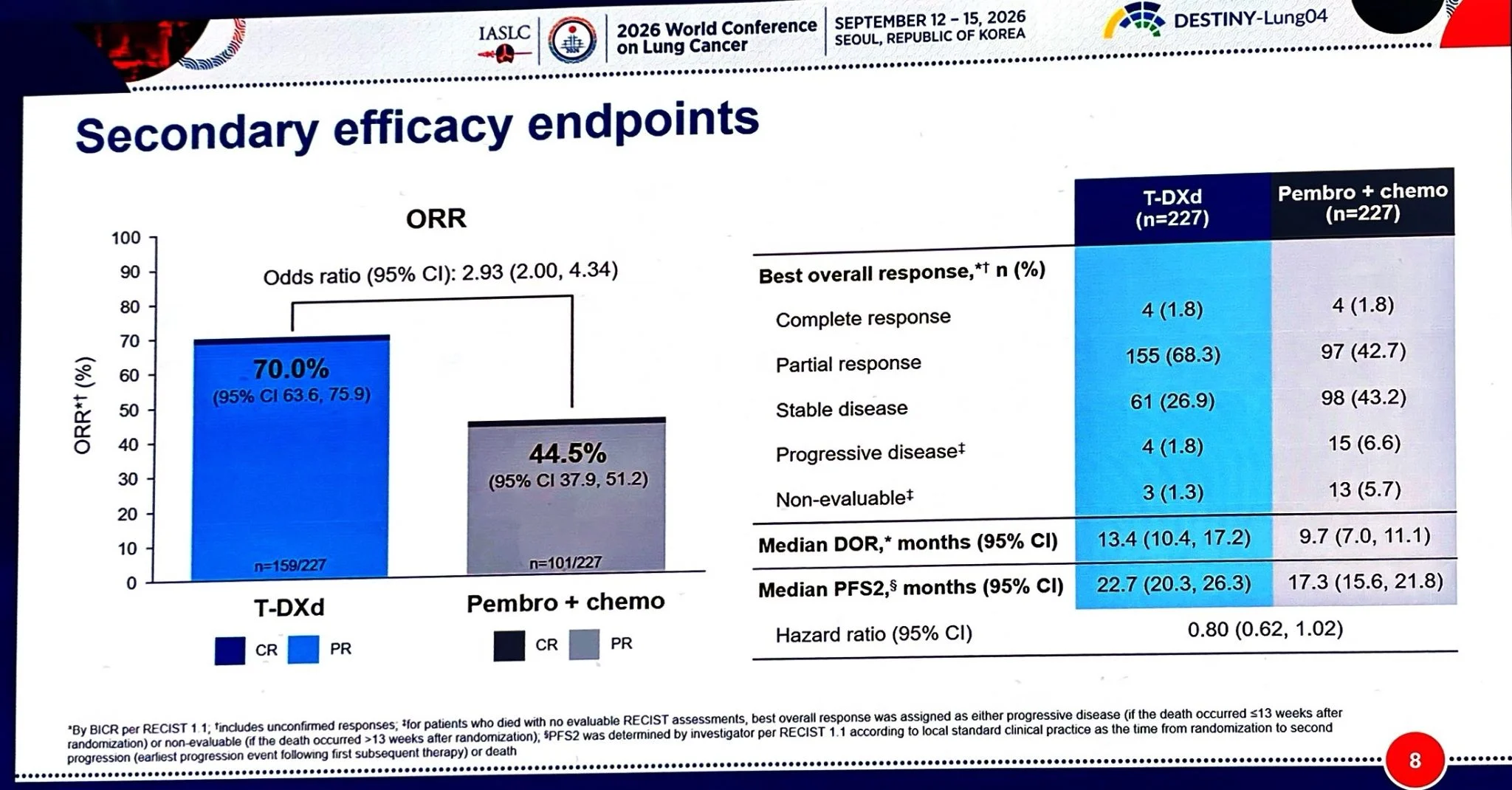
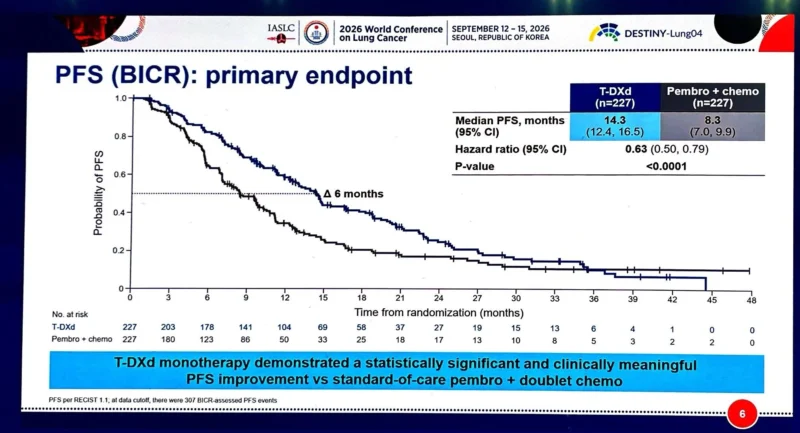
- Improved mPFS 14.3 v 8.3m, HR 0.63
- Increased ORR 70 v 44%
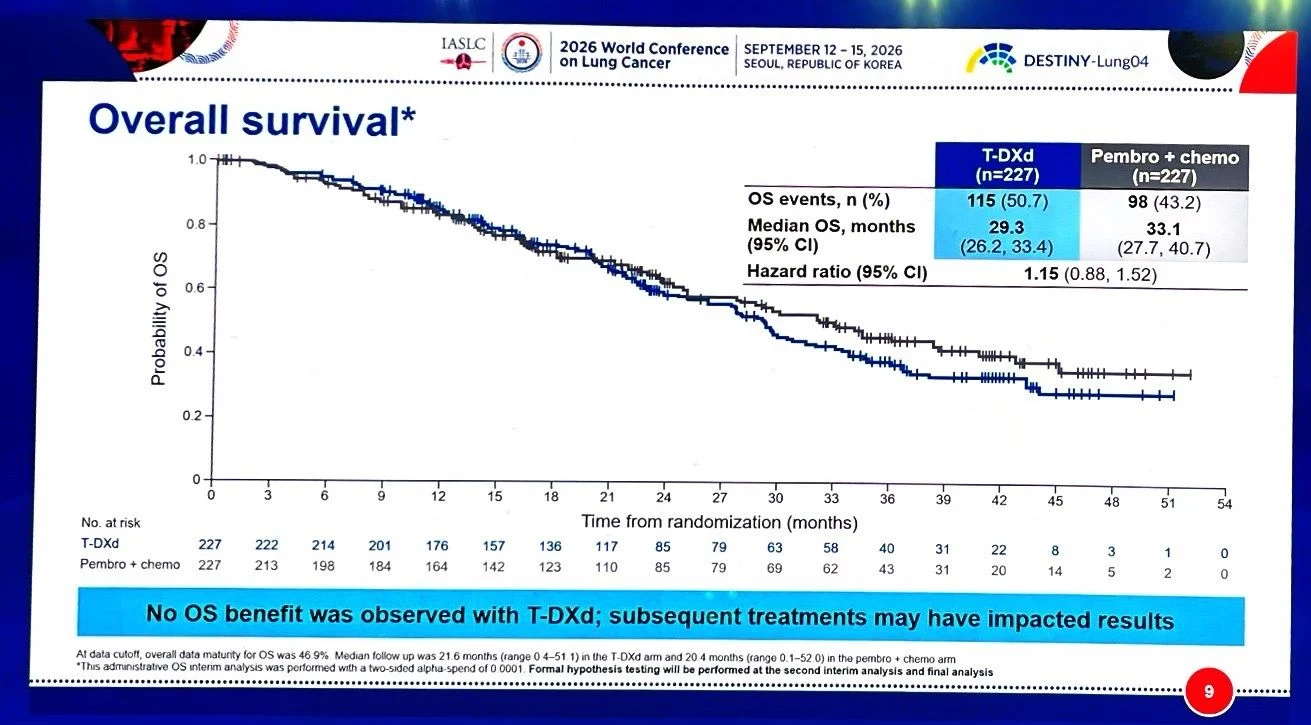
- No difference OS, HR 1.15
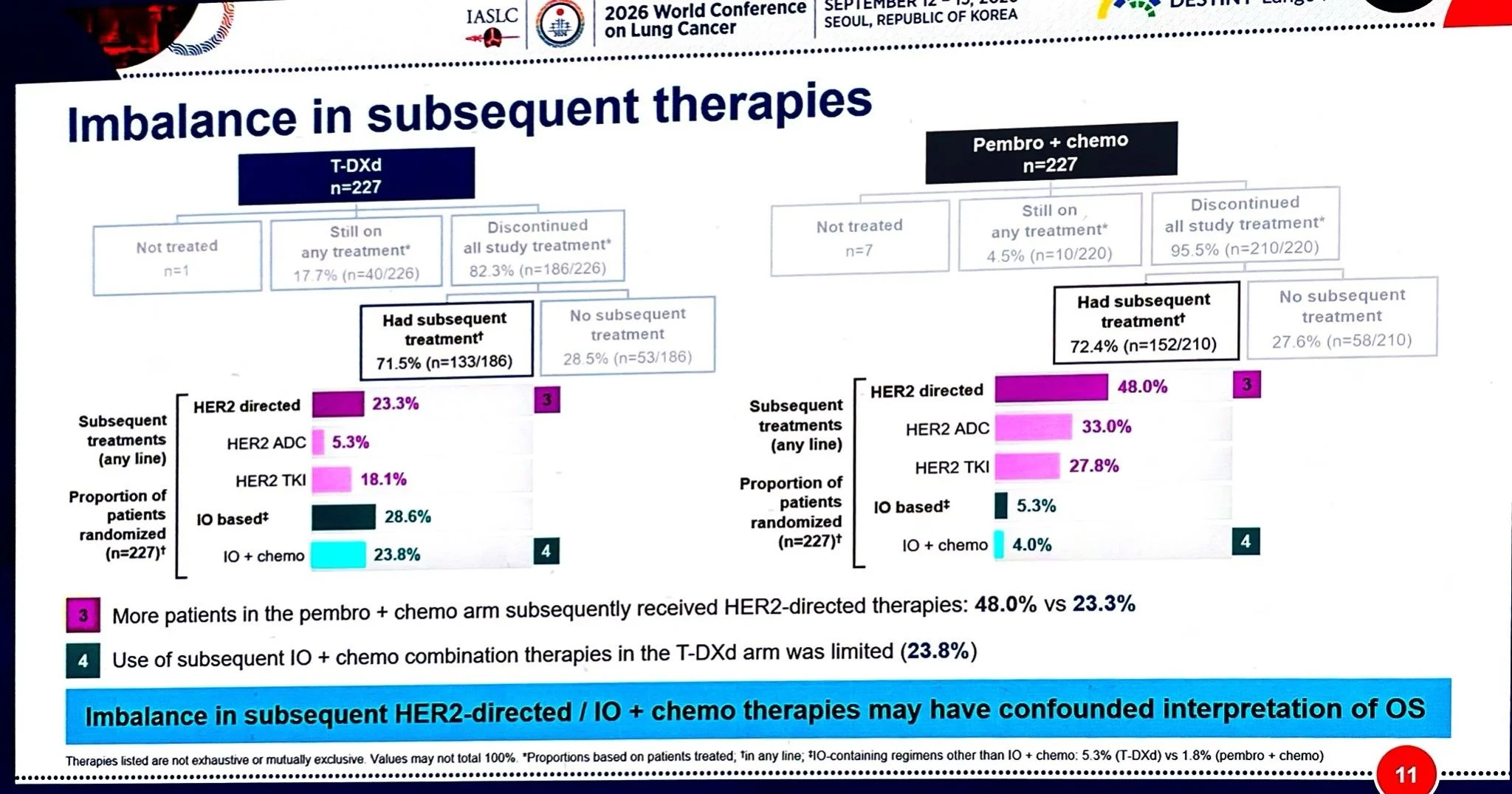
- Suggested that OS result due to different subsequent treatments: HER2 (48%) in cntrl, chemoIO in TDXd arm
What about side effects?
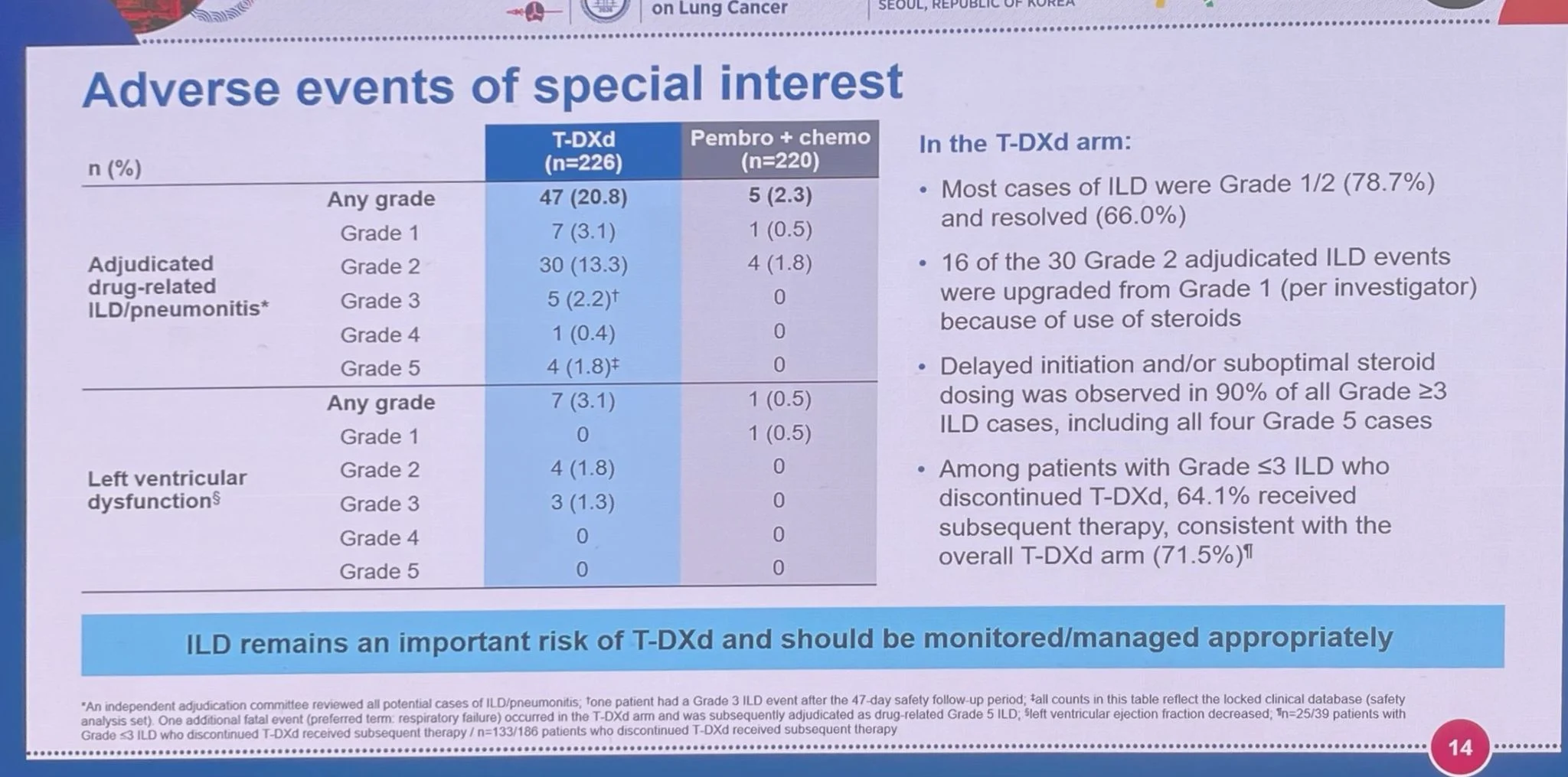
- 20% ILD, 4% Gr3+
- Dose reduction 16%, discontinuation 14%
How do TKIs compare?
- Zongertinib (BEAMION-Lung01), Ph1b, n=74, ORR 74%; mPFS 14.4m; icRR 47%
TRAEs: Gr3+ 19%. 55% all-grade diarrhoea.
No ILD
Dose reduction 16%, discontinuation 9%
- Sevabertinib (SOHO-01), Ph3, n=73, ORR 71%; 12m PFS 55%;
TRAEs: Gr3+ 21-36%. 86% all-grade diarrhoea, 5-23% grade 3+. No ILD
My thoughts:
- 3 active agents for 1L HER2, whereas only recently we had none
- PFS and ORR similar between 3 options (caveat of different phase trials)
- TDXd OS data disappointing, despite explanation suggested
- Toxicity, especially ILD = driver of choice: TKI clearly better, with minimal ILD risk. Zongertinib easier than Sevabertinib IMO
- Surprised by immunotherapy in control arm of DESTINY, given concern that might increase subsequent ILD risk
- Patient preference important: oral therapies usually preferred to IV/SC
- Optimal sequencing yet to be established: do TKI – ADC resistance, and vice versa?
Conclusion:
If all drugs available, I would use Zongertinib over TDXd in 1L.”
You can also read:
DESTINY-Lung04: Enhertu Improves First-Line PFS in HER2-Mutant NSCLC