Talha Badar, Hematology/Oncology Specialist at Mayo Clinic, shared on X:
“Precision medicine in myeloid neoplasm: are we there yet!
Does genomic classification of myeloid neoplasms change what we DO at the bedside, or mainly how we classify and predict?
WHO 2022 and ICC 2022 moved AML/MDS decisively from morphology toward genotype.
Here’s where precision medicine has, and hasn’t, delivered.
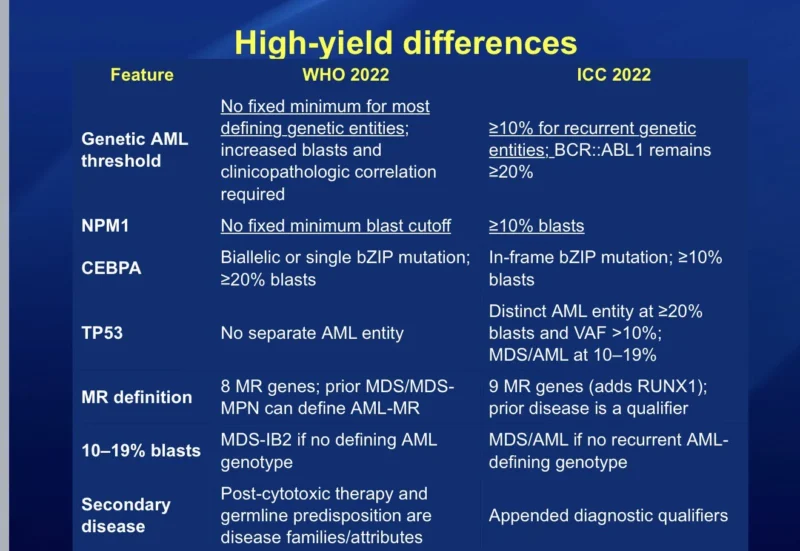
WHO 2022 and ICC 2022 are not interchangeable: blast thresholds differ for NPM1/CEBPA, TP53 is handled differently, and MR gene panels differ (8 vs 9, with RUNX1 added in ICC). Before comparing outcomes, know which classification system your dataset used.
AML survival has improved, but not evenly.
Median OS in patients <65 rose from 8 to 46 months from the 1970s to 2010s, much of it before targeted therapy. Since 2017, 14 targeted agents have been approved. TP53-mutated and complex-karyotype AML remain major exceptions.
APL remains the precision-medicine template: PML::RARA is both the diagnosis and the target.
ATRA+ATO cures >90% of low/intermediate-risk disease without chemotherapy. Yet rare fusion partners can resist differentiation therapy. Even the model success story has biological exceptions.
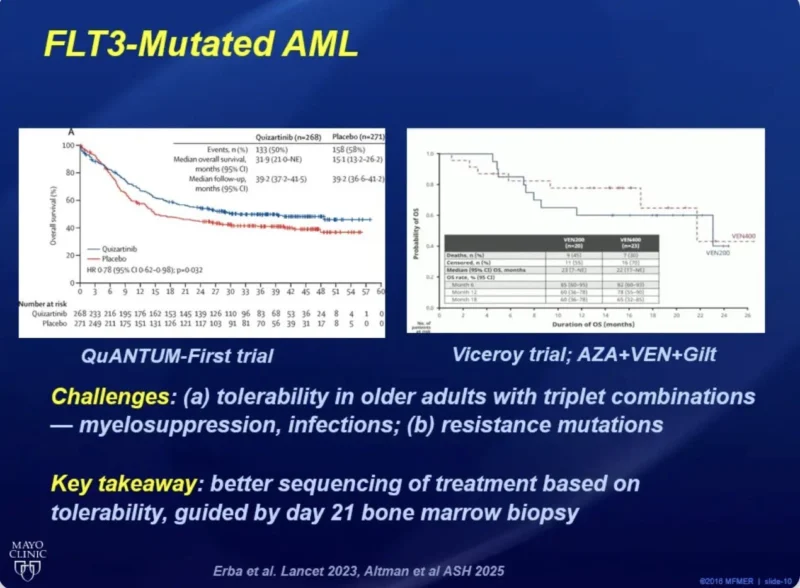
FLT3-mutated AML shows what precision therapy can achieve, and what it still cannot.
QuANTUM-First and FLT3-inhibitor triplets improve outcomes, but myelosuppression, infection, and resistance remain limiting.
Practical point: marrow-guided treatment adjustment matters.
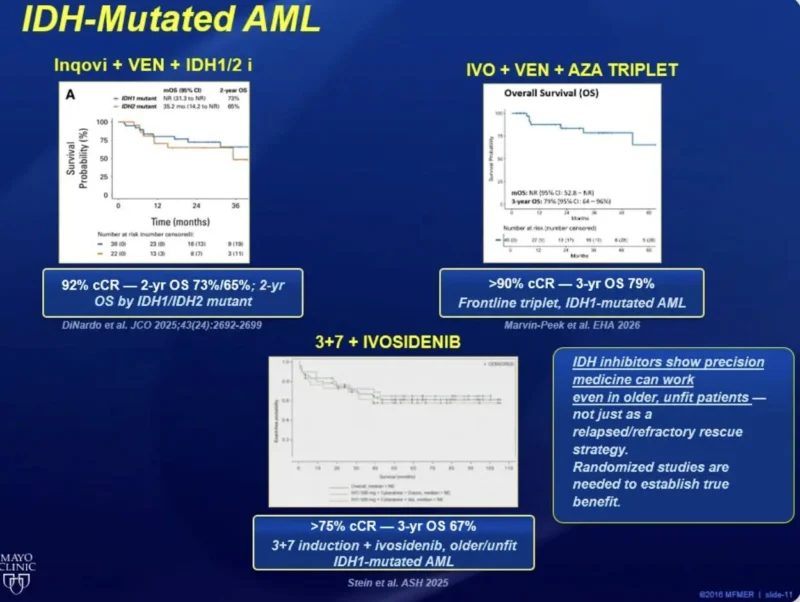
IDH-mutated AML may be one of the clearest next frontiers.
IVO+VEN+AZA and 3+7+ivosidenib have produced CR rates >90% with prolonged survival, including in older patients. The signal is impressive; randomized data still need to define when triplets should become standard.
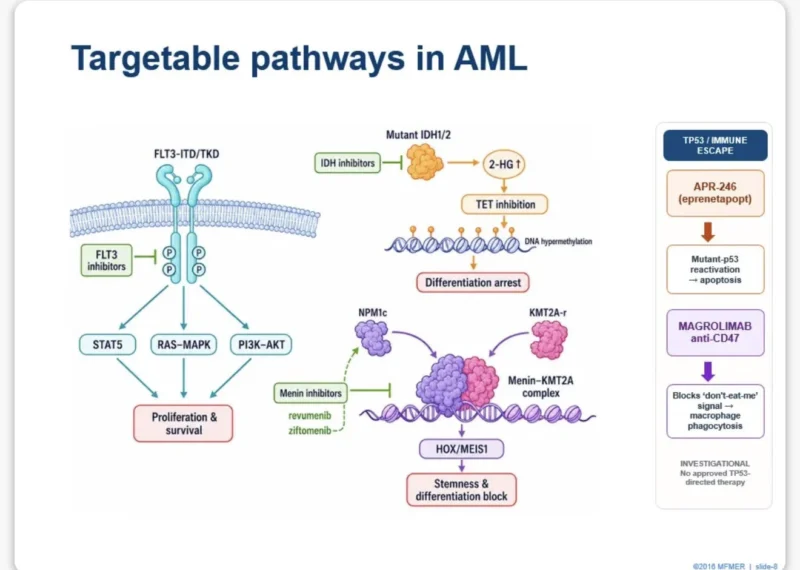
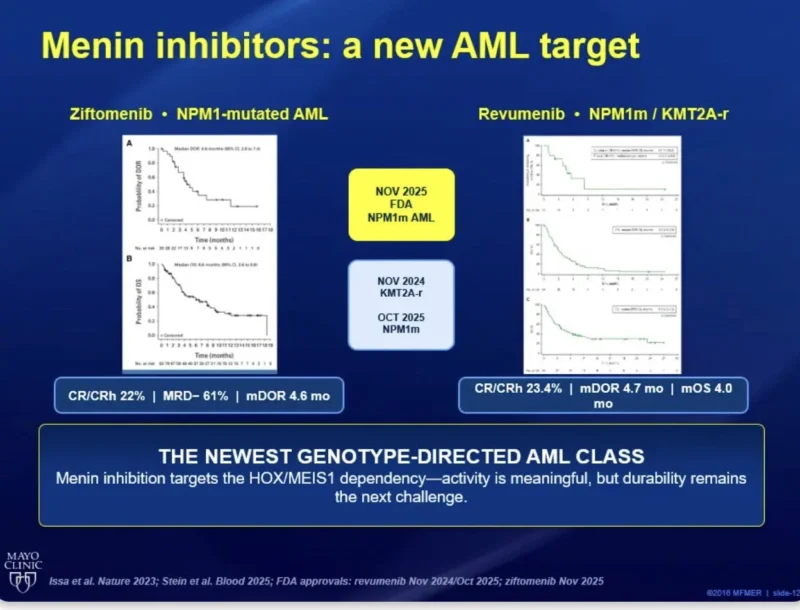
Menin inhibition is the newest genotype-directed AML class.
Revumenib in NPM1m/KMT2A-r disease and ziftomenib in NPM1m AML show CR/CRh rates around 22-23% in heavily pretreated patients.
The proof of activity is here.
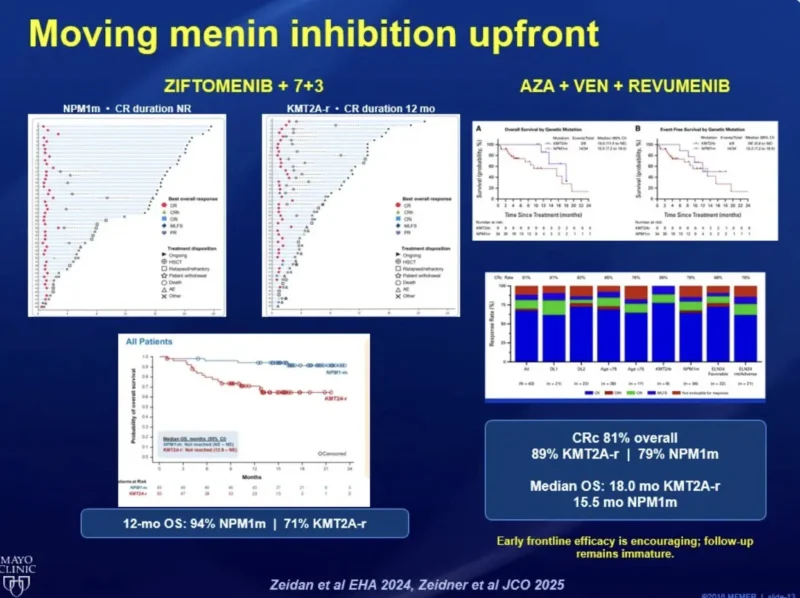
The next question is durability, combinations, and earlier-line use.
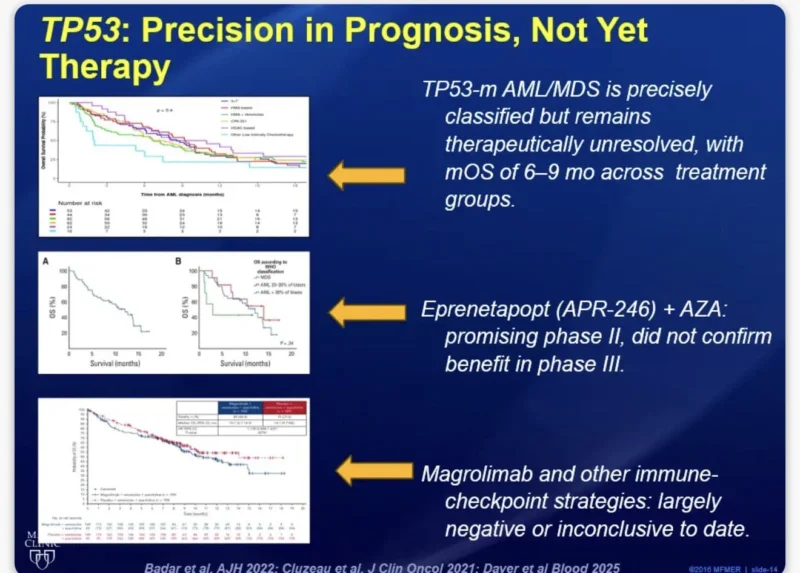
TP53-mutated AML/MDS remains precision medicine’s hardest test. Median OS is still roughly 6-9 months.
Eprenetapopt+AZA advanced from promising phase 2 data to a negative phase 3 trial; magrolimab and checkpoint strategies also disappointed. We can identify the biology better than we can treat it.
OPTI-AML tested something often individualized without randomized evidence: 28 vs 14 days of venetoclax.
CR was 49.4% vs 43.0%, and non-inferiority was not met.
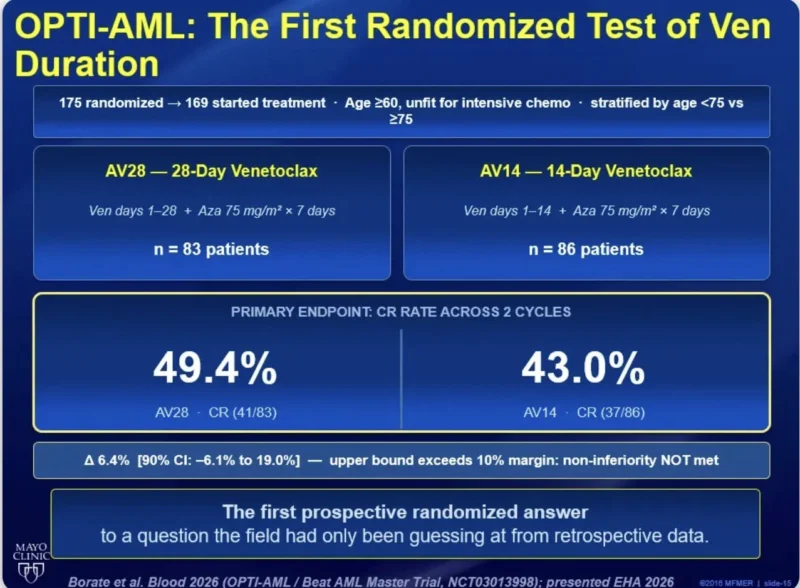
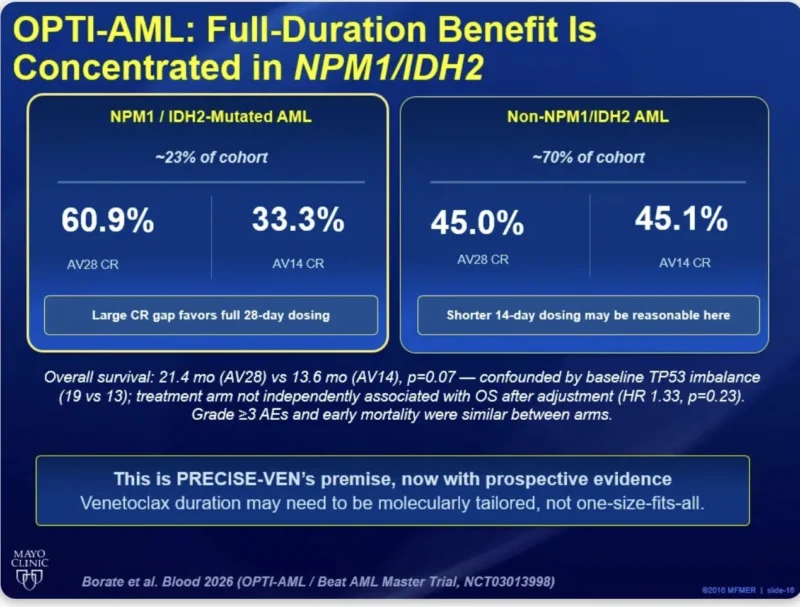
The signal that full-duration benefit may cluster in NPM1/IDH2-mutated AML raises a bigger question:
Should VEN duration be genotype-tailored?
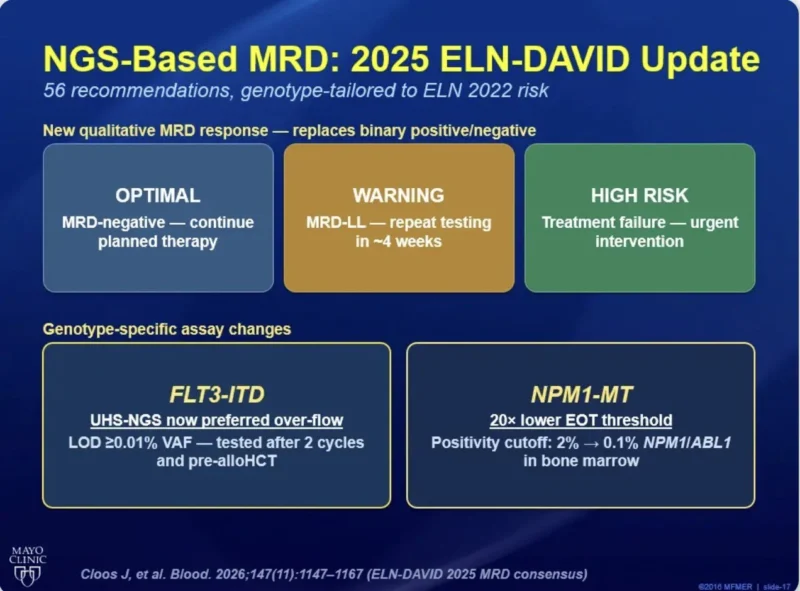
MRD may be where precision medicine becomes most clinically actionable. In NPM1-mutated AML, post-induction MRD identifies who benefits from CR1 allo-HCT, while MRD-negative patients may not.
The field is moving from “what mutation is present?” to “how should molecular response change treatment?”
You can also read: Talha Badar: DDX41mt predisposition syndrome in myeloid neoplasms – OncoDaily