Talha Badar, Associate Professor of Medicine at Mayo Clinic, shared on X:
“Venetoclax duration in AML:
Toward a precision approach Ven-HMA is standard therapy for older/unfit AML, but 2 questions remain unsettled:
- How long should venetoclax be given within each cycle?
- Can treatment eventually be stopped after a durable remission?
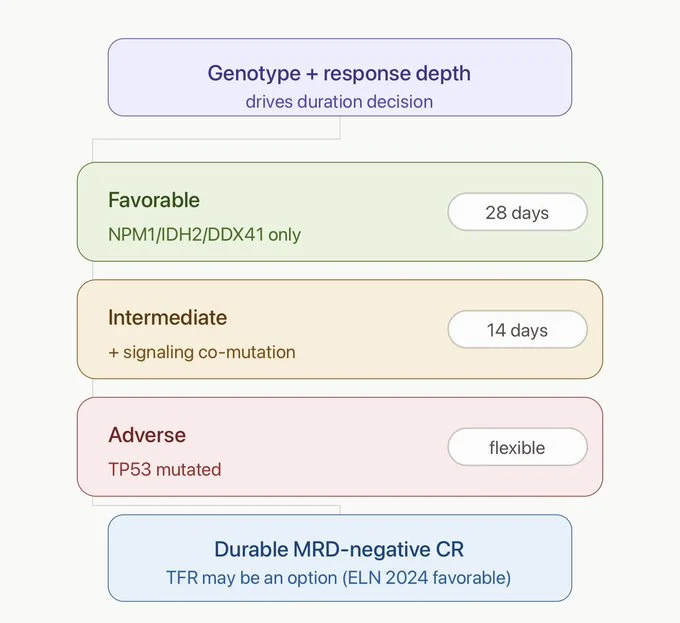
Increasingly, the answer may depend on genotype + depth of response, rather than one schedule for all.
Genomic risk matters
The ELN 2024 less-intensive classification identifies:
- Favorable: NPM1, IDH2, DDX41 without FLT3-ITD/RAS/TP53
- Intermediate: favorable genotypes + signaling mutation
- Adverse: TP53-mutated AML
Median OS is >24, ~12–13, and 5–8 months, respectively.
A striking example:
NPM1-mutated AML falls from ~39 to 9.9 months when a signaling co-mutation is present.
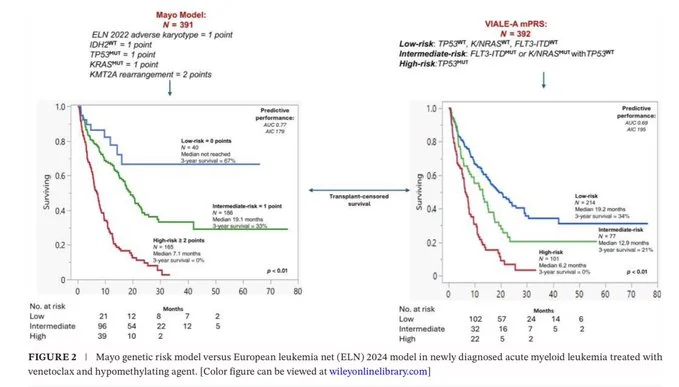
The Mayo genetic risk model adds further refinement.
Pre-treatment factors include:
- ELN-adverse karyotype
- TP53 mutation
- KRAS mutation
- IDH2 wild-type
- KMT2A rearrangement
3-year OS: 67% → 33% → 0% across low/intermediate/high-risk groups. Importantly, achieving CR/CRi was the strongest survival predictor, emphasizing that baseline genetics should be interpreted together with response.
Does 14 vs 28 days of venetoclax matter?
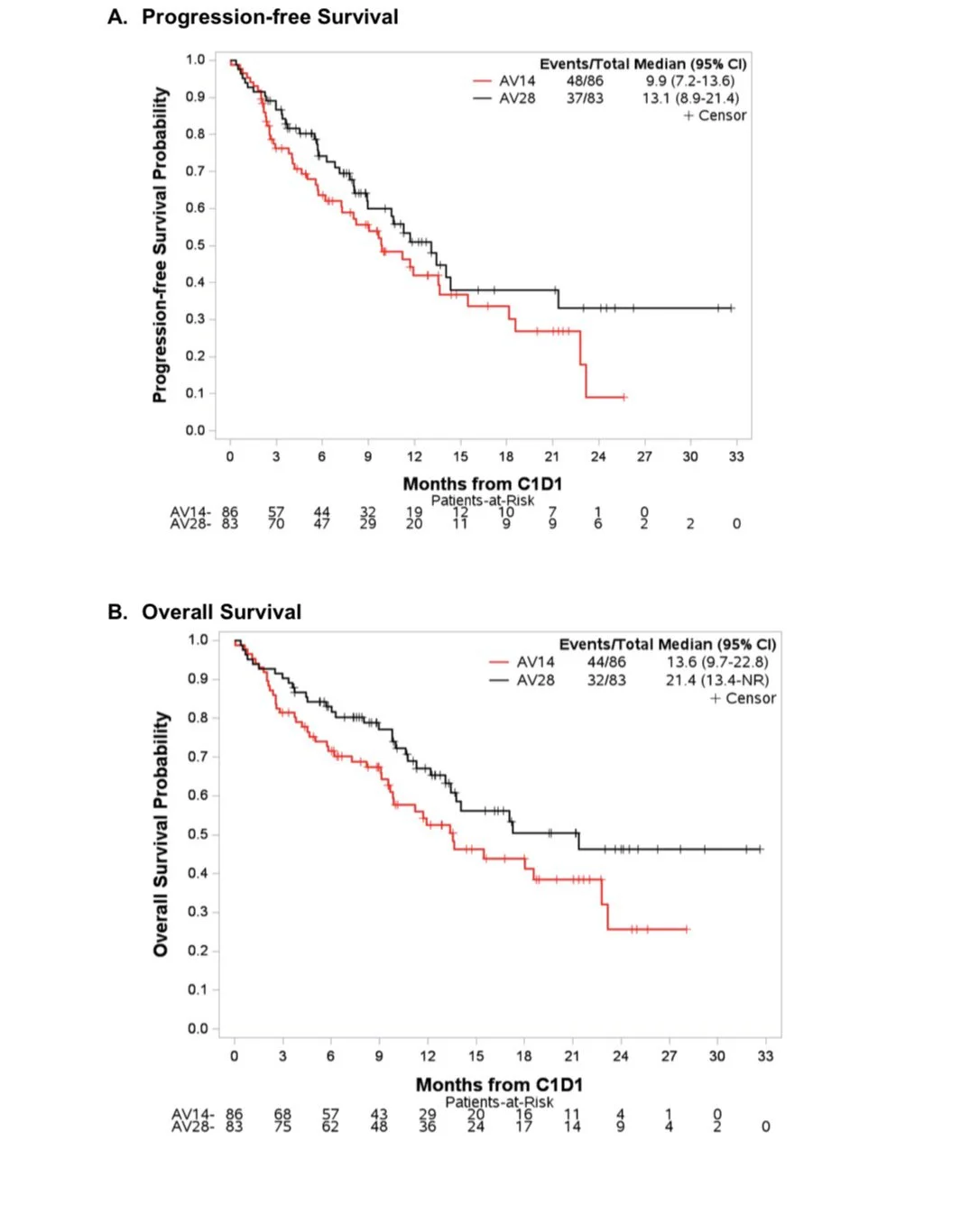
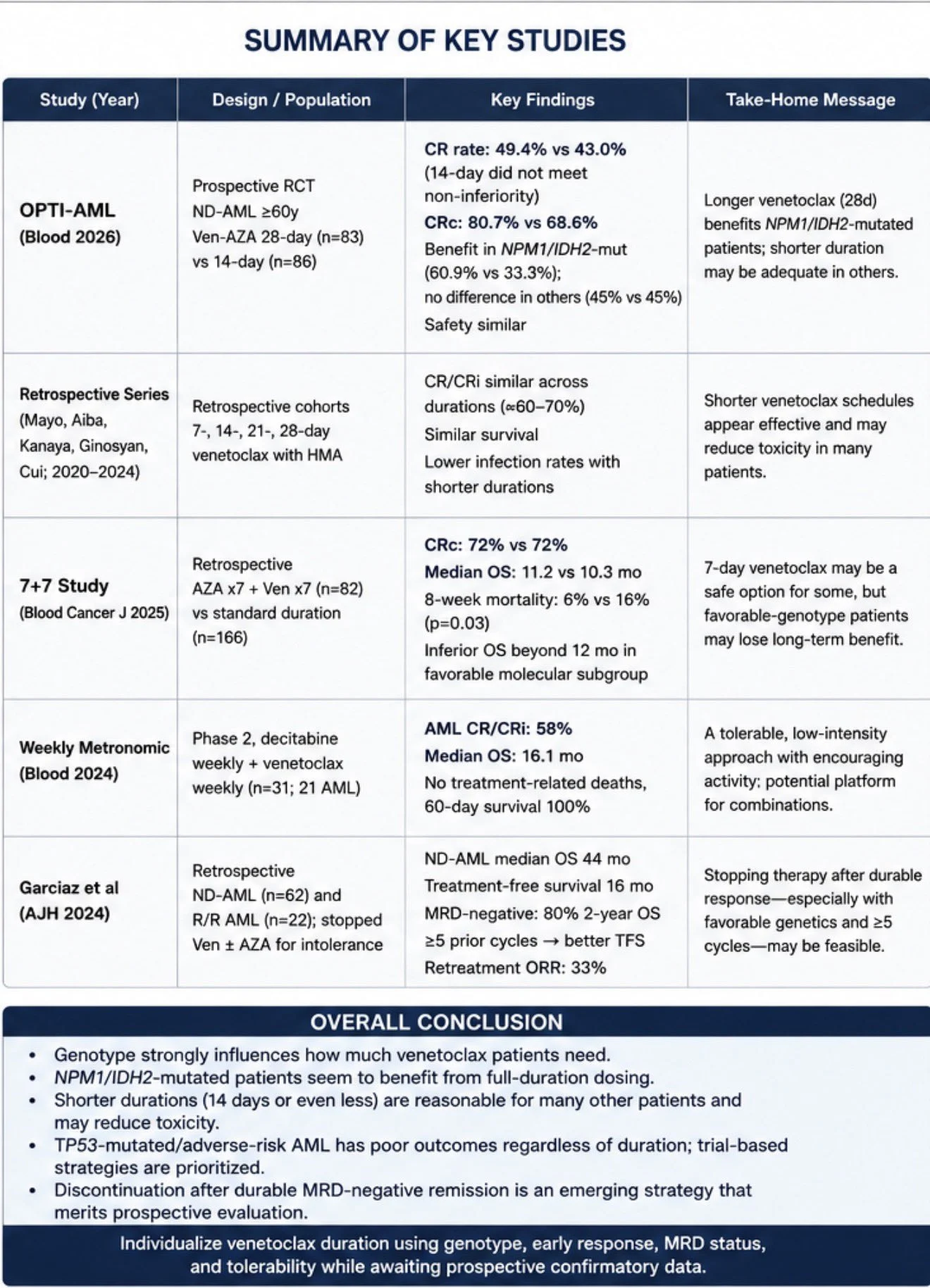
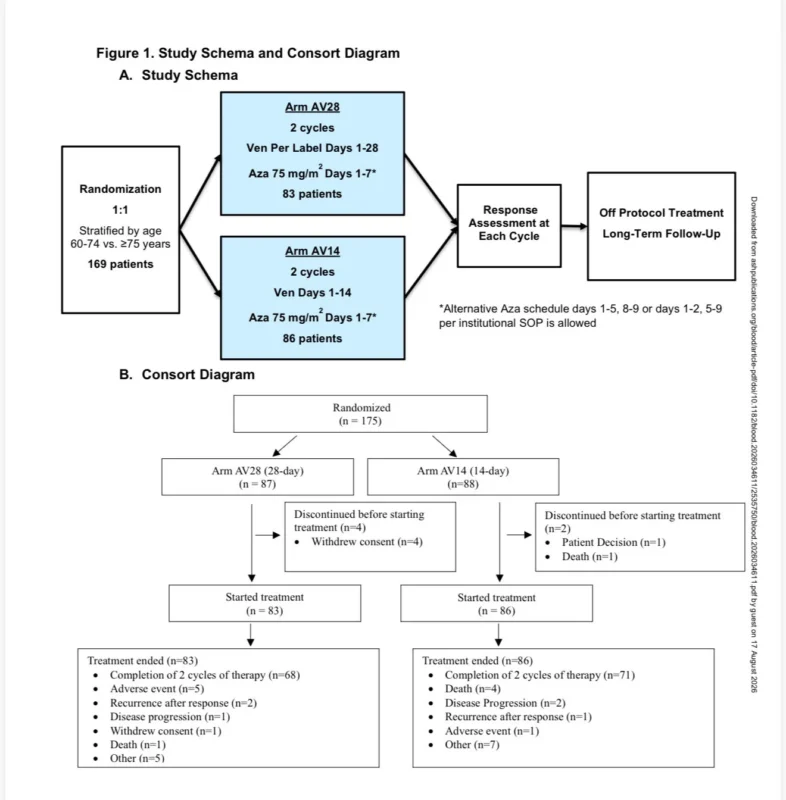
OPTI-AML (Blood 2026) prospectively randomized 28-day vs 14-day VEN with AZA. By Dr. Barote and Dr. Zeidner et al!
CR:
- 28d: 49.4%
- 14d:
43.0% 14-day VEN did not meet non-inferiority. Composite CR also favored 28d: 80.7% vs 68.6%.
But the genomic signal may be more important than the overall difference.
In NPM1/IDH2-mutated AML: CR was 60.9% with 28d vs 33.3% with 14d.
In patients without these mutations: CR was essentially identical: 45% vs 45%.
This raises an important possibility:
- VEN-sensitive genotypes may benefit from greater drug exposure
- Shorter schedules may be sufficient for many others
What do retrospective studies tell us?
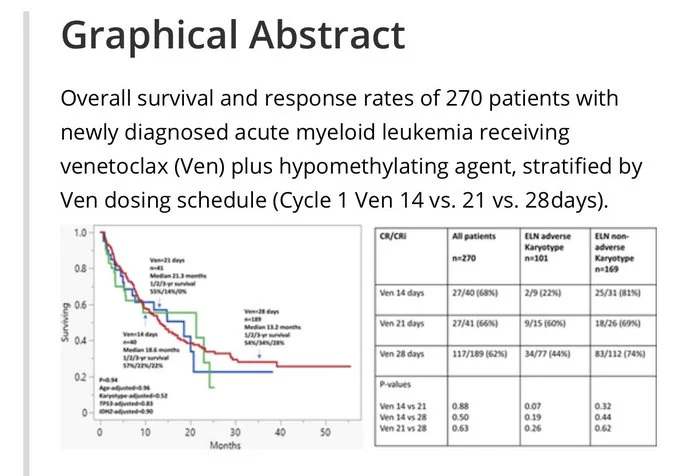
Across multiple 7-, 14-, 21- and 28-day VEN series, shorter schedules generally show (Karrar and Gangat et al)
- Similar CR/CRi
- Similar survival
- Potentially less myelosuppression/infection
In the Mayo series (n=270): CR/CRi:
- 14d 68%
- 21d 66%
- 28d 62%
No clear survival advantage by duration.
The 7+7 experience adds another clue
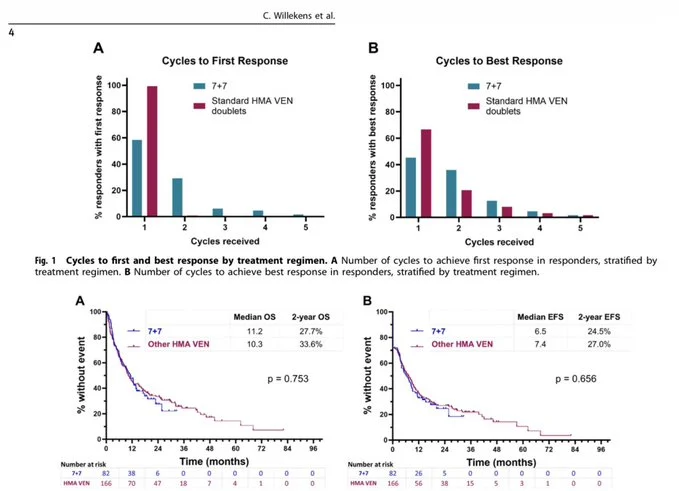
AZA x7 + VEN x7 produced:
- CRc 72% vs 72% with standard duration
- Similar median OS
- Lower 8-week mortality: 6% vs 16%
But patients with a more favorable molecular profile had a signal for inferior longer-term OS with 7-day VEN.
Again: shorter may not be equally appropriate for every genotype.
Could we shorten even further?
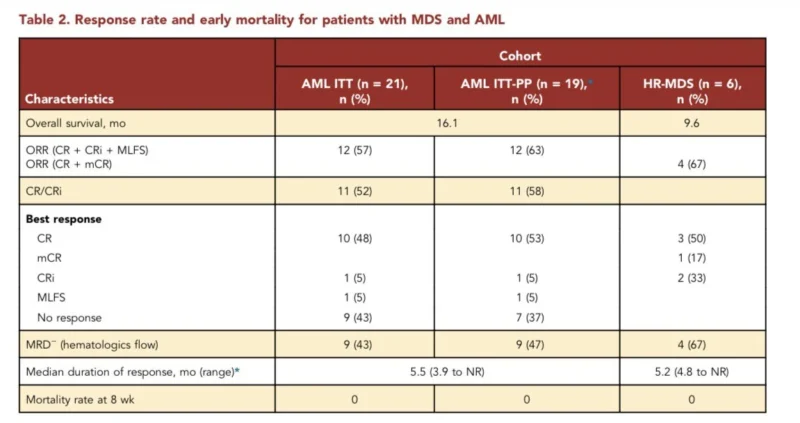
A phase 2 study evaluated weekly decitabine + weekly VEN.
Despite a frail population:
- 90% completed 12-week induction without interruption
- 60-day survival 100%
- AML CR/CRi 58%
- Median OS 16.1 months
Small study, but the markedly different toxicity profile is intriguing, particularly as a potential backbone for future combinations.
Can VEN-HMA eventually be stopped?
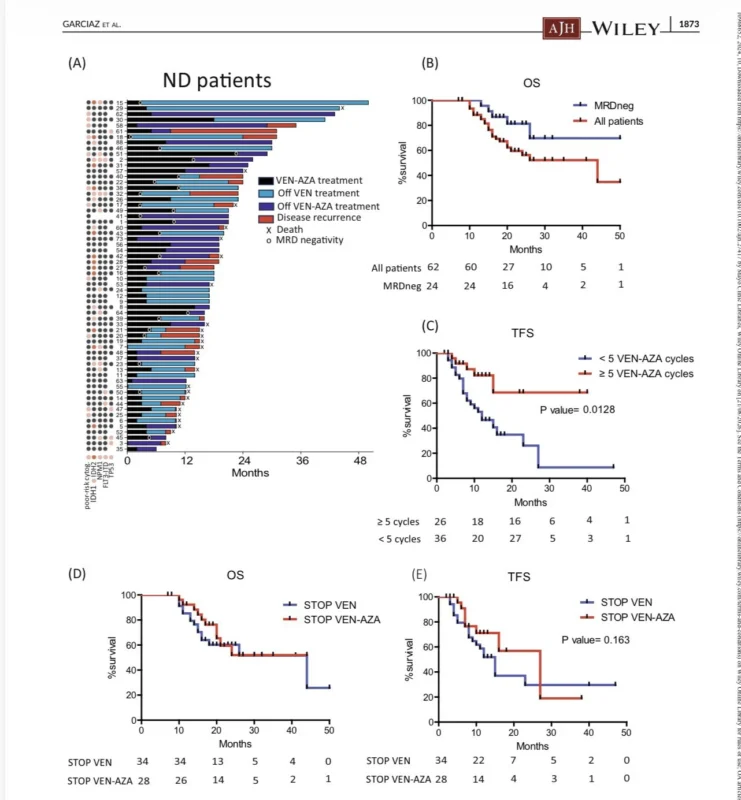
Garciaz et al evaluated patients who discontinued VEN ± AZA after achieving remission because of intolerance.
In newly diagnosed AML:
- Median OS 44 months
- Treatment-free survival 16 months
- MRD-negative patients: 80% 2-year OS
Patients receiving ≥5 prior cycles had significantly better treatment-free survival. These data are retrospective and highly selected – but support prospective testing of fixed-duration therapy.
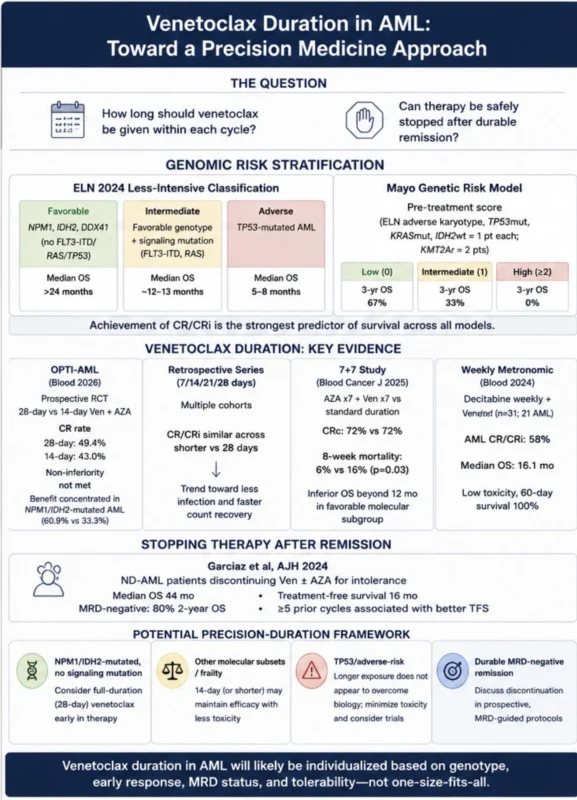
Putting this together: a possible precision-duration framework
- NPM1/IDH2-mutated, no signaling mutation Consider maintaining adequate VEN exposure, especially early in therapy.
- Other molecular subsets / frail patients 14-day, and in selected cases shorter schedules, may preserve efficacy while reducing toxicity.
- TP53/adverse-risk disease Longer VEN exposure has not clearly overcome adverse biology; minimizing toxicity and prioritizing clinical trials/new combinations may matter more.
- Durable MRD-negative remission Treatment discontinuation is increasingly worth studying, ideally within prospective MRD-guided strategies.
Bottom line
The future of VEN-HMA may not be 28 vs 21 vs 14 vs 7 days for everyone.
It may be:
genotype → early response → MRD → toxicity → individualized VEN duration
For now, only OPTI-AML provides prospective randomized evidence, and most subgroup data remain exploratory.
But the direction is increasingly clear: Venetoclax duration in AML may ultimately become another component of precision medicine.
Other articles about AML on OncoDaily.