Talha Badar, Hematology/Oncology Specialist at Mayo Clinic, shared on LinkedIn:
“Is the chemo-free era finally here for Ph+ ALL?
The newly published GIMEMA ALL2820 phase III trial in NEJM represents an important milestone in the evolution of frontline therapy for Philadelphia chromosome-positive ALL.
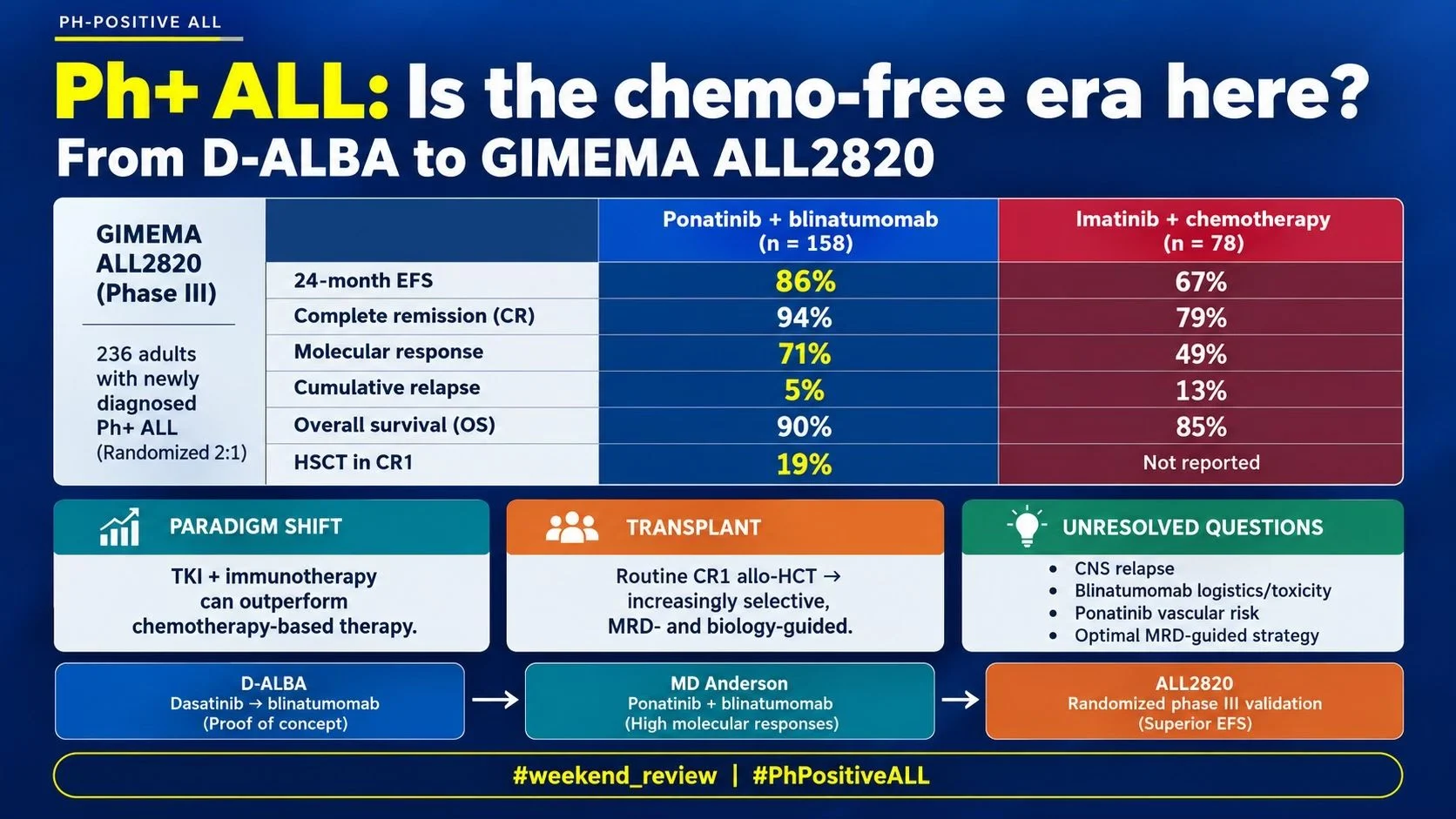
In 236 adults with newly diagnosed Ph+ ALL, ponatinib + blinatumomab was compared with imatinib + chemotherapy.
At ~24 months:
- EFS: 86% vs 67%
- CR: 94% vs 79%
- Molecular response: 71% vs 49%
- Relapse: 5% vs 13%
- OS: 90% vs 85%
Only 19% of patients receiving ponatinib/blinatumomab underwent HSCT in CR1.
This is the culmination of an evolution that began with D-ALBA, demonstrating durable remissions with dasatinib followed by blinatumomab, and continued with the MD Anderson experience combining ponatinib + blinatumomab, where only 2/60 patients underwent HSCT.
But chemo-free does not mean challenge-free.
Three issues deserve attention:
- CNS relapse: D-ALBA reported 4 CNS-involving relapses, while 4 of 7 relapses in the MD Anderson experience were isolated CNS relapses. This does not establish causation, but emphasizes the importance of optimized CNS-directed therapy.
- Blinatumomab burden: continuous infusion, CRS/neurotoxicity, logistics and repeated treatment cycles remain relevant.
- The changing role of transplant: allo-HCT is not disappearing, but its utilization is contracting toward a more MRD- and biology-guided strategy.
Perhaps the biggest shift is therefore conceptual: Ph+ ALL is moving from chemotherapy + routine transplant toward TKI + immunotherapy + molecularly guided selective transplant.
The remaining questions may be as important as the answers: optimal TKI, duration of blinatumomab, CNS prophylaxis, MRD methodology, and precisely who still benefits from allo-HCT?”
You can also read: First Line Treatment of Adults with Ph+ ALL: Intermediate Analysis of the ALLPh2022 Trial – Resonance