





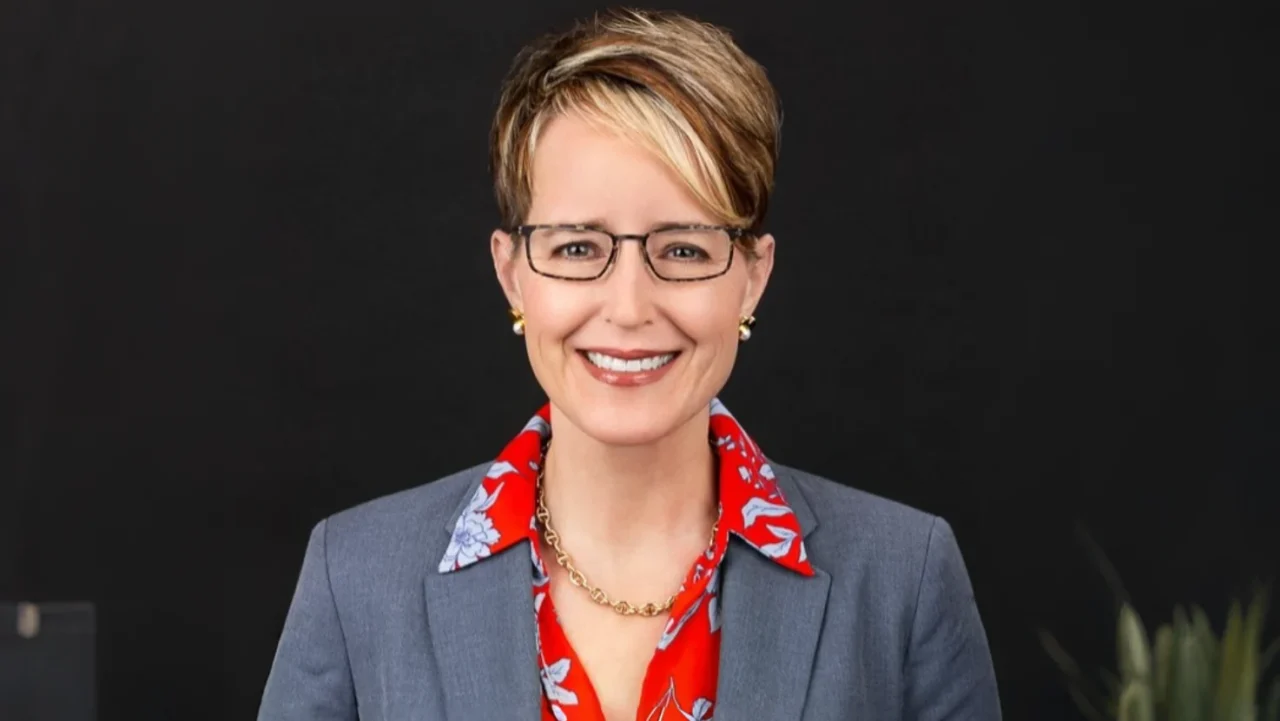
Susanna Fletcher Greer, Chief Scientific Officer at the V Foundation, shared on LinkedIn:
“Three Minds, One Mission: How V Foundation Scholars Are Reshaping Pediatric Cancer Care
This week, I want to share a the V Foundation funded study that matters because it points to a new way of thinking about a childhood cancer that still has far too few treatment options.
Rhabdomyosarcoma is the most common soft tissue sarcoma in children and adolescents. It develops from cells that are meant to become muscle, and some forms of the disease can be especially aggressive.
For children whose cancer has already spread at diagnosis, five-year survival remains dismally low; below 20 percent. For these children and their families, we urgently need new ideas that can lead to better treatments; and this is one of them.
The work involves three V Foundation funded investigators at Duke, Drs. Kris Wood, Christine Eyler and Corinne Linardic, and offers one of those desperately needed ideas.
The team focused on a form of rhabdomyosarcoma driven by a genetic change that keeps immature muscle cells from developing normally and instead pushes them to keep growing as cancer cells. That genetic driver has been very difficult to target directly, so the researchers asked a different question.
‘Instead of trying to attack the cancer at its source, could they find something the cancer had become dependent on in order to survive?’
What they found was a vulnerability.
These cancer cells rely heavily on a protein called FANCM to help manage the stresses created by the very changes that are driving the cancer. In some ways, the cancer creates its own problem...and then becomes dependent on FANCM to help it cope.
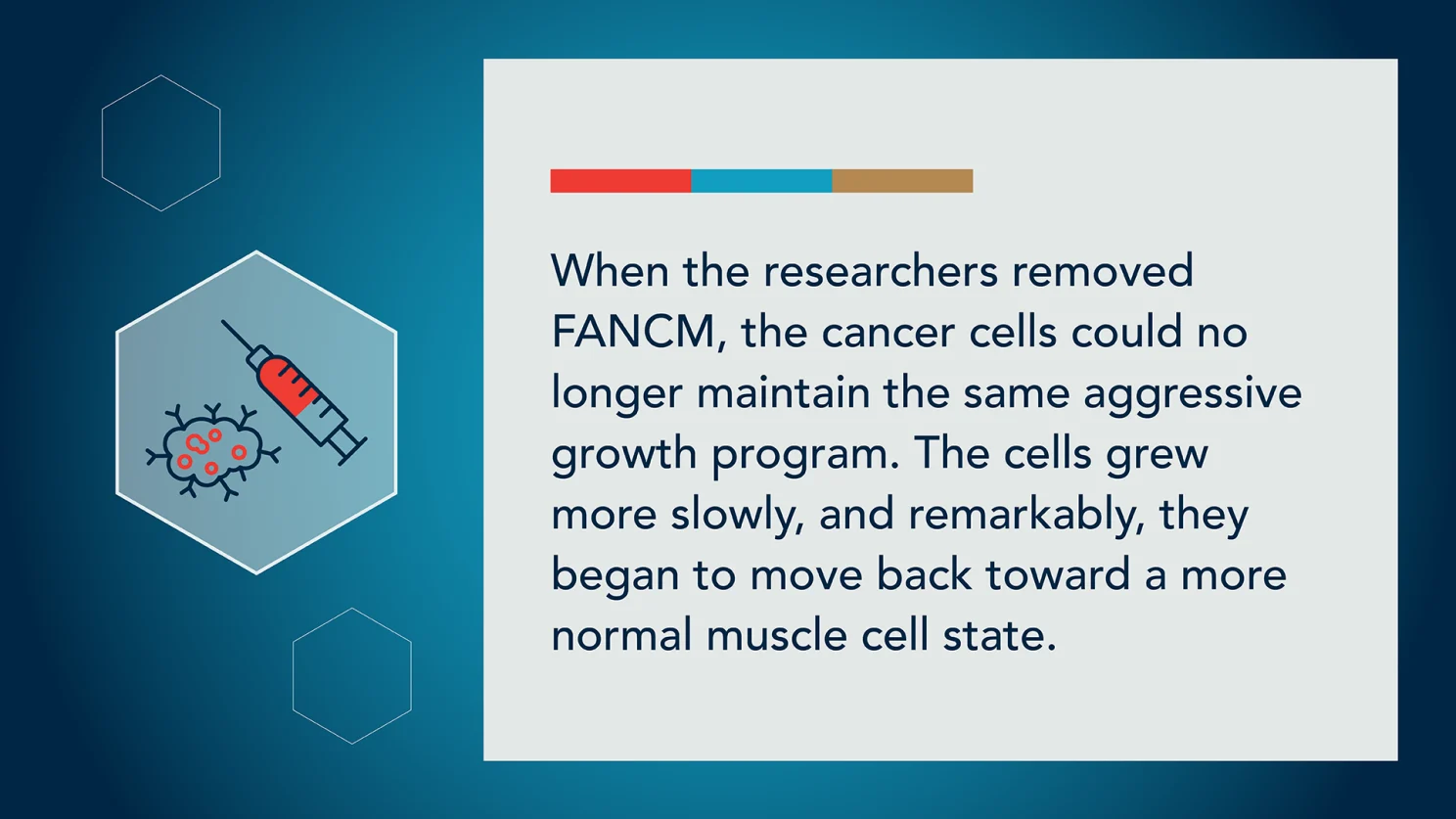
When the researchers removed FANCM, the cancer cells could no longer maintain the same aggressive growth program. The cells grew more slowly, and remarkably, they began to move back toward a more normal muscle cell state.
In animal models, disrupting FANCM also slowed tumor growth and improved survival. Exciting results. Super promising!
This is not yet a FANCM targeted treatment ready for children with rhabdomyosarcoma; but what this study gives us is something earlier in the drug development process: a new weakness to pursue in a cancer that has been very difficult to treat.
It also gives drug developers a clearer place to focus their efforts, which is how basic discovery begins to move toward patient impact.
I have to say what I also love about this study is that it brings together three V Foundation funded investigators, Drs. Wood, Eyler and Linardic.
‘It’s so meaningful to see scientists we have chosen to support come together around a difficult problem, because it reinforces the importance of investing in exceptional people as well as exceptional projects.’
The impact of a grant can extend far beyond the work originally proposed when talented investigators become part of a broader scientific community and begin building on one another’s ideas.
For me, this study matters so much because it gives the field a new direction.
And for families facing a cancer where progress has been too slow and options remain too limited, every new direction matters.
Research moves forward by finding the next weakness, the next target and the next opportunity to turn what we learn in the laboratory into something that can change a patient’s life.
Dr. Kris Wood led this study. Find the Wood lab at Wood Lab | Duke University and read the paper at FANCM is required for the PAX3::FOXO1-driven oncogenic program in rhabdomyosarcoma: Cell Reports.”
Title: FANCM is required for the PAX3::FOXO1-driven oncogenic program in rhabdomyosarcoma
Authors: Christopher D. Delaney, Min Lu, Seth P. Zimmerman, Yingying Meng, Camille Vaganay, Christian G. Cerda-Smith, Annie Liu, Jacob P. Hoj, Shane T. Killarney, Kerry Dillon, Amy E. Stewart, Kevin Huang, Julia D. Caci, Olivia White, Alexandre Puissant, David E. Root, Jack F. Shern, Christine E. Eyler, Chun-Wei David Chen, Christopher M. Counter, Corinne M. Linardic, Lee Zou, Kris C. Wood․
Other articles about Childhood Cancer on OncoDaily.