



Sendurai Mani, Associate Director of Translational Oncology at the Legorreta Cancer Center, shared on LinkedIn:
”Top 200 most influential cancer papers – Paper 93:
PKM2 – reconnecting cancer with altered metabolism.
I recently shared an Al-generated (Claude) list of the top 200 papers that have shaped cancer research on Linkedin. Today, I share more about Paper 93.
Why do many cancer cells process glucose differently from normal cells, even when oxygen is available?
In 2008, Heather Christok and colleagues published influential Nature studies examining the role of pyruvate kinase M2 (PKM2) in cancer metabolism.
Pyruvate kinase controls an important step in glycolysis, the pathway cells use to break down glucose.
The researchers showed that tumor cells preferentially expressing PKM2 displayed metabolic characteristics that could support the Warburg effect – the tendency of many cancer cells to rely heavily on aerobic glycolysis.
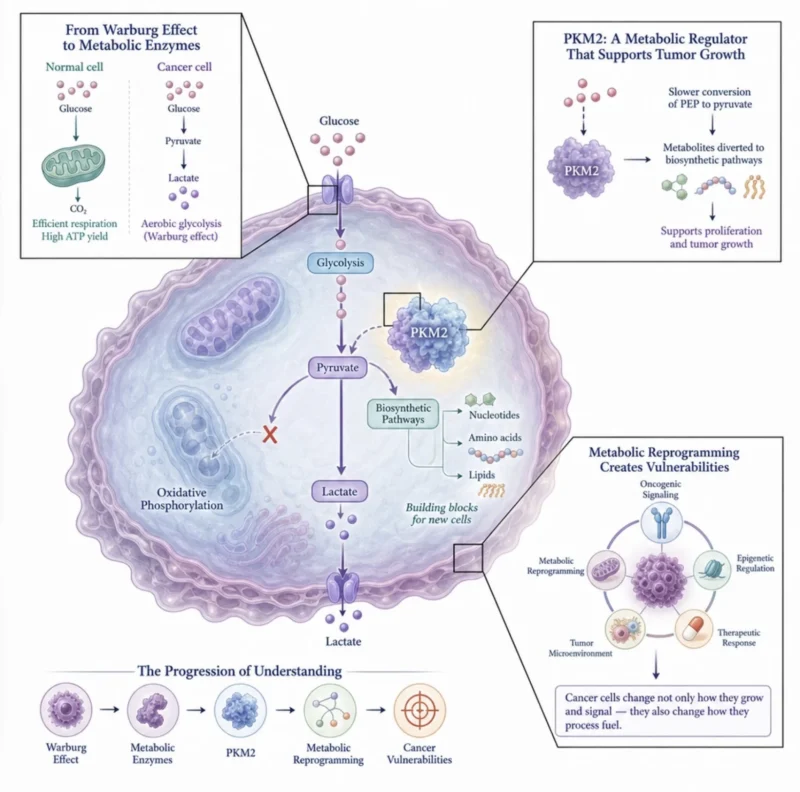
In experimental systems, replacing PKM2 with the more constitutively active PKM1 isoform altered metabolism and reduced tumor formation.
The emerging model was:
PKM2 expression → altered glycolytic regulation → diversion of metabolic intermediates support for biosynthesis and tumor growth
The work helped renew interest in a concept first associated with Otto Warburg decades earlier: Cancer is not only a disease of abnormal genes and signaling – it is also a disease of altered metabolism.
Importantly, later research has shown that PKM2 biology is complex, and its precise requirements and functions can vary by tumor context. The 2008 studies nevertheless helped stimulate a major resurgence in cancer-metabolism research.
The progression is striking:
Warburg effect → molecular mechanisms → PKM2 → metabolic reprogramming → cancer metabolism as a therapeutic field.
The enduring lesson: Cancer cells must do more than keep dividing. They must reprogram how they acquire and use nutrients to support that growth.”
Title: The M2 splice isoform of pyruvate kinase is important for cancer metabolism and tumour growth
Authors: Heather R. Christofk, Matthew G. Vander Heiden,cMarian H. Harris, Arvind Ramanathan, Robert E. Gerszten, Ru Wei, Mark D. Fleming, Stuart L. Schreiber, Lewis C. Cantley
You can also read: