Raffaele Colombo, Director of Medicinal Chemistry at Zymeworks, shared on X:
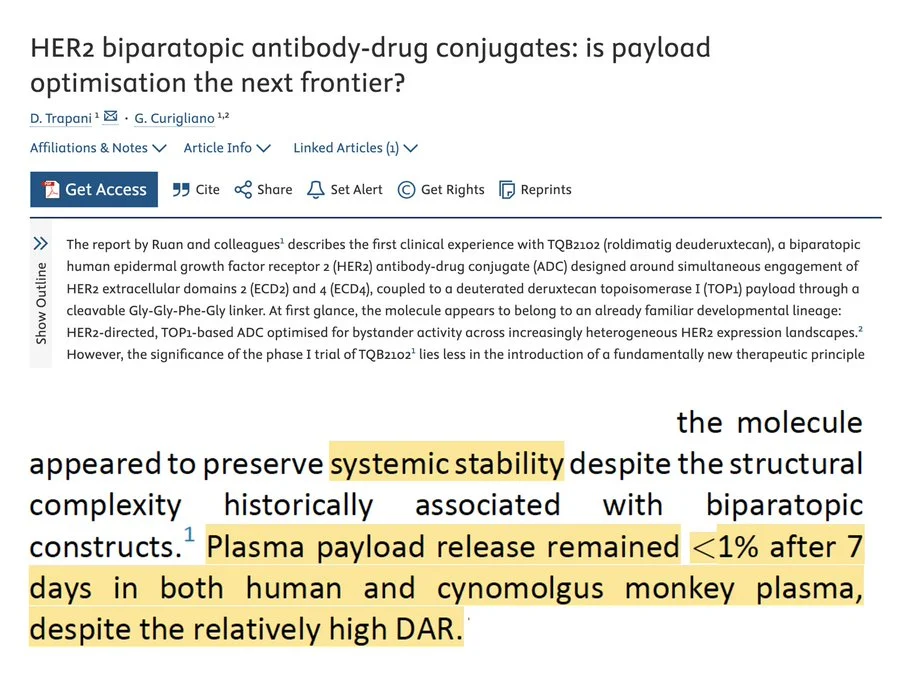
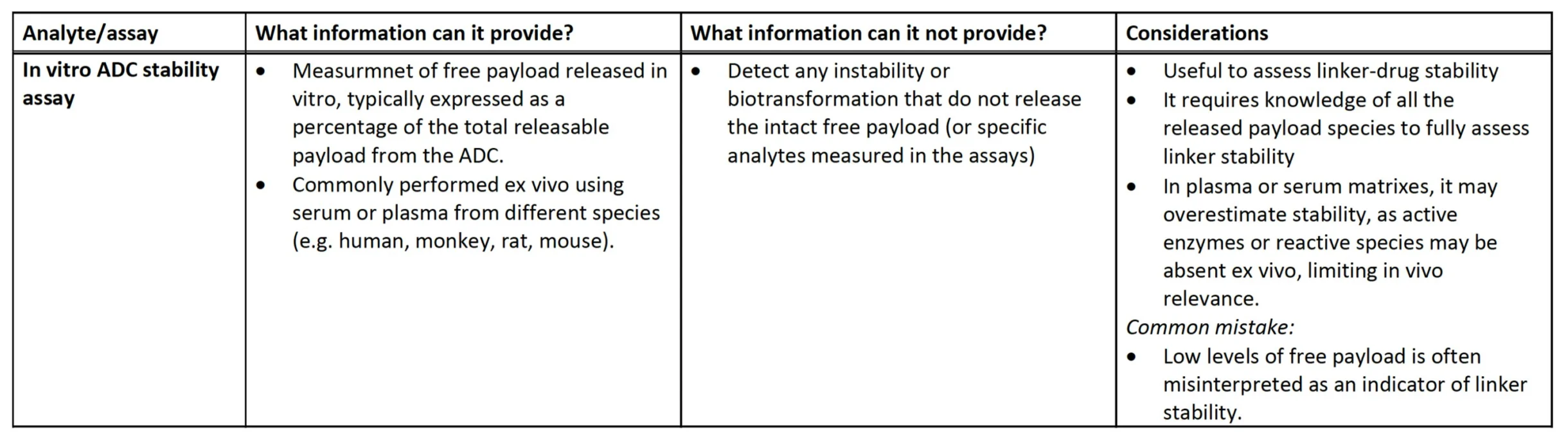
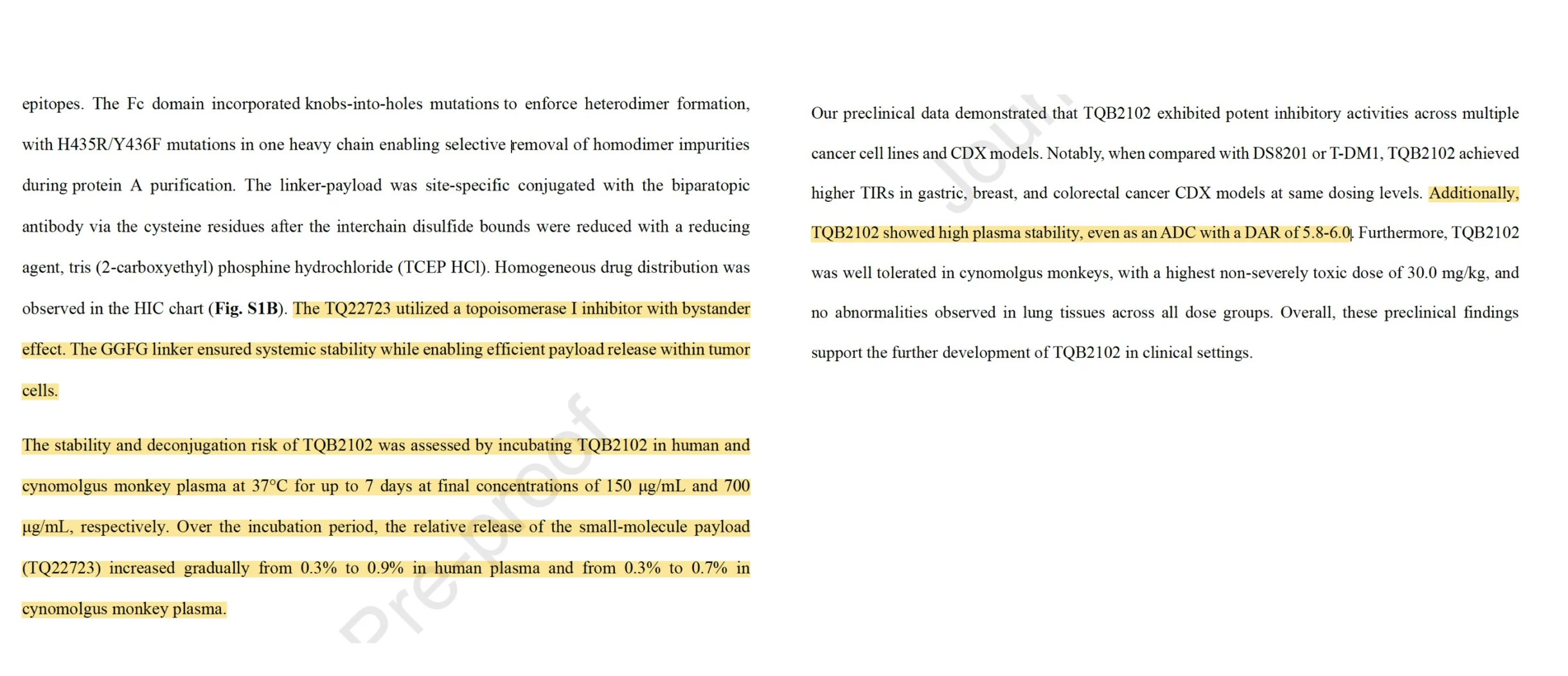
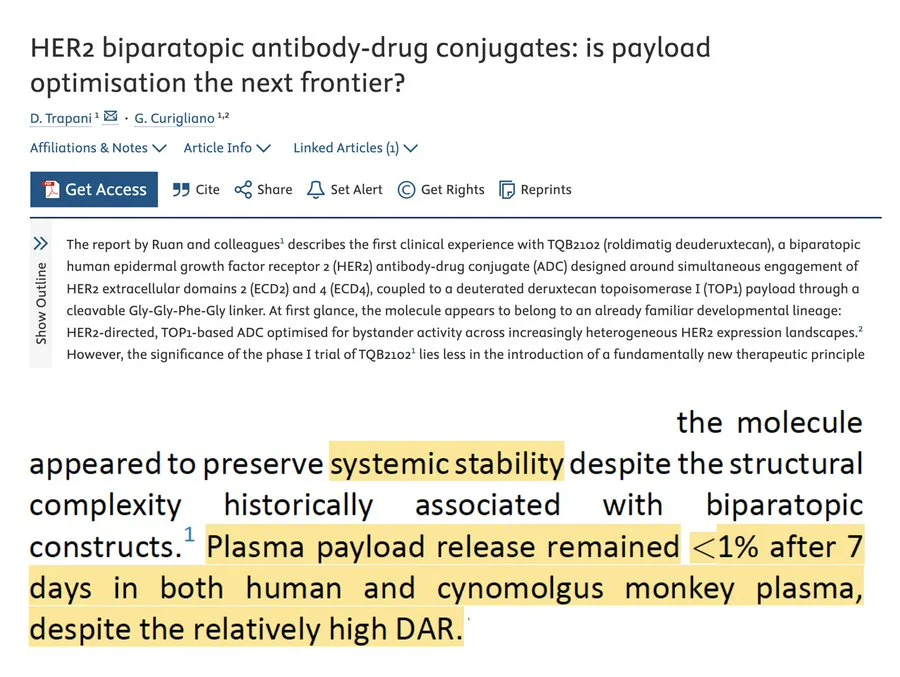
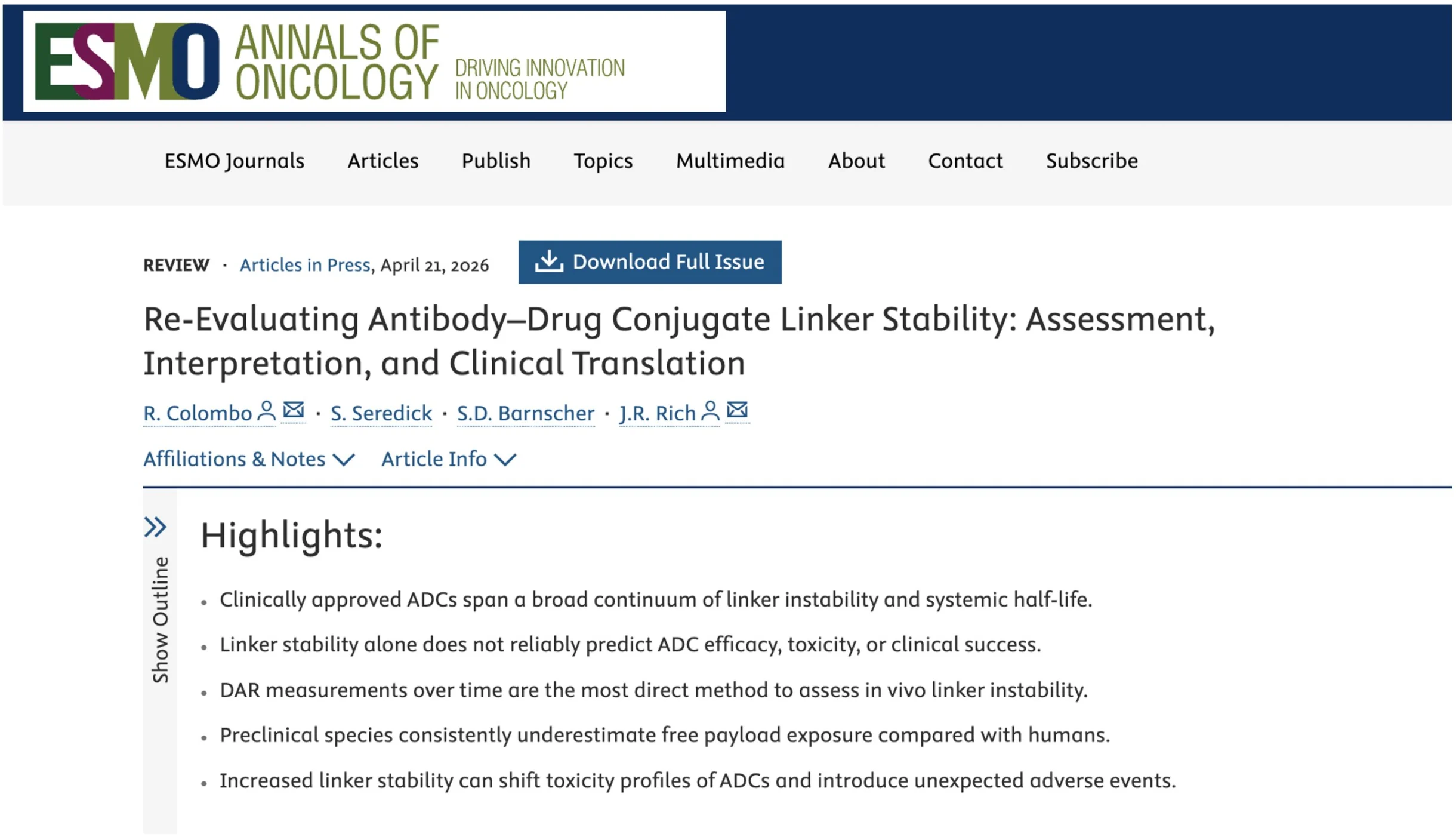
“While the data are encouraging, the discussion of TQB2102 stability is incorrect. The percentage of payload release in plasma does not capture all aspects of ADC instability. We discussed in our recent work.
Nothing wrong with not being perfectly stable!
Unfortunately, this is a very common and widespread mistake in the ADC field…
Low levels of free payload in plasma is often misinterpreted as an indicator of stability. TQB2101, like T-DXd and other ADCs, is not fully stable.
“Stable”, “more stable”, or “less stable” describes a property of the ADC, not whether that property is inherently good or bad. Mischaracterizing stability based on an incorrect assessment adds confusion to the literature and perpetuates misconceptions.”
Title: HER2 biparatopic antibody-drug conjugates: is payload optimization the next frontier?
Authors: D. Trapani, G. Curigliano.
Title: Re-evaluating antibody–drug conjugate linker stability: assessment, interpretation, and clinical translation
Authors: R. Colombo, S.D. Seredick, S.D. Barnscher , J.R. Rich.
You can also read: TQB2102 and the Evolution of HER2 Antibody-Drug Conjugates: Exploring the Role of Payload Optimisation in Breast Cancer