Nicola Fusco, Director of the Division of Pathology at IEO European Institute of Oncology, shared a post on LinkedIn:
“I’m pleased to share our latest Editorial, co-authored with my friend Umberto Malapelle, just published in The Journal of Liquid Biopsy.
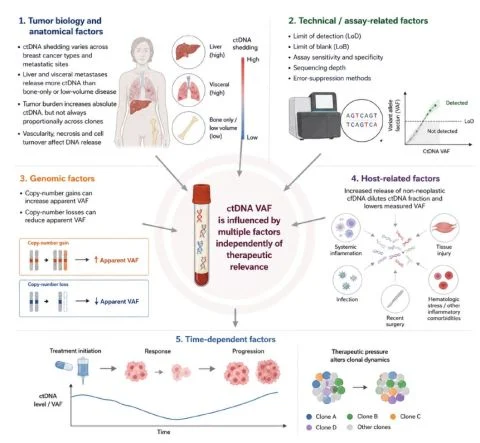
In this paper, we address a practical question that is becoming increasingly relevant in the management of HR+/HER2– metastatic breast cancer: how should variant allele fraction (VAF) be interpreted when circulating tumor DNA (ctDNA) testing identifies concurrent ESR1 and PIK3CA mutations?
Breast cancer biology, here, tells an important story. PIK3CA mutations are early, clonal events that remain stable throughout tumor evolution, whereas ESR1 mutations emerge under the selective pressure of endocrine therapy, are subclonal, and evolve dynamically over time. Comparing their VAF values without considering these biological differences may lead to misleading clinical interpretations.
The key take-home message for oncologists is straightforward: although VAF provides valuable biological and analytical context, it is not a validated biomarker for prioritizing ESR1- versus PIK3CA-directed therapies in patients with breast cancer harboring both alterations. Treatment decisions should continue to be guided by the presence of actionable mutations together with the overall clinical context.
Many thanks to the International Society of Liquid Biopsy (ISLB) for its continued commitment to advancing quality and education in the field of liquid biopsy.”
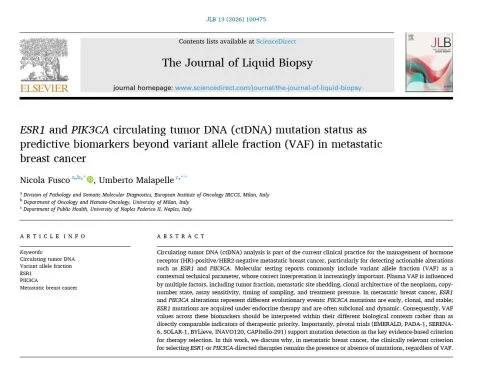
Title: ESR1 and PIK3CA circulating tumor DNA (ctDNA) mutation status as predictive biomarkers beyond variant allele fraction (VAF) in metastatic breast cancer
Authors: Nicola Fusco, Umberto Malapelle
Other articles featuring Nicola Fusco on OncoDaily.