Nabil Ismaili, Director of Medical Oncology and Radiotherapy Department at Mohammed VI University of Sciences and Health, shared on LinkedIn:
“PERSEE Trial Settles the PD-L1 ≥50% NSCLC Debate? Pembro + Chemo Doubles PFS (Simultaneous Annals of Oncology Publication).
I just attended a highly anticipated session where Dr. Chantal Decroisette presented the results of the Phase 3 PERSEE trial (GFPC 01-2020), simultaneously published today in Annals of Oncology.
This academic French trial directly tackles the most debated question in 1st-line PD-L1 ≥50% NSCLC: Is Pembrolizumab monotherapy enough, or does adding platinum-based chemotherapy provide superior outcomes?
Here is the breakdown of the data (N=321)
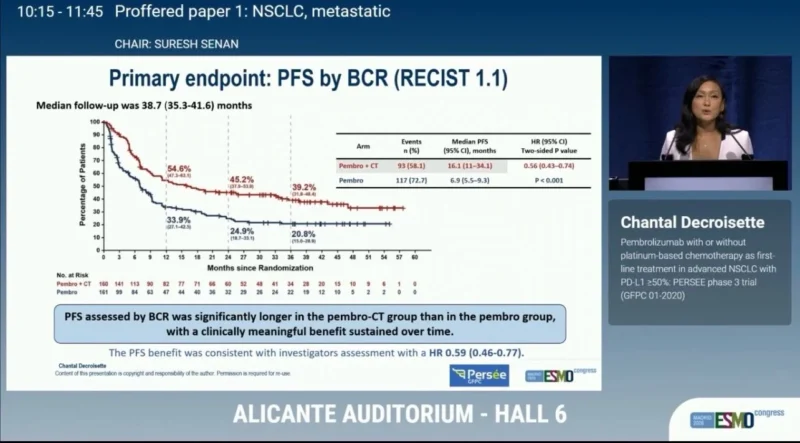
Progression-Free Survival (PFS): A clear, significant win
- Median PFS more than doubled with the combination: 16.1 months vs. 6.9 months (HR 0.56; 95% CI 0.43–0.74; p<0.001).
- The benefit was consistent across all subgroups (including PD-L1 90-100%, where PFS was 25.4 vs 7.1 months!).
- Crucial finding: Adding chemotherapy drastically reduced the rate of early disease progression (5.8% vs 26.5%), a major issue in PD-L1 high patients.
Overall Survival (OS): A strong numerical trend
- Median OS was 50.2 months vs. 29.9 months in favor of chemo-immunotherapy (HR 0.77; 95% CI 0.56–1.05).
- While it did not reach statistical significance (the trial was powered for PFS), the 4-year OS rate was 50.9% vs 38.9%. A highly clinically meaningful difference.
The Trade-off: Toxicity
- Grade ≥3 treatment-related AEs were significantly higher in the combo arm: 54% vs. 19%. This reflects the expected hematologic and GI toxicities of chemotherapy. Immune-related AEs were similar (13% vs 13%).
My Clinical Takeaway
PERSEE confirms what many of us suspect in real-world practice: Pembrolizumab + Chemotherapy should be strongly considered for patients who can tolerate it, especially those with high tumor burden who cannot afford early progression. The reduction of early progression from 26.5% to 5.8% is a massive clinical win.
For patients who are frail, have autoimmune comorbidities, or refuse chemotherapy, Pembrolizumab monotherapy remains a valid standard, but the PFS drop-off is real.
For my thoracic oncology colleagues: How will PERSEE impact your daily decisions for PD-L1 ≥50% patients? Will you be pushing more for the combination upfront based on this PFS and early progression data?”
This also can be interesting:
PERSEE Trial: Pembrolizumab With or Without Chemotherapy in PD-L1–High NSCLC