The phase III PERSEE trial demonstrated significantly longer progression-free survival (PFS) with pembrolizumab plus platinum-based chemotherapy compared with pembrolizumab alone in previously untreated advanced non-small cell lung cancer (NSCLC) with PD-L1 expression ≥50%.
Among 321 randomized patients, median PFS was 16.1 months with the combination versus 6.9 months with monotherapy. Objective response rates were also higher with the combination. Overall survival (OS) numerically favored combination treatment, but a statistically significant OS benefit was not established.
These improvements in disease control were accompanied by more frequent grade ≥3 treatment-related adverse events.
Chantal Decroisette presented the findings at ESMO Congress 2026.
Background
Pembrolizumab monotherapy and pembrolizumab plus platinum-based chemotherapy are first-line approaches for advanced NSCLC with high PD-L1 expression and without relevant actionable alterations.
Although high PD-L1 expression identifies a population that can benefit from pembrolizumab alone, some patients experience early progression. Adding chemotherapy may improve disease control, but also increases treatment-related toxicity.
PERSEE directly compared these approaches in patients with PD-L1 expression on at least 50% of tumor cells.
Methods and Study Design
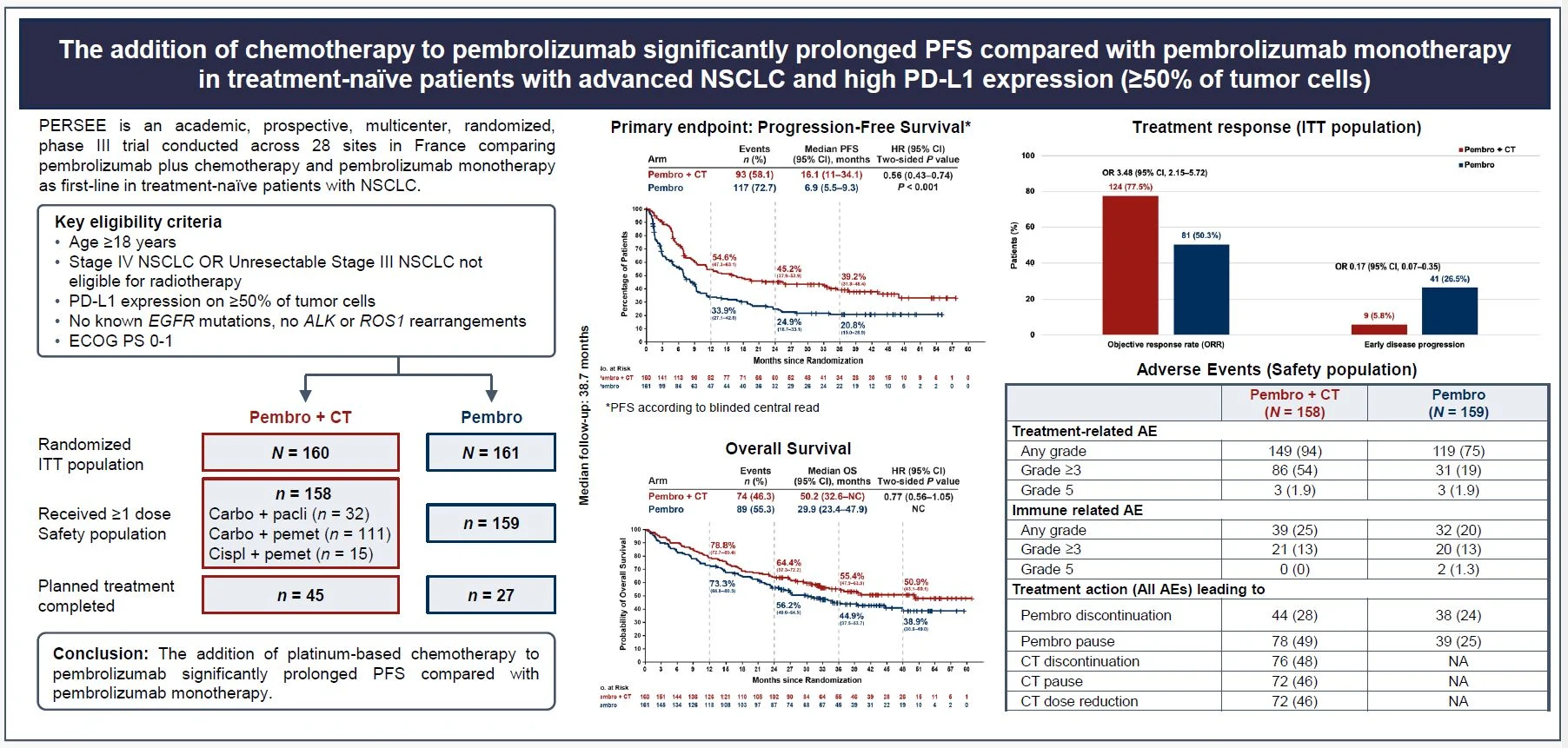
PERSEE (NCT04547504; GFPC 01-2020) was a multicenter, open-label, randomized phase III trial conducted at 28 French centers.
Eligible patients had previously untreated stage IV NSCLC or unresectable stage III NSCLC not eligible for radiotherapy, PD-L1 expression ≥50%, ECOG performance status 0–1, and no known EGFR mutations or ALK or ROS1 rearrangements.
A total of 321 patients were randomized 1:1 to:
- Pembrolizumab plus platinum-based chemotherapy (n = 160): Four chemotherapy cycles, using a platinum agent plus paclitaxel for squamous disease or pemetrexed for nonsquamous disease, followed by maintenance pembrolizumab with pemetrexed where applicable.
- Pembrolizumab monotherapy (n = 161).
Randomization was stratified by histology and the presence of brain metastases.
The primary endpoint was PFS assessed by blinded central review according to RECIST 1.1. Other reported outcomes included investigator-assessed PFS, OS, objective response rate (ORR), duration of response, PFS2, and safety.
Median age was 64 years; 32.4% of patients were women, 23.4% had brain metastases, and 19.6% had squamous histology.
Results
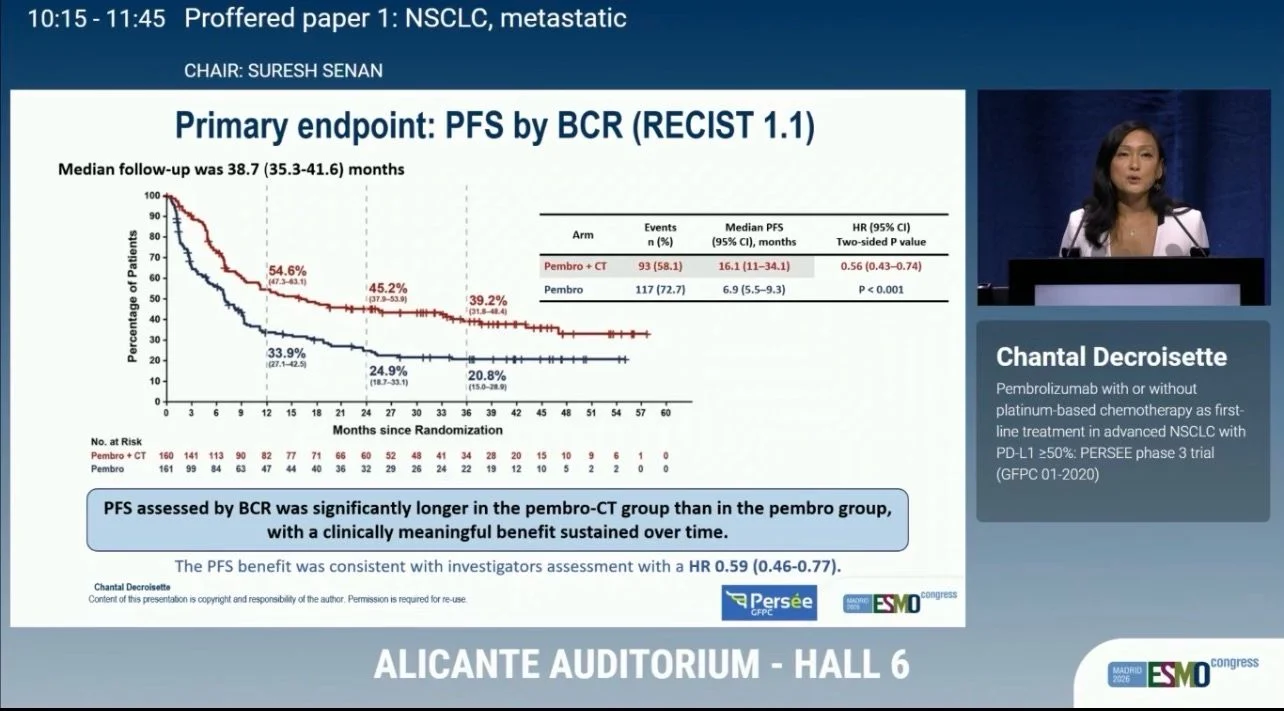
At the April 7, 2026 data cutoff, median follow-up was 38.7 months.
- Primary PFS endpoint: Median PFS by blinded central review was 16.1 months (95% CI 11.0–34.1) with pembrolizumab plus chemotherapy versus 6.9 months (95% CI 5.5–9.3) with pembrolizumab alone. The HR was 0.56 (95% CI 0.43–0.74; two-sided P <0.001), corresponding to a 44% reduction in the hazard of progression or death.
- Landmark PFS: Estimated PFS rates at 12, 24, and 36 months were 54.6%, 45.2%, and 39.2% with the combination, compared with 33.9%, 24.9%, and 20.8% with monotherapy.
- Investigator-assessed PFS: Findings were consistent with the primary analysis, with an HR of 0.59 (95% CI 0.46–0.77).
- Overall survival: Median OS was 50.2 months (95% CI 32.6–not calculable) with the combination versus 29.9 months (95% CI 23.4–47.9) with monotherapy. The HR was 0.77 (95% CI 0.56–1.05). The confidence interval crossed 1, and an OS benefit was not established.
- Objective response: ORR was 77.5% with the combination versus 50.3% with monotherapy, an absolute difference of 27.2 percentage points. The response odds ratio was 3.48 (95% CI 2.15–5.72).
- Early disease progression: The reported rate was 5.8% with the combination versus 26.5% with monotherapy.
- Duration of response: Median duration of response was 30.0 versus 15.6 months, respectively. The reported HR was 0.86, without a clear difference established between treatment arms.
- PFS2: Median PFS2 was 39.0 months (95% CI 26.2–not reached) with the combination versus 15.9 months (95% CI 13.2–29.9) with monotherapy. The HR was 0.68 (95% CI 0.50–0.91). This additional outcome favored the combination, although multiplicity-controlled statistical significance was not established in the supplied presentation.
Safety
The safety population included 158 patients receiving pembrolizumab plus chemotherapy and 159 receiving pembrolizumab alone.
- Treatment-related adverse events: Any-grade events occurred in 94% versus 75% of patients. Grade ≥3 treatment-related events occurred in 86 patients (54%) versus 31 patients (19%).
- Fatal treatment-related events: Grade 5 treatment-related adverse events occurred in three patients in each arm (1.9%).
- Immune-related adverse events: Any-grade events occurred in 25% versus 20%, while grade ≥3 events occurred in 13% in both arms. Grade 5 immune-related events occurred in no patients receiving the combination and two patients (1.3%) receiving monotherapy.
- Pembrolizumab discontinuation: Adverse events of any cause led to discontinuation in 28% versus 24%.
- Chemotherapy discontinuation: Adverse events led to chemotherapy discontinuation in 48% of patients receiving the combination.
Treatment-related and immune-related event categories may overlap and should not be added together.
Interpretation
PERSEE demonstrated that adding platinum-based chemotherapy to pembrolizumab improved PFS and response rates in advanced NSCLC despite PD-L1 expression ≥50%. The lower reported rate of early progression also supports improved initial disease control.
However, the combination substantially increased grade ≥3 treatment-related toxicity. The numerical difference in median OS should be interpreted alongside the HR and its confidence interval, which did not establish a statistically significant survival advantage.
The findings inform the balance between disease control and toxicity when selecting first-line treatment. They do not establish a validated rule for identifying which individual patients require chemotherapy. Further subgroup analyses and patient-reported outcomes may help clarify treatment selection.
Conclusion
PERSEE met its primary endpoint, demonstrating significantly improved PFS with pembrolizumab plus platinum-based chemotherapy compared with pembrolizumab alone in previously untreated advanced NSCLC with PD-L1 expression ≥50%.
The combination also produced higher response rates and favorable PFS2 findings, but an OS benefit was not established. These efficacy findings must be weighed against the substantially higher frequency of grade ≥3 treatment-related adverse events.
BAT8008 Plus BAT1308: TROP2 ADC–Immunotherapy in First-Line NSCLC