
Nabil Ismaili, Director of Medical Oncology and Radiotherapy Department at Mohammed VI University of Sciences and Health, shared on LinkedIn:
“ESMO 2026: AZUR-1 Trial Changes the Game for dMMR Rectal Cancer! Simultaneous Publication in Annals of Oncology
I just attended one of the most practice-changing presentations of this ESMO. Dr. Andrea Cercek presented the first results of the global Phase 2 AZUR-1 trial, evaluating Dostarlimab monotherapy in patients with locally advanced (Stage II/III) dMMR/MSI-H rectal cancer.
The data were simultaneously published in Annals of Oncology, and they are nothing short of revolutionary for organ preservation.
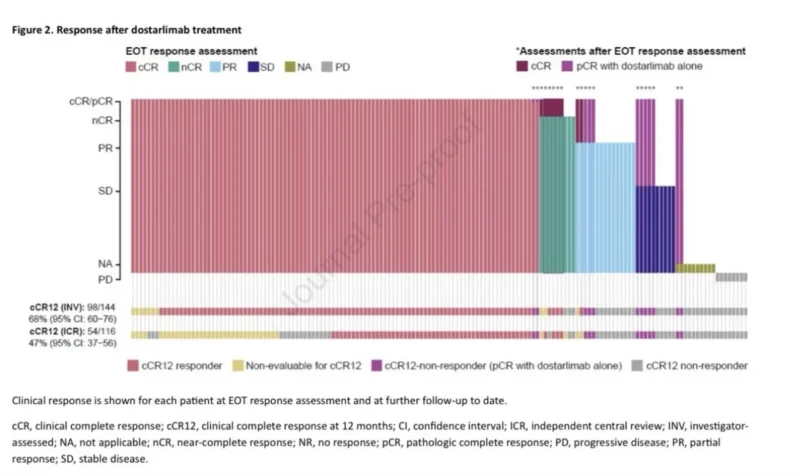
The Concept: We know that dMMR tumors are exquisitely sensitive to PD-1 blockade. AZUR-1 investigated whether we could safely omit the standard toxic trimodal therapy (chemotherapy + radiation + radical surgery) and use immunotherapy alone, guided by a Non-Operative Management (NOM) strategy.
The Spectacular Results (N=154):
Patients received Dostarlimab 500 mg IV Q3W for 9 cycles.
- Clinical Complete Response (cCR): 71% (110/154) achieved a cCR with Dostarlimab alone.
- Durability: Of those evaluable for cCR12, 68% maintained cCR for ≥12 months. Crucially, 98% of patients who achieved cCR maintained it.
- Composite cCR12 + pCR: 76%.
- Survival & Recurrence: There have been zero recurrences to date in any patient who achieved cCR or pCR after Dostarlimab alone!
- Surgery Avoidance: Only 16% of the total population ultimately required Total Mesorectal Excision (TME).
Safety and Quality of Life: The safety profile is highly favorable. Grade ≥3 immune-mediated AEs occurred in only 3% of patients, with no fatal events. Patient-Reported Outcomes (PROs) showed meaningful improvements from baseline in gastrointestinal symptoms, emotional functioning, and global quality of life – a massive win given the life-altering morbidities of standard rectal cancer surgery.
The Bottom Line: AZUR-1 proves that Dostarlimab monotherapy provides durable cCRs, allowing most patients to avoid the toxicity of chemotherapy, radiation, and the morbidity of a permanent stoma. This sets a new standard of care for dMMR/MSI-H locally advanced rectal cancer.
For my GI oncology and surgical colleagues: This data reinforces the absolute necessity of universal MMR/MSI testing at diagnosis. How are we preparing our multidisciplinary tumor boards to standardize the assessment of cCR and implement NOM pathways for these patients?
Let’s discuss!”
You may also be interested in: 20 Posts Not to Miss from ESMO Congress 2026: Day 2