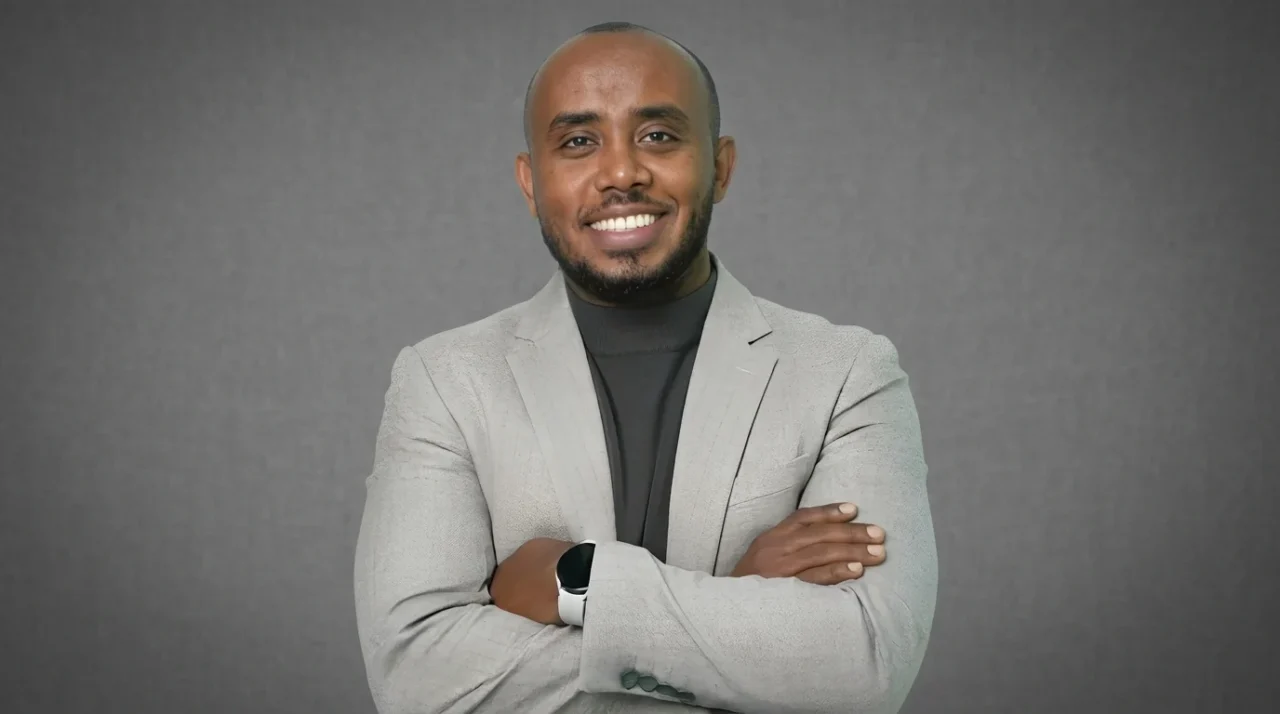
Michael Lemma, Executive Director of October Breast Cancer Survivor’s Support Group at Hiwot Fana Cancer Treatment Center, shared on LinkedIn:
“One Disease, Many Realities: What My International Oncology Journey Taught Me About Breast Cancer?
Every October the world turns pink. But after learning and working in oncology centres across Europe, Africa, Asia, North America and the Pacific, I have seen that a breast cancer diagnosis means very different things depending on where a woman lives.
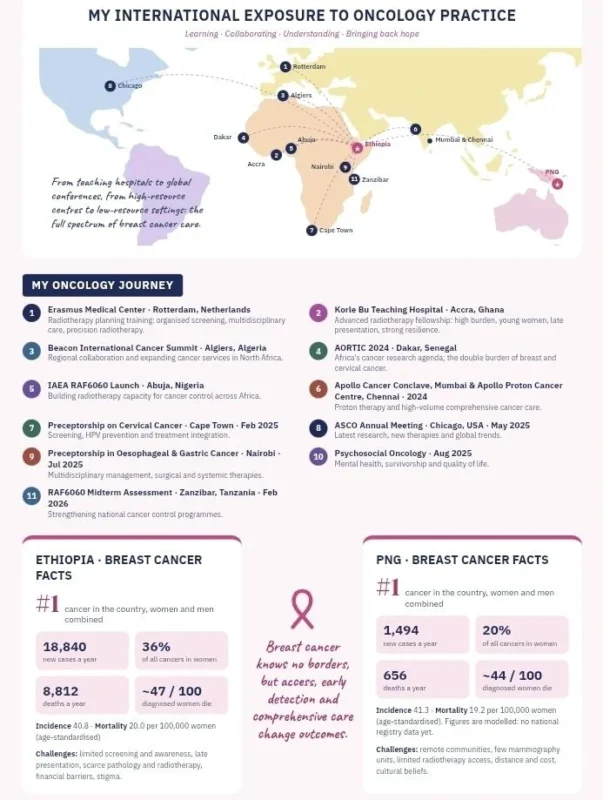
My journey has taken me to: Erasmus MC in Rotterdam and Korle Bu Teaching Hospital in Accra, the Beacon International Cancer Summit in Algiers and AORTIC 2024 in Dakar, the IAEA RAF6060 launch in Abuja and its midterm assessment in Zanzibar, the Apollo Cancer Conclave in Mumbai and the Apollo Proton Cancer Centre in Chennai, preceptorships in Cape Town and Nairobi, and ASCO in Chicago.
Along the way I saw the full spectrum of cancer care, from proton therapy to hospitals with a single radiotherapy machine serving millions.
The numbers tell the story. The latest GLOBOCAN 2024 estimates show a striking paradox. The USA and the Netherlands have the highest breast cancer rates on my list, about 97 and 91 new cases per 100,000 women. Yet they lose the fewest women. Roughly 16 to 23 die for every 100 diagnosed.
In Ghana, Nigeria, Kenya and Tanzania, close to 50 die for every 100 diagnosed. That is nearly one in two. It is the same disease and the same medicines exist, but the outcomes are three times worse. Ethiopia and PNG face the same challenge. In both countries breast cancer is now the most common cancer.
Ethiopia: 18,840 new cases and 8,812 deaths a year. Breast cancer makes up 36% of all cancers in women. Papua New Guinea: 1,494 new cases and 656 deaths a year. Breast cancer makes up 20% of cancers in women.
What makes the difference? It is not biology. It is when a woman is diagnosed, whether pathology and radiotherapy are available, whether she can afford treatment, and whether she finishes it. Fear, stigma and cost stop too many women halfway.
So this October, remember:
- Know your normal, and check your breasts regularly. A painless lump is not a harmless lump.
Watch for skin dimpling, nipple changes or discharge, or a lump in the armpit. - See a health worker early. Do not wait until it hurts.
- Finish your treatment. Early breast cancer is one of the most curable cancers we treat.
Different places, different systems, the same mission: every woman deserves the chance to survive breast cancer!
Data: IARC GLOBOCAN 2024.”
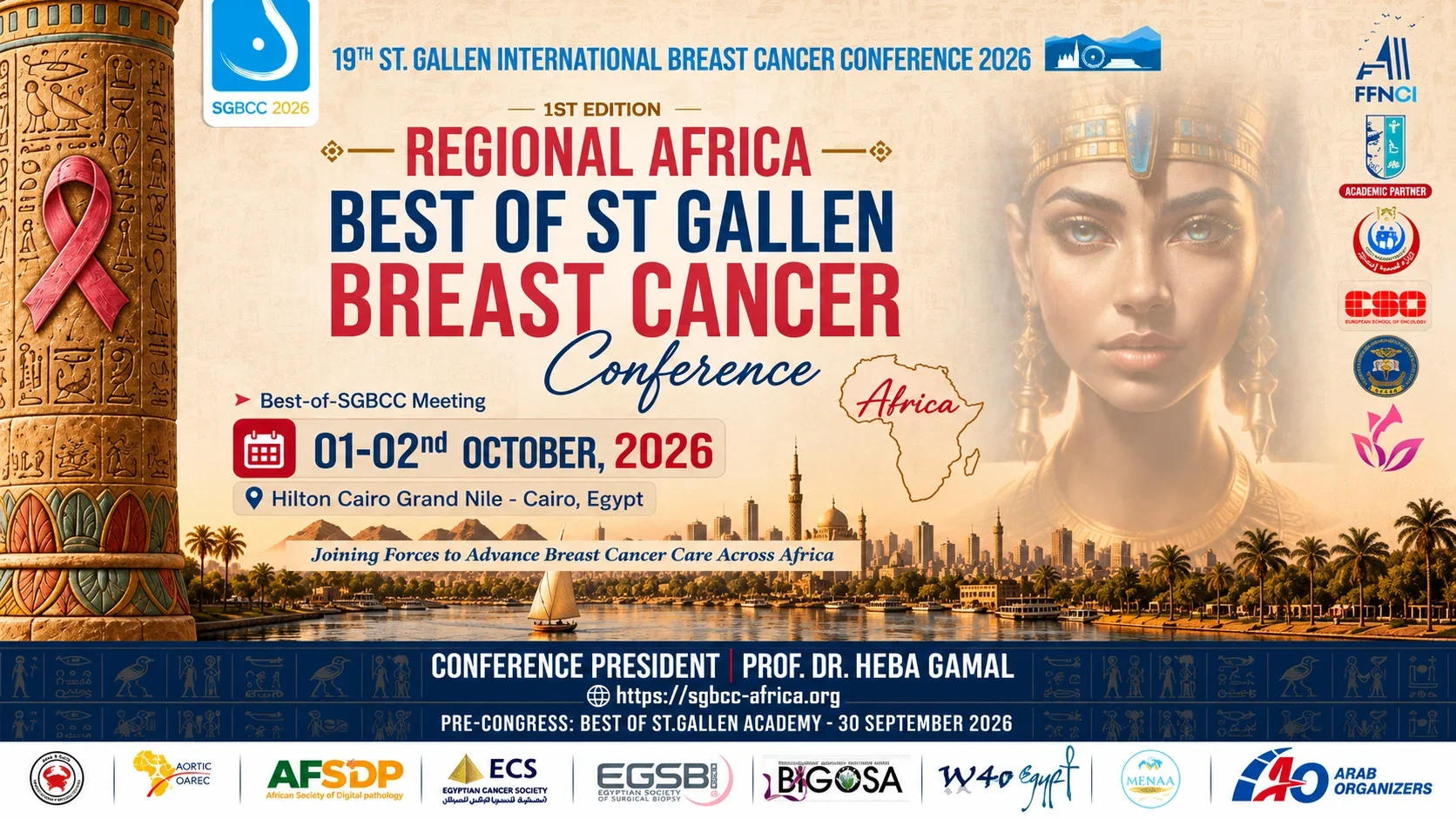
You can also read: The Regional Africa Best of St. Gallen Breast Cancer Conference 2026: Advancing Breast Cancer Care and Implementation in Africa.