Michael Gieske, Physician Director Lung Cancer Screening at St. Elizabeth Healthcare, shared on LinkedIn:
“This just in! Our complete 2025 data are now assimilated – and the story is compelling!
A decade of lung cancer screening, combined with a programmatic incidental pulmonary nodule program, is demonstrating a profound change in how lung cancer presents across our entire healthcare system.
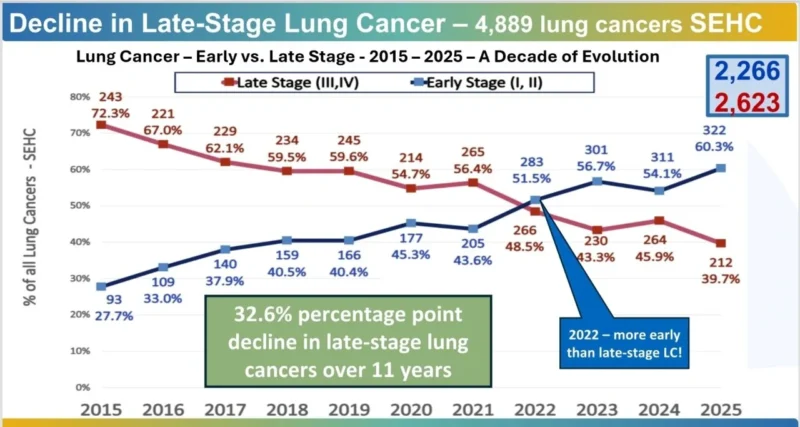
From 2015 through 2025, the proportion of all lung cancer diagnosed at late stage (III/IV) at St. Elizabeth Healthcare fell from 72.3% to 39.7% – a 32.6 percentage-point decline.
And in 2025, for the first time, more than 60% of ALL lung cancers diagnosed across our health system were early stage (I/II).
The impact of screening itself is even more striking:
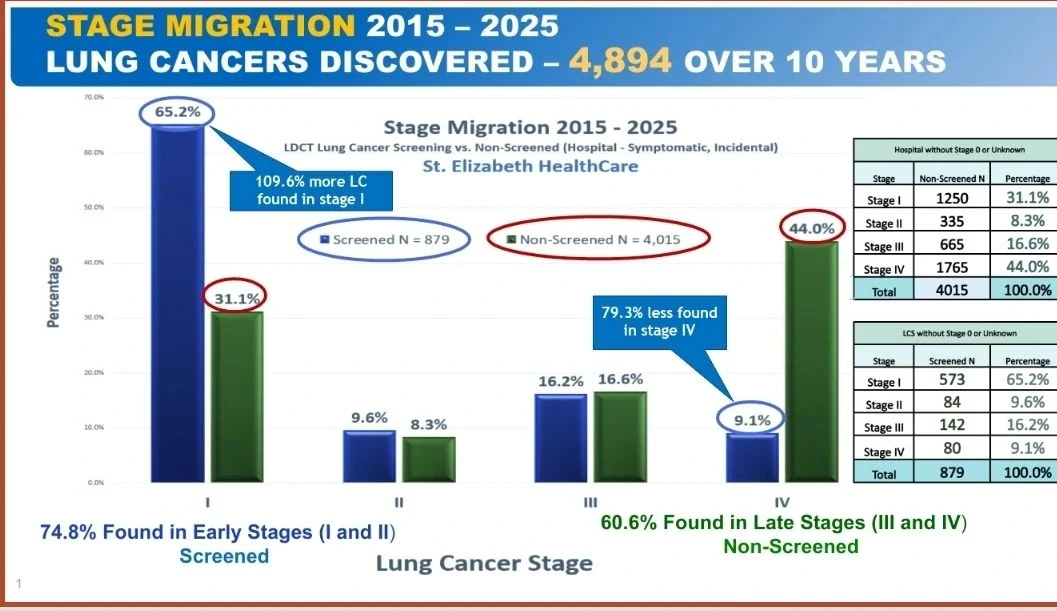
74.8% of lung cancers detected through our screening program over the decade were found at Stage I or II, compared with only 39.4% among non-screened cancers.
And the evolution continues: this year, >80% of lung cancers detected through our Lung Cancer Screening Program are being diagnosed at Stage I.
This is what profund stage shift looks like.
It doesn’t happen with a LDCT alone. It takes an empowered primary care network, systematic identification of eligible patients, longitudinal outreach and adherence, a dedicated multidisciplinary team, and reliable pathways for both screening-detected and incidentally discovered pulmonary nodules.
But at the center of it all is something remarkably simple:
‘Find lung cancer before symptoms find it’
I could not be more proud of our team and what we are accomplishing at St. Elizabeth Healthcare and St. Elizabeth Physicians – recently recognized by U.S. News and World Report as the number 1 hospital in Greater Cincinnati AND Kentucky.
Nearly 4,900 lung cancers over a decade tell a remarkable story.
Screening works. Systems matter. Early detection saves lives.”
You can also read:
Precision Oncology in Lung Cancer: How Contemporary Practice Is Evolving in Algeria