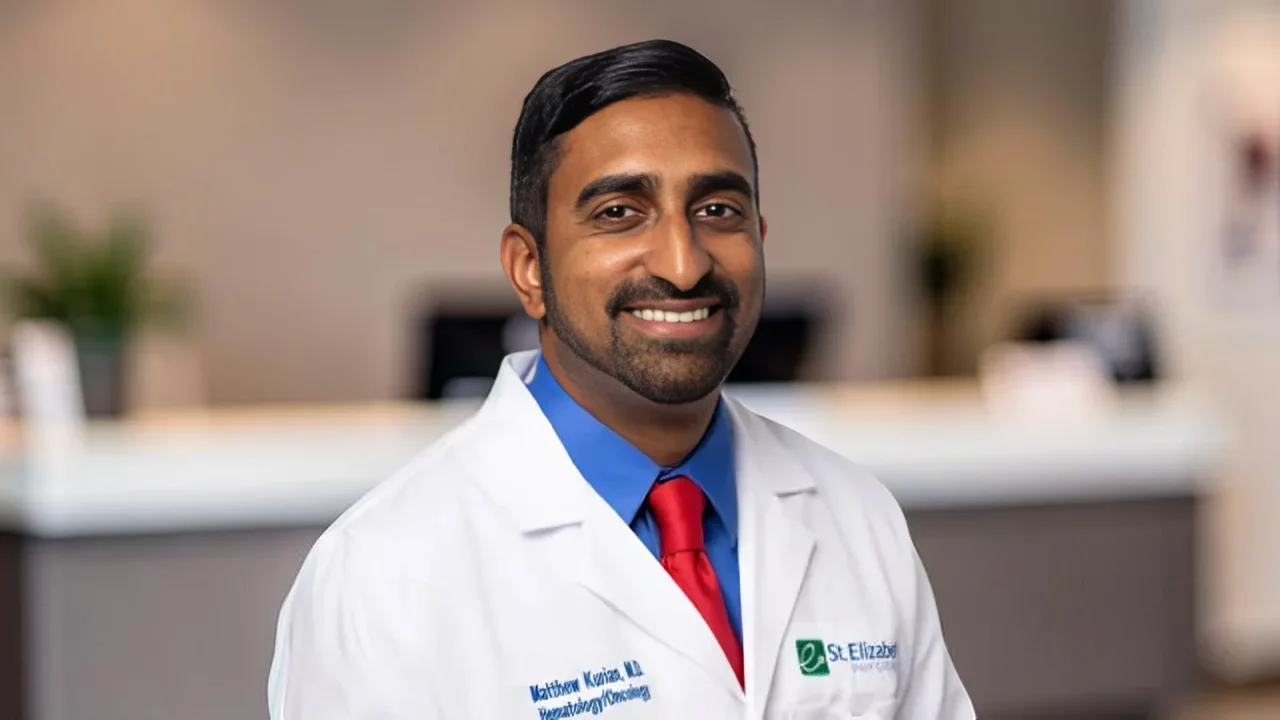
Matthew Kurian, Physician at St. Elizabeth Healthcare, shared on LinkedIn:
“A normal mammogram. Negative genetic testing. Yet a simple breast cancer risk assessment may have saved Olivia Munn ’s life.
Her OB/GYN proactively calculated her Tyrer-Cuzick lifetime breast cancer risk of 37.3%, prompting an MRI that ultimately led to her breast cancer diagnosis. Has your healthcare team discuss this with you? If not, why is this not an automated thing we do in healthcare? Like check your blood pressure? Seems pretty simple and non-invasive.
The newly introduced bipartisan Know Your Risk Act aims to improve the accessibility and routine implementation of breast cancer risk assessments. What makes this particularly exciting is how rapidly the science of risk assessment is evolving with artificial intelligence.
The updated National Comprehensive Cancer Network (NCCN) v1.2026 guidelines now recognize a five-year invasive breast cancer risk ≥1.7% using imaging-based risk assessment models as an increased-risk category, with consideration of supplemental breast MRI and risk-reduction strategies.
Clairity Breast, the first FDA-authorized AI-based mammographic risk prediction tool, is expanding its availability across the country, offering an opportunity to identify women at increased risk starting as early as age 35, even in the absence of significant family history or genetic predisposition.
We spend so much time talking about precision medicine in breast cancer treatment. The future of precision breast cancer prevention is as equally exciting.
More on the Susan G. Komen official website.”
You can also read: