Maryam Lustberg, Director of the Center for Breast Cancer at Yale University School of Medicine, shared on LinkedIn:
“American Society of Clinical Oncology (ASCO) convened an expert panel to update breast cancer surveillance and follow up guidelines. I along with Zeina Nahleh co chaired the discussions leading to this update.
Special thank you to all the input from the panel and ASCO staff.
Key points are summarized here and happy to take comments and questions.
- The guideline offers recommendations on the role of a risk-based approach to the frequency and intensity of follow-up among patients with breast cancer in the adjuvant setting.
- One size does not fit all and ultimately decisions are made with individual patients with this document serving as a framework
- Certain patients at high risk of cancer recurrence warrant closer surveillance, such as those patients with locally advanced disease or residual disease following neoadjuvant chemotherapy.
- Recommendations on the use of blood-based biomarkers and supplemental imaging are provided. Guideline recommendations will be updated once additional evidence-based tools become available to better individualize surveillance. This space is evolving and as more evidence is generated, these will be updated
- Multiple clinicians not just oncologists can be and should be involved in follow up care including women’s health, primary care and survivorship focused nurses, APPs and physicians.
More to come including an American Society of Clinical Oncology (ASCO) podcast on the topic.”
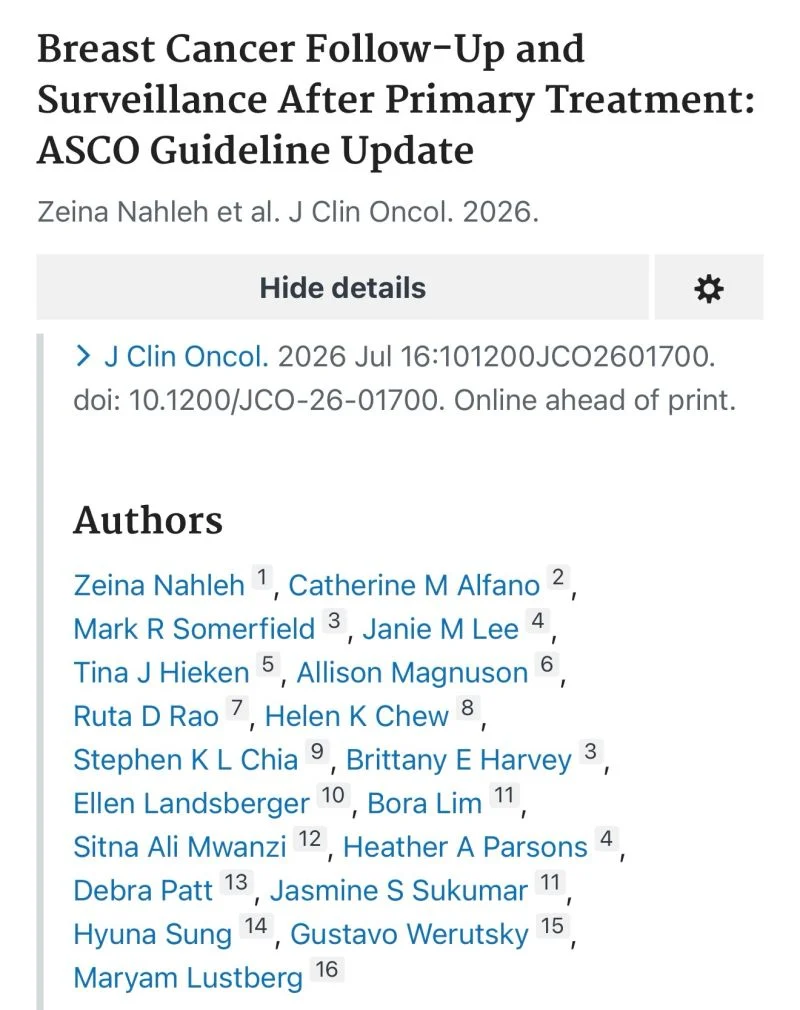
Title: Breast Cancer Follow-Up and Surveillance After Primary Treatment: ASCO Guideline Update
Authors: Zeina Nahleh, Catherine M. Alfano, Mark R. Somerfield, Janie M. Lee, Tina J. Hieken, Allison Magnuson, Ruta D. Rao, Helen K. Chew, Stephen K. L. Chia, Brittany E. Harvey, Ellen Landsberger, Bora Lim, Sitna Ali Mwanzi, Heather A. Parsons, Debra Patt, Jasmine S. Sukumar, Hyuna Sung, Gustavo Werutsky, Maryam Lustberg.
Read the full article.
This also can be interesting:
EVERGREEN Study: Everolimus Shows Modest Benefit After CDK4/6 Progression