The ESMO Congress 2026 is the annual meeting of the European Society for Medical Oncology. It stands as one of the world’s most influential oncology platforms for presenting pioneering cancer research. The event takes place from October 23 to 27, 2026, in Madrid, Spain, at the IFEMA MADRID convention center, utilizing a highly accessible hybrid (in-person and virtual) format.
Mario Balsa, Medical Oncologist at Hospital Clínic de Barcelona, shared on X:
“More than a faculty and more than a network!
The best oncology family I could ask for.
So proud to be part of OncoAlert and being pulse at ESMO26! Learning from brilliant colleagues, sharing the science in real time, and growing together along the way.
A very unexpected recognition from ESMO26.
Named a Top KOL Voice in Melanoma alongside people I’ve learned from for years.
I’m still young, early in my career, and very aware of how much I have left to learn. But I’ve discovered that one of the best ways to learn oncology is to communicate it: read the study, question the methodology, challenge the conclusions, discuss it with colleagues and try to explain why it actually matters!
Still learning. Just doing some of it out loud.
What a pleasure to coincide with the +MIR family from Kristof V at ESMO26!
Great colleagues, tons of eagerness to learn and, above all, a young generation eager to participate, propose, and help grow our oncology! A pride to be part of this team.
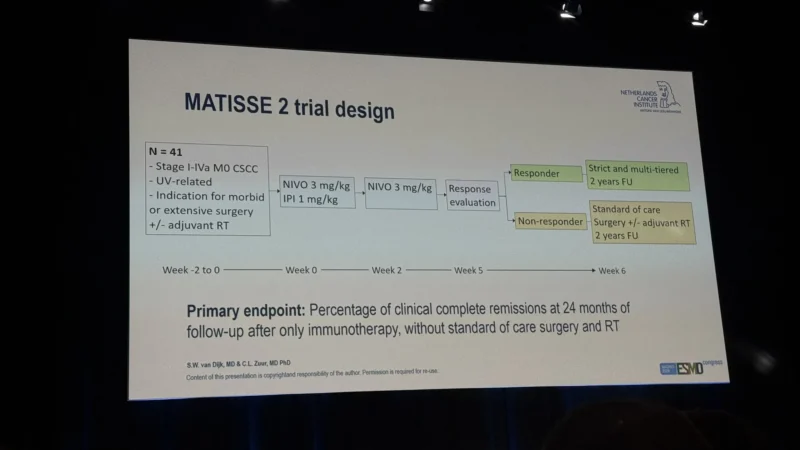
ESMO26 | Can IO make surgery unnecessary in cSCC?
MATISSE-2: 41 pts with resectable cSCC received neoadjuvant nivo/ipi → nivo.
- 25/41 (61%) achieved clinical CR
- No surgery, RT or maintenance therapy in responders
- Median time to cCR: ~ 2 months
- G3–4 immune toxicity: 17%
- No surgical delays or unresectable disease in non-responders
But an important caveat from the discussion: clinical CR may not equal pathological CR and median follow-up is still only 11 months.
A potentially practice-changing concept, but I think we need to know whether ‘no visible tumour’ can safely become ‘no surgery’!
MATISSE may be teaching us that sometimes the best surgical masterpiece is the one you never have to paint
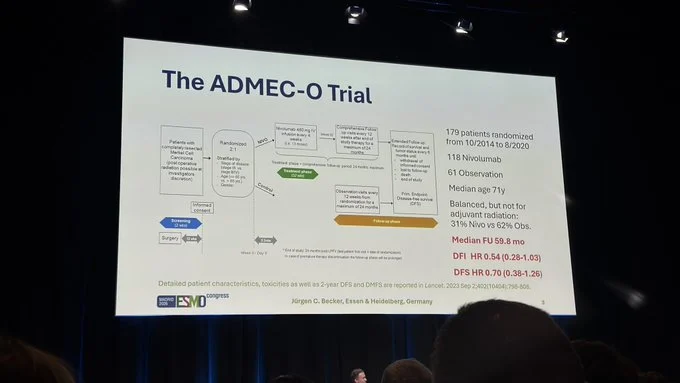
ESMO26 | Long-term ADMEC-O in resected Merkel cell carcinoma.
Adjuvant nivolumab vs observation:
- DFI HR 0.54 | DFS HR 0.70
- But no OS benefit → HR 0.98
The interesting part? Mature TLS could identify patients more likely to benefit, while host fitness may determine whether recurrence prevention translates into survival.
Perhaps ADMEC-O is telling us the ‘O’ should stand for Optimize who we treat.
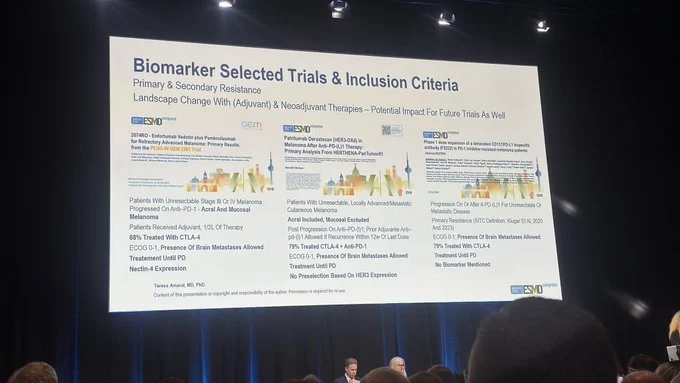
Brilliant discussion by Teresa Amaral at ESMO26 on the evolving post–PD-1 melanoma landscape.
Three very different strategies, remarkably similar signals:
- EV + pembro: ORR 32%
- HER3-DXd: ORR 21%
- FS222: ORR 36%
But the real message: ORR 30% is no longer enough! We need smarter trial populations, earlier referral, meaningful biomarkers and better representation of acral/mucosal melanoma.
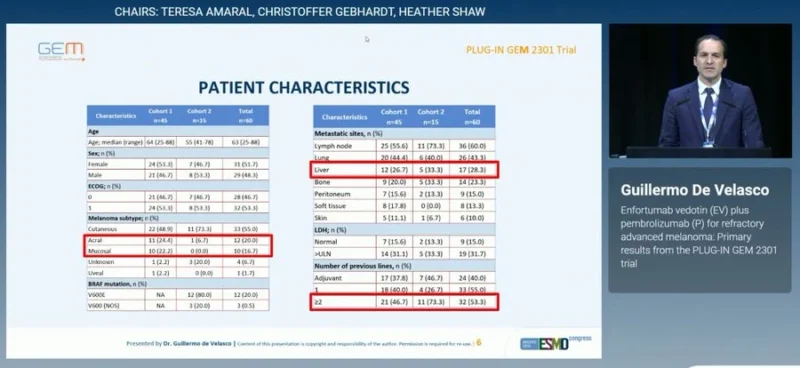
ESMO26 | PLUG-IN GEM 2301
Enfortumab vedotin + pembro in anti–PD-1–refractory advanced melanoma (N=60):
- Confirmed ORR 25% | DCR 55%
- BRAF WT: ORR 21.4%
- BRAF-mut: ORR 33.3%
- Acral 33.3% | Mucosal 20.0% confirmed ORR
Safety with no new signals! Interestingly, Nectin-4 expression did not identify responders, exploratory, but worth watching A new ADC signal in refractory melanoma.
This PLUG-IN deserves to stay connected.
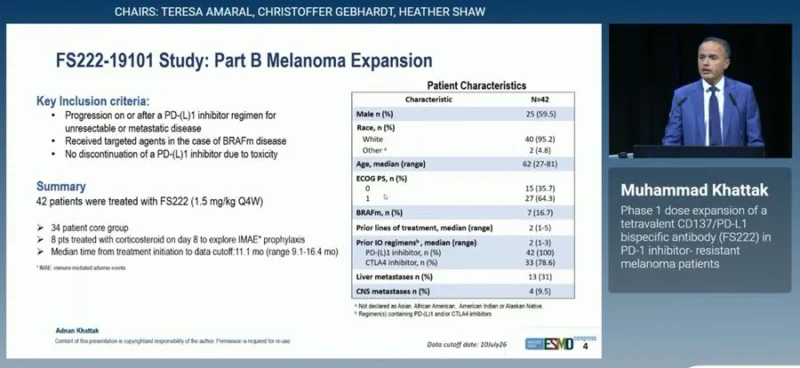
ESMO26 | FS222 in PD-1–resistant melanoma!
A tetravalent CD137/PD-L1 bispecific with encouraging activity in a difficult setting!
- N=42
- ORR 36% | mDOR 5.5 mo | mPFS 3.7 mo
- 8/15 responders had primary resistance to prior IO
- >10× ↑ CD8+ T-cell proliferation and IFNγ
Safety was manageable, although G≥3 TRAEs occurred in 45.2%…mainly immune-mediated hepatic/hematologic events.
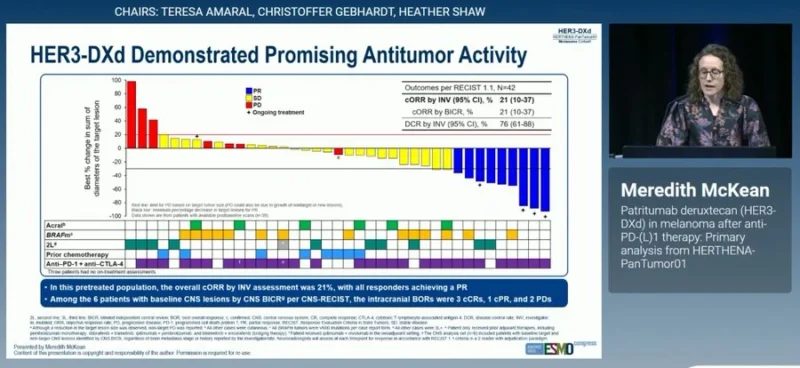
ESMO26 | HER3-DXd enters melanoma.
HERTHENA-PanTumor01: patritumab deruxtecan in heavily pretreated advanced melanoma after anti–PD-(L)1 (N=42).
- cORR 21% | DCR 76% | mDOR 8.0 mo
- mPFS 5.3 mo | mOS 13.0 mo
Notably, 79% had prior anti–PD-1 + anti–CTLA-4 Exploratory CNS signal: among 6 pts with baseline CNS lesions 3 CR, 1 PR!
Grade ≥3 TRAEs: 57%; no adjudicated HER3-DXd–related ILD.
One of the big melanoma moments of ESMO26!
INTerpath-001 is positive, but the most interesting part may be the questions it opens:
- Who benefits most?
- Will the RFS benefit translate into OS?
- And where does a personalized mRNA vaccine fit in the neoadjuvant era?
Presidential ESMO26! INTerpath-001: personalized mRNA vaccination reaches phase III in melanoma.
Resected stage IIB–IV melanoma, N=1,137: intismeran + pembrolizumab vs pembrolizumab.
At 24 months:
- RFS: 82.2% vs 70.0% → HR 0.58
- DMFS: 88.5% vs 80.2% → HR 0.62
- Absolute gains: +12.2% RFS / +8.3% DMFS
- Benefit emerges mainly after 6 months
- Grade ≥3 AEs: 23.6% vs 20.3%
- OS still immature
A clinically meaningful new mechanism, but the real question now is positioning.
For macroscopic stage III: adjuvant personalized vaccine after surgery, or neoadjuvant ipi/nivo before it? Biomarkers may ultimately decide.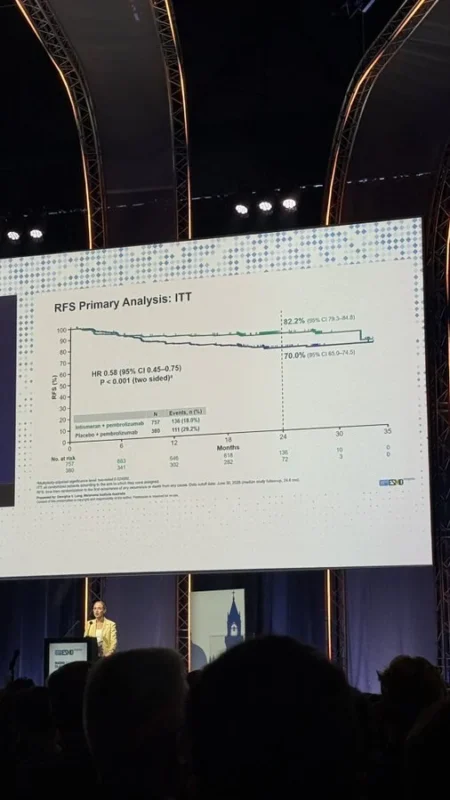
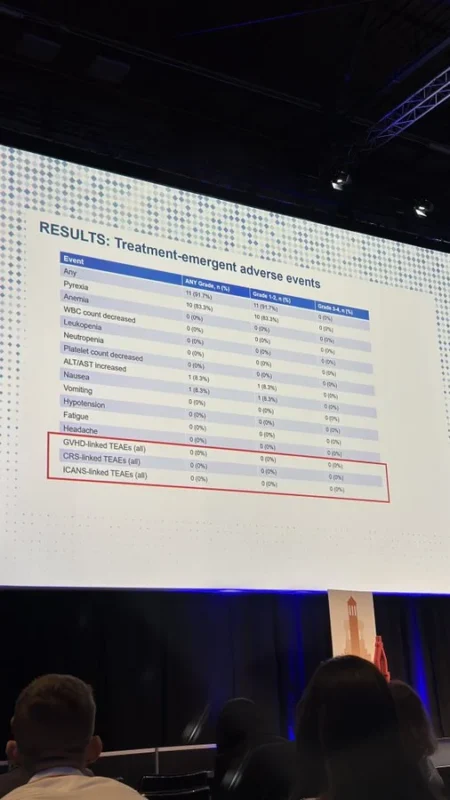
One of those ESMO26 presentations I knew nothing about (and ended up loving)
SL-28: a novel off-the-shelf, non-genetically modified allogeneic leukocyte therapy in heavily pretreated solid tumors (n=12)!
- ORR 66.7% (4 CR, 4 PR), DCR 100%, with responses across multiple tumor types and mDoR not reached!
- mPFS: 24.7 mo. Importantly, the observed deaths were non-cancer related, so the OS curve should be interpreted in that context.
- No GVHD. No CRS. No ICANS.
A very early n=12 dataset, but definitely one to watch.
Hey ESMO26 family!
Great discussion by Funda Meric-Bernstam on the rationale behind ADC + IO combinations!
- ADCs may induce immunogenic cell death, release DAMPs and prime the TME
- They may also increase PD-L1 expression and help overcome antigen heterogeneity
- VEGF–PD-(L)1 bispecifics aim to reverse vascular immunosuppression and improve tumour immune access.
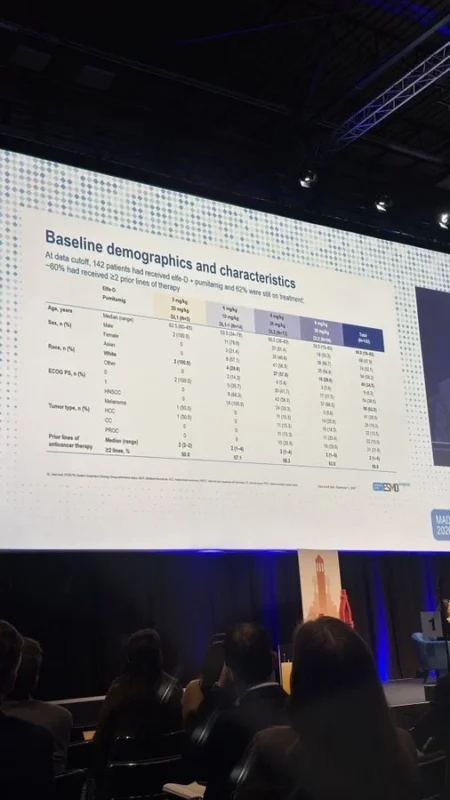
ESMO26 | Elfe-D + pumitamig across solid tumors
First clinical data beyond lung cancer for the B7-H3 ADC elfetabart drozuntecan + PD-L1×VEGF-A bsAb pumitamig!
- N=139 efficacy-evaluable: uORR 48.9% | cORR 39.6% | DCR 87.8%
- Melanoma (n=26): uORR 30.8% | cORR 26.9% | DCR 80.8%
Safety appeared manageable, with mainly G1–2 GI/hematologic TRAEs, no DLTs or treatment-related deaths, and 2 investigator-reported ILD cases.
One question: is the activity driven by the IO, the antiangiogenic effect, or a synergy between the two?
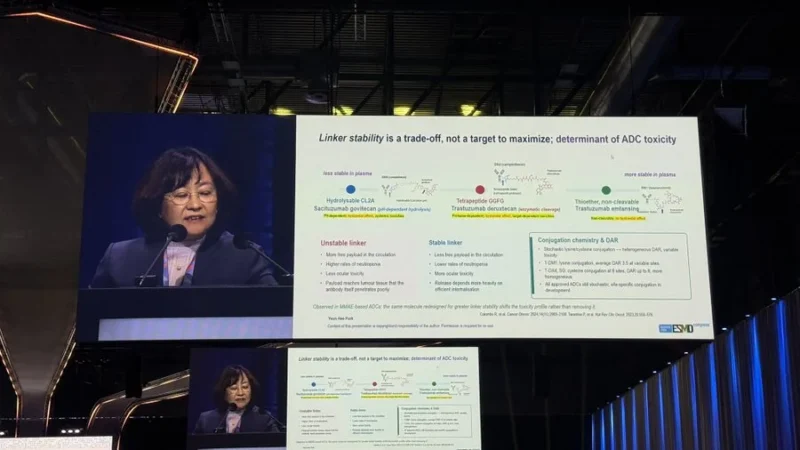
ESMO26 | ADC toxicities with Yeon Hee Park
Key pearls:
- Toxicity depends on the payload, linker, target and patient of course!
- Different ADCs, different profiles! T-DXd: ILD | SG: myelosuppression/diarrhea | Dato-DXd: stomatitis/ocular
- Timing matters: toxicities can emerge from days to months
With ADCs, the construct tells you what to watch for.
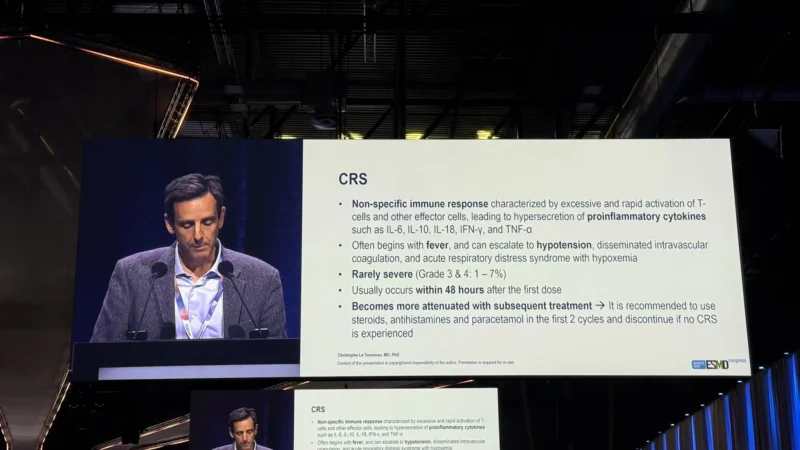
ESMO26 | Managing toxicities with bispecific therapies
Key pearls from Christophe Le Tourneau:
- CRS usually occurs early, often within 48h, and becomes less frequent with subsequent doses!
- ICANS remains uncommon, but early neurological symptoms matter
- ‘On-target, off-tumor’ toxicity depends on where the target is expressed in normal tissues
- Infusion-related reactions are frequent with some agents, but usually manageable with premedication and early intervention!
With bispecifics, toxicity management starts by being very specific about the mechanism.
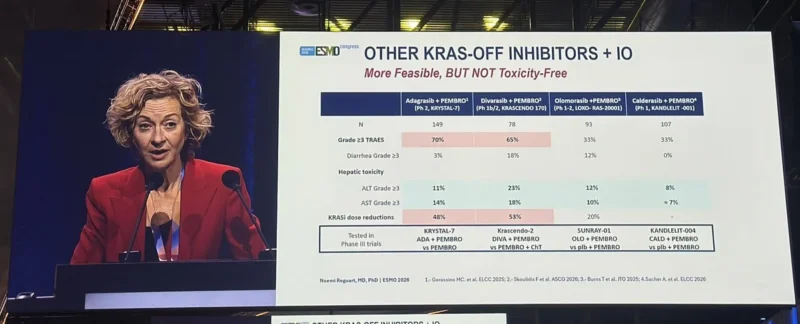
ESMO26 Targeted therapies: toxicity is not just about the drug – context matters.
Key pearls from Noemi Reguart:
- PD-(L)1 → osimertinib: severe irAEs 15%; G≥3 pneumonitis 10%
- PD-(L)1 → sotorasib: G≥3 hepatotoxicity strongly ↑ with short washout
- KRASi + IO: feasible, but toxicity varies markedly across agents
- Dose modification is not = treatment failure
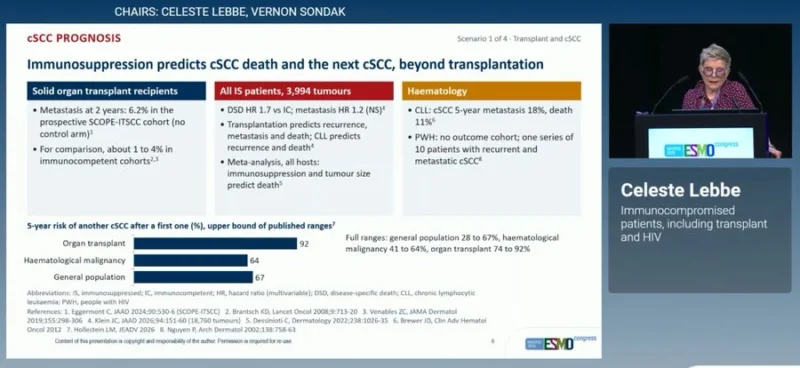
ESMO26 Skin cancer in immunocompromised patients!
Key pearls from Celeste Lebbé:
- SOTR: more cSCC risk ~46-fold…treat every cSCC as high-risk
- Ruxolitinib: ~2–3× excess cSCC risk, but may still synergise with anti–PD-1
- Post-transplant MCC: often MCPyV-negative and more lethal
- ICI: rejection ≈1 in 3; mTOR-based immunosuppression may mitigate risk
- HIV-associated KS: restoring immunity with ART remains fundamental
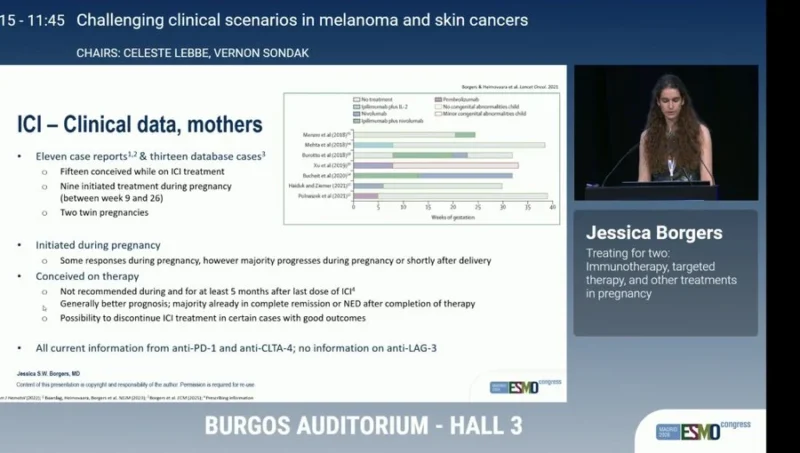
ESMO26 How do we treat melanoma when we are treating for two?
Excellent practical session by Jessica Borgers on melanoma and pregnancy.
Key takeaways:
- Evidence remains scarce
- ICI may disrupt fetal-maternal tolerance: prematurity/IUGR concern
- Anti-LAG3 pregnancy data: essentially none
- BRAF/MEK: very limited evidence; consider only case by case
- After high-risk adjuvant therapy: ideally wait ~3 years
- After neoadjuvant ICI+MPR? Maybe shorter
Personalized oncology means treating not one patient, but two timelines at once!
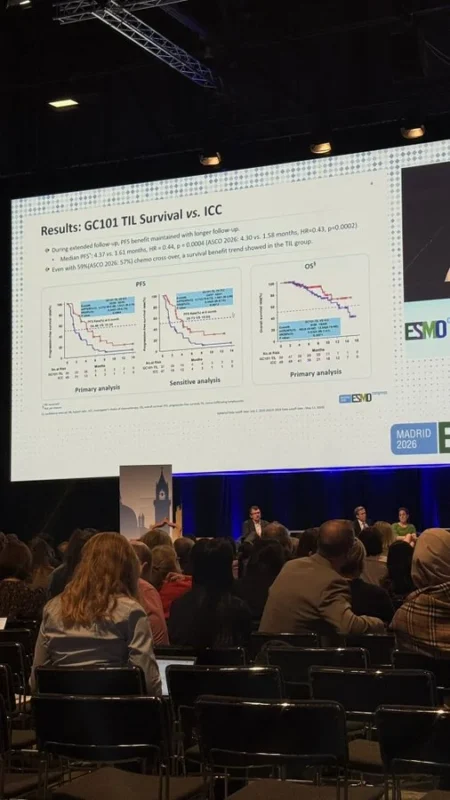
My top 4 Melanoma ESMO26 GC101 TIL: TILs without the full toxicity baggage?
Randomized phase II in >=2L anti-PD-1-resistant melanoma! Notably 73% acral/mucosal!
- PFS: 4.37 vs 1.61m (HR 0.44)
- ORR: 44% vs 8%
- -Acral: ORR 45% vs 8%
- -Mucosal: ORR 50% vs 0%
IL-2-free + reduced-intensity lymphodepletion and the discussant questioned whether 50% dose sintilimab really changes much.
ESMO26 IOV-COM-202: bringing TILs upfront! Lifileucel + pembrolizumab in ICI-naïve advanced melanoma.
ORR 62.5% | CR 29.2% mPFS 19.8m | mDOR NR | 13/15 responses ≥12m Now TILVANCE-301 has to advance the signal.
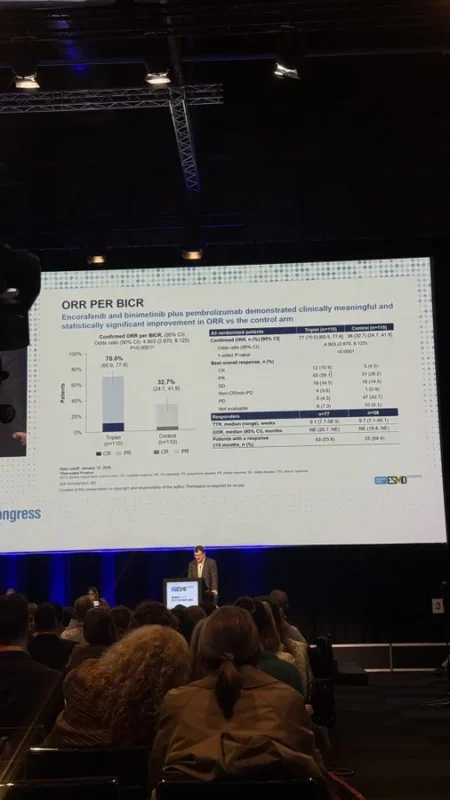
Triplet therapy in BRAF V600 melanoma: enco + bini + pembro vs pembro alone in 1L.
- ORR: 70% vs 32.7% || mPFS: 33.0 vs 3.4 mo
- G3/4 TEAEs: 70% vs 39%
OS: positive trend, but immature after early trial closure. Impressive PFS! But STARBOARD has not reached the OS shore yet.
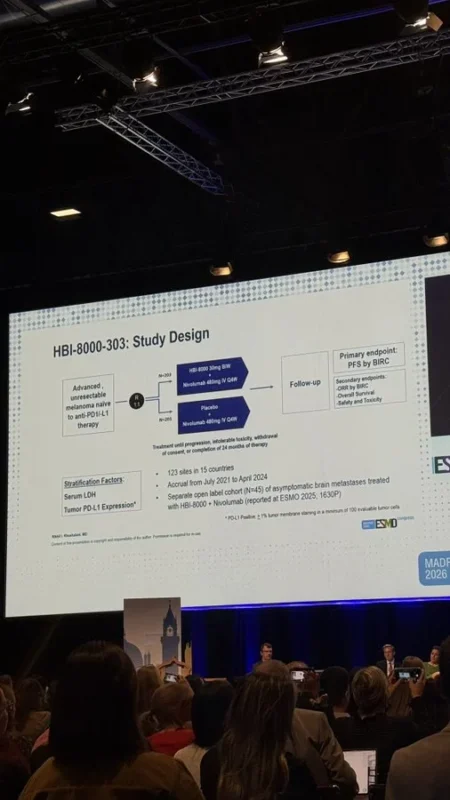
My TOP 3 Melanoma ESMO26 HBI-8000 + nivolumab in advanced melanoma – phase III vs nivolumab alone.
- mPFS: 11.7 vs 7.4 mo | HR 0.73
- ORR: 41.4% vs 32.3% (p=0.0569)
- G3/4 TRAEs: 54.8% vs 17.9%
- 4 treatment-related deaths with HBI-8000
Benefit seemed strongest in lower-burden/normal-LDH disease! A PFS win, yes. A new standard? OS?
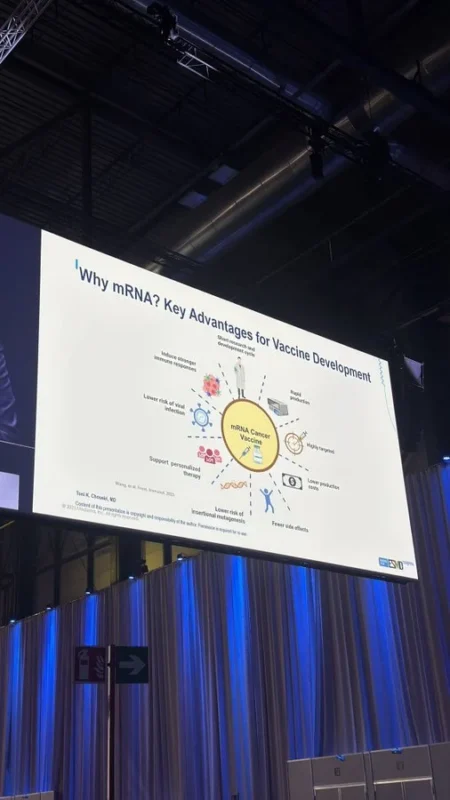
ESMO26 mRNA cancer vaccines: beyond melanoma
Personalized neoantigen vaccines are moving from treatment toward broader (and earlier) disease settings!
- Signals in low-TMB tumors
- Activity explored in PDAC and RCC
- Now even entering cancer prevention in Lynch syndrome
The mRNA ‘message’ getting much broader than melanoma. Congrats Toni Choueiri! Amazing discussion!
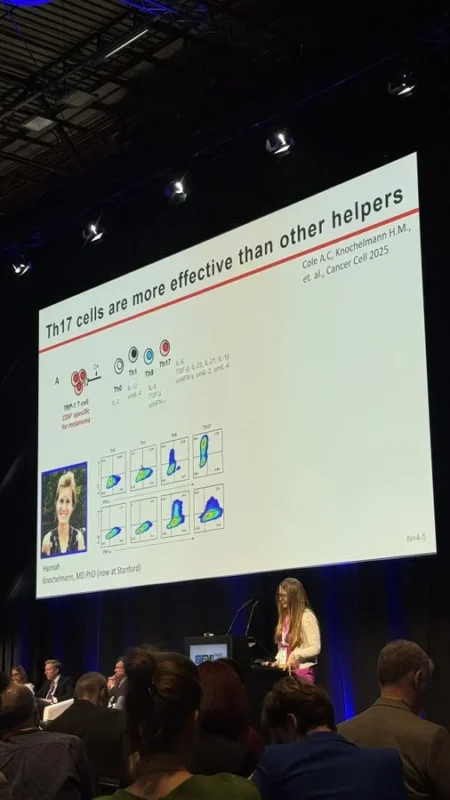
ESMO26 Autologous cell therapy: getting the T-cell fit right.
Th17-polarized T cells:
- Enhance B-cell, plasma-cell and memory responses
- Promote class switching
- Support tissue-resident CD4/CD8 immunity
- Show potent antitumor activity in preclinical melanoma models
Not all helpers are equally helpful Congrats to Chrystal Paulos and all the team!
ESMO26 Personalized cancer vaccines: promise meets precision.
Large-scale personalization is now feasible, with growing clinical evidence in melanoma
- Robust, durable vaccine-induced T-cell responses
- Positive randomized phase II/III development in adjuvant melanoma
- Excellent safety profile
- But immune breadth remains limited
Personalized? Yes. Predictable? Not yet
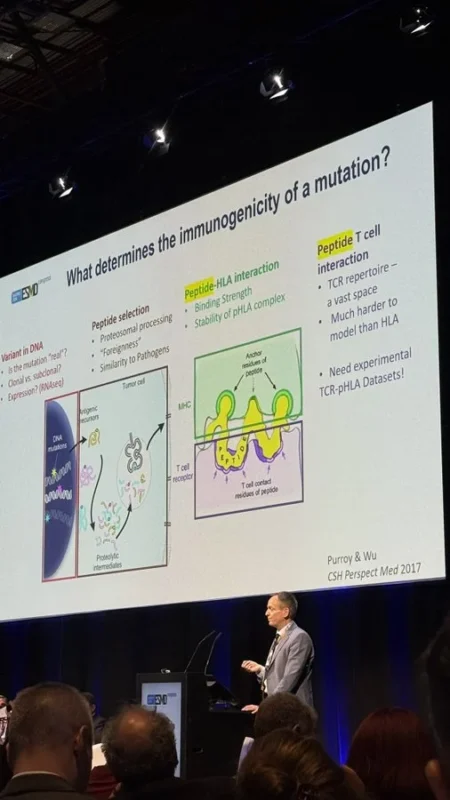
ESMO26 Matchmaking TCRs: from standard fit to bespoke melanoma care.
The antigen is as important as the engineered T cell.
Finding the right cell may start with finding the right match.
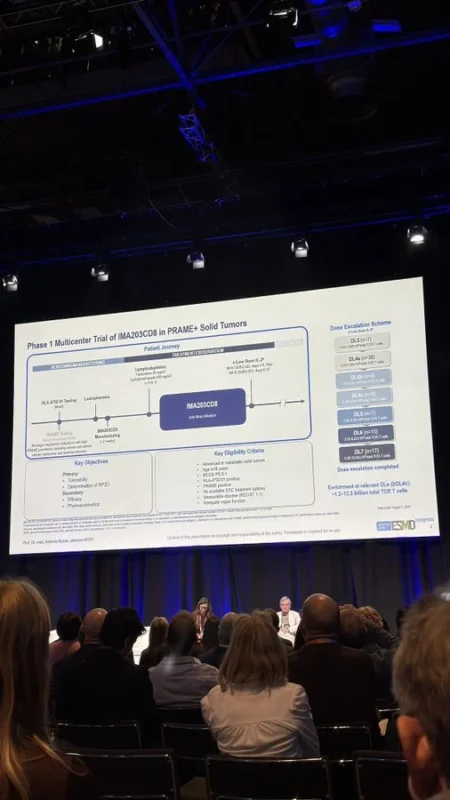
ESMO26 IMA203CD8: PRAME-directed TCR therapy.
Phase I in heavily pretreated HLA-A*02:01+, PRAME+ solid tumors.
ORR 51% | cORR 41%
- Melanoma: ORR 52%
- Synovial sarcoma: 67%
- Higher-dose gynecologic tumors: ORR 60%, cORR 55%
Responses ongoing beyond 2.5 years Is PRAME ready for PRIME time?
Saved this one for the start of ESMO26!
If melanoma/skin cancer is your field, these are the 8 trials I think you really cannot miss in Madrid The studies, the timing, and why each one matters: all in one picture!
Your melanoma map for Madrid starts here.
Scientific embargoes exist for a reason: fair access to data, scientific integrity and, ultimately, patients.
Seeing a major ESMO26 study disclosed ahead of schedule is disappointing.
I think ESMO takes its embargo policy seriously, and I would expect a breach of this magnitude to have consequences. Science should set the timeline, not the stock market.
With INTerpath-001, someone clearly took a shortcut on the path to the data.
ESMO26 | Phase III INTerpath-001
After an early embargo breach, ESMO brought the abstract release forward!
And yes, it’s clearly positive:
- RFS HR 0.58
- DMFS HR 0.62
But here’s the uncomfortable part: SWOG S1801 also reported an HR 0.58…simply by moving 3 doses of pembrolizumab BEFORE surgery.
Not the same population. Not the same endpoint. Not a cross-trial comparison.
Still, in 2026, should a personalized mRNA vaccine really be benchmarked against adjuvant pembro alone? Before calling this a new standard, I want to see the vaccine face the NEOADJUVANT era.
Same HR. Different path. And that may be the real INTerpath question.”
You can also read:
INTerpath-001 Trial: Personalized mRNA Cancer Vaccine in High-Risk Melanoma