Jorge Reis-Filho, Chief of AI for Science Innovation, Enterprise AI Unit at AstraZeneca, shared a post on LinkedIn:
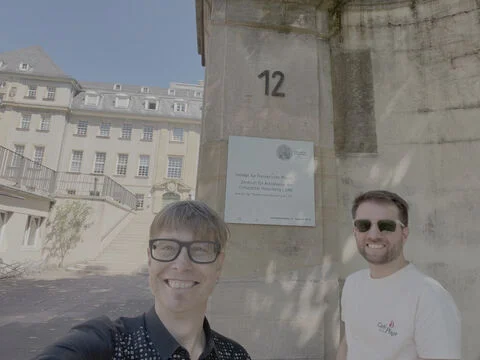
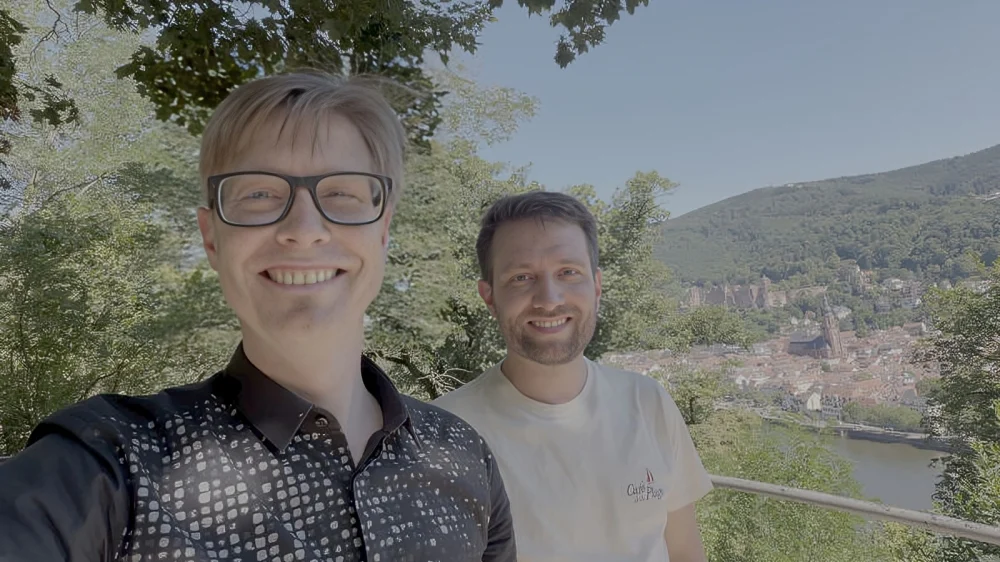
“What better way to spend a weekend than discussing the future of AI in biomedicine with Jakob Nikolas Kather in Frankfurt and Heidelberg?
- Across many hours of immensely stimulating conversations, four themes stood out:
AI hypothesis slop is a concrete problem we are collectively facing.
As AI systems generate scientific hypotheses at an unprecedented scale, the central question becomes: what would be required for us to move safely from AI-enabled prediction and disease interception to clinical intervention based on AI-generated hypotheses? Generating data for hypothesis verification is essential, as is the development of robust, fit-for-purpose evaluation and experimental validation. - Predicting patient trajectories from multimodal longitudinal data is likely to become a deliverable within the next 12 to 18 months.
Expert physicians already predict trajectories with a certain level of accuracy. Truly multimodal models capable of learning how patients evolve over time, such as Apollo, will transform how these predictions are made. Defining the highest-value use cases and downstream applications is now the next frontier. Counterfactual analysis, asking and understanding what might happen under a different intervention, remains a particularly exciting problem to solve. - Highly capable AI solutions are already available, and substantially more powerful systems will emerge in the not-so-distant future.
Their adoption will depend on much more than model performance. We need a multidisciplinary assessment of the scientific, clinical, operational, regulatory, economic and human barriers to implementation. There is much we can learn from the experience of computational pathology , including the real distance between demonstrating that an algorithm works and embedding it into routine clinical practice to deliver tangible benefit to patients. - As intelligence becomes increasingly commoditized, meaningful human interaction will acquire even greater value.
Knowledge, analysis and certain forms of expertise will become progressively more abundant and accessible. Trust, empathy, judgment, shared experience and the ability to inspire one another will remain irreducibly human. In science and medicine, progress has always depended on the quality of the interactions among people. In an age of ubiquitous AI, these relationships may become even more consequential.
The next phase of AI in biomedicine will require us to think beyond models and predictions. We must build the evidence, infrastructure and clinical systems needed to translate what these models tell us into meaningful improvements in patient outcomes. At the same time, we must preserve and cultivate the human relationships that give these advances purpose.
Jakob, thank you for the privilege of having you as a thought partner.
Onwards and upwards!”
Other articles about AI on OncoDaily.